
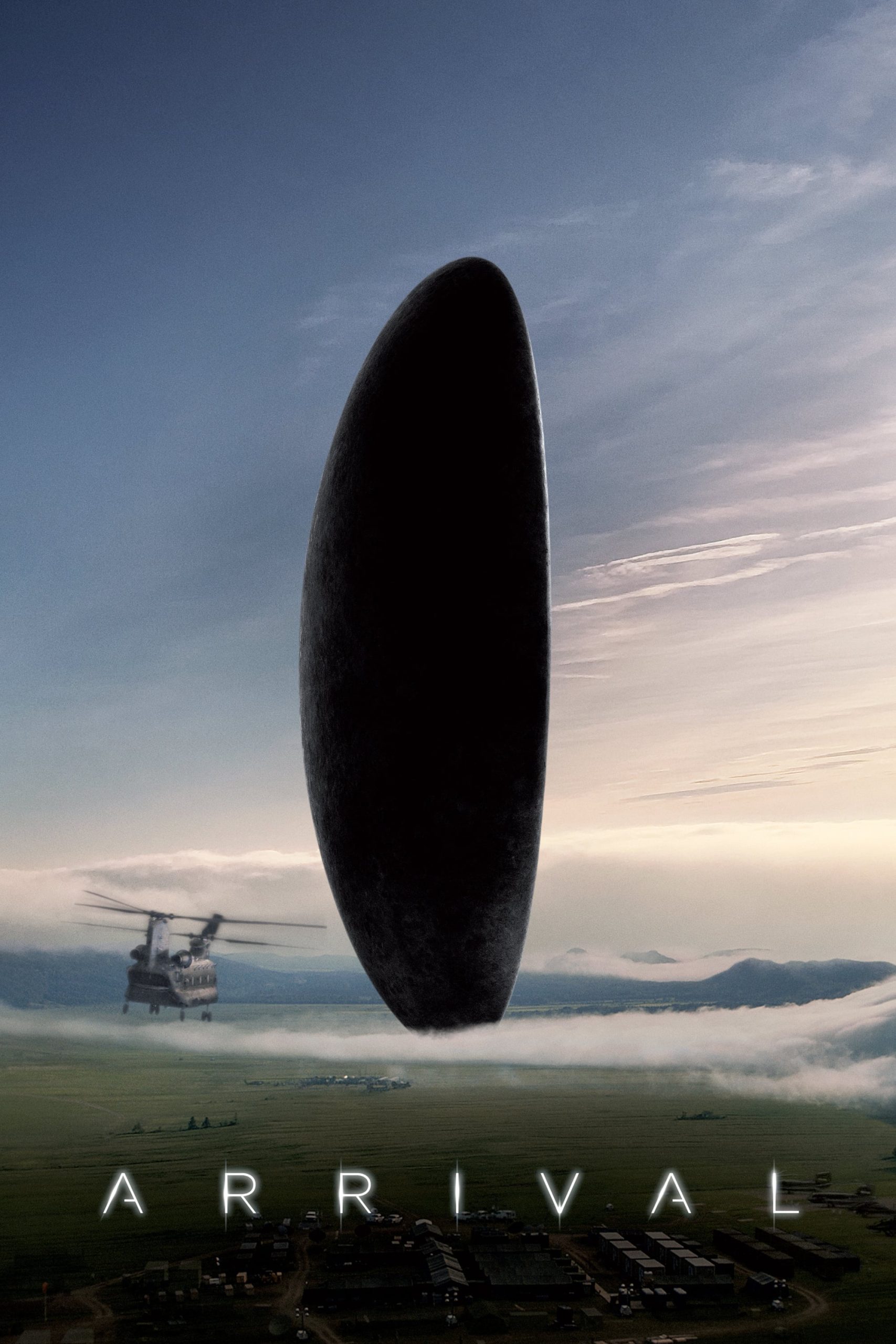
Is This Film Based on a True Story?
Nothing about “Arrival” feels timid, especially on a first watch. I remember being completely absorbed by its slow methodical pace and the weighty questions it throws at the audience, and that immersion left me genuinely curious: could any of what I was seeing be rooted in fact? After digging into its genesis, I’ve come to understand that “Arrival” is not based on a true story. There are no documented accounts of linguists decoding alien languages, nor has humanity ever confronted the circumstances presented in the film. Instead, what I saw was a work of speculative fiction, meticulously adapted from a celebrated short story rather than inspired by real events or people. For me, knowing that “Arrival” springs entirely from literary and cinematic imagination, rather than history or factual accounts, sharpened the way I processed its central questions about communication, memory, and the fabric of time.
The Real Events or Historical Inspirations
When I started unraveling the threads behind “Arrival,” the first clear fact I found was that the film’s foundation is Ted Chiang’s novella, “Story of Your Life,” published in 1998. No government files, scientific journals, or biographical sources directly inform its central storyline. That origin is purely literary and rooted in science fiction. However, what intrigued me as I read deeper was how much Chiang and, by extension, the filmmakers drew inspiration from real academic fields and genuine scientific concepts. I noticed how the character of Dr. Louise Banks, for example, is modeled after real-world linguists. She doesn’t exist as a historical person, but the intellectual rigor she applies mirrors practices found in linguistic fieldwork.
The authenticity of Louise’s attempts to decipher the alien language (“Heptapod B”) is steeped in methods linguistic anthropologists have long employed when working with newly encountered languages or lost dialects. As I explored interviews and articles about Chiang’s process, he often referenced “Describing Morphosyntax” by linguist Thomas E. Payne, a practical handbook for documenting and analyzing languages with little documentation. While not a direct factual source, I found this methodical underpinning gives the story a layer of verisimilitude. Science fiction typically builds its fictional elements on known science before leaping into the unexplained, and “Arrival” is no different. The “Sapir-Whorf hypothesis,” a real linguistic theory suggesting language shapes thought, forms the philosophical backbone of both the story and the film adaptation. I found it compelling how Chiang and the filmmakers didn’t merely invent concepts from thin air, but extrapolated from ongoing debates in cognitive science and linguistics.
I also noticed echoes of Cold War-era anxieties throughout the narrative. The film presents global governments scrambling for control, communication, and understanding as they face the unknown. While not direct history, these elements seem to build from humanity’s documented patterns of panic and competition during times of crisis — such as the early years of nuclear weapons development or the “first contact” moments of the Space Race. For me, the careful blending of these real psychological and sociopolitical impulses with the fictional visitation grounds “Arrival” just enough for its speculative leaps to resonate.
Yet, it’s worth repeating: no part of “Arrival” or its literary source comes from disclosed government files, real alien encounters, or historical linguistic cases involving extraterrestrial communication. The film’s emotional truth is drawn from our world, but its events are invented, with inspiration filtered through speculative fiction rather than documented history.
What Was Changed or Dramatized
As someone who obsessively traces the steps between literary source and screen, I found the journey from “Story of Your Life” to “Arrival” full of creative invention. While the broad contours are consistent — a linguist is recruited by the government to help understand alien visitors — the film adapts, intensifies, and restructures several elements. Many of these changes, to my eyes, are in service of cinematic storytelling rather than historical accuracy (which, as outlined, wasn’t really a consideration given the fictional premise).
The first thing that stands out is the reimagining of the military and global response. In the novella, the focus remains mostly on Louise’s personal and intellectual journey. The film amplifies the sense of worldwide crisis, giving us pulse-pounding montages of military buildups, governmental gridlock, and global unrest. The United States military’s role becomes more prominent, with newly invented characters standing in for broader state interests. These changes heighten suspense and give external stakes to Louise’s mission, but depart from the quieter, introspective tone of the novella.
Another shift I noticed lies in the film’s structure. Ted Chiang’s story unfolds in a more fragmented, recursive style — reflecting the story’s fascination with the nature of memory and time. Denis Villeneuve’s film likewise experiments with time, but uses visual effects and editing to create striking “revelation” moments framing Louise’s experience. What impressed me was how these cinematic techniques dramatize the internal cognitive shift experienced by Louise when she grasps the non-linear language of the aliens. It felt designed for the viewer’s emotional understanding, once again prioritizing engagement over strict scientific accuracy.
I also picked up on how the heptapods themselves are more visually and conceptually developed in the film adaptation. Their language system in the novella is symbolic, but the film visually renders their written language as graceful, inky logograms that pulse with significance. This tangible approach gives the language a cinematic presence, though in that creativity it necessarily departs from how real languages function — and, as far as anyone can document, how completely unknown intelligence might communicate.
Perhaps the most subtle form of dramatization involves the story’s emotional arc. The novella spends more time with Louise’s future daughter, reflecting on fate, love, and loss with a quiet philosophical weight. The film, while faithful in its ending, foregrounds the emotional stakes and crafts more explicit relationships between past and future. For me, the emotional storytelling, especially around memory and grief, felt carefully calculated for strong audience impact. It dramatizes inner experience in ways that might not resemble any factual reality, but instead reflect speculative possibilities.
Historical Accuracy Overview
Assessing the historical accuracy of “Arrival” is, from my perspective, an unconventional exercise. Its central scenario — humanity’s first contact with an intelligent alien species, filtered through linguistics — is a work of pure fiction as of this writing. No historical records or scientific observations directly parallel what unfolds in the narrative.
However, every time I revisit the film, I’m struck by how much care is given to representing actual linguistic science. I see Louise applying real-world methods: collecting data, observing minute details in language, making careful hypotheses, and iterating her understanding as more information emerges. The portrayal of government bureaucracy, secrecy, and global tension also feels grounded, if dramatized. If the historical record shows anything, it’s that humanity struggles to coordinate in the face of unfamiliar dangers — and “Arrival” extrapolates from that reality.
On the scientific side, the film’s use of the “Sapir-Whorf hypothesis” as its foundation impressed me. The concept that language can alter cognitive patterns is debated but not disproven in linguistics. The story’s leap — that learning a non-linear language reprograms one’s experience of time itself — moves well beyond established science into speculative territory. No known language can rewire perception to the degree dramatized. Still, I value how the film uses real academic discourse as a jumping-off point, framing its fiction in a way science fiction at its best often strives for: by asking, “What if?”
The aliens, the heptapods, are the most obvious break from any historical or biological precedent. To my knowledge, no biological or anthropological record details contact with non-human intelligence, let alone lifeforms with the attributes and communication modes displayed here. The visual design of their logogram-based written language, while inspired and intricate, bears little resemblance to the evolution of language in human societies — but it’s rooted in genuine creativity and, I think, a respect for the complexity any alien system would likely possess.
When it comes to the representation of technology and government protocols, the film invents plausible frameworks for first contact scenarios. I’ve read about SETI and real-world protocols for the discovery of extraterrestrial intelligence, but there is no step-by-step guide that matches the events of “Arrival.” The tension between cooperation and secrecy, bureaucracy and scientific discovery, rings true to recorded human behavior, if sometimes heightened for dramatic purposes.
How Knowing the Facts Affects the Viewing Experience
I find that knowing the precise origins of “Arrival” — that it’s an adaptation of an acclaimed piece of science fiction rather than a record of real events — fundamentally shifts the experience of watching it. While some may initially be drawn to its verisimilitude or the authenticity of its language scenes, understanding that every crisis, every character, and every breakthrough is imagined allows me to appreciate the film on two distinct levels.
First, I approach the story as a deeply crafted thought experiment. I can let go of any expectation that it will supply documentary insight into how humanity has or would respond to extraterrestrial life. That freedom, for me, opens the door to engage more fully with the philosophical and emotional stakes. When Louise Banks learns to experience time non-linearly, I don’t ask: could this really happen? Instead, I wonder what it means about grief, memory, and the human condition to imagine such a thing. That, I think, is the film’s lasting power — inviting me to engage with “what if” rather than “what is.”
Second, recognizing the intentional dramatizations and creative liberties made in adapting Chiang’s work helps me appreciate the film not for accuracy, but for metaphorical resonance. The way the global response is intensified, the military presence ramped up, and the scope expanded — these choices do not reflect recorded history but aim to surface real anxieties and hopes about international crises, miscommunication, and the risks and rewards of openness to difference.
For viewers like me, well aware of the speculative chain at the heart of “Arrival,” the experience becomes less about seeking clues to real alien contact or historical precedent, and more about watching a meditation on communication, time, and empathy. Knowing that the scientific and governmental details are extrapolated or dramatized lets me focus on the film’s central metaphors. At the same time, I see more clearly how real scientific theories like the Sapir-Whorf hypothesis can be a launching point for fiction that raises profound questions, even if it answers none conclusively.
Ultimately, my own enjoyment of the film is heightened by this knowledge. Free from the need to fact-check every scene, I’m allowed to sink into the story’s questions — about loss, fate, and the desire to connect across gulfs of understanding — and ponder their relevance in my own life rather than in history books or scientific journals. For those who crave realism, knowing the facts behind “Arrival” may lead to a reevaluation of its plausibility, but for me, it enriches the invitation to imagine new possibilities not yet — or perhaps ever — realized in human experience.
After learning about the film’s origins, you may want to see how audiences and critics responded.