
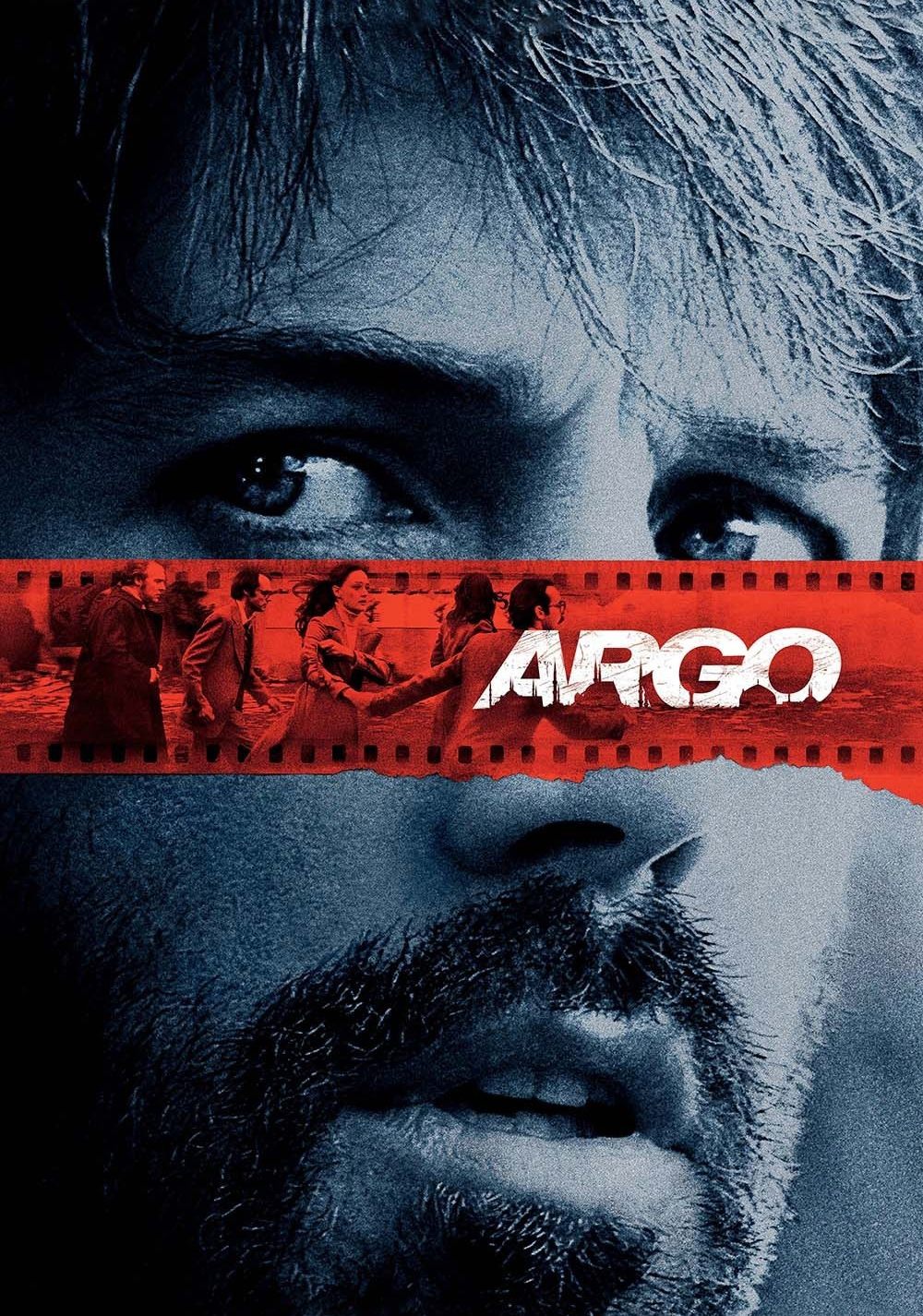
The Question of Truth Behind the Film
Reflecting on my own experience with “Argo,” I can’t help but remember the moment I saw the phrase “based on a true story” appear on the screen. That tagline immediately pulled me into a specific kind of anticipation—one laced with both curiosity and skepticism. I’ve noticed that whenever I watch a film that carries this label, I approach it with a different mindset than I do with entirely fictional narratives. The presence of “truth” in a story adds a certain gravity to each event I witness, making every twist seem not only intriguing but also significant in a historical sense. There’s an underlying urge in me, as there likely is in many viewers, to mentally map each cinematic detail against what I suspect or know of history. I ask myself: Did that really happen? Were those people exactly like that? Is that how those decisions unfolded?
For me, the assumption that a film is based on real events primes me to expect authenticity, not just in surface-level details like costumes or sets, but also in the ways people act and react. The phrase “true story” acts as a frame, signaling that what I’m about to see will offer at least a window into the real world, even if blurred by artistic brushstrokes. I find myself scrutinizing the film’s choices with questions about motivation—why did the filmmakers use this real-life event? What are they trying to communicate about its relevance? When I consider “Argo,” I realize I began watching it not just as a story, but as a window into the Iran hostage crisis and covert diplomacy of that turbulent time. It’s not just entertainment; it’s a lesson, or perhaps at least an invitation to revisit history. That expectation fundamentally alters the viewing process for me, guiding my attention toward both overt historical markers and subtle thematic nuances.
Historical Facts and Cinematic Interpretation
When I reflect on “Argo,” I’m struck by how the raw material of history is transformed to better fit the contours of cinematic structure. The actual CIA operation that inspired the film—known as the Canadian Caper—involved a complex web of decisions, multiple governments, and a number of individuals no single screenplay could fully encompass. Faced with all these complexities, the film’s adaptation choices become more apparent. For instance, the real escape of American diplomats from Tehran was successful largely due to the intricate collaboration between Canadian diplomats and American intelligence; yet, on screen, I felt the narrative streamlined these overlapping contributions, foregrounding the CIA operative Tony Mendez’s actions and subtly shifting the spatial focus from embassy corridors and bureaucratic offices to more suspenseful, kinetic set pieces.
What I find especially compelling is the way “Argo” condenses timelines and heightens dramatic beats for greater coherence. In the film’s version of events, certain logistical hurdles and moments of jeopardy are amplified—airport interrogations become nail-biting showdowns, and the escape sequence is rendered with all the rituals of a classic thriller. I’m aware from background reading that many of these moments, while rooted in real tension, were less overtly cinematic in real life: there were no dramatic last-minute chases on a tarmac, nor were armed guards ever in hot pursuit at the departure gate. Yet, I understand why these flourishes exist. They help guide my engagement, providing both catharsis and an emotional climax that historical minutiae might not naturally supply. In my view, this process of adaptation involves not only creative license, but also a pragmatic reimagining—condensing several diplomatic efforts into a handful of conversations, or merging roles and personalities to clarify central conflicts.
I notice how these narrative choices manipulate pacing. The actual events took place over days and weeks, punctuated by moments of tense waiting, bureaucratic limbo, and quiet anxiety. The film, however, skirts long periods of inactivity, using montage and carefully selected dialogue to collapse time. I find this both effective and illustrative of the broader cinematic philosophy: fidelity to the emotional core of events matters more than painstaking documentary detail. Yet, for me as an alert viewer, knowing that entire segments of planning or diplomatic negotiation have been effectively “compressed” or omitted adds texture to my interpretation. It reminds me that cinematic history is inevitably partial, a distillation of a complex reality into something legible and evocative for a mass audience.
What Changes When Reality Is Shaped for Cinema
Experiencing “Argo” as both a viewer and someone who values historical inquiry, I’m always drawn to the balancing act between telling a clear, engrossing story and honoring the tangled uncertainty of real events. For me, there’s a tangible shift each time a film chooses to sacrifice certain facts in favor of narrative drive. I watch these choices unfold not as betrayals of the past, but as clear-eyed admissions of the limits and opportunities of cinema.
One trade-off that stands out for me is character focus. In historical reality, operations like those depicted in “Argo” involve teams of people operating across networks of agencies and governments, each playing roles that are at times crucial, at times collaborative, at times adversarial. But in the film, I notice a deliberate narrowing: Tony Mendez’s perspective becomes the nucleus of the drama. This gives the story an emotional through-line but inherently reduces the sense of collective action that often defines historical moments. For me, this focus translates into a more intimate identification with the protagonist, yet it simplifies the vast web of relationships typical of real-world diplomacy.
I’m also aware of what isn’t shown: the moral ambiguities, policy debates, bureaucratic stumbling blocks, and quieter forms of courage or resistance. These elements, while present in historical records, seldom translate cleanly into genres designed for tension or heroism. Instead, I see how the film opts for dramatic showpieces—climactic moments of near-discovery, quick-thinking improvisation at the airport, and Hollywood’s playful self-satire. The tension between fact and dramatization becomes manifest in every line of dialogue or montage. From my perspective, this is about more than leaving details out; it’s about recasting the very shape of the narrative, transforming sprawling, ambiguous history into a tightly constructed arc.
There’s also the pragmatic question of audience engagement. I sense that decisions about pacing, visual style, and even humor are designed to hold my attention and deliver a sense of satisfaction as the story unfolds. While real historical events might lapse into periods of anxiety and uncertainty, the film must move with resolute momentum. This leads to composite characters (amalgams of several real figures), fictionalized threats, and sequences crafted for cinematic exhilaration rather than historical granularity. I find this process fascinating; it shows me how history is both the anchor and launch pad for imaginative reinterpretation. The film’s ultimate shape is determined as much by the constraints of runtime and storytelling convention as by fidelity to the record.
Audience Expectations and the “True Story” Label
The moment I know a film is “based on a true story,” my mindset shifts. I expect some degree of documentary truth but also an accessible narrative that will draw me emotionally into the experience. With “Argo,” this expectation sets up a kind of double vision. On one hand, I want to surrender to the thrill of cinematic suspense, cheering for the disguised escape, feeling the mounting pressure in every checkpoint scene. On the other, I’m aware of my curiosity about the real events: did these hostages actually feel this level of fear? Did Canadian and American efforts dovetail this seamlessly? Did the Hollywood ruse really draw that kind of attention?
For me, the label “true story” generates a desire for historical insight, yet I sometimes feel it also masks or softens the deviations from fact. In the case of “Argo,” I remember later reading about the diplomatic efforts led by Canadian Ambassador Ken Taylor and realizing how the film had recentered agency and credit toward the American lead. This realization subtly affected my emotional connection; I felt compelled to parse what was accurate and what was strategic embellishment. My sense of suspense on first viewing was gradually accompanied by a mild curiosity—and later investigation—into what was dramatized or omitted. For viewers like me, this process continues long after the credits roll. It shapes my willingness to accept the “truth” offered and inspires me to explore further, comparing press accounts, government records, or memoirs against the film’s narrative choices.
I also notice a divergence in how audiences relate to “true” versus “inspired by real events” labels. If I’m told explicitly that a film is only inspired by history, I adjust my expectations. I’m open to broader creative liberties, less focused on point-by-point accuracy, perhaps more ready to take the film on its own thematic terms. Conversely, when the “true story” claim sits at the forefront, I instinctively become more analytical, parsing authenticity from invention, weighing where the drama has been salted with imagination or shaped by the imperatives of popular storytelling. For me, this reframes how I process each scene—I catch myself toggling between immersion and investigation, entertainment and education. It can be both exhilarating and somewhat distracting, depending on how the narrative flows and how transparently the film signals its departures from record.
I find that this “true story” lens influences not just my emotional investment, but also how I contextualize the work socially and politically. Am I seeing history’s victors reshape the narrative? Is the film offering redemptive closure for a national audience? Or is it providing a nuanced window into the ambiguities and collaborations that actually shaped the past? Knowing what is real or fictional doesn’t just color my verdict on the film—it recalibrates the lens through which I view its portrayal of agency, sacrifice, and cunning. Audience reactions, as I’ve observed in conversations and reviews, seem to oscillate between awe at the filmmaker’s ingenuity and skepticism about historical liberties. This tension is a product of the label itself, always inviting, and perhaps demanding, a deeper engagement with both history and its retelling.
Final Perspective on Fact vs Fiction
As I look back on my experience of “Argo,” I’m reminded that my interpretation of the film is inseparable from my awareness of what parts are factual and what parts have been reshaped for effect. It’s not so much a matter of passing judgment on the film’s historical liberties as it is of understanding the choices through which a historical moment becomes a cinematic narrative. The interplay between fact and fiction doesn’t just inform my intellectual response; it colors the emotional resonance and the questions I bring to the viewing.
Knowing where reality ends and the screenwriter’s imagination begins changes how I relate to the film’s characters and events. It invites me to see Tony Mendez not only as a hero forged in Hollywood tradition but also as a stand-in for broader forms of agency and ingenuity. The awareness that the drama has been heightened, and that specific contributions or perspectives may have been sidelined, gives me a more layered appreciation. I see how the film crystallizes a national memory—even as it complicates the precise record of history. This awareness doesn’t prevent me from engaging with the story or feeling its suspense; rather, it invites a more nuanced, inquisitive kind of engagement. I’m drawn into conversation not simply with the film itself, but with the trace of real events it both reveals and reframes.
I find that recognizing where “Argo” diverges from its real-world inspiration adds an additional dimension to my understanding. The narrative is no longer a straightforward tale of escape, but a lens onto the mechanics of adaptation, storytelling, and the pressures that shape historical representation in popular culture. I consider this process as intrinsic to cinema’s function: to invite, provoke, and sometimes sidestep easy answers. My sense of the story’s stakes, emotional and thematic, shifts as I discern the boundaries between invention and record. Knowing the facts behind the fiction doesn’t lessen the experience for me—it deepens my curiosity about both the story and the processes by which such stories reach the screen. In that light, the convergence and divergence of fact and filmic fiction become as intriguing as the drama itself.
For additional context, you may also explore the film’s overview and how it was received by audiences and critics.