
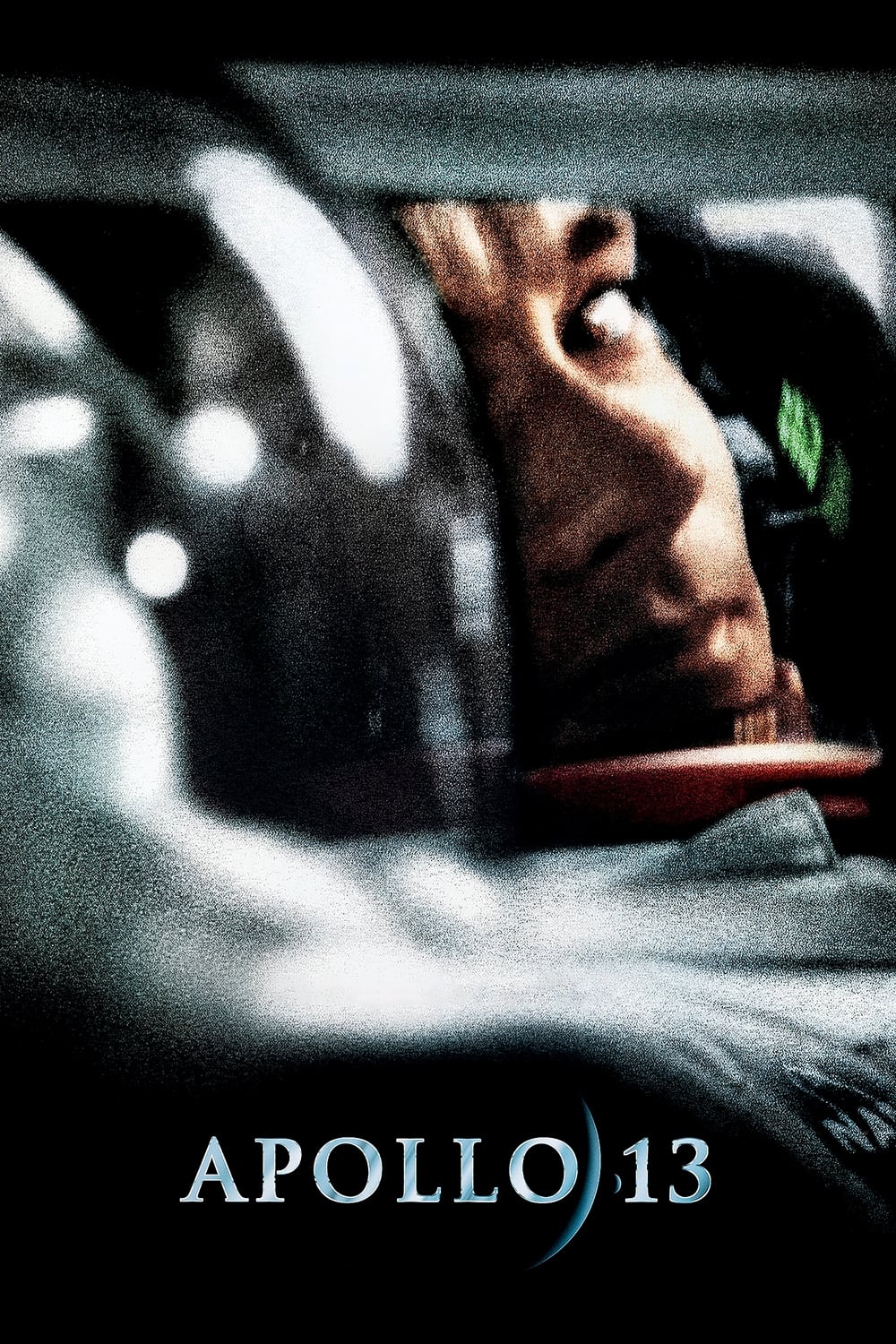
Is This Film Based on a True Story?
The first time I watched “Apollo 13,” I remember being struck by how real everything felt—not just the visuals and sounds, but the tension humming through every scene. This wasn’t some distant sci-fi adventure or a loosely inspired narrative. As I dug deeper after that first viewing, I found that the film is unmistakably based on a true story. “Apollo 13” is not a work of fiction or merely inspired by historical events; it’s a dramatic retelling of the ill-fated 1970 NASA mission. The characters, the crisis, the ingenuity on display—they’re reinvented from an actual moment in American history that continues to resonate because it unfolded in real life before a watching world.
The Real Events or Historical Inspirations
My fascination with “Apollo 13” goes beyond the spectacle of spaceflight; it’s rooted in learning about the real people whose lives shaped the mission. As I’ve researched, the film’s screenplay is drawn directly from real historical events, specifically the Apollo 13 mission—NASA’s third attempt to land humans on the Moon. The mission, carrying astronauts Jim Lovell, Fred Haise, and Jack Swigert, was launched on April 11, 1970. What was supposed to be a routine lunar journey became a fight for survival when an oxygen tank exploded, leaving the crew stranded nearly 200,000 miles from Earth.
The film’s narrative sticks closely to actual transcripts, logs, and autobiographical accounts. In particular, Jim Lovell’s memoir “Lost Moon: The Perilous Voyage of Apollo 13,” co-written with journalist Jeffrey Kluger, serves as a primary foundation for the adaptation. This book, published in 1994, offered both a technical and deeply personal recollection of the near-catastrophic mission, giving me unique insight into not only what happened but also how it felt for those involved. NASA’s own archival records, mission audio, and photographs provided additional factual scaffolding for the filmmakers, who sought to vividly recreate events that had already been closely followed by the public via television and radio in the 1970s.
When I think about what set “Apollo 13” apart from other space dramas, it’s the meticulously detailed source material and the abundance of public record. The mission was among the most intensely documented of NASA’s Apollo program, both in internal mission documents and in the eyes of millions who watched the crew’s ordeal unfold in real time. The film captures that collective anxiety and hope by rooting itself directly in the words, gestures, and technical language of the time. Characters like Gene Kranz (the real NASA flight director), Jim Lovell, Fred Haise, and Jack Swigert are more than cinematic inventions for me—they are reconstructions of living, breathing people whose actions were scrutinized by an international audience.
What Was Changed or Dramatized
Every time I rewatch “Apollo 13,” I pick up on small moments that prompt me to question whether they happened that way. My research has pointed to several specific elements that were, to varying degrees, dramatized or altered for narrative clarity and emotional impact. Filmmakers, while closely hewing to Lovell’s memoir and NASA documentation, inevitably made choices to sharpen tension or condense complex sequences for a mainstream audience.
One of the most significant alterations is the depiction of astronaut Jack Swigert’s role and personality. In the film, Swigert is portrayed as something of an outsider, joining the mission crew at the last minute due to Ken Mattingly’s (Gary Sinise) exposure to German measles. The dramatic tension between Swigert and the rest of the crew is heightened for storytelling purposes. In reality, by the time of launch, Swigert had trained adequately, and accounts from both Lovell and Haise suggest that initial awkwardness was resolved professionally and without the friction shown in the script.
I also noticed that several technical discussions are simplified or rearranged in the film. For example, work in Mission Control is streamlined by combining technical conversations and removing jargon to keep the pacing brisk. Scenes featuring Ed Harris’s Gene Kranz—like his famous declaration, “Failure is not an option”—distill the immense burden and resolve felt in Houston, even though that specific phrase wasn’t documented as official dialogue during the mission. I found out Kranz himself adopted it as a personal motto later, influenced by the movie’s popularity.
There are instances where minor incidents or arguments are accentuated. The film introduces moments of doubt or panic within the crew that, based on primary sources, never escalated as dramatically in real life. These heightened exchanges serve a narrative function but subtly shift the audience’s sense of crew interactions from sustained professionalism to controlled emotional release.
Additionally, the portrayal of the astronauts’ families, particularly Marilyn Lovell (Kathleen Quinlan), is expanded for emotional resonance. While Marilyn did face genuine anxiety and difficulty, some dramatic confrontations and moments—such as the threat of the water heater breaking just after news of the in-flight problem—serve as literary flourishes to mirror the turmoil happening in space. These scenes are not fabrications, but they are carefully shaped to draw parallels between the home front and the isolation felt by the crew in space.
From a production standpoint, I appreciated the artistic license taken with visuals and timelines. Events such as the frantic development of the CO2 canister “mailbox” solution are compressed to occur more rapidly and with a clarity that only comes through careful cinematic adaptation. In practice, these innovations were the result of ongoing, multi-hour teamwork that played out with far less theatrical brevity. Even the now-iconic scene where Lovell (Tom Hanks) gazes longingly at the Moon, contemplating the abandoned lunar landing, is a directorial interpolation. The actual moment wasn’t quite as drawn-out or theatrical—yet it effectively captures the loss and yearning reported by the astronauts afterward.
In piecing all this together, I see that while the broad strokes and key details remain accurate, many so-called “minor” moments are refined or streamlined for emotional truth or storytelling clarity. It’s a reminder that while the events are real, the medium shapes interpretation.
Historical Accuracy Overview
I’ve always been fascinated by how closely a film can adhere to real history without sacrificing its power as a story. With “Apollo 13,” I’ve found that most historians, former astronauts, and NASA insiders consider its technical and narrative accuracy remarkably high—yet not without its share of cinematic liberties.
From the outset, the physical details—spacesuits, cockpit layouts, Mission Control’s consoles—were scrupulously researched. I learned that NASA granted the filmmakers significant access to their archives, even letting them film in actual zero-gravity aboard a KC-135 aircraft (the “Vomit Comet”) to create weightless scenes. Watching those sequences, I’m consistently impressed by how seamlessly the film replicates the look and feel of 1970s spaceflight, from the blue-lit glow of instrument panels to the minutiae of checklists scribbled on notepads floating through the Lunar Module.
Technical aspects of the crisis, like the powerdown sequence, the improvised construction of carbon dioxide scrubbers, and the treacherous reentry, are all based on real procedures. One of the most compelling things to me is the authenticity in showing teamwork—engineers, astronauts, and backroom support aligning under acute pressure. There’s an almost documentary-like approach to technical dialogue and decision-making, made accessible for viewers without sacrificing core truths.
Yet, I can’t ignore the creative liberties taken, even as they serve the film’s pacing. Montage sequences telescope multi-day developments into mere minutes. Scenes suggesting that Ken Mattingly almost single-handedly solves the spacecraft’s power-up sequence slightly exaggerate his role—though he undoubtedly contributed, the solution was a team effort involving many engineers. The inclusion of conflicts and doubt, particularly on the command module between Swigert and Haise, is a deliberate narrative device rather than a reflection of documented crew dynamics. In reality, post-mission reports and oral histories from the crew—Lovell, Haise, and Swigert—describe a culture of disciplined mutual respect despite the high stakes.
Historical dialogue is one area where the film introduces enhancements. Most famous lines spoken by Ed Harris’s Gene Kranz and Tom Hanks’s Jim Lovell are paraphrased or reconstructed from real transcripts for clarity and dramatic emphasis. Still, I’m aware that many of the radio exchanges and in-mission updates were recreated nearly verbatim. The white vest worn by Gene Kranz, lovingly reproduced for the film, is another testament to the filmmakers’ devotion to accuracy; yet, the public’s association of certain lines or particular moments with the real-time event often stems more from the film’s script than archival tapes.
What I appreciate as a researcher is how the film navigates this line. It doesn’t invent a radically different era or set of outcomes. Instead, “Apollo 13” distills, condenses, or subtly elaborates to translate a highly technical crisis into a dramatic narrative that remains faithful at its core. The tension, teamwork, and ingenuity are all true to the version of history recounted in memoirs, oral interviews, and NASA documentation. The minor discrepancies seem minor minded against the broader fidelity to real events.
How Knowing the Facts Affects the Viewing Experience
The more I learn about the fine details of the Apollo 13 mission, the more my perception of the film deepens. With the facts in mind, every scene in “Apollo 13” carries a new weight for me. I know that when Tom Hanks’s Jim Lovell gazes out at the moon, he’s not just mourning a lost opportunity—it’s a composite of the real emotional stakes faced by the man whose memoir shapes the film. That knowledge sharpens the moments of silence as much as it enriches the bursts of technical dialogue.
Understanding how the story is both real and slightly tailored helps me approach “Apollo 13” as more than just entertainment. When I first saw it, before delving into the real transcripts and Lovell’s autobiography, I accepted the on-screen tension and emotional highs at face value. Now, with more background, I approach each conversation between astronauts and Mission Control with an awareness of the underlying realities—the relentless professionalism, the necessity of precise communication, and the weight of each decision. If anything, the heroics feel more impressive knowing that, in the genuine chaos of the incident, the involved parties maintained a degree of calm and mutual reliance that was rarely breached.
The visual accuracy and technical achievements also stand out more clearly in light of documentary evidence. After reading first-hand accounts and browsing photo archives, I recognize set pieces, mission insignias, and the patchwork of procedural notes not just as set dressing, but as meaningful artifacts of a particular era in American engineering and scientific ambition. It’s not just a fantastical re-creation but an attempt to honor the collective memory of a turbulent chapter in human space exploration.
I find that knowing what was dramatized (like the “failure is not an option” mantra or the implied interpersonal strife) doesn’t undercut my appreciation of the film. Instead, it enhances my understanding of how filmmakers distill real complexity into an accessible and emotionally resonant form. With the facts in hand, I can appreciate those moments for what they are: narrative amplifiers that clarify, rather than mislead, the audience about the stakes and spirit of the mission.
For me, awareness of the film’s origins also changes how I talk about “Apollo 13” with others. No longer just an inspirational space thriller, the movie becomes a cultural artifact—an interpretation of an event where technical competence, resourcefulness, and teamwork stood in for less tangible forms of heroism. I think this factual underpinning invites viewers to reflect on the real constraints and uncertainties that shaped the mission, offering a richer context for the drama on screen.
The emotional impact is heightened when I remind myself of the public spectacle the original mission became—people watching anxiously from their homes as the fate of the astronauts hung in the balance. Knowing that millions joined in collective vigil, I sense a continuity between the original events and my own viewing, separated by decades but linked through a shared tension and hope. The very act of dramatizing these events for the big screen becomes, in my eyes, a way to keep that communal experience alive.
In other words, understanding the careful balance between fact and art in “Apollo 13” allows me to approach it as both a thrilling historical document and a cinematic achievement. The film’s commitment to representing real people, real crises, and real solutions gives it a unique place in the realm of adaptations—a place where knowledge amplifies drama and empathy, rather than diminishing it.
After learning about the film’s origins, you may want to see how audiences and critics responded.