
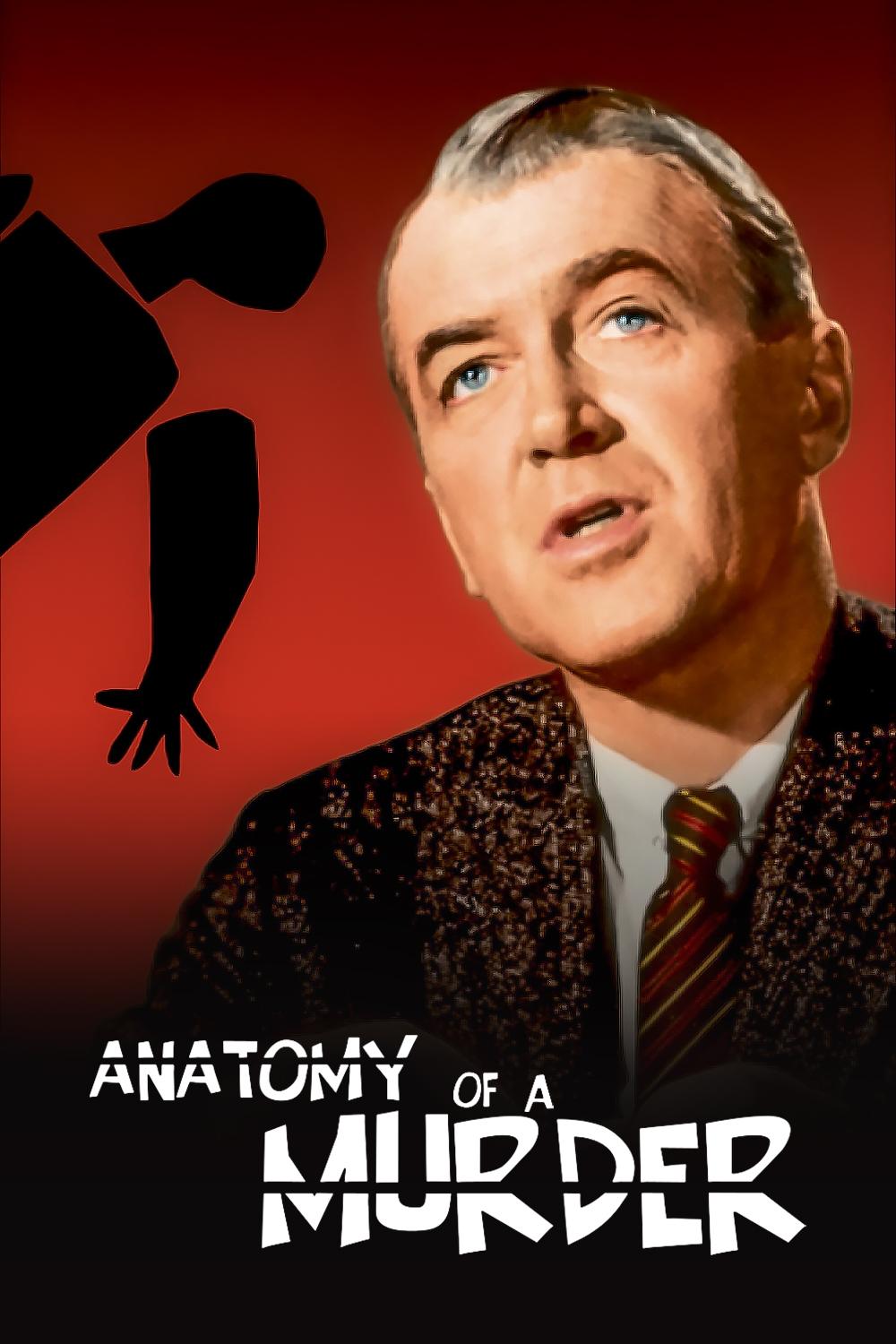
The Question of Truth Behind the Film
It strikes me every time I watch an older courtroom drama just how quickly the question emerges: “Did this really happen?” With Anatomy of a Murder, the urge to know where the facts end and the fiction begins is almost irresistible. I find myself reflecting on why audiences—myself included—often seem so invested in that answer. Sometimes it feels like we’re searching for permission to weigh in on the morality or plausibility of the story, as if its authenticity could either enhance or diminish our engagement. There’s a particular cachet to that “based on a true story” label, one that often swings open a different set of expectations than pure invention does. It’s as though, once I know a film is rooted in fact, I’m being enlisted to bear witness rather than merely be entertained. This tension between veracity and artistry especially fascinates me when a film like Anatomy of a Murder tiptoes so carefully between detailed realism and constructed drama.
Personally, I approach every film situated in historical reality with a certain wariness, even before I dive into its backstory. I know that movies can never be pure, untouched documents; they transform, condense, and shape raw events into something that coheres on screen. Yet, I notice that, for many, the implicit contract changes once we believe we’re watching “truth”: I see viewers scrutinize the choices of characters, the motivations behind their actions, with an intensity that’s reserved for depictions grounded in the real world. That assumption sets up a fascinating tension—the expectation that characters might be more psychologically credible, or that the narrative might reflect actual consequences from lived events. Whenever I read about the real-life case behind this film, I’m reminded how easily cinematic storytelling blurs into cultural memory, recoloring our perceptions of what happened and why.
Historical Facts and Cinematic Interpretation
Reflecting on Anatomy of a Murder, I’m drawn to the intricate interplay between actual events and the liberties a screenplay inevitably takes. The film, as I’ve learned, draws inspiration from a real 1952 murder case in Michigan, detailed in a novel by John D. Voelker—a lawyer who actually defended the accused. What fascinates me is how this origin material is already twice removed: first, real-life events recounted by a participant, then adapted by Hollywood. Each step absorbs the fuzzy edges of truth and molds them for a new medium. I see how the specificities of the case—small town dynamics, legal loopholes, ambiguities of guilt—become thematic raw material, not immutable history. For me, realizing that events are condensed, characters composited, and outcomes slightly shifted for effect doesn’t lessen their impact; rather, it highlights the creative negotiation at play.
In my view, cinematic interpretation involves more than just trimming for time or dramatizing an occasional exchange. Anatomy of a Murder layers its source material with nuance—subtleties that might have evaded the constraints of courtroom transcripts or press reports. Scenes that feel sharply naturalistic are, in fact, carefully arranged for the needs of tension, pacing, and dramatic structure. I note how the script relishes detail—procedural quirks, local dialects, messy emotional confessions—but I’m always aware that even the most “documentary” moments are tethered to a screenplay and the expectations of a 1959 audience. I find myself marveling at how facts are not simply stated but filtered, translated, sometimes even deliberately left ambiguous to serve the film’s commitment to uncertainty. Each adaptation choice, to me, is a signal: a way to retain the flavor of the world as it really was, but through the selective lens of cinema.
The process by which history is distilled for film fascinates me because it exposes the pressures of adaptation. I notice, for instance, how the filmmakers select and accentuate certain witness testimonies, or how they sculpt the rhythms of courtroom exchange, to slide between the mundane and the consequential. The implication for audiences, as I see it, is that even the smallest narrative rearrangement—merging two real witnesses into one, or omitting procedural minutiae—can shift our grasp of cause and effect, doubt and certainty. Oddly, I find this awareness to be liberating; it allows me to appreciate film both as record and as argument.
What Changes When Reality Is Shaped for Cinema
I’m always keenly aware of the compressions and expansions undertaken by films like Anatomy of a Murder. The passage of time, for instance, is pliable: hours or even days of real testimony are distilled into kinetic cross-examinations, every gesture calculated to accelerate the narrative. As I watch, I’m struck by the trade-offs: in striving for engagement and immediacy, the slow, ambiguous grind of real legal proceedings is sometimes lost. But, to me, this isn’t a flaw so much as an inevitable transformation. Every dramatic emphasis—each revelation, each rhetorical flourish—signals a choice to foreground character over chronology, implication over literalism.
Because I’m invested in the authenticity of the world onscreen, I pay close attention to how the textures of reality are bent toward cinematic ends. In Anatomy of a Murder, the dialogue carries the charge of real speech, unpolished and winding, yet the scenes unfold with a clarity and focus rare outside of film. I notice that certain subtleties—a glance exchanged, a lingering pause—are laden with meaning for the viewer, even if their original counterparts might have gone unremarked in life. For me, this heightened selectivity is neither a betrayal nor embellishment, but rather a declaration of the film’s priorities. I see the procedural detail as both backdrop and character, mediating the line between what truly happened and what needed to happen for the film to resonate.
I often think about the boundaries of representation when an event is dramatized—especially with a storyline that pivots on doubt, justice, and motive. Cinematic language amplifies, reduces, and sometimes reorders reality, not to mislead, but to achieve a kind of moral or emotional clarity. Yet, in the case of Anatomy of a Murder, that clarity is elusive by design. I interpret the film’s ambiguities as an invitation to hover between judgment and uncertainty, mirroring the uncertainties that the real trial, as described in Voelker’s account, never definitively resolved. The very act of organizing facts into a compelling narrative, I believe, illuminates as much as it obscures. In making sense of this, I appreciate the honesty of movies that acknowledge their partialness, situating viewers in that in-between space where reality is not quite reached but always approached.
Audience Expectations and the “True Story” Label
I can’t help but notice how my own reactions while viewing Anatomy of a Murder fluctuate depending on what I’ve read or heard about its factual basis. The phrase “based on a true story” feels like an invitation—sometimes even a challenge—to weigh the on-screen actions with a seriousness that goes beyond fiction. When I’m told a film is factual, every gesture and utterance takes on new potential ramifications. I find myself parsing motivation differently: What really happened? Who was telling the truth? I imagine this tendency isn’t unique to me; there’s a wider cultural impulse to interrogate “true story” films as though they can expose truths about society and human nature, not just about individual characters.
For me, discovering that a movie is an adaptation of real events adds a complex layer to my expectations. I expect contradictions, moral ambiguity, and unresolved threads, because real life rarely tidies itself up for narrative convenience. If a film signals that it’s fictional, however, I engage from a slightly different stance—relishing the inventive or metaphorical possibilities rather than demanding fidelity. There’s a freedom to appreciate exaggeration, coincidence, or implausible resolution, liberated from the scrutinizing gaze that “true story” films provoke. Yet, with Anatomy of a Murder, I’m struck by the way it both courts and evades the aura of reality. Even if I had no foreknowledge of its origins, its tonality and attention to the legal apparatus would hint at documentary impulse, coaxing me to read it as a plausible, if not perfectly faithful, portrait of small-town justice.
The label “inspired by actual events” is, to my mind, a kind of middle ground. I find it often serves to highlight the artistry of adaptation rather than to hold the story to documentary standards. Knowing this distinction readjusts my equilibrium: I grant the filmroom to breathe, while still seeking patterns that might map onto the world I know. With Anatomy of a Murder, I’m reminded that cultural impact and audience response are tied not just to what’s on screen, but to everything we bring in with us—assumptions about the period, the legal system, and the uneasy proximity between lived experience and its retelling. My view of character actions, or even the ethics of defense and prosecution, subtly shifts when I believe the story is grounded in lived reality; I start to see the narrative as both entertainment and informal history lesson. This duality is at the core of why the “true story” label holds such power for me and, I suspect, for countless other viewers.
Final Perspective on Fact vs Fiction
After spending time with Anatomy of a Murder, both as a narrative and as a case study in adaptation, I find my most lasting impression is not about the particular veracity of each detail, but about the interplay between knowing and wondering. When I’m aware of the real incident that shadows the film, my interpretation evolves: I become a more critical viewer, attentive not just to what is shown, but to what is shaped, omitted, or stylized in the translation from fact to fiction. The film, for me, is less a mirror than a prism; it redirects and remembers the essentials of the story, not only recounting events but reframing them through craft.
I’ve come to appreciate that, even when a film hews closely to historical sources, something fundamentally different transpires when those events become cinematic. My engagement shifts; I oscillate between viewing the story as an artifact of its time and as a creative dialog with history itself. I become more attuned to the choices that filmmakers make: which small-town social tensions they preserve, which trails of ambiguity they allow to linger, which emphases serve the needs of drama over biographical accuracy. For me, this awareness isn’t destabilizing; rather, it enriches the interpretive space. If I stopped at asking whether every event “really happened,” I might miss the more subtle revelations—the way cinema renders history legible, while still resisting finality.
Ultimately, knowing the boundary between real and fictional in a film like Anatomy of a Murder deepens my understanding, but not in the sense of simply adjudicating truth or error. It primes me to look for resonance in how the story unfolds, to interrogate what is foregrounded and what recedes into the background. My sense of the film as a cultural artifact, a reflection of American anxieties about justice and truth, is sharpened by the knowledge of its origins. Yet, I’m also mindful that cinema’s highest achievement often lies in its ability to sustain ambiguity rather than dispel it. The more I probe the tension between fact and adaptation, the more satisfied I am to inhabit that space of uncertainty, recognizing the unique insight it grants into both the world on screen and the world beyond.
For additional context, you may also explore the film’s overview and how it was received by audiences and critics.