
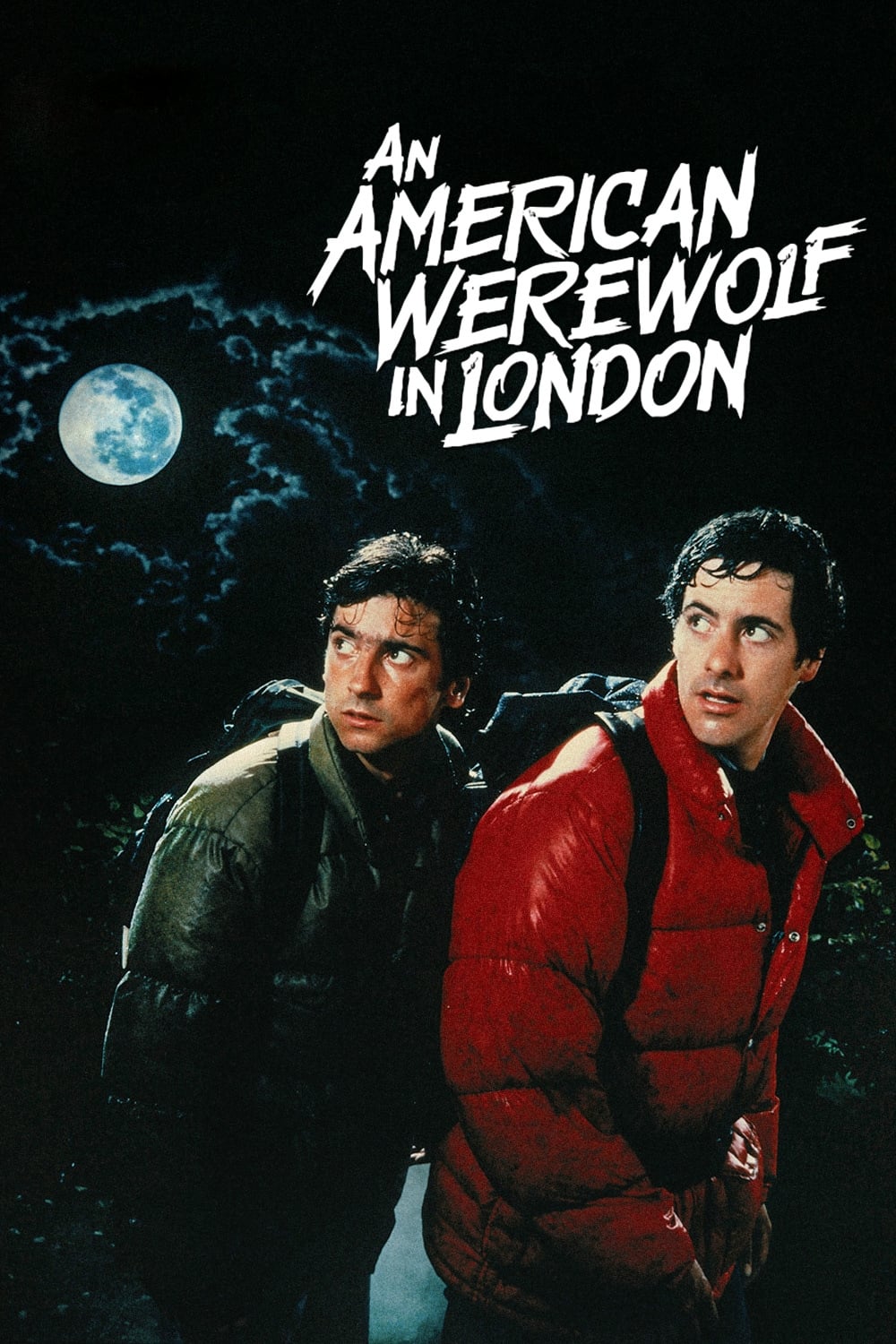
The Question of Truth Behind the Film
Stepping out of the chilly London night after seeing “An American Werewolf in London” for the first time, I found myself unexpectedly preoccupied by an odd question: why do so many people—even with wildly supernatural stories—start wondering if there’s a hint of truth behind them? In my experience, any film that chooses a real-world setting, especially one so palpably alive as John Landis’s vision of 1980s Britain, tends to draw whispers about authenticity. For me, it’s as if audiences instinctively search for the seams between fact and invention, hoping that the shocks and pleasures they witness play out in some shadowy historical footnote. I know I’m not immune to this. When I discover that a narrative claims roots in “a true story,” my approach to the film subtly changes: every odd detail, bit of dialogue, and dramatic twist prompts me to ask, “Did that actually happen?” There’s a certain charge that comes from this possibility, as though the screen becomes a portal to something previously unknown, or at least newly contextualized. With “An American Werewolf in London,” I’ve encountered a peculiar tension: the genre cues me to expect pure invention, yet the specificity of setting and cultural backdrop urges me to look for the truth beneath the transformation. This tension—between wild supernatural spectacle and familiar rainy reality—makes me question where my fascination with “based on real events” originates. Do I crave reassurance that the world is as uncanny as these tales suggest? Or am I simply drawn to the act of deciphering what’s real in a world made of illusions? Knowing that, I’m much more attuned to every narrative choice and historical allusion woven through the story, searching for that elusive thread of fact within the cinematic tapestry.
Historical Facts and Cinematic Interpretation
When I set out to trace the factual roots of “An American Werewolf in London,” what I find isn’t a concrete incident, but something more ephemeral: cultural folklore, urban legend, and the collective memory of old fears. Unlike some dramas that draw directly from headline events or public archives, this film seems to inhabit a liminal space between inherited stories and imaginative excess. I notice that the scaffold of the narrative—two American tourists attacked on the Yorkshire moors, a supernatural infection, a haunted cityscape—feels tethered to the centuries-old tradition of werewolf myths, not to any documented occurrence. Yet, Landis’s invocation of historical and contemporary British environments, from rural villages to bustling urban hospitals, anchors these impossible events in a world I recognize. For me, that is no accident. The film excerpts not only the “facts” of place but the patterns of folklore that flow through those places. When details like the Slaughtered Lamb pub, with its wary locals and mismatched decor, pop up onscreen, I catch echoes of stories told in hushed tones—tales of outsiders stumbling across old curses or ancient terrors. The historical accuracy here isn’t one of dates and persons, but of atmosphere and collective anxiety. I see an intentional condensation of centuries of legend into a single fevered—and fiercely cinematic—evening. So, when I try to assess what’s “true,” I end up charting how the facts of lived English history (the foggy roads, the hospital bureaucracy, the wary glances of villagers) become platforms for legends to spring to life, rearranged for contemporary storytelling. What I often miss, on a first watch, is how the real details are reshaped to sustain the internal logic of the supernatural tale: police procedures are compressed, medical discourse is stylized, and rural life is rendered with just enough specificity to keep me guessing about what might be lurking outside the edges of ordinary experience. It’s a blend that feels deliberately ambiguous, and I find myself respecting how the film never claims to be a docudrama, but allows shadows of the “real” to creep in at the corners.
What Changes When Reality Is Shaped for Cinema
I’ve long wondered about the quiet alchemy involved when filmmakers adapt real history—whether explicit or implied—into the heightened world of cinema. For me, the process is less about distorting facts, and more about arranging them for maximum narrative impact. In the case of “An American Werewolf in London,” that means foregrounding recognizable English settings and ordinary routines against extraordinary happenings, using small factual anchors to make the implausible feel oddly plausible. I notice how choices about pacing, character, and setting become points where reality is bent: time compresses, events converge, and the logic of dreams infiltrates daily life. Instead of flinching at those changes, I see them as vital trade-offs. Practically, there’s no way a two-hour film can present every complexity of cross-cultural travel or local British governance, nor should it try. Instead, moments like David’s diagnosis in the hospital—or his bewildering run-ins with the London police—are intensified or shortened, not out of disregard for accuracy but in the name of momentum. In my analysis, these decisions are about clarification: trimming away inessentials to sharpen what the film wants me to feel in the moment. The supernatural premise demands a briskness and internal logic that might frustrate a historian, but which allows the deeper, archetypal patterns to emerge. I see how the authenticity of experience often trumps literal accuracy: the discomfort of being a foreigner, the blending of horror and absurdity, the cyclical nature of folk legend buried just beneath the surface of the everyday.
Through this lens, it’s clear to me that the film isn’t attempting a precise reenactment or a measured social history. Instead, it juggles what’s credible in the setting—the omnipresence of authority, the banality of hospital waiting rooms, the pub’s chilly reception—with deliberate stylizations. The boundaries between nightmare and waking world blur, and I recognize this as a conscious trade-off. For instance, the seemingly mundane excursions through the London Underground become freighted with menace, transforming a real location into a stage for primal fears. Yet, the presence of English public institutions—displayed with a certain dry literalness—grounds the story for me, even as werewolves stalk through the Tube. What changes when reality is shaped for cinema, I’d argue, is not just the content but the register: fact is repositioned to serve affect, and the emotional clarity of the film outweighs granular accuracy. It’s an exchange I notice even more sharply in genre filmmaking, where myth and memory intersect in ways that are both selective and revealing.
Audience Expectations and the “True Story” Label
Whenever I watch a film labeled as “inspired by true events,” I can feel my mode of engagement shift almost immediately. Authenticity becomes a kind of currency—whether earned or borrowed—with a pronounced effect on how I interpret the action onscreen. In my experience, if I believe I’m seeing a literal retelling, I scrutinize each twist, hunting for fidelity to history and expecting the possible over the improbable. But when a film is openly fictional, I find myself embracing more ambiguity, allowing imaginative leaps and genre conventions without the burden of “truth.” With “An American Werewolf in London,” the lack of any overt claim to factual inspiration liberates me to read the film on its own mythic terms. I focus less on whether the events could or did occur, and more on how the juxtaposition of everyday reality and supernatural horror accomplishes its effect.
That said, the lines can blur. The film’s evocative rendering of real settings, from the London streets to the bleak countryside, makes it easy for me to slide into supposing there’s something beneath the surface—an older folklore, a kernel of collective trauma. I’m aware that knowing something is fabricated doesn’t prevent me from seeking hidden truths within it; if anything, it sharpens my eye for subtext. When a film is presented as “factual,” I become a fact-checker; when it’s labeled “fictional,” I become a folklorist or a psychologist, searching for resonance and suggestiveness. The “true story” label, for me, acts as a signpost, instructing me on how literally or metaphorically I should read what’s unfolding. With “An American Werewolf in London,” where verisimilitude is used as texture rather than claim, I end up focusing more on what the film evokes—fear of the unknown, alienation in foreign lands, or the persistence of legend—than on what it reports.
I also notice that different audience members around me have their own thresholds for belief and tolerance for ambiguity. For some, the absence of a true story foundation seems to lessen the film’s impact, while for others, it frees the filmmakers to pursue bolder, more unpredictable lines of storytelling. From my vantage point, fiction can sometimes be more emotionally truthful than literal reenactment. The lack of a “true story” label on “An American Werewolf in London” invites me to consider what it means that we search for meaning even in pure invention, and to question whether the desire for factual accuracy is itself a kind of mythmaking—a need to see the world as stranger and more interconnected than it might actually be.
Final Perspective on Fact vs Fiction
My ongoing fascination with “An American Werewolf in London” lies precisely at this boundary—between what I know to be constructed and what feels borrowed from history. For me, films like this don’t rise or fall based on their historical precision so much as on how deftly they play with my knowledge and expectations. The awareness that the story is fictional, rooted in myth rather than in journalistic record, shapes the way I relate to its narrative turns and emotional beats. I find that instead of distancing me, it encourages me to look for broader truths: not “Did this happen?” but “Why do we keep telling ourselves stories like this?” The recognition that I am watching an elaborate fiction—albeit one furnished with authentic details—makes me conscious of my own interpretative habits. I become attuned to symbols, recurring patterns, and cultural anxieties made flesh in cinematic form.
At the same time, I’m aware that the tangibility of the film’s Britain—the rain-slick pavement, the wary glances in country pubs—grounds the story in a shared reality. This pushes me to see the film not just as an isolated fantasy, but as a response to collective fears and suppressed histories. I’m reminded that every choice in the adaptation process is a negotiation: between the plausible and the fantastic, the known and the imagined, the past and the present. My reception of the film is not dictated strictly by the presence or absence of historical fact, but by how these elements inform and challenge each other within the narrative. For “An American Werewolf in London,” reality is the base note, with legend and invention providing the harmonics.
When I reflect on how much my understanding of this film is colored by what I know (or don’t know) about its factual origins, I see that awareness as a lens, not a verdict. It changes how I watch—what I look for, what clues I chase, what meanings I’m open to discovering. To me, the real value comes not from judging the film’s success at “accuracy,” but from noticing how my own relationship to stories evolves in response to their claims (or refusals) of truth. In the end, “An American Werewolf in London” reveals to me not only the enduring power of urban legend, but also the subtle ways that cinema, fact, and fantasy continually intersect in shaping how I understand what it means to be haunted—by history, by culture, and by the wildness of imagination itself.
For additional context, you may also explore the film’s overview and how it was received by audiences and critics.