
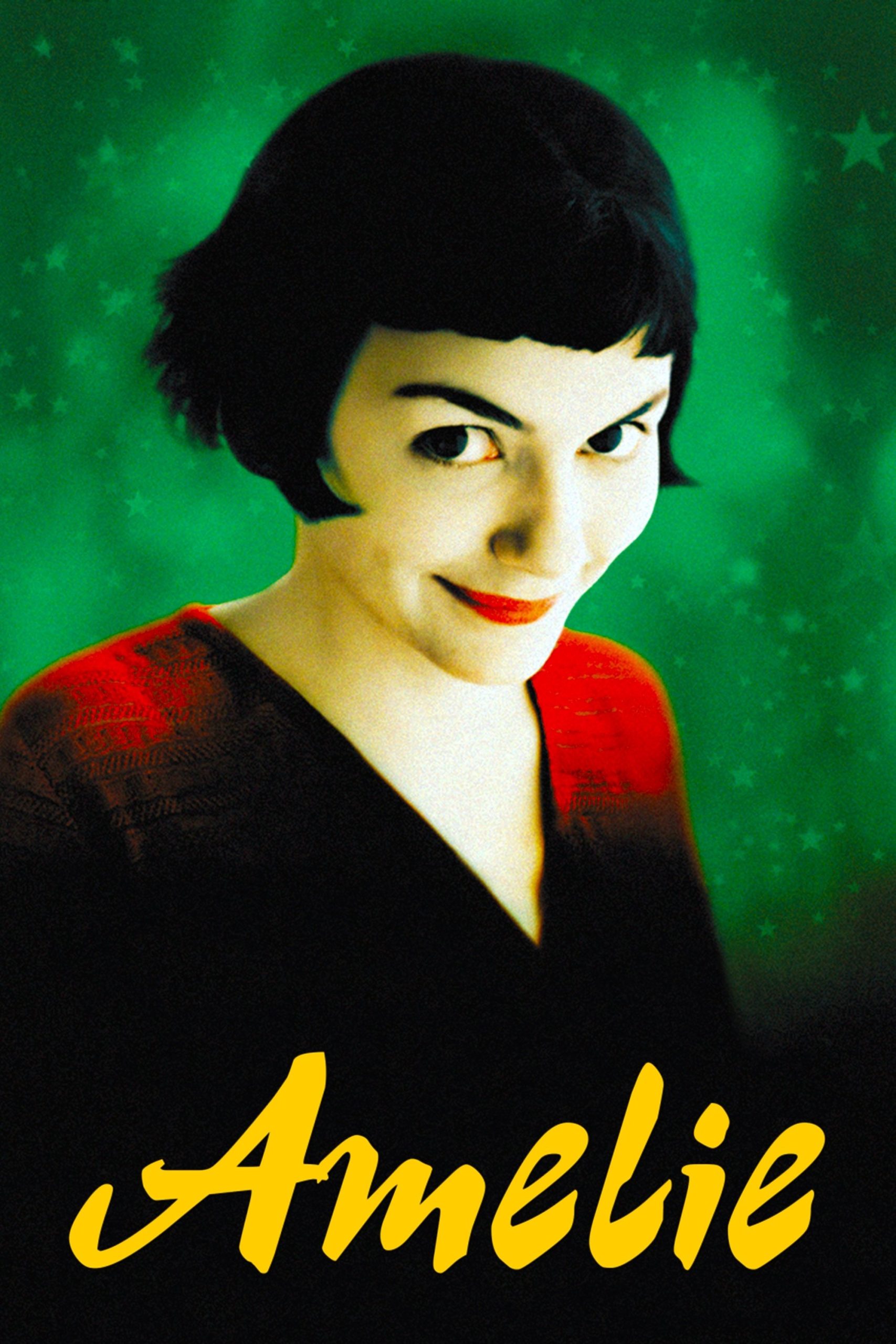
Is This Film Based on a True Story?
The first time I watched Amélie, I was completely taken in by its quirky charm, overbright colors, and magical depiction of Paris. However, as someone deeply interested in the origins of film narratives, it’s only natural for me to ask whether such an enchanting story is rooted in reality or fantasy. To answer plainly: Amélie is a wholly fictional film, not based on true events, real people, or any specific documented history. Its protagonist, Amélie Poulain, is an original creation, as are her experiences and the whimsical elements that swirl around her existence. This film occupies the territory of artistic invention rather than biographical retelling or adaptation of real-life occurrences. My own research into French cinema from this period confirms that there was neither a famous Amélie Poulain nor a legendary Montmartre figure who inspired a story of this nature. Instead, the film stands as an invention of director Jean-Pierre Jeunet and his co-writer Guillaume Laurant, reflecting an imaginative vision of Parisian life untethered from the specifics of actual events.
The Real Events or Historical Inspirations
When I dug deeper into the origins of Amélie, I found that, unlike some films set in recognizable historical contexts or based on memoirs, there is no single real event or documented person that sparked this story. No newspaper clippings, biographies, or oral histories point to a source. Rather, the inspirations at play belong to the realm of mood, aesthetic, and tradition—particularly the cinematic and cultural iconography of Paris itself. For example, while Amélie’s Cafe des 2 Moulins actually exists in Montmartre, the bustling scenes shot there serve more as a tribute to the neighborhood’s spirit than a recreation of factual events.
It’s tempting to wonder if the film might have been inspired by tales of reclusive yet imaginative Parisians or charitable acts that changed lives quietly behind the scenes, given how intimately it portrays its characters’ inner worlds. But as I examined interviews and production notes, I realized that the creative team drew from the lineage of French whimsy—echoing the works of Jacques Tati and Marcel Carné, where ordinary locales become grounds for the extraordinary. Jeunet has spoken about being influenced more by artistic predecessors and a general nostalgia for a romanticized Paris than by any specific person or document. The closest parallel I could find were references to the silent comedy and poetic realism streams that have long enchanted French filmmakers, but never a direct factual inspiration.
What often gets mistaken for realism in Amélie—the intimately rendered local details, the cast of unique characters—reflects a broader tradition of French storytelling, rather than evidence that the events actually happened. This is an imagination at work, blending bits of observed life with a heavy dose of fabrication. In my experience dissecting true-story adaptations, Amélie is distinct in how it conjures a world so believable and detailed that it feels rooted in possibility, even though it remains untouched by documented fact. The film’s devotion is to mood and feeling more than to chronicling anything from the public record.
What Was Changed or Dramatized
When considering films “based on a true story” or “inspired by” real life, I’ve often had to compare what was altered, condensed, or invented for dramatic effect. In the case of Amélie, since the narrative does not stem from a factual base, every element is in essence a dramatization or invention. That being said, I think it’s important to highlight the specific ways the filmmakers shaped their fictional world to mirror (and consciously diverge from) real life, thereby achieving their particular storytelling goals.
One area where I noticed deliberate stylization is the film’s treatment of time and Parisian geography. Real Paris, as anyone who has wandered its streets will attest, is more gritty and complex than the film’s romantic, candy-colored vistas. Montmartre appears almost as an enclosed village—a sentimental microcosm presented through exaggerated hues and glowing lights. The characters populate this setting with equally heightened personalities. Amélie herself is deeply introverted, with an inner life that borders on the surreal; she engineers small missions of kindness that, while heartwarming, often unfold with the logic and timing of a fairy tale.
Another element that felt heightened, even fantastical, was the film’s use of magical realism. Garden gnomes travel the globe, goldfish give mournful looks, and the screen pulses with dreamlike imagery. As someone who’s analyzed films based on life stories, I can say with certainty that such flourishes are not grounded in any historical record, but instead belong entirely to the realm of storytelling artifice. These touches serve to distance the story from anything remotely documentary-like. What might at first appear as an idiosyncratic portrait of an actual woman reveals itself to be a constructed fable. Even the intimately observed minor characters have no counterparts in census data, court records, or documented memoirs—they are products of screenwriting creativity.
I’m also struck by the film’s intentional avoidance of broader historical context. Set in a recognizable contemporary Paris (at the time of its release), Amélie pays little attention to the markers of real-world current events, politics, or economic strife. The world outside Amélie’s immediate sphere rarely intrudes, creating a bubble in which small personal quests take on epic proportions. This is story as selective lens—a clear signal to me that the filmmakers weren’t interested in historical reconstruction but rather in creating a self-sustaining universe.
Historical Accuracy Overview
Given all this, when I set out to evaluate the historical accuracy of Amélie, I find myself in the unusual position of confirming its deliberate artifice. Unlike films where I can cross-reference scenes with archival material or memoirs, here accuracy is a matter of internal coherence to the film’s own imaginative premise rather than adherence to actual events or people.
On the question of setting, though, I do see glimmers of “accuracy” if one thinks of the ambiance of Montmartre rather than specific events. The cafe is real, and the film includes genuine locations across Paris, filmed in situ. The little details—like the pleasure of cracking a crème brûlée or skipping stones on a canal—are undeniably a part of contemporary Parisian life. Yet, the specific circumstances of the characters, their backstories, their connections, and most crucially their ultimate fates, are pure invention. There is no historical evidence to suggest otherwise: Amélie’s search for meaning and her acts of secret kindness are narrative devices, not records of a documented life.
For me, evaluating “accuracy” here means distinguishing between the authenticity of emotional or cultural texture and the presence of verifiable fact. Amélie’s world resonates emotionally with audiences, including myself, who have experienced the idiosyncrasies of urban living, the power of imagination, and the small dramas that color everyday life. Yet, I have found no credible record—no contemporary news articles, legal cases, or diaries—that point to even a loose basis in reality for the narrative’s core events or characters. Filmmakers have confirmed as much in interviews; they sought to evoke feeling rather than document fact. Unlike biopics that blend fiction with recognizable anchors in history, Amélie floats free from the constraints of accuracy measured against known events. Its only “accuracy” lies in its heightened expression of a sensibility, not in the specifics of true history.
How Knowing the Facts Affects the Viewing Experience
Personally, learning that Amélie is not a true story shattered none of its magic for me—if anything, it deepened my appreciation for the inventiveness and artistry required to conjure an entire world out of air. As someone who often watches films with an eye toward fact versus fiction, I found it liberating to approach this film without the usual burden of verifying details or tracing real-life counterparts. Knowing that all the whimsy—the globe-hopping gnome, the secret box, Amélie’s Rube Goldberg-style machinations—is the product of freewheeling imagination allowed me to relax into the narrative on its own terms, savoring its depiction of possibility and wonder.
For viewers who, like me, are frequently drawn to films “based on a true story” for the way they bridge fantasy and history, my understanding here shifts priorities: rather than mining the film for hidden references or weighting its events with extra significance because they “really happened,” I can instead marvel at its construction as a modern-day fairy tale. The film’s emotional truth—the sweetness of small gestures, the longing for connection, and the bittersweetness of unspoken love—remains undiminished by its fictional foundation. For me, the purpose of knowing the facts is not to debunk, but to recalibrate my approach to the art: Amélie aims not for documentary realism, but for a resonance that feels emotionally real, even if the plot is pure fantasy.
In my work, I sometimes observe disappointment from audiences when a film turns out to be less “true” than assumed. In the case of Amélie, though, I sense the opposite: the film’s magic relies on its invention, its willingness to transform the mundane into the miraculous. Knowing that Montmartre’s characters are not drawn from any historical ledger frees me to see them as universal archetypes—neighbors, strangers, would-be lovers—animated by the particular vision of their creators. It pushes me, as a viewer, to engage with the film in the spirit of play, to allow myself to be swept up in its narrative possibilities rather than constraining my expectations to what “really” happened.
Ultimately, I find value in this type of transparency. Recognizing that the events of Amélie are not drawn from the archive clarifies that its project is not one of history lesson, but of storytelling. Every choice—from color palette to character quirk—becomes a testament to the freedom of the filmic imagination. For me, the richness of the viewing experience derives not from discovering hidden truths, but from being welcomed into an exuberant, handcrafted world where ordinary life is rendered extraordinary—no source material required.
After learning about the film’s origins, you may want to see how audiences and critics responded.