
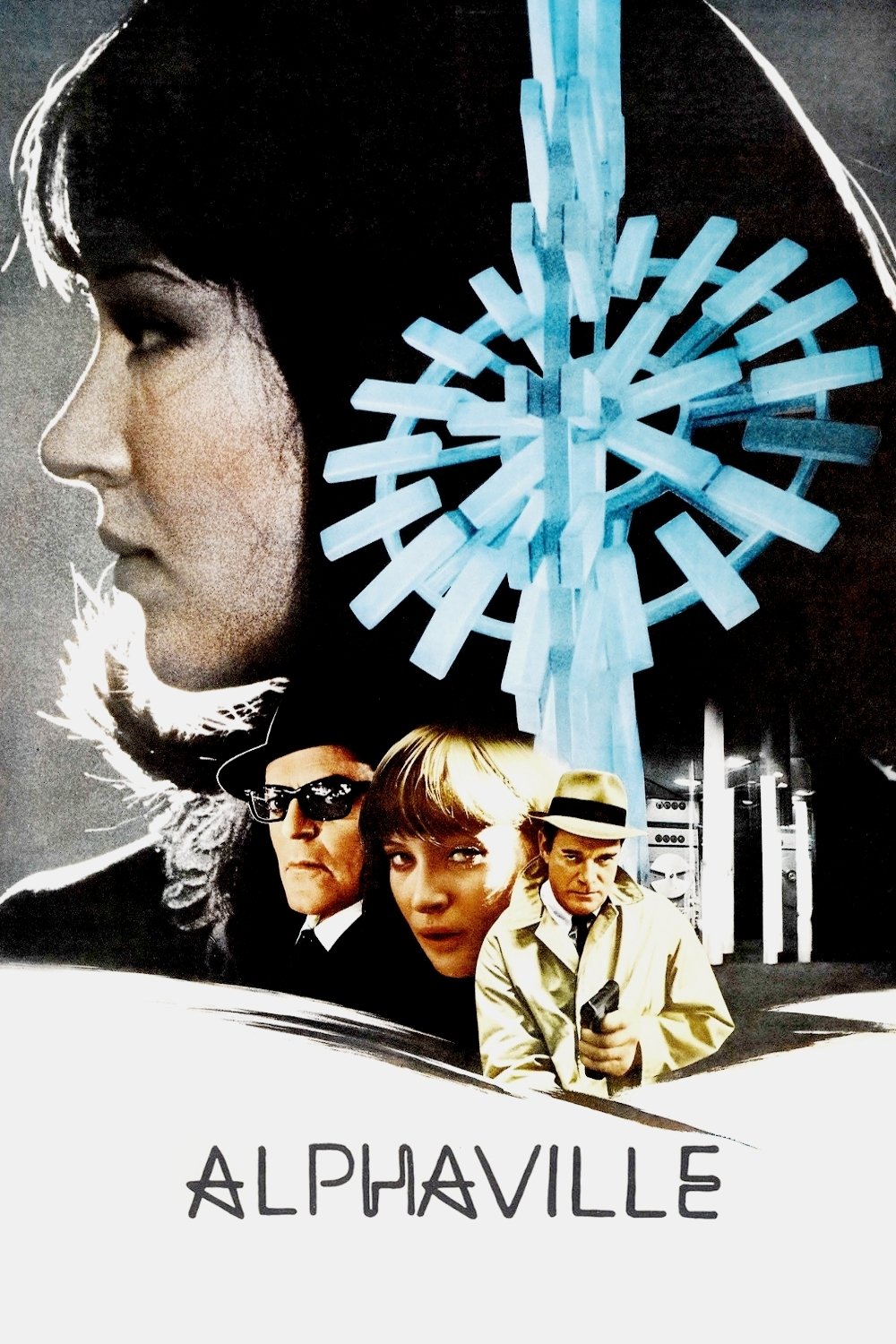
Is This Film Based on a True Story?
When I watched “Alphaville,” I couldn’t shake the feeling that I was wandering a world simultaneously familiar and deeply alien—a Paris that became unrecognizable, twisted through the lens of science fiction. Yet, no matter how evocative its settings or how haunting its dystopian vision, my research has shown that “Alphaville” is an entirely fictional film. It isn’t based on any singular real event, nor does it directly reconstruct the life of a real person. There’s no verifiable moment in history where an investigator like Lemmy Caution took on a sentient, dictatorial computer in a repressive future city. The narrative, characters, and setting emerge from imagination, albeit laced with subtle references and inspirations pulled from both literature and the anxieties of the era in which it was made.
The Real Events or Historical Inspirations
When I dove deeper into the making of “Alphaville,” it became clear to me that Godard, the film’s director, was far more concerned with reflecting artistic ideas and societal moods than re-telling literal history. The world depicted in the movie is not drawn from any documented real-life dystopia, but I can’t ignore how many elements echo the contemporary fear of technological overreach and authoritarianism. For me, the most tangible connection to the real world came through the way the film appropriates elements from classic detective fiction, specifically the pulp hero Lemmy Caution, originally devised by British author Peter Cheyney. While Cheyney’s stories are themselves works of fiction, their noir sensibility and depiction of lone investigators in corrupt worlds had clear parallels with the broader cultural preoccupations of the mid-20th century: totalitarian regimes, surveillance society, and the destabilizing march of technology.
“Alphaville” also seems to draw from the collective unease surrounding the changing nature of urban life in the 1960s. Watching the movie, I felt an undercurrent of the same existential dread I have seen in Orwell’s “1984” or even Kafka’s writings—books that tapped into real historical trends of rising government control, fear of conformity, and the loss of individual autonomy. But as I see it, these are more thematic inspirations than literal histories. The film’s setting—shot in real Parisian locations but never named as Paris—feels almost mythic, serving as a stand-in for any modern European city undergoing rapid transformation. Godard, through his unique cinematic style, crystalizes and exaggerates these public anxieties rather than recreating specific historical incidents.
What Was Changed or Dramatized
The creative liberties in “Alphaville” stood out to me from the very start. I recognize that Godard did not adapt a pre-existing historical scenario, but the way he transposes Lemmy Caution—a character usually grounded in gritty detective tales—into a futuristic and surreal landscape is, in itself, a radical dramatization. Caution, as depicted in Cheyney’s novels, never battles supercomputers or navigates a city ruled by logic at the expense of emotion. By lifting him out of his familiar genre and into a hybridized, science fiction-noir universe, Godard creates a new context that is wholly imaginative. To me, this act speaks more about the mutability of fictional icons than about factual storytelling.
As I noticed, the architecture and urban geography in “Alphaville” are significant, but their use is purposefully misleading. Godard films in recognizable Parisian locations, yet presents them as the chilling heart of an unnamed technocratic metropolis. The choice to forego futurist set design—not employing elaborate props or visual effects—felt, to me, like a deliberate rejection of realism in favor of abstraction. This choice magnifies the film’s sense of dislocation, as if we are seeing the everyday world distorted by an authoritarian logic. These choices heighten the drama, making the familiar seem uncanny and reminding me that the film is not anchored in direct historical fact but in heightened artistic allegory.
What fascinates me most is the film’s use of the central computer, Alpha 60. The notion of an autonomous, omnipresent artificial intellect policing and controlling every aspect of society is a distortion borne of Cold War-era anxieties. I realize that although computer technology was developing rapidly in the 1960s, no actual system remotely approximated the capabilities depicted in the movie. Rather, Godard amplifies then-current fears about automation, bureaucracy, and dehumanization, dramatizing these concepts for cinematic effect without reference to any direct historical precedent.
Historical Accuracy Overview
Though “Alphaville” contains echoes of its era’s political and societal fears, my assessment is that it doesn’t strive for historical accuracy in the conventional sense. Any similarities to real-world settings, people, or events are more interpretive and metaphorical than literal. The Paris I see on screen is masked as another, transformed through the editing and narrative conceits. The protagonist—a well-worn literary creation—is operating in a world disconnected from his source material’s actual milieu. There is no record of an individual resembling Caution ever playing such a role in world affairs, nor is there documented evidence of a centralized computer intelligence like Alpha 60 existing, either historically or technologically, in the mid-20th century.
I have noticed, however, that the anxieties animating the society of “Alphaville” are entirely historically accurate in the sense that they reflect the mood of the times. The mid-1960s marked a period of profound change: the rapidly expanding reach of computers, the rise of surveillance—themes I find closely associated with governmental power, particularly in the context of the Cold War. Yet, even as these themes were very real, the specifics of Godard’s dystopian vision represent artistic exaggeration, not journalistic reporting.
When I consider the use of contemporary Paris as a stand-in for the city-state of Alphaville, I recognize an approach that sidesteps traditional accuracy in favor of invoking a sense of uneasy familiarity. Godard’s vision, to me, appropriates the textures of real cities while stripping them of precise identity, making accuracy a fluid, subjective quality. Ultimately, though the film may spark discussion about real trends—technological development, bureaucratization, and the erosion of free will—it remains steadfastly in the realm of creative extrapolation, not documented fact.
How Knowing the Facts Affects the Viewing Experience
Understanding that “Alphaville” is a work of fiction, inspired more by mood and cultural commentary than by concrete events, has shaped my appreciation for its artistry. When I first watched the film, unaware of its origins, I kept searching for clues—were the names, the city, perhaps concealed references to some suppressed episode of recent history? Learning that the story is not tethered to real events, but instead is a speculative exploration of society’s potential futures, helped me to settle into the film’s rhythms on their own terms. I found myself liberated to focus on the philosophical questions it raises rather than fact-checking its scenarios.
What’s particularly striking to me is how the film encourages viewers to reflect on the direction of modern life. If I thought “Alphaville” was depicting actual past events, I’d view its narrative as a cautionary tale, warning of future possibilities by drawing from real mistakes. Since it is unapologetically speculative, my experience became less about measuring authenticity and more about examining the metaphorical terrain: What trends or attitudes from the present can be found in this invented world? With the knowledge that reality is only faintly mirrored in its stylized universe, I felt more at ease parsing the allegorical language, and less preoccupied with resolving fact from invention.
Knowing that the Alpha 60 computer is an imaginative construct, not a prescient depiction of actually existing technology, I began to look at the movie as an early meditation on the ethical consequences of technological progress—problems that have since become even more pressing. Godard’s vision, as I interpret it, seemed to be wrestling with what might happen if rationality and efficiency were pushed so far they erased what makes people human. That perspective feels just as urgent today, even if its source is fiction rather than fact.
I also realized how Godard’s casting of real Paris as the backdrop for Alphaville subverts, rather than enhances, historical reality; the suspension of disbelief is key. I found myself oscillating between recognizing familiar streets and being unsettled by their purposeful estrangement. Understanding that this effect is deliberate, not an attempt at recreating the Paris of the 1960s, helped me appreciate the emotional disconnect Godard cultivates—one I’d have missed if I were still focused on the literal fidelity of his representation.
Additionally, being aware that Lemmy Caution is lifted from unrelated detective novels, I found the character’s journey more compelling, not less. The juxtaposition of a noir detective, with his world-weary pragmatism, against an inhumanly rational society, sharpened my impression of the film’s thematic intentions. Knowing that the film’s origins are fundamentally intertextual enriches my reading, drawing attention to the play between genres, rather than any fidelity to real biographies or incidents.
Ultimately, having clarity about “Alphaville’s” origins allowed me to approach the work as a living document of its time—one that channels the hopes, fears, and possibilities surrounding technology and power in the mid-20th century. If anything, this knowledge deepens my engagement, giving me more freedom to interpret the film’s symbolism, narrative quirks, and visual strategies. I can see it as a vivid speculation on where society might go, not a recollection of what society actually was.
After learning about the film’s origins, you may want to see how audiences and critics responded.