
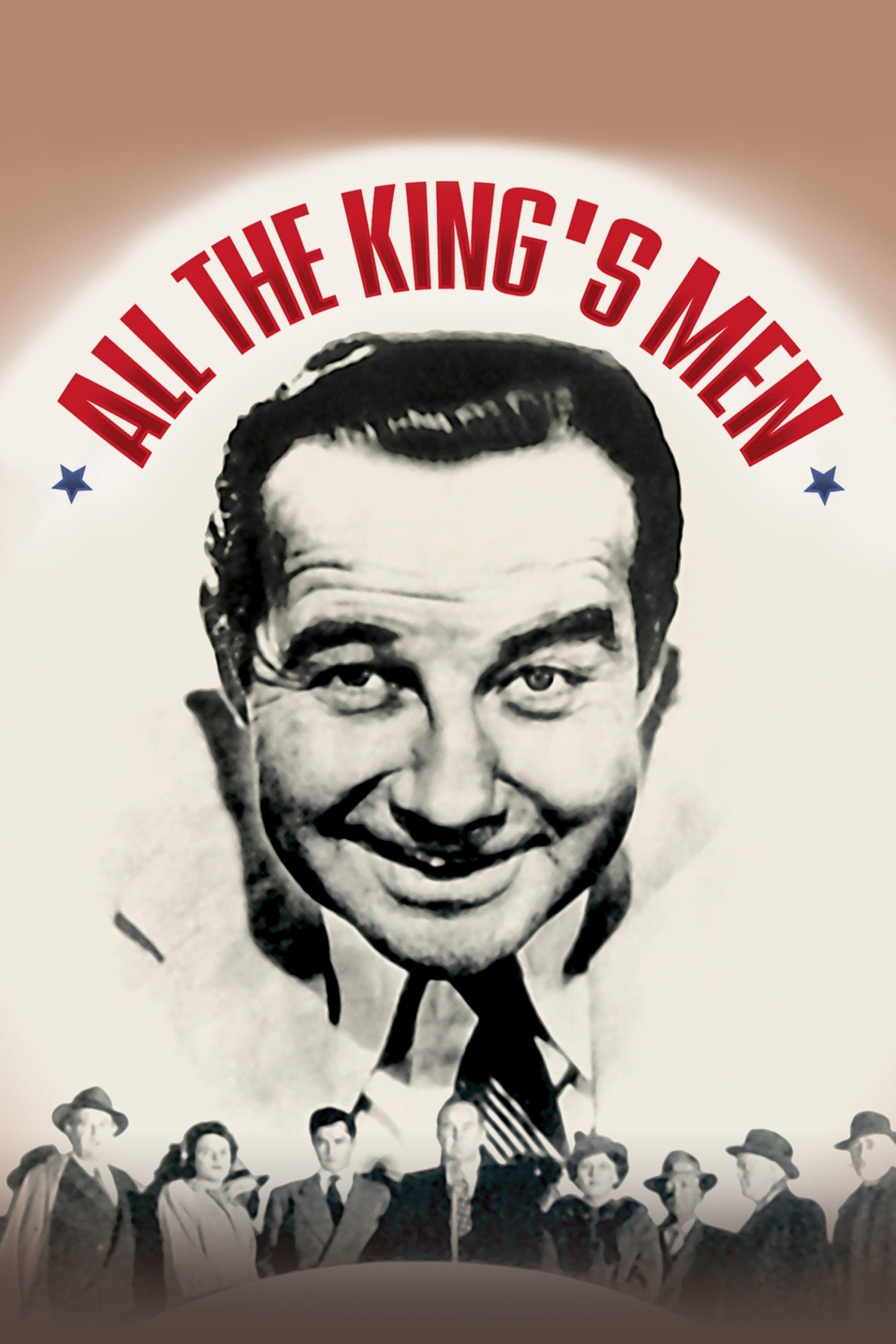
The Question of Truth Behind the Film
Whenever I sit down to watch “All the King’s Men,” I can’t help but grapple with the question: how much of what I’m about to see is a retelling of real events, and how much belongs to the vivid imagination of its creators? There’s something deeply magnetic about the label “based on a true story.” For me, it’s almost as if that phrase grants the film an extra layer of gravity, even before a single frame unfolds. I notice that audiences (myself certainly included) instinctively search for echoes of the real world when a film stakes such a claim; we calibrate our expectations differently, primed to distinguish between creative liberty and fidelity to some factual record. I often catch myself scanning the screen for signs of authenticity—clothing, speech patterns, even historical backdrops—wondering: How much of this is accurate, and how much has been altered for dramatic effect?
I’ve observed that this hunger for “the real” isn’t just about curiosity; it’s also about seeking meaning. When a film presents itself as rooted in actual events, I tend to watch with a more analytical mind, weighing its every depiction not just for emotional impact but also for historical resonance. The assumptions that creep in are subtle: if something is portrayed onscreen, I expect that it must be grounded in research, or at least, in underlying truths. Yet, as I’ve considered with “All the King’s Men,” that expectation can itself be a fiction, blurring the boundary between what really happened and what serves the drama unfolding in front of me. I find that I’m constantly reminded of how audiences like myself often conflate the power of a good story with the legitimacy of “what really happened.” The moment I realize a film is drawing inspiration from real political scandals or larger-than-life personalities, I lean in, subconsciously hoping for insights about the actual world, not just the cinematic one.
Historical Facts and Cinematic Interpretation
With “All the King’s Men,” my own sense of the truth-vs-fiction puzzle plays out most palpably when considering the film’s roots in Robert Penn Warren’s Pulitzer-winning novel, itself a fictionalized portrait of a very real Louisiana politician, Huey Long. While the film never names Long directly, I recognize that its central character, Willie Stark, resonates unmistakably with the controversial governor and senator who left an indelible mark on American politics. For me, this filtering of reality through layers—first into a novel, then into a screenplay—underscores how cinematic interpretation inevitably distills, reshapes, and sometimes distorts the original facts. Even acknowledging the connections, I’m still acutely aware of the film’s selective approach: real events are telescoped into manageable storylines, complex relationships are boiled down for clarity, and historical personalities become composites, more archetype than accurate biography.
I find the process both fascinating and fraught. Whenever a significant political speech appears in the film, a part of me wonders whether I am witnessing an authentic echo of 1930s populist rhetoric or a carefully constructed monologue that aligns more with postwar anxieties than Long’s actual appeals to his constituency. Scenes that unfold with searing emotional power often feel universal, almost mythic, even as they are studded with references that ground them in a particular time and place. To me, this is where adaptation choices become most apparent: timelines are shortened, motivations clarified, and outcomes sharpened to fit the needs of cinematic storytelling. Real life, with its lingering ambiguities and unfinished business, is rarely so accommodating. I recognize that the film has no obligation to function as a documentary, but I remain keenly aware that its streamlined approach consciously discards details that might confuse, distract, or complicate the audience’s emotional journey.
After multiple viewings, I notice that my understanding of “historical fact” is itself shaped by these narrative choices. The film leverages the scaffolding of real political corruption, backroom deals, and Southern populism, but it is not constrained by them. Instead, it reorients them to serve an allegory, a meditation on the intoxicating appeal and corrosive effects of power. As I reflect on the gap between the real Huey Long and the fictional Willie Stark, I see not just creative invention, but a deliberate negotiation: what is gained or lost in omitting entire chapters of a public figure’s life, or recasting his rise and fall in more dramatic, even tragic, terms? These decisions underscore that in transforming fact into drama, the demands of narrative coherence, pacing, and emotional arc necessarily reshape reality into something new—maybe not less true, but certainly no longer literal.
What Changes When Reality Is Shaped for Cinema
I often think about the unavoidable friction that arises when filmmakers translate historical events into cinematic language. In my viewing of “All the King’s Men,” this tension is present in almost every story beat. Historical precision offers a certain kind of rigor, yet the language of film is one of abstraction, symbolism, and—above all—emotion. When the film distills Willie Stark’s complex, years-long evolution from idealistic reformer to compromised demagogue into a brisk series of turning-point moments, I see the trade-offs at play. It’s as if two clocks tick in different rhythms: the measured, unpredictable tempo of real life versus the tight, calibrated machinery of a feature film.
What fascinates me most is how these changes are not simply cosmetic, but structural. The motivations of characters become clearer, sometimes more virtuous or more villainous, and the thematic arcs crystallize in ways that real life rarely permits. While the actual story of Huey Long is littered with contradictions and unresolved questions, the film version of Willie Stark is constructed with a narrative logic that rewards the viewer with payoffs, foreshadowing, and closure. I watch these carefully plotted trajectories and reflect on how they affect my comprehension: ambiguity is dialed down, and the thorny complexities of political coalitions, legal maneuvers, and public opinion are tidied away in service of a streamlined story. What’s left is often more accessible, more potent, but undeniably less “messy” than the world outside the theater.
This process, I’ve come to realize, is a matter of necessity as much as choice. The act of compressing sprawling events into a two-hour runtime means only a handful of moments, relationships, or dilemmas can be fully explored, and so the film’s version of history becomes an interpretive act. Each omission or simplification is not just a loss, but also a recalibration, aiming to focus audience attention where it is most emotionally or thematically resonant. When I see the dramatic confrontations heightened—betrayals, revelations, fatal consequences—I understand these not as exaggerations but as distillations, intended to pin down the intangible energies that shape public life. For me, this awareness tempers my expectations: I am watching something shaped by reality, but not enslaved to its every detail.
Audience Expectations and the “True Story” Label
Whenever I encounter the “true story” label, my perception shifts almost instinctively. “All the King’s Men” never opens with a direct assertion that what I’m about to witness is a literal biography, yet the film’s context and source material create their own set of expectations. I find myself scrutinizing its events more closely, interpreting dialogue as possible historical record, and searching for what might be subtly borrowed from political headlines. There’s a kind of contract that arises between me and the film: if it leans on real events or real figures, I demand a certain level of adherence, even as I grant leeway for dramatization.
I’ve learned that the degree to which a film claims authenticity deeply colors the audience response. If something is marketed as “inspired by real events,” I approach it more skeptically, aware that the boundaries of invention are broader. Conversely, a straightforward claim of fact signals to me an invitation to judge—but also to trust—what unfolds as a documented version of history. In “All the King’s Men,” the murkiness between inspiration and invention means I occupy a space between these poles: never fully convinced, yet always half-expecting the film to intrude on the territory of documentary truth.
This uncertainty influences not just my aesthetic experience, but also my retrospective sense of what the film “means.” If I believe that what I am watching genuinely happened, each scene carries the extra weight of lived consequence; the lessons or warnings embedded in the story deposit themselves more firmly. If the film’s relationship to history is looser, then the insights I glean feel more general—fables about ambition or morality, rather than hard-won lessons from actual people. I admit that this dynamic often pulls me in two directions at once: part of me wants the clarity and safety of factual retelling, part of me is seduced by the untethered creativity of fiction. In every viewing, I see how other audience members, too, bring their own hunger for truth to the film, expecting it to either confirm or complicate what they thought they knew about the past.
Final Perspective on Fact vs Fiction
Reflecting on my repeated encounters with “All the King’s Men,” I am more aware than ever that my reactions are shaped not just by what happens onscreen, but by how closely I believe it cleaves to the real world. The film’s ambiguous dance between history and storytelling doesn’t so much diminish its impact as refract it through different lenses. When I watch with the knowledge that Willie Stark is a stand-in for Huey Long, I catch echoes of American populism, political reform, and corruption filtered through a real-life prism. Yet, unbound by strict accuracy, I also encounter a more universal meditation on the temptations of power—an allegory that remains relevant independent of its factual scaffolding.
For me, knowing the factual inspirations behind the film adds layers but never prescribes meaning. I am always aware that adaptation involves choice: which events are emphasized, which are omitted, how real figures are transformed into dramatic symbols. This knowledge doesn’t tell me how to judge the film, but it does expand my sense of the film’s ambitions, the pressures it negotiates, and the unique terrain it occupies at the threshold of history and imagination. I admit that sometimes the departure from fact jolts me out of immersion momentarily, yet it also invites me to consider not just “Did it happen this way?” but “Why is it told this way?” That, to my mind, is the more enduring question.
Ultimately, my experience of “All the King’s Men” is enriched—and sometimes complicated—by my awareness of its source material and historical context. Far from settling the issue, it encourages me to watch with a double vision: attuned to both the echoes of real politics and the artistry of filmed narrative. The interplay between the two doesn’t so much resolve as deepen the questions I bring to the film with every viewing. If anything, it reminds me that the line between history and fiction is always negotiated, never fixed, and that my understanding is shaped as much by what’s left out as by what is shown.
For additional context, you may also explore the film’s overview and how it was received by audiences and critics.