
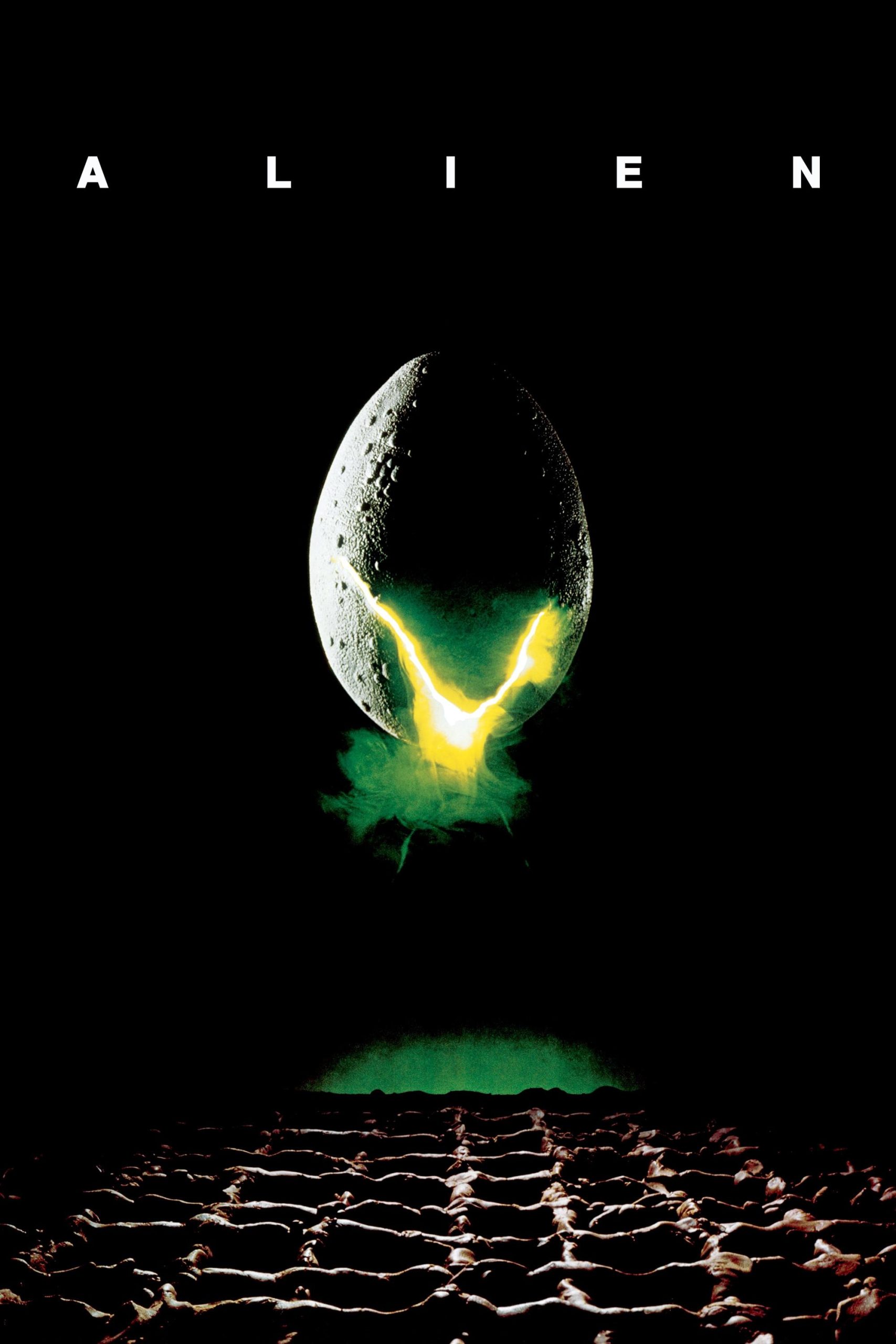
The Question of Truth Behind the Film
I can still remember the first time I watched Alien—how the oppressive silence of space seemed like a deliberate invitation to question not just the story, but its roots in any real human experience. When I reflect on why people (myself included) are drawn to examine whether a film traces its origins back to real events, I see it as an impulse to decode the boundary between what’s possible and what’s been imagined. There’s a powerful allure in the phrase “based on a true story”; it sharply reframes expectations, even before the opening credits roll. I find myself unconsciously ascribing more weight, sometimes even a kind of reverence, to narratives that claim authenticity. The flip side, of course, is a slight buffer of skepticism or detachment when I learn that a film is entirely a product of fictional invention. Whenever I discuss a science fiction classic like Alien with others, I notice that the question of factual origin lingers just beneath the surface, coloring every analytical lens—from interpretations of horror to thoughts about humanity’s relationship to the unknown.
It’s clear to me that labeling a film as “true” comes loaded with assumptions: a promise of accuracy, the authority of lived experience, and an expectation that emotional reactions should somehow be justified by reality. Often, it feels as though audiences (myself included) lean heavily on the idea that truth amplifies meaning, even after the credits have rolled. The simple gesture of placing a “based on actual events” tag at the film’s beginning can silently redirect all avenues of analysis, imbuing meaning to even the smallest details. With Alien, I find myself grappling with these expectations, realizing how much of its power comes not from strict adherence to history, but from its ability to feel eerily plausible despite being set so far from our known world.
Historical Facts and Cinematic Interpretation
When I dissect films that bridge the gap between actual history and cinematic retelling, I see how even the most minor slivers of reality can become something else entirely on screen. For Alien, I’m struck by the reality that the story springs almost wholly from imagination—there is no spaceship Nostromo in the historical archive, no recorded encounter with an extraterrestrial predator. Yet, as I trace the contours of its development, I can’t ignore how its DNA is tangled up with threads of real-world anxieties, technology, and even industrial relations of the late 1970s.
Looking beneath the surface of Alien‘s template, I sense the fingerprints of historical developments and cultural phenomena. The film, as I see it, channels deeply held fears about corporate power and blue-collar exploitation—anxieties that were very real in the labor climate of its time. These themes, while not literal historical events, are drawn from recognizable contexts. I also detect shades of historical literary and cinematic precedents—classics like The Thing from Another World and Alfred Hitchcock’s psycho-sexual thrillers—which are reorganized, compressed, and reimagined through Ridley Scott’s distinct vision.
To me, the reinterpretation process is less about factual condensation and more about extracting emotional truths from the messiness of modern life. Alien never claims to document an actual space mission, but in staging blue-collar workers dealing with corporate indifference and invasive threats, it captures an atmosphere shaped by capitalist structures, technological uncertainty, and fear of the unknown—realities prevalent well outside the boundaries of science fiction cinema. The film becomes a mirror reflecting not historic events per se, but the deep undercurrent of late 1970s cultural and psychological experience. Every creative choice—whether in character depiction, design of the alien monster, or portrayal of space as an indifferent void—reshapes raw context into a heightened, sometimes terrifying meditation on survival and isolation.
When I reflect on this interpretive process, I see the boundary between fact and fiction as porous. Even in the absence of direct adaptation from a “real” story, the film engages with the truths of its era. It’s not a narrative carved from historical record, but an accumulation of cultural anxieties, industrial disputes, and engineering advancements. This all gets filtered and distilled into something that, while fictional, is resonant and immediate because it speaks to actual lived fears and possibilities. So, even in movies that originate entirely in the writer’s mind—as I read Alien—the historical and the imaginative continue to entwine in unexpected, revealing ways.
What Changes When Reality Is Shaped for Cinema
I often marvel at the inherent tension filmmakers navigate when translating fragments of reality—or even broad concepts grounded in real-world issues—into cinematic form. When I observe Alien, I notice that every narrative and visual decision is guided less by historical fidelity and more by the pursuit of visceral narrative coherence. This is particularly clear given the lack of any prescriptive “true story” elements in its construction. Yet, the broader truths it hints at—corporate neglect, class divisions, unchecked technological advancement—are all sharpened in service of the story, rather than being presented in their full, mundane complexity.
What stands out to me as I analyze the film is how adaptation for cinema often necessitates a radical distillation of nuance. In reality, the workplace tensions and institutional failings that inspired the film’s world would be far more drawn-out and ambiguous, full of negotiation and contradiction. On the Nostromo, however, these themes are embodied in the necessity of survival under corporate indifference: the “Company” is remote yet omnipresent, never humanized, always a lurking threat behind the monster. I see this as a trade-off; the film sacrifices granular accuracy for archetype and immediacy. It’s not a depiction of actual industrial relations—instead, it is an emotionally heightened condensation of those dynamics, structured for maximum suspense.
Even the titular alien creature, for all its imaginative otherness, borrows from both scientific speculation and primal fears. There’s no documented organism resembling H. R. Giger’s biomechanical nightmare. Still, the film’s creature design incorporates plausible evolutionary features (parasitism, accelerated growth, predation). When I reflect on this, I sense that the adaptation process weaves factual inspiration together with creative liberty, always prioritizing cinematic effect over adherence to scientific or historical accuracy.
Another facet I find compelling is the manipulation of time and space. Cinema compresses and amplifies: years of institutional neglect become a single, disastrous mission; deep-seated conflicts are packed into terse exchanges between crewmembers. The nature of “truth” changes in that translation. Rather than tracing long arcs or ambiguous outcomes, Alien offers an extraction of potent emotional states—fear, mistrust, isolation—which are easier for audiences to engage with within a two-hour frame.
In my view, this trade-off is neither wholly positive nor negative. It is a practical response to the constraints and dramatic imperatives of cinema. Every time I encounter a film that balances between the familiar and the extraordinary, I’m reminded that no adaptation—whether of history, science, or pure imagination—escapes this dance between fidelity and function. Alien may not document reality, but it operates with rules and symbols that evoke the pressures and uncertainties of the actual world, albeit dramatically heightened and simplified for effect.
Audience Expectations and the “True Story” Label
Each time I sit down to watch a film clearly labeled as “a true story,” I notice how my guard goes up and my analytical response shifts. I bring a host of questions with me: How much of the narrative has been verified? Which details are dramatized? In my experience, the disclosure that a film is drawn from real events heightens skepticism and sometimes even invites research during or after viewing. In contrast, when a film like Alien is presented as pure fiction, my focus feels more elastic—freed from the need to fact-check, I allow myself to be absorbed in the mechanics of the world-building and the rules of the universe.
For me, the absence of any “true story” marketing around Alien clears space for a deeper engagement with metaphor and allegory. I can approach the film with curiosity rather than journalistic scrutiny. At the same time, I’m not entirely untethered from reality; films like this often provoke speculation about plausibility—the practicalities of deep space travel, the corporate structures that might govern distant futures, or the science underlying alien biology. My engagement becomes less about checking boxes of historical accuracy and more about the plausibility and thematic consistency within the world that’s been constructed.
I find it fascinating how audience responses shift depending on the way a film frames its relationship to reality. Films explicitly touting factuality spark debates about distortion, responsibility, and authorial bias, while those occupying the “inspired by real events” space draw intrigue around which elements have been changed or exaggerated. With full-on fiction, such as Alien, viewers toggle between immersion and analysis, often looking for psychological truths or social reflections rather than concrete facts.
Ultimately, I see that the power of knowing—or not knowing—the factual basis of a film deeply influences my interpretive stance. When I approach a story with the assumption of truth, I carry a different type of emotional investment, perhaps even a sense of obligation to respond authentically. With fiction, I give myself permission to read more freely, savoring atmosphere, symbols, and subtext without feeling compelled to relate every beat back to the world as it is. For Alien, this means I’m able to appreciate both the speculative terror and the grounded cultural fears it explores, unburdened by the weight of needing to discern fact from fabrication at every narrative turn.
Final Perspective on Fact vs Fiction
Reflecting on my relationship with Alien has made me acutely aware of how my awareness of a film’s factual origin (or lack thereof) shapes the way I read and interpret every element. In some sense, learning that the film is a work of speculative fiction dissolves concerns over historical “loyalty” and instead sharpens my focus on its symbolic and thematic resonance. I’m more attentive to the emotional choreography—the way the film channels fears of isolation, technological dominance, and faceless authority—because I know it isn’t tethered to any particular moment in the historical record. I become less concerned with accuracy and more attuned to coherence within its invented world.
Yet, I find that even without a foundation in literal truth, the film’s impact can be traced back to real, tangible anxieties. It’s a reminder to me that fact and fiction often intermingle in the cinematic space. The process of adaptation isn’t only about translating one medium or moment into another; it’s also about distilling and amplifying essential truths, whether experiential, psychological, or cultural. When I watch Alien, my interpretive lens broadens—rather than narrowing in on external reality, I reflect inward, considering how the film’s fictional construction lets it speak to my own and our collective fears.
I don’t see this as diminishing the experience. If anything, it opens up new possibilities for understanding how film operates as a vessel for both the imagined and the real. Once I let go of the expectation that a narrative should mirror actual events, I’m able to embrace the ways in which cinematic storytelling reorganizes, abstracts, and retools reality’s textures, distilling them into intense, sometimes overwhelming forms. The absence of direct historicity in Alien allows me to focus on the ineffable: the mood, the existential questions, the persistent sense that beneath the surface of the universe lies a deeper, more unnerving reality. That’s a kind of truth in itself, even if it doesn’t map onto any historical record.
Knowing what’s real or fictional—at least for me—doesn’t just alter how I interpret a film’s meaning; it transforms the emotional landscape within which I encounter it. Alien stands as a testament to the power of cinema to weave together truth and invention, creating something that feels immediate, urgent, and surprisingly relevant, regardless of its origin. As an analyst, I approach it not as a documentarian, but as a participant in the ongoing exchange between what happened, what could happen, and what we most fear might one day come to pass.
For additional context, you may also explore the film’s overview and how it was received by audiences and critics.