
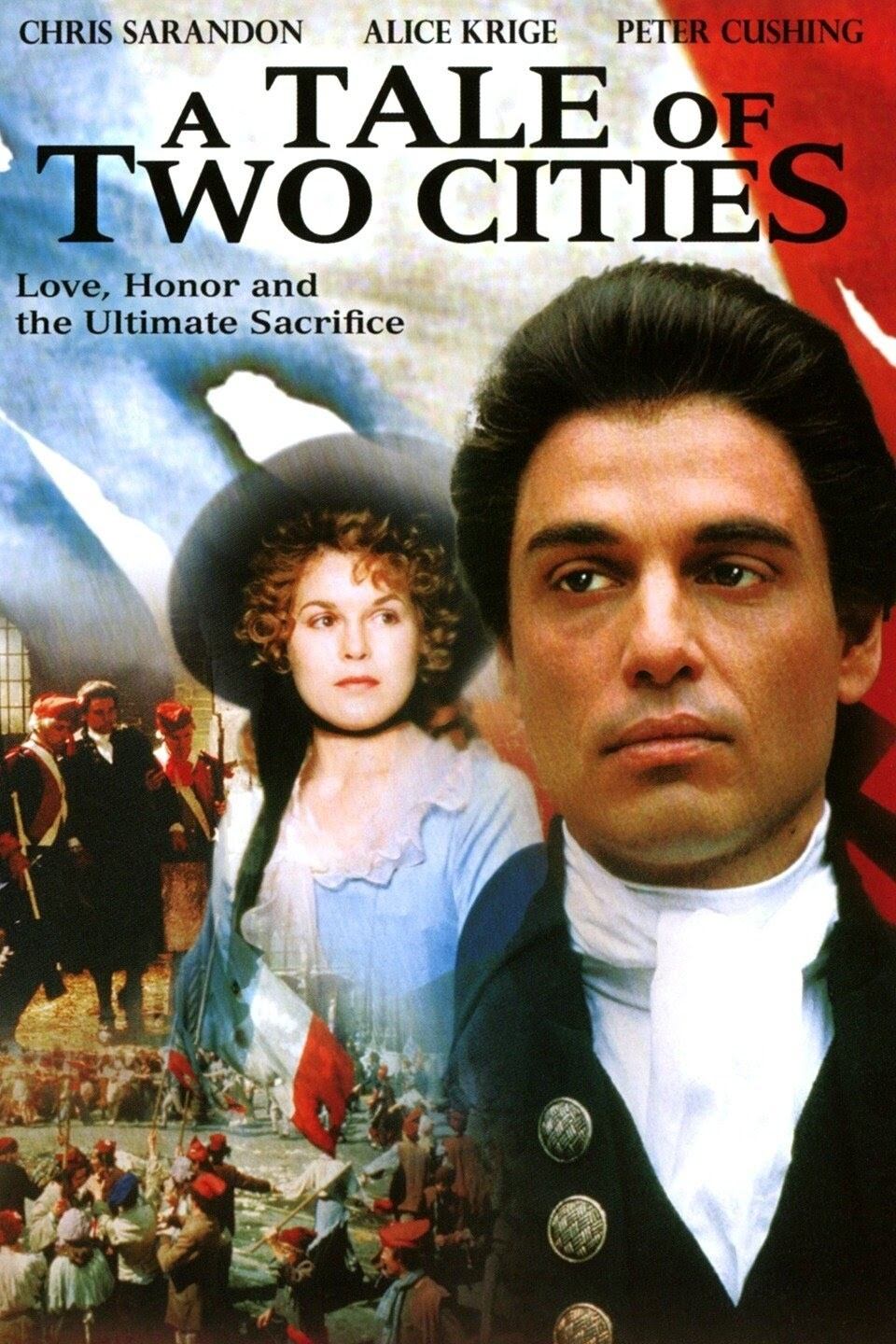
The Question of Truth Behind the Film
When encountering a movie like the 1935 adaptation of A Tale of Two Cities, viewers frequently wonder to what extent the events it portrays are grounded in historical reality. This curiosity is deeply rooted in the way audiences process stories, particularly those set against the backdrop of major world events. The label “based on a true story” or even the suggestion of historical authenticity can prompt viewers to watch with a different set of assumptions, often expecting education as well as entertainment.
Films that allude to real historical periods, especially those involving watershed moments like the French Revolution, naturally invite viewers to question how much of what unfolds on screen is faithful to documented history. There is an underlying belief that movies rooted in fact carry a responsibility to inform as well as to engage. As a result, audiences may approach such films with the anticipation that the people, places, and incidents depicted have a factual counterpart. This can shape not only their understanding of the narrative but also their grasp of history itself, blurring the line between dramatized fiction and documentary truth.
In the case of A Tale of Two Cities, although it is adapted from a well-known novel by Charles Dickens rather than from direct historical records, the genuine historical setting of revolutionary France adds layers of perceived authenticity. Even though viewers may be aware that central characters such as Charles Darnay and Sydney Carton are creations of fiction, the vivid setting, references to actual events like the storming of the Bastille, and the representation of social turmoil create an impression that the film is steeped in truth. This usually leads the audience to grapple with questions regarding the historical accuracy of what they observe—how closely the film reflects the turbulence, fear, and aspirations of the era it depicts.
Historical Facts and Cinematic Interpretation
The 1935 production translates Dickens’s narrative for the screen with a blend of historical backdrop and cinematic creativity. The French Revolution, as presented in the film, is rooted in genuine historical occurrences—the rise of revolutionary fervor, the power of the mob, and the establishment of the guillotine as both judicial and symbolic instrument. Long-standing injustices, such as the persecution and suffering of the lower classes, are drawn from considerable historical documentation. The social conditions, including poverty, starvation, and public executions, were consistently part of the late 18th-century Parisian reality.
Yet, cinematic storytelling requires selection and condensation, resulting in a narrative that foregrounds select themes and milestones from the period. Key scenes depicting the storming of the Bastille or the fervent trial scenes evoke the intensity of revolution but do so within the constraints of time, dramatic pacing, and character arcs. The filmmakers condense years of gradual uprising into a few charged sequences, synthesizing public sentiment and political transformation for clarity and momentum. Additionally, the characters—themselves a fictional construct—function as gateways through which audiences witness the larger historical canvas. Sydney Carton’s act of sacrifice, for example, aligns with themes of redemption and hope but is not extracted from any single documented biography of the revolution.
This approach yields a representation of history that is shaped more by narrative logic than by relentless attention to documentary accuracy. Dialogues, dress, and even public attitudes are filtered through both the lens of Dickens’s 19th-century perspective and the filmmakers’ 20th-century sensibilities. In doing so, the adaptation creates a sense of immediacy and coherence, crafting a depiction of turbulent times that is both evocative and accessible, while ultimately prioritizing storytelling over strict adherence to every historical detail.
What Changes When Reality Is Shaped for Cinema
The journey from historical record to cinematic rendition involves several practical decisions. Even when a film claims a setting or storyline inspired by real events—as with A Tale of Two Cities—the limitations of budget, running time, and audience comprehension shape what appears onscreen. The adaptation process usually centers on certain highlights, notable personalities, or emblematic events, relegating the more complex, slower-moving, or ambiguous elements of history to the background or omitting them entirely.
For the 1935 film, this meant focusing on iconic locations such as the prison of La Force, and dramatizing set pieces like the revolutionary tribunals. The larger, sprawling context of political negotiations, international influences, and the slower burn of class resentment are, by the necessities of the medium, streamlined and often hinted at rather than explicitly detailed. The representation of pivotal moments is crafted to ensure emotional impact, often through artistic choices in lighting, music, or dialogue that would not be commonly found in written historical accounts.
Such transformations serve to clarify motivations and relationships for viewers, sacrificing some of the historical nuance in favor of narrative drive. Real figures from history are condensed into composite characters or interact with fictional protagonists, shaping the viewer’s sense of history into a cohesive but selective vision. These choices are neither accidental nor careless; rather, they reflect the distinct imperatives of visual storytelling, which favors images, dramatic confrontations, and succinct symbolism over exhaustive documentation. In essence, the film provides a version of revolutionary France that is shaped to support its central plot and thematic aspirations—a revolution not just of politics and society, but of personal morality, sacrifice, and hope.
Audience Expectations and the “True Story” Label
The ways in which audiences engage with a film are often guided by the cues provided at its outset: whether it declares itself as factual, fictional, or inspired by true events. When a film such as A Tale of Two Cities openly acknowledges its literary origins and the blending of fact with invention, viewers may adjust their expectations, looking for resonance with real events while remaining alert to the inventions of drama.
Those approaching the film with a focus on its historical setting may take its depictions of mob violence, courtroom proceedings, and revolutionary fervor as an entry point into understanding how people lived and felt during those upheavals, even as they recognize that the principal figures are not historical actors. Others, aware of the original Dickens novel’s metaphorical intentions, might interpret the film as an artistic meditation on historical forces, rather than as a factual chronicle. In each case, the degree to which audiences recognize the creative liberties taken can affect whether they treat the film chiefly as an immersive work of fiction or as a reference point for historical inquiry.
Films that explicitly declare “based on a true story” often invite more critical scrutiny about their representation of actual events. Audiences may search for parallels with real historical figures, or find themselves fact-checking key moments. In contrast, when a film is framed simply as a narrative set during a particular era, the imperative to match exact historical detail is softened, and the focus shifts toward thematic exploration and emotional truth.
The 1935 adaptation, by virtue of its source material and the audience’s likely familiarity with both the French Revolution and Dickens’s work, occupies a middle ground. Viewers may simultaneously appreciate its window onto the era’s atmosphere and recognize the constructed nature of its story. This awareness can lead to a layered reception: admiration for the film’s imaginative use of history without mistaking its inventions for factual record.
Final Perspective on Fact vs Fiction
Understanding the interplay between historical fact and cinematic storytelling does not fundamentally alter the entertainment or emotional value viewers may derive from A Tale of Two Cities. However, awareness of what is factually based and what has been shaped or invented for the screen can enrich, complicate, or even transform the interpretation of the film. Rather than diminishing its impact, this knowledge encourages a more nuanced view, inviting comparison with historical sources and prompting reflection on how stories are shaped to fit the demands of different media.
Knowing which elements are the product of Dickens’s imagination and which are rooted in historical events offers viewers the opportunity to see the film as both a reflection and a reinterpretation of the past. It neither negates the power of cinematic narrative nor the value of historical inquiry; instead, it situates the film within a continuum of storytelling traditions, where truth is sometimes literal and sometimes evocative. The result is a form of engagement that acknowledges both the pleasures of fiction and the insights of history, allowing audiences to appreciate the contribution of each without conflating them.
For additional context, you may also explore the film’s overview and how it was received by audiences and critics.