
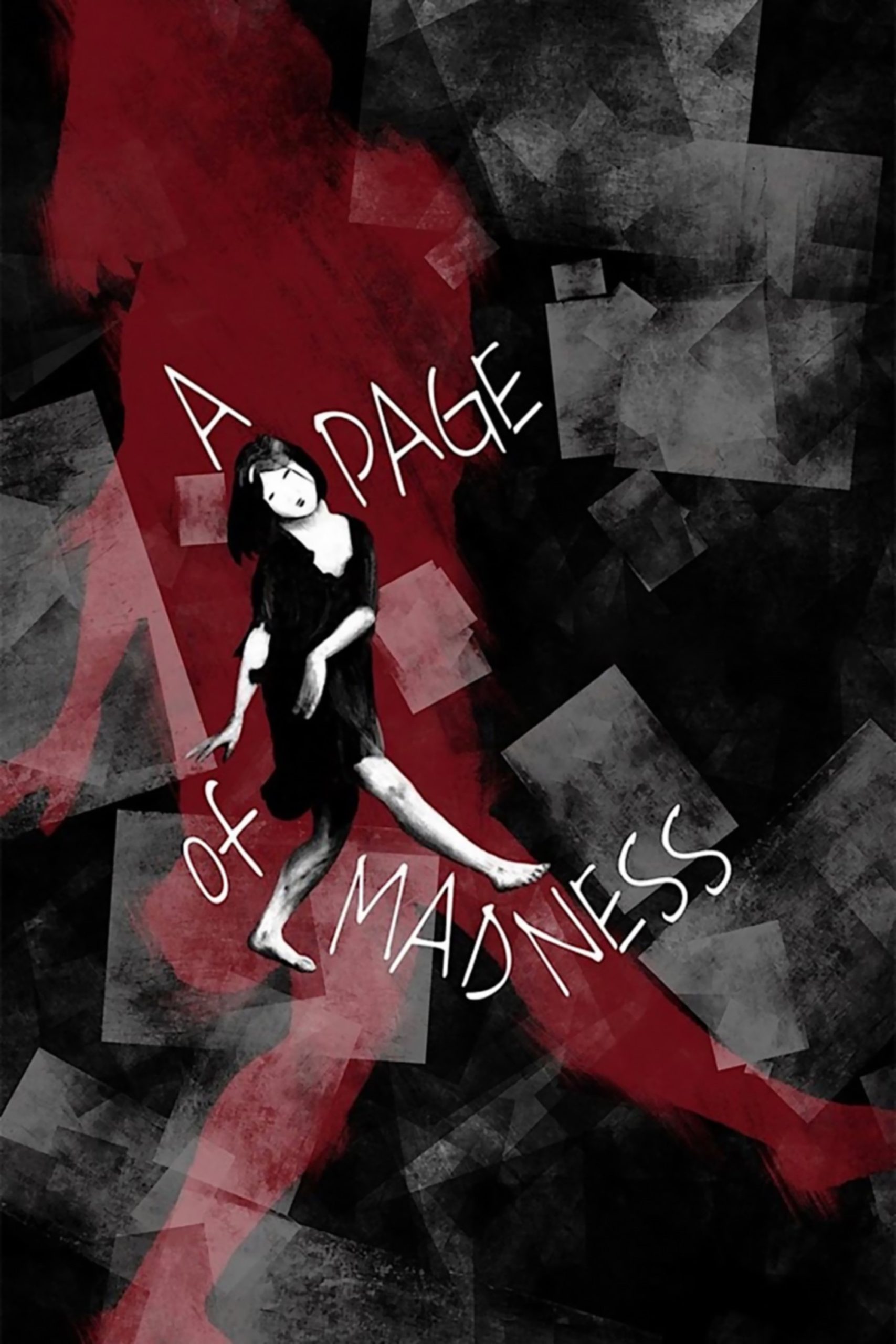
The Question of Truth Behind the Film
When encountering a film like A Page of Madness from 1926, it is common for audiences to inquire whether the story derives from true events or is a purely fictional creation. This impulse stems from a fundamental curiosity about the connection between cinematic art and the world it represents. The label “based on a true story” carries significant weight; it shapes the way viewers approach and interpret the material. There is an underlying assumption that films engaging with factual events hold not just narrative value but also some historical, psychological, or sociological insight about the time and people depicted. Audiences may seek films grounded in reality as windows into distant cultures or periods, or as means to understand extraordinary human experiences through dramatization. This search for truth in cinema is equally an inquiry into authenticity, reliability, and the boundaries of artistic license. When a film is explicitly or implicitly labeled as factual, it invites a different kind of engagement, prompting viewers to question what is documented history and what is invention.
Historical Facts and Cinematic Interpretation
A Page of Madness occupies a distinctive position regarding its factual origin. Unlike films that dramatize specific, well-documented events or real individuals, this work emerges from a context and set of influences that are primarily creative rather than strictly historical. Conceived in Japan by director Teinosuke Kinugasa, in collaboration with the avant-garde writer Yasunari Kawabata, the film draws on broad social realities and institutional atmospheres rather than on direct historical happenings. The setting—a mental asylum—and certain themes reflect aspects of early twentieth-century Japanese society, particularly prevailing attitudes toward mental health, family dynamics, and marginalization.
Despite this resonance with real societal concerns, the narrative structure and content of A Page of Madness are largely a product of imaginative invention. There is no surviving evidence that the story adapts a single real-life case or documented incident. Instead, the filmmakers used the asylum, its residents, and the protagonist’s fractured family as vehicles for an expressionist reflection on alienation and psychological disturbance. The film’s non-linear storytelling, reliance on symbolic and surreal imagery, and absence of intertitles are deliberate cinematic choices that depart from documentary representation. These interpretive strategies transform ambiguous social realities into an experience that is less about reconstructing witnessed facts and more about evoking sensations associated with emotional and psychological states. In this way, fragments of real environments and social dynamics are filtered, condensed, and reorganized to support a more abstract narrative agenda, highlighting cinema’s unique capacity for interpretation rather than transcription.
What Changes When Reality Is Shaped for Cinema
The adaptation of factual or realistic contexts into a cinematic form inevitably involves negotiation between two imperatives: staying close to the lived experiences or documented reality, and constructing a story that functions effectively within the constraints and possibilities of film. This negotiation yields a set of trade-offs. In the case of A Page of Madness, the decision to omit explanatory intertitles and to favor a montage-driven, disjointed narrative results in a depiction of mental instability that is more evocative than strictly explanatory.
Such choices often demand the condensation of time, the amalgamation of multiple real-life figures into composite characters, or the invention of scenarios that serve narrative themes rather than factual progression. Details are sometimes moved, omitted, or accentuated to communicate specific emotions or abstract concepts. The practical result is a work that communicates its message in an intensified, focused way, but potentially sacrifices the intricate particularities that might have marked a direct recounting of real events.
In A Page of Madness, the filmmakers shaped the institutional environment to reflect internal states rather than external realities. The physical space of the asylum is less a meticulously observed re-creation than a landscape of psychological metaphor, structured by framing, editing, and set design to disrupt the viewer’s sense of space and time. The absence of a clear temporal sequence or expository background distances the film from the conventions of both journalistic and dramatic realism. This strategic abstraction can risk muddying the boundary between the social reality of psychiatric institutions in 1920s Japan and the highly subjective reality constructed by the film. However, it facilitates a depiction of experience—particularly madness and familial distress—in a manner that literal representation might not allow. Thus, the remolding of reality for cinema is not simply a matter of adding or subtracting facts; it is a transformation through narrative and aesthetic form, making certain truths accessible at the potential cost of documentary precision.
Audience Expectations and the “True Story” Label
Audience perception is strongly influenced by the framing of a film as a factual account, as an act of artistic invention, or as a work inspired by real situations. This labeling affects both the lens through which viewers interpret character motivations and plot developments, and the standards by which they assess the film’s meaning. When a film presents itself as a direct retelling of verified events, viewers are primed to treat its content as having informational or educational value, sometimes sparking further investigation or debate about accuracy and bias.
A film like A Page of Madness, situated firmly in the fictional realm despite its evocation of real-world phenomena, offers a different kind of engagement. Viewers enter the film’s world with the understanding that narrative and imagery are guided by artistic purpose rather than documentary responsibility. The absence of a “true story” label encourages the audience to see characters more as archetypes or expressions of ideas than as representations of actual persons. The focus shifts to subjective response: how the film conveys mood, perception, or the nature of insanity, rather than whether it faithfully chronicles a particular case.
It is also worth noting that some viewers, upon learning that a film is not grounded in historical reality, may alter their relationship to its content. Scenes depicting suffering, injustice, or social conditions may be interpreted as commentaries or allegories rather than records of specific events. Conversely, knowledge that a film is inspired by real events can intensify emotional reactions, even when narrative liberties are evident. The interplay between expectation and presentation thus becomes central to the cinematic experience, with the “true story” label acting as an interpretive signal that inflects every scene with potential factual resonance or, in its absence, with symbolic or imaginative freedom.
Final Perspective on Fact vs Fiction
Awareness of a film’s historical grounding—or lack thereof—profoundly shapes the interpretive frameworks audiences bring to their encounter with the work. In the case of A Page of Madness, this awareness invites consideration of the film as a sophisticated artistic reflection on issues prevalent in its cultural moment rather than as a reconstruction of particular historical episodes. Recognizing the film as fictional establishes an interpretive distance, allowing viewers to engage more directly with its aesthetic, psychological, and formal qualities without seeking confirmation of its veracity.
At the same time, the recognizable social realities embedded within the film—such as the depiction of asylums, familial estrangement, and mental illness—anchor its abstract narrative in a wider context, enabling those with knowledge of historical attitudes and environments to see correspondences between art and life. Thus, the distinction between fact and fiction does not simply divide films into categories of truth or fantasy; it is a spectrum across which varying kinds of understanding are possible. For some audiences, fidelity to historical detail is central, while for others, the resonance and significance of the invented world may take precedence. Ultimately, knowledge of what is real or fictional informs not only interpretation but also enriches the spectrum of possible responses, fostering a more nuanced engagement with the complex relationship between history and cinematic storytelling.