
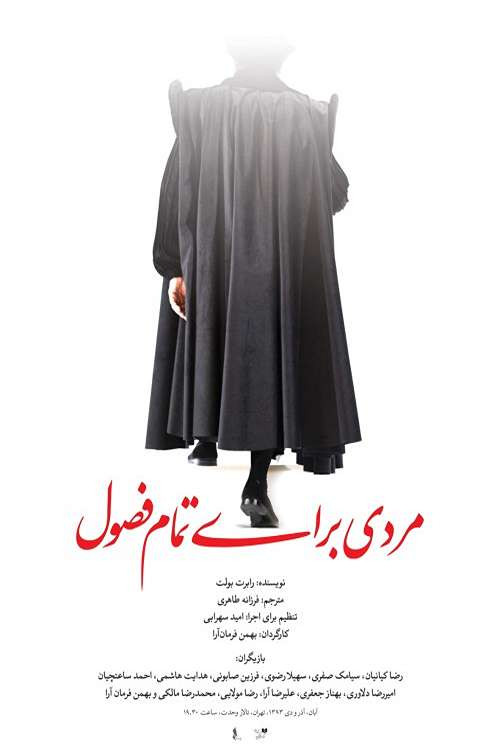
Is This Film Based on a True Story?
“A Man for All Seasons” (1966) is based on real historical events and centers around actual historical figures, chiefly Sir Thomas More. The film dramatizes the conflict between More and King Henry VIII over the king’s divorce and establishment of the Church of England. While the screenplay adapts Robert Bolt’s 1960 stage play of the same name, itself rooted in historical narratives, the portrayal is a blend of fact and dramatic license. In summary, the film is based on a true story but is not a wholly precise account of events.
The Real Events or Historical Inspirations
The primary historical basis for the film is the confrontational relationship between Sir Thomas More and King Henry VIII during the 16th century. More, an English lawyer, scholar, and Lord Chancellor, is celebrated for his opposition to the English Reformation and the king’s rejection of papal authority. More’s refusal to endorse Henry VIII’s divorce from Catherine of Aragon and his subsequent marriage to Anne Boleyn, as well as his rejection of the king as Supreme Head of the Church of England, ultimately led to his arrest, trial, and execution for treason in 1535.
The majority of the principal characters in the film are rooted in historical figures, including Henry VIII, Anne Boleyn, Thomas Cromwell, Duke of Norfolk, and Richard Rich. Their actions are documented in government records, personal correspondence, and contemporary chronicles. Sir Thomas More himself authored several significant works such as “Utopia” and letters that are still studied. The trial and execution of More are well documented in historical archives, including court documents and the writings of chroniclers such as E. E. Reynolds and More’s friend, Erasmus.
Robert Bolt’s original play, adapted for the screen, used historical sources such as Roper’s biography “The Life of Sir Thomas More” by More’s son-in-law William Roper, as well as state papers and accounts from 16th-century English historians. The play and film sought to capture the essence of More’s moral and political stance, his personal convictions, and the peril he faced by placing conscience above royal dictate. Thus, the film’s foundation lies in a documented true story with historical figures and events.
What Was Changed or Dramatized
While the film closely follows the broad outline of Sir Thomas More’s life and the political-religious crisis of the era, it introduces dramatized dialogues, composite characters, and narrative simplifications for clarity and dramatic tension.
One major dramatization is the portrayal of More as a lone, unwavering defender of conscience surrounded by less steadfast figures. Historical records indicate that opposition to the king’s reforms included a broader and more nuanced spectrum of responses from clergy and laypeople, which is simplified for narrative focus.
The character of Richard Rich is presented as an ambitious, opportunistic courtier whose betrayal of More is pivotal to the trial’s outcome. In reality, while Rich did testify against More, evidence of malice or a single moment of personal betrayal may be more subtle than portrayed.
Dialogues throughout the film are largely invented or based on the spirit rather than the letter of extant records. The film also condenses timelines and omits several intermediate events and debates that occurred between More’s resignation as Chancellor and his execution.
The film’s script introduces certain dramatic confrontations, such as private meetings between More and other court figures, which are speculative rather than documented historical events. The narrative arc is constructed to emphasize themes of integrity and conscience, using the available facts as a scaffold but prioritizing accessible narrative over comprehensive scholarly precision.
Historical Accuracy Overview
“A Man for All Seasons” is regarded as broadly accurate in its depiction of the major events in Sir Thomas More’s life, including his opposition to the Act of Supremacy, his resignation as Lord Chancellor, refusal to endorse Henry VIII’s separation from the Catholic Church, imprisonment, trial, and execution.
The historical context of King Henry VIII’s reign, the formation of the Church of England, and the dissolution of relations with Rome are depicted with general thematic accuracy. The central conflict—More’s moral stance against the pressures of royal authority—is directly supported by surviving correspondence and legal records.
However, there are significant omissions and adjustments. The film compresses events from several years into a clear, streamlined sequence. Certain secondary characters, such as More’s wife Alice and daughter Margaret, are given dialogue and roles that are sometimes speculative or symbolic. The film’s focus on More’s private moral deliberations over public legal and political maneuvering simplifies more complex religious, social, and political factors in play at the time.
Some historians have noted that the script idealizes More, emphasizing his virtue and downplaying his involvement in the persecution of heretics during his tenure as Chancellor. The complexity of the period’s religious and political issues—including those surrounding the king, Parliament, and other dissenters—are reduced to spotlight More’s predicament.
Despite these limitations, the film’s depiction of More’s major choices, trial procedures, and ultimate fate is firmly grounded in historical record, making the adaptation reasonably faithful to known facts while embracing the conventions of dramatic storytelling.
How Knowing the Facts Affects the Viewing Experience
Familiarity with the historical context and the life of Sir Thomas More can enhance the viewer’s understanding of the movie’s stakes and the degree to which individual conscience could conflict with royal and religious authority in Tudor England. Knowing that the film is based on real people and documented events may increase appreciation for the dilemmas depicted and the risks faced by those who opposed powerful institutions.
Audiences aware of historical inconsistencies or artistic liberties may notice the film’s focused lens on More’s character, which highlights his moral and ethical convictions above other aspects of his public career. Additionally, recognition of composite or dramatized scenes can encourage critical engagement with the narrative as an interpretation rather than a verbatim account.
Understanding the factual background gives context to the political maneuvering and personal cost of dissent in 16th-century England, providing insight into the rationale behind both the king’s reforms and More’s resistance. This contextual knowledge may also prompt interest in exploring the broader historical events, as well as alternative perspectives omitted for dramatic clarity.
Overall, recognizing the film’s roots in true events, combined with an awareness of adaptation choices, offers viewers a richer, more informed engagement with the narrative, making clear what is preserved from historical record and what is shaped to suit the medium of cinema.