
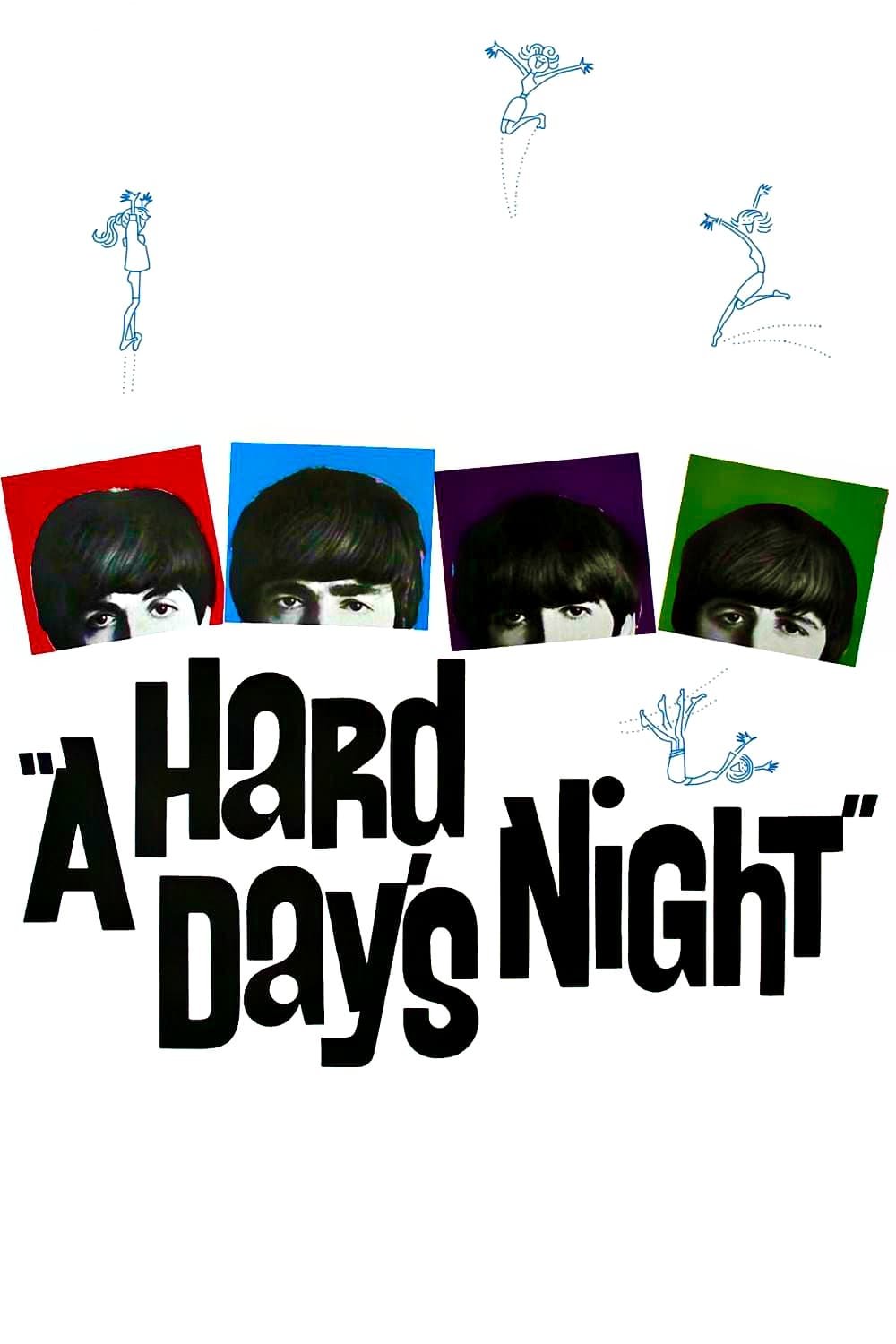
The Question of Truth Behind the Film
When audiences approach a film such as A Hard Day’s Night, a recurring curiosity emerges: to what extent does it mirror real life? This question is not unique to this film alone, but is prevalent across numerous works that feature recognizable figures or reference notable eras. The underlying assumption is that a film “based on a true story” offers a more authentic window into events or personalities, conferring a degree of credibility or documentary value. Many viewers, consciously or unconsciously, use this framework to guide their engagement, wondering if what they witness on screen corresponds to historical reality. For a film featuring The Beatles—international icons whose cultural impact was profound—there is an added expectation that the film might reveal insider glimpses, genuine situations, or honest depictions otherwise hidden from public view. The term “true story” thus becomes a lens: it frames not only the audience’s understanding of the narrative, but also their emotional investment and their willingness to accept the events as having broader historical or biographical significance.
Historical Facts and Cinematic Interpretation
The relationship between A Hard Day’s Night and historical fact is nuanced. The Beatles, indisputably real and at the zenith of their influence during the early 1960s, are the central figures. However, the film does not present itself as a literal retelling of precise events from their lives. Instead, it adopts a stylized version of a day in the life of the band, constructing scenarios inspired by their actual experiences but reshaped for narrative effect. This approach is particularly evident in the script, which draws upon the chaos, humor, and public excitement that surrounded The Beatles during this period. Select incidents—such as frenzied fans, hectic schedules, and press encounters—are grounded in real phenomena yet are exaggerated or combined for comedic rhythm and pacing. Details such as the group’s banter, the dynamic with their managers, and the sense of being under constant observation encapsulate wider truths about their reality, but these elements are filtered through a comedic and sometimes satirical framework. Even the supporting characters are composites, designed to represent broader types The Beatles encountered, rather than specific individuals. For instance, the figure of Paul’s grandfather operates as a comedic catalyst rather than as a literal biographical note. In this way, documentary fragments are reshaped and intensified through creative storytelling, allowing the film to capture the “spirit” of a particular moment in time rather than offering a point-by-point historical account.
What Changes When Reality Is Shaped for Cinema
The adaptation of real events for film routinely involves practical compromises. In A Hard Day’s Night, the necessity for a compact, energetic narrative meant condensing the complexity of The Beatles’ lives into a 24-hour window. Timeline compression is a frequent device in cinema, allowing the essence of a prolonged experience to be communicated rapidly, without the languor of complete accuracy. The selection of which scenarios to dramatize often favors those with inherent entertainment value or clarity, which can result in the exclusion of less cinematic yet historically relevant moments. Dialogue attributed to The Beatles in the film—sharp, witty, and perfectly timed—leans toward performance, regardless of whether it is a verbatim record of actual speech. The result is a film where the “truth” is filtered through screenwriting choices, editing, and performances designed for maximum audience engagement. Moreover, the photographic style, rhythm of the musical sequences, and quick-fire editing emphasize a breezy atmosphere that represents the exhilarating pace of Beatlemania, even if it departs from the more routine, mundane aspects of the band’s actual lives. Such modifications are not inherently negative or positive; they are the tools filmmakers employ to render complex realities accessible and entertaining to audiences within the constraints of feature-length storytelling.
Audience Expectations and the “True Story” Label
Audience response is deeply influenced by whether a film is presented as factual, inspired by true events, or openly fictional. In the case of A Hard Day’s Night, promotional materials and the film’s playful tone temper any assumption of strict veracity, but the presence of The Beatles themselves introduces ambiguity. Some viewers approach the film as a pseudo-documentary, expecting genuine insight into the personalities and backstage realities of the band. For these audiences, moments of apparent candor or documentary-style footage take on added weight—as if revealing aspects of the “real” Beatles that newsreels or interviews are unable to convey. Alternatively, others recognize the film as a vehicle for performance, understanding that its scenarios are inventions tailored for the medium of cinema. This group’s expectations are shaped by familiarity with the conventions of musical comedies, where exaggeration and invented situations are commonplace. The contrast between these modes affects how viewers interpret specific scenes: is an argument between the band members a glimpse of actual tensions, or a comedic set piece crafted for laughs? The “true story” label, or its absence, establishes a contract between the film and the audience, determining whether viewers approach it as a factual document, a dramatized account, or an entertaining fiction loosely tethered to real events. This distinction influences not only the perceived accuracy of details but also the role the film plays in shaping collective memory of The Beatles and the era they represent.
Final Perspective on Fact vs Fiction
The interplay between documentary fact and cinematic storytelling in A Hard Day’s Night has a significant impact on interpretation. Being aware of which elements stem from historical reality, and which are products of creative adaptation, provides audiences with a set of tools for understanding the film’s intentions and its place within both cultural history and cinematic tradition. Factual awareness frames the film less as a literal chronicle of The Beatles’ lives and more as a reflection of their public persona at a specific point in their career. This recognition does not inherently alter the enjoyment or emotional resonance the film may evoke but does encourage a nuanced reading—one where viewers can appreciate the balance between authentic experience and crafted entertainment. By navigating this boundary, audiences may develop an appreciation for the ways in which cinema translates the complexities of real life into accessible, coherent, and engaging stories, all while acknowledging the necessary liberties that this process entails. Thus, recognizing the blend of fact and fiction enriches interpretation, inviting viewers to consider not just what is shown, but why these particular choices were made—and how they contribute to the lasting cultural legacy of both The Beatles and the film itself.