
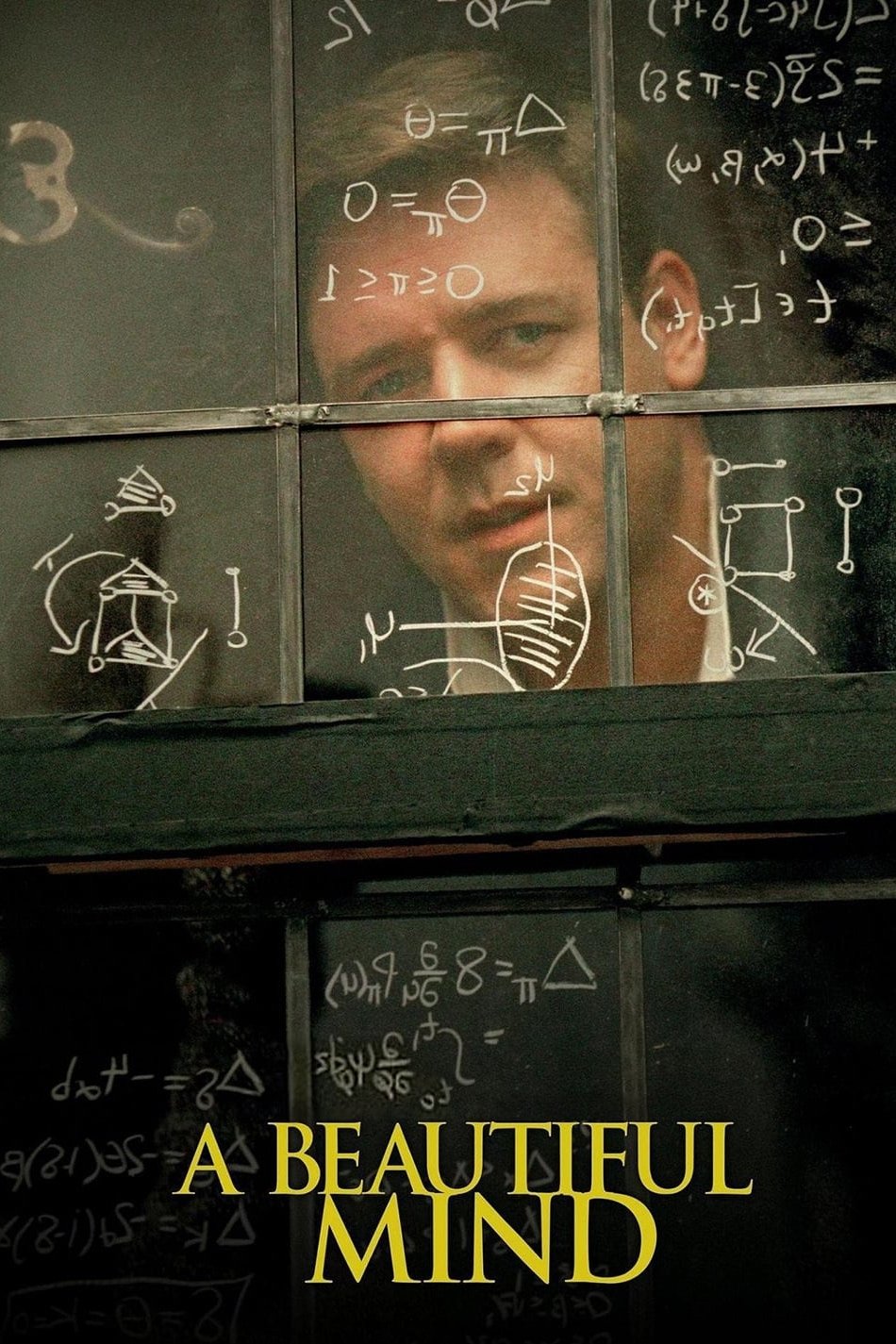
The Question of Truth Behind the Film
The phrase “based on a true story” invites a unique kind of engagement from audiences. When a film such as A Beautiful Mind is promoted with this label, viewers are naturally prompted to consider not only the story being told, but also how closely it aligns with real-life events and individuals. The underlying assumption is that cinematic portrayals can offer valuable insight into history or the personal journeys of real figures. This expectation often leads audiences to question the accuracy of specific details, the representation of characters, and the validity of events depicted onscreen. At its core, this impulse reflects a desire to find authenticity and perhaps to vicariously experience the challenges, triumphs, or traumas of actual people. The label of factuality, consequently, invites scrutiny regarding omissions, embellishments, and interpretive choices, as viewers seek to reconcile on-screen drama with their understanding of historical reality. In the case of A Beautiful Mind, which draws from the life and work of mathematician John Nash, curiosity about what is “real” versus “fictional” becomes a lens through which the narrative is viewed, interpreted, and discussed.
Historical Facts and Cinematic Interpretation
Biographical films, especially those depicting complex figures such as John Nash, often rely on a blend of research, adaptation, and artistic structuring. The real John Nash was a groundbreaking mathematician whose struggle with schizophrenia and later recognition as a Nobel Laureate form the skeleton of both the historical record and the film’s narrative arc. However, the journey from biography to screenplay entails significant condensation and reorganization of events. For example, certain aspects of Nash’s mathematical contributions—such as his work on game theory—are simplified or amalgamated to communicate their essence to a broad audience. Some characters in the film serve as composites, representing facets of multiple real-life individuals or dramatizing certain challenges Nash faced. Additionally, pivotal events such as Nash’s flirtation with Cold War cryptography are stylized and amplified to provide narrative drive.
The film also introduces fictional elements not present in Sylvia Nasar’s biography upon which it is loosely based. Notably, several experiences and figures central to the movie’s plotline—such as the hallucinated government agent William Parcher—are dramatic inventions. Other details, such as Nash’s tenure at Princeton, his relationships with colleagues, and the course of his illness, are adjusted to streamline the timeline or intensify emotional stakes. These choices are not random but respond to the requirements of limited screen time, audience engagement, and narrative coherence. As a result, the final cinematic portrait is shaped by both the factual scaffolding of Nash’s life and the interpretive needs of storytelling.
What Changes When Reality Is Shaped for Cinema
The process of adapting historical events for cinema inevitably introduces a series of adjustments. Filmmakers working within finite runtime and the demands of dramatic structure must prioritize which moments receive attention, which are compressed, and which are omitted or altered entirely. With A Beautiful Mind, the depiction of schizophrenia is restructured into a series of vivid hallucinations, thereby offering viewers a visual and visceral sense of Nash’s psychological experience. This represents a trade-off: while the hallucinations serve to externalize internal struggles for cinematic purposes, the real Nash’s symptoms were considerably different, involving more subtle and complex delusions.
Further, the relationships surrounding Nash are distilled for clarity; certain aspects of his personal life and career are simplified or bypassed to ensure narrative momentum. For instance, Nash’s first marriage, his time spent outside the academic world, and some challenging periods of his life receive brief mention or are reimagined to create a satisfying emotional arc. This approach allows filmmakers to maintain a focused storyline, but it also means certain nuances and complexities are lost. Characters are often streamlined, and timelines are compacted, creating a version of events that is more accessible yet also further removed from the untidy particulars of lived experience. The resultant trade-off favors engagement and thematic coherence over intricate, and sometimes unwieldy, historical fidelity.
Audience Expectations and the “True Story” Label
The way a film is presented—whether as a true story, as inspired by true events, or as purely fictional—shapes audience engagement and interpretation. When viewers recognize that a film like A Beautiful Mind is crafted from real lives and events, the expectation shifts toward a kind of authenticity and educational value. The “true story” label often leads to increased emotional investment and a closer scrutiny of details, as audiences wonder how much of the narrative aligns with actual occurrences. This may inspire viewers to seek out additional information, prompting comparisons with historical records, biographies, or documentaries. Conversely, when deviations from known facts become apparent, they can spark debate about the nature of adaptation and the boundaries of dramatic license.
For some, the discovery of fictionalized elements—such as invented characters or dramatized plot points—can prompt disappointment or a sense that the film has misrepresented important truths. Others view such creative decisions as necessary or even expected, recognizing the constraints and conventions of narrative film. The response to these choices, therefore, varies widely, as different viewers bring distinct expectations about the role of cinema as a medium for truth-telling versus storytelling. The more audiences become aware of the hybrid nature of films like A Beautiful Mind, the more nuanced their understanding may become, seeing the film not only as an account of real events but also as an artwork shaped by interpretive and expressive priorities.
Final Perspective on Fact vs Fiction
Awareness of the distinctions between fact and creative interpretation exerts a significant influence on how viewers approach and interpret a film such as A Beautiful Mind. Knowledge of what is historically grounded and what is dramatized encourages audiences to engage with the film on multiple levels: both as an emotional story and as a representation of real-life complexity. This dual perspective enables a richer appreciation of how films operate—illuminating, compressing, and sometimes altering history to render it comprehensible and compelling within the confines of cinematic language.
Recognizing the boundaries between reality and invention does not prescribe a single “correct” way to experience the film. Instead, it allows for a spectrum of responses, shaped by individual curiosity, prior knowledge, and openness to adaptation. Factual awareness can lead to a deeper exploration of the true events behind the narrative, inspiring further reading or discussion. At the same time, understanding the adaptive choices made for film can foster sensitivity to the challenges inherent in representing complex lives and eras on screen. In the end, this knowledge transforms viewing from passive reception to an active process of interpretation, in which the interplay of fact and fiction becomes a central and dynamic aspect of cinematic storytelling.