
Is This Film Based on a True Story?
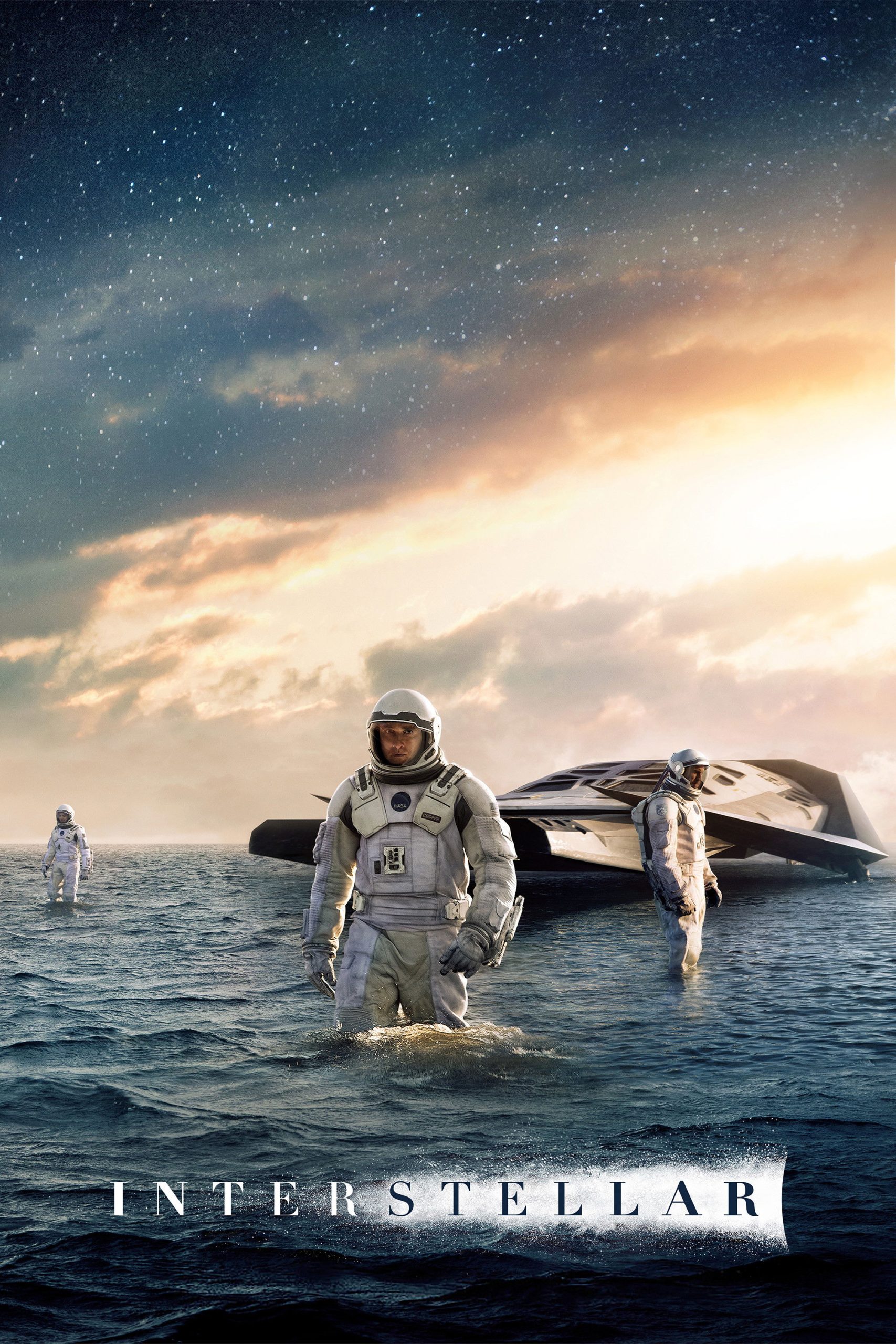
Every time I revisit “Interstellar,” I’m struck by the sheer ambition behind its vision — not just in storytelling, but in how it presents its entire universe. When pondering whether the movie springs from truth, partial truth, or unbridled fiction, I find myself zeroing in on its core: “Interstellar” is not based on a true story, at least not in the way biopics or historical dramas are. The film doesn’t recount the events of real people sent on a last-ditch mission through a wormhole to save humanity. Yet, as I see it, its foundation isn’t woven purely from fantasy either. What makes it stand out to me is the depth of genuine scientific theory and speculation that informs almost every frame. While I can categorically say no humans have ever traveled through wormholes near Saturn — nor have we faced an extinction-level “blight” in the immediate sense — the film’s roots dig deep into real scientific thought. Its world is fictional, but the soil it’s planted in is undeniably fertilized by current (and in some cases, cutting-edge) astrophysics.
The Real Events or Historical Inspirations
Whenever I dissect “Interstellar’s” origins, the name that comes up repeatedly in my research is Dr. Kip Thorne. He’s not merely a consultant, but a key originator of the scientific framework behind the movie. What fascinates me most is how the narrative developed partially in tandem with Thorne’s own scientific curiosity about the possibilities of wormholes and black holes. While Christopher Nolan and his brother Jonathan penned the screenplay, Thorne’s influence is present in the rules governing space travel, time dilation, and gravitational anomalies depicted on screen.
There aren’t specific historical events “Interstellar” recreates. Rather, I see it as a culmination of ideas swirling throughout the late 20th and early 21st centuries: the anxiety about environmental collapse, the hope of colonizing distant worlds, and the wonder surrounding Einstein’s theories of relativity. The visual depiction of the black hole “Gargantua,” for example, crystallizes equations and thought experiments that had, until this point, largely existed on chalkboards and in physics journals. Thorne’s 2014 book “The Science of Interstellar” lays bare just how much math and empirical rigor went into constructing these sequences. I don’t know of another mainstream science fiction film where I can literally trace a special effect back to published scientific research.
Yet, my understanding is that the film also owes something to the broader cultural and historical milieu: the Dust Bowl era, climate change discourse, and the golden age of NASA exploration. I see reflections of mid-20th-century American agricultural crises in the blight-plagued farms, and echoes of “Apollo 13”-era hope and despair in the depictions of a faded American space program. It reminds me of stories told to me by relatives who lived through periods when nature itself seemed to turn against humanity. The movie’s portrait of desperation isn’t lifted from any one decade but resonates across several, a collage of historical fears and technological aspirations.
What Was Changed or Dramatized
Whenever a movie draws deeply from real science, I expect — and often notice — places where the story takes priority over literal accuracy. In “Interstellar,” what stands out most in my mind is how theoretical ideas become tangible, urgent narrative devices. Take, for instance, the concept of time dilation near a massive black hole. While it’s a real phenomenon predicted by Einstein, the dramatic way it unfolds on the water planet (where one hour equals seven years back on the main ship) is, as I understand from Thorne’s writing, exaggerated to increase dramatic tension. The mathematics allow for such relativity, but the specifics are calculated for maximum impact on the viewer, not for strict adherence to nature’s laws as we know them.
Also, the nature of the “blight” wiping out Earth’s crops is never fully specified. In my research, I haven’t found a single ecological phenomenon from Earth’s past that matches these characteristics. Real agricultural crises, like the Irish Potato Famine or the American Dust Bowl, have always been more localized and less apocalyptic. The blight here functions as a metaphor for a wide spectrum of modern anxieties, drawing inspiration from historical struggles but ramping up the stakes to necessitate interstellar travel.
The depiction of wormholes is one of the most fascinating points of dramatization for me. While Kip Thorne and his computer models helped design an accurate visual representation, the idea that such a stable, traversable wormhole would conveniently appear near Saturn at a time of dire earthly need certainly feels like a calculated creative leap. The nature of the “bulk beings” — mysterious intelligences existing in higher dimensions — belongs squarely to science fiction, though these entities arise from genuine attempts to imagine what higher-dimensional life might be within the constraints of physics.
Finally, I notice a significant shift in how space travel organizations are portrayed. The film’s iteration of NASA exists as a covert, nearly mythical remnant rather than the highly public governmental entity we know. Although this anchored the story’s ethos of secrecy and scarcity, it’s a stark departure from the real agency’s operational structure and transparency, both historically and in our present era.
Historical Accuracy Overview
For me, “Interstellar’s” greatest achievement lies in its integration of theory with cinema. I’m always amazed at the lengths to which the filmmakers — guided by Thorne’s involvement — went to illustrate phenomena like gravitational lensing, accretion disks, and time dilation near immense gravitational masses. The visual representation of Gargantua’s “photon sphere,” for example, is grounded in new computer simulations generated solely for the film and later published in scientific journals. These depictions are not random special effects. They spring from genuine physics equations and provide viewers, like myself, with a window into how scientists visualize these otherwise invisible cosmic objects.
But there are inevitable departures from reality dictated by the needs of a two-hour film. While some aspects of relativity are meticulously plotted, details are also streamlined for audience comprehension or emotional weight. The movie’s gravitational anomalies, the presence of habitable exoplanets just a wormhole away, and the practicalities of cryosleep for long-duration travel are projections reliant on extrapolation and imagination. I recognize elements — like the representation of tesseracts or higher-dimensional “bookshelves” — that are metaphorical as much as technical, allowing a deeply theoretical idea about time as a landscape to become something emotionally palpable for viewers.
When it comes to Earth’s dustbowl conditions, I see an effective blend of past and possible future. The inspiration undoubtedly draws from real periods of agricultural collapse, with nods to historic interviews from the Depression era shaping the film’s fictional testimonies. However, as far as I’ve found in my reading, no blight or ecological disaster has brought humankind to the brink depicted here. The extrapolation is intentional, meant to amp up the urgency without anchoring it to an event on our actual timeline.
On the whole, “Interstellar” is, in my judgment, a work exemplary for its scientific foundation, while still unapologetically speculative in both premise and resolution. Its accuracy fluctuates: real science anchors its launching point, but it breaks free from historical and scientific precedent as the story ascends into its final acts.
How Knowing the Facts Affects the Viewing Experience
Whenever I sit with “Interstellar,” my knowledge of its scientific underpinnings colors every frame. The fact that Kip Thorne’s involvement led to academic papers stemming from the special effects — not just entertainment — transforms the film for me into something more than a spectacle. When I see Gargantua’s swirling light, I’m aware I’m witnessing perhaps the most accurate black hole modeling ever attempted in cinema. This awareness lends the visuals a gravity (no pun intended) that would be absent if the story abandoned real science entirely.
At the same time, I find myself viewing the dramatized human drama with a dual lens. Knowing that the environmental disaster is an extrapolation rather than a direct retelling of historical events helps me place its message within the realm of allegory. It isn’t a prophecy or a dire blueprint, but a warning, a meditation, and a “what if?” rendered with emotional force. That knowledge doesn’t undermine my investment in the characters or their mission. Rather, it deepens it, giving me latitude to accept the narrative’s grander metaphysical quirks as storytelling, not as a attempt at literal prediction.
I’m also aware that the movie’s representation of time, space, and the possibilities of advanced beings exists in a speculative borderland between fact and fiction. Instead of feeling let down by the film’s final flights of fancy, I find my experience heightened by understanding where the science ends and the storytelling begins. I can appreciate the “tesseract” scene not as a plausible event (as we currently comprehend higher-dimensional physics), but as a cinematic visualization of an idea that’s resonant with the spirit of modern scientific inquiry.
For me, perhaps the most profound impact is a renewed sense of curiosity. Rather than settling my questions about space and humanity’s future, “Interstellar” ignites more. When the film dramatizes phenomena like time slippage or the hunt for habitable worlds, knowing these are drawn from, but not confined to, our current understanding makes the stakes somehow more tangible. This blend reminds me repeatedly of the power in consultative storytelling—the way genuine science can be a springboard for speculation, not a boundary fencing it in.
Ultimately, my appreciation for “Interstellar” is enriched by seeing just how it dances across the border between plausible future and poetic fiction. It reassures me that cinema can embrace real theory while acknowledging that not all answers, or even all questions, are available in the current archive of human experience. The blurred line the film walks between the real and the imagined is, to my mind, exactly where its most lasting resonance resides.
After learning about the film’s origins, you may want to see how audiences and critics responded.
🎬 Check out today's best-selling movies on Amazon!
View Deals on Amazon