
Is This Film Based on a True Story?
Whenever I watch “Guess Who’s Coming to Dinner,” I’m struck by how immediate and real its tensions feel, even all these decades later. But after spending time researching its background, I can say with certainty that this film is a work of fiction—it’s not based on any specific true story, individual, or real-life family. The events in the film were imagined by screenwriter William Rose and shaped to provoke the questions about race, marriage, and generational values that gripped American society at the time. Although it’s easy to see why someone might wonder if such a personal and charged narrative could have roots in real events, all indications point to the film arising purely from the writer’s creative vision rather than reportage or firsthand biographical inspiration.
The Real Events or Historical Inspirations
As someone who often digs deep into the genealogy of storytelling, I approached “Guess Who’s Coming to Dinner” expecting maybe a link to a prominent interracial couple or a well-documented social incident that challenged norms in 1960s America. What I actually found is more diffuse, rooted in a broad social context rather than any one event. William Rose, the screenwriter, reportedly conceived the story entirely in his imagination, building off the growing visibility—and controversy—around interracial relationships following the Civil Rights movement. The year before the film was written, the U.S. Supreme Court had just struck down laws banning interracial marriage with 1967’s Loving v. Virginia. This decision did not directly inspire the film, but as I see it, the legal and social climate provided fertile ground for a story addressing interracial unions.
I’ve never encountered accounts from Rose or director Stanley Kramer claiming a real-world template for the Drayton or Prentice families. Instead, the influences come from the zeitgeist—a national debate about race and love, amplified by news coverage, marches, and courtroom battles. For me, one thing is both clear and fascinating: the very lack of a singular inspiration gives the film a representative power, as if it’s not recounting one family’s dinner but the collective anxiety and hope of an entire era wrestling with change.
I should note that while the film doesn’t adapt a non-fiction book or news story, it does echo the kinds of anxieties, conversations, and confrontations that many interracial couples living in the United States—particularly in major cities on the West Coast—reported experiencing in the years leading up to the film’s release. Interviews from the 1960s (like those found in newspaper archives and sociological studies) recount similar challenges, though I see these as parallel histories rather than direct source material for the story in the script.
What Was Changed or Dramatized
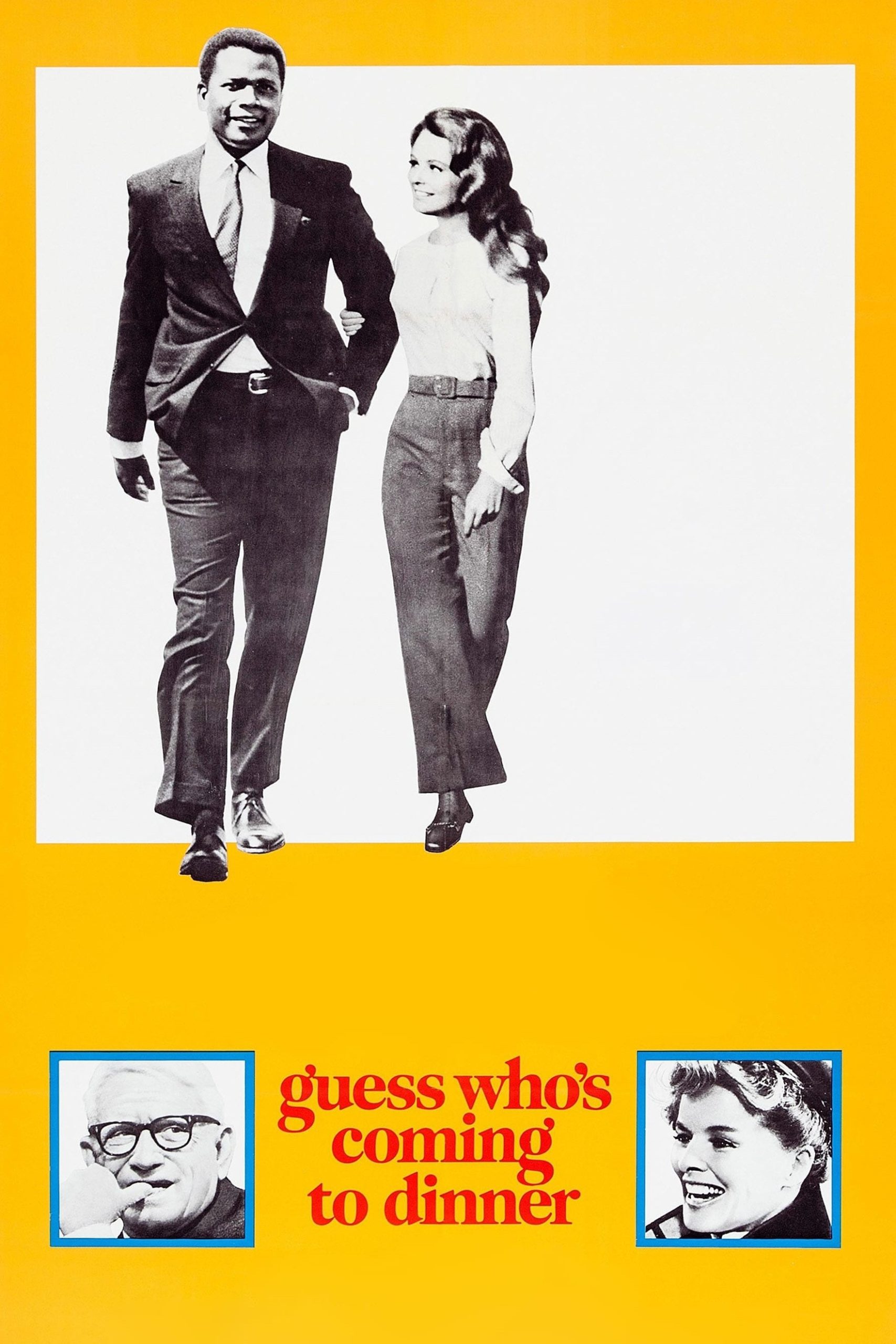
Because the film is essentially a what-if built from social tension, rather than an adaptation, all of its details serve the demands of drama rather than fidelity to real events. As I watched, I noticed how sharply constructed the situations and characters are—almost emblematic rather than individual. The young Joanna Drayton (a white woman) and Dr. John Prentice (a Black man) are portrayed as unambiguously accomplished and likable, designed almost to remove any objections to their marriage besides race. Dr. Prentice is a world-class physician: intelligent, successful, and gentle in manner. Joanna is idealistic and open-hearted. I see this as a calculated choice, heightening the story’s focus on the single barrier of race by removing any other potential sources of discord from the equation.
From what I’ve learned, the climactic family dinner and heated discussions happening all in a single day are artistic compressions. Life rarely moves so quickly, but in the hands of Rose and Kramer, the drama is forced to its limits—as if to concentrate a week, month, or year’s worth of family reckoning into one unforgettable evening. There is a suspicion, never directly confirmed, that setting the story in cosmopolitan San Francisco and making the white family politically liberal added additional ironies and complexities not always present in real-life scenarios, especially those happening in other regions or among different social classes. I interpret these choices as a way to explore contradictions: what happens when those who proudly think themselves progressive are confronted with the messy realities of their own prejudices?
Another dramatization I see is the absence of external hostility. The film’s conflicts are largely constrained to the home, with just one brief acknowledgment that the outside world might pose dangers to an interracial couple. In reality, even in California, social ostracism, discrimination, and sometimes open hostility awaited such couples—not to mention violence in less tolerant parts of the country. By keeping the threat largely theoretical, the script keeps the focus tightly on the personal, familial implications rather than the broader, sometimes grimmer reality. From my vantage point, this is dramatization as simplification, clearing the field for a more controlled examination of personal bias without delving into the full spectrum of historical risk or societal violence associated with these relationships at the time.
Historical Accuracy Overview
When I sift through the details—both factual and invented—what strikes me is how “Guess Who’s Coming to Dinner” acts as both time capsule and parable. On the one hand, it clearly captures the reality that interracial couples in the United States faced daunting familial and social obstacles in the 1960s. The film does not invent that dilemma. Loving v. Virginia, decided just months before the film’s release, legalized interracial marriage nationwide, indicating both the recency and urgency of the topic. Couples living prior to this decision could be, and often were, barred from marrying, depending on their state’s laws. Moreover, countless oral histories and sociological studies from the period confirm that conversations around race and marriage were exceptionally fraught, even among otherwise liberal or progressive families.
Where the film diverges from accuracy, at least as I see it, is in the idealization of its core couple and in the relative gentleness of the obstacles they face. Many real-life stories include a much broader range of reactions—everything from quiet acceptance to outright rejection and worse. The world constructed in “Guess Who’s Coming to Dinner” is in some ways a moral laboratory or a hypothetical, rather than a straight retelling. While it faithfully represents the shock and soul-searching interracial relationships could spark, it smooths over much of society’s broader and more dangerous hostilities. It omits the institutional barriers, the threats of violence, and often the more substantial familial rifts that could last for years or even lifetimes.
What I find especially accurate is the film’s depiction of generational divides on social issues, something well documented in oral histories from the time period. Often, younger family members embraced social changes more rapidly than their elders. The way Matt and Christina Drayton (played by Spencer Tracy and Katharine Hepburn) approach their daughter’s intended marriage with initial bewilderment, fear, and gradual acceptance aligns with documented patterns among real families navigating the transformative years of the 1960s.
However, the neatness of the film’s resolution—its hopeful, tolerant closure—does not always match what I’ve read in case studies, memoirs, and contemporary news clippings. Many real-world situations would have ended in estrangement, difficult compromise, or gradual, uneasy adjustment rather than cinematic affirmation. Real life could be slower, messier, and far less conclusive than the drama on screen. This is something I always notice when I compare cinematic adaptation with lived history, and “Guess Who’s Coming to Dinner” is no exception.
How Knowing the Facts Affects the Viewing Experience
When I approach “Guess Who’s Coming to Dinner” with the knowledge that it isn’t grounded in the particulars of a true story, I find my expectations shifting. Rather than looking for historical accuracy at the micro level—dates, names, snippets of dialogue—I concentrate on the bigger, more universal themes the film addresses. Knowing that this isn’t a direct dramatization lets me appreciate the piece as an allegory, an emotional argument meant to distill cultural anxieties of its age, rather than a record of any one family’s journey.
I also notice myself becoming more alert to the decisions made by the filmmaker and writer: why present the couple as so unimpeachable in character? Why structure the action over the course of one day? These questions take on added significance when I’m not scanning for real people behind the names but instead considering how a hypothetical scenario is engineered to maximize tension and emotional clarity. Understanding that the film exists in dialogue with its historical moment—but not as a transcription—shapes my interpretation in a major way.
For me, the film’s studied avoidance of showing deeper, more dangerous forms of societal pushback opens a space to think about what was permissible to depict in 1967, both in terms of Hollywood’s comfort zone and that of mainstream American viewers. Contemporary documentation—such as sociological interviews and news articles—suggests that violence and exclusion were more likely than the film admits, which in turn colors how I read its optimistic ending. The choice to not focus on explicit threats or legal restrictions makes the resolution feel more like an invitation to aspire, rather than a reflection of what was, or even could be, in most people’s lives at the time.
On the flip side, by not being tied to one specific case or biography, the film is freed up to become a stand-in for thousands of real, but undocumented, family conversations and confrontations that likely took place all over the United States. When I reflect on the film now, I see it as both an artifact of its era’s hopes and limitations—a kind of optimistic test case, not a mirror to any single real-world event. This shapes my experience as a viewer, making the film not so much a lesson in history but a springboard for questions about progress, bias, and what it means for families to face the unfamiliar and the uncomfortable.
I find this understanding enriches, rather than detracts from, the film’s resonance. While it may be tempting to read “Guess Who’s Coming to Dinner” as documentary-adjacent, knowing its origins allows me to appreciate both its artifice and its power as a cultural touchstone. It invites me not just to ask what happened, but what might have happened—or still could—in countless homes facing new social realities.
After learning about the film’s origins, you may want to see how audiences and critics responded.
🎬 Check out today's best-selling movies on Amazon!
View Deals on Amazon