
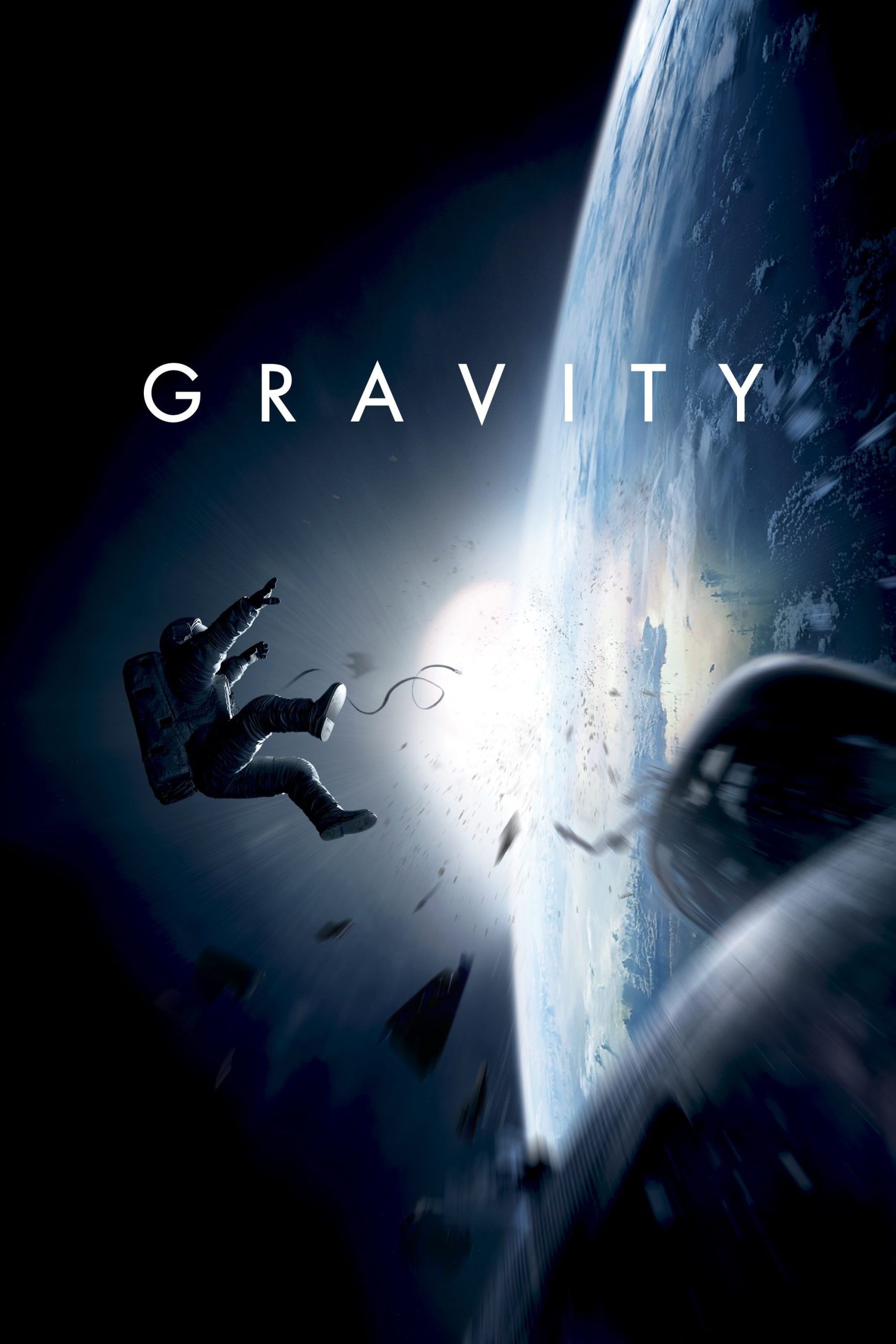
Is This Film Based on a True Story?
The first time I watched “Gravity,” I was completely enveloped in the dizzying spectacle and heart-pounding tension, to the point where I found myself gripping the arms of my chair. What lingered in my mind afterwards, though, was a persistent question: was any of this rooted in reality? Having now researched extensively, I can say with certainty that “Gravity” is not based on a true story. Its plot and characters are original creations, not direct representations of actual astronauts or historic space disasters. That said, my understanding is that the film draws deeply from current space exploration technology, documented space risks, and real-world missions for its life-or-death environment. Still, nothing that happens to Ryan Stone and Matt Kowalski is taken from a single, true account, nor are they surrogates for known astronauts. Rather, the film weaves plausible scenarios into a suspense-driven fiction.
The Real Events or Historical Inspirations
Taking a closer look at the cinematic world Alfonso Cuarón constructs, I’ve realized how much of the perceived authenticity stems from how well he recreates the everyday reality of life in low-Earth orbit. Unlike some science fiction outings that invent their own rules, “Gravity” places recognizable hardware at center stage: the Space Shuttle, International Space Station, and Soyuz and Shenzhou capsules. As I dove into interviews and production materials, it became clear to me that the filmmakers poured over NASA data, astronaut memoirs, and technical blueprints. They corresponded with space travel experts and referenced first-hand accounts to capture details like zero gravity movement, radio chatter, and even the soundproof silence of the vacuum outside a helmet.
Yet, I found no singular disaster in actual space history that mirrors the catastrophic chain reactions unfolding in “Gravity.” What does ring true are the specific risks that the film builds around. For example, the “Kessler Syndrome”—a theorized domino-effect debris scenario proposed by NASA scientist Donald J. Kessler in 1978—directly informs the main crisis. Kessler predicted that a collision between objects in orbit could generate fast-moving debris, which then causes more collisions—a scenario that, in theory, could imperil satellites and crewed missions. While such an event has not occurred to the extent depicted, smaller collisions and endangered crews have been part of the real space narrative, like the 2009 crash between an Iridium communications satellite and a defunct Russian Kosmos satellite.
I also came across echoes of the Columbia and Challenger shuttle tragedies, which haunt every American who lived through those moments. Yet Cuarón doesn’t transpose these events into his narrative—he draws from their emotional resonance and technical stakes but doesn’t relay their specifics. The depiction of the Chinese space program’s technology (namely, the Shenzhou capsule) borrows aesthetic and operational details from public records and broadcasts, but again, it serves the plot rather than recalling a concrete episode from history.
To further ground their fiction, Cuarón and his team looked at how real astronauts prepare for calamity, meticulously researching spacecraft procedures and EVAs (extravehicular activities), gleaning from the practical wisdom of the likes of Chris Hadfield and Michael Massimino. Yet, as I noted, the brunt of “Gravity’s” narrative device—being severed from home, isolated in a rapidly deteriorating orbit—is a hypothetical personal ordeal and not one retrieved from diaries or mission logs.
What Was Changed or Dramatized
When I probe what “Gravity” alters for dramatic effect, it’s the stacking of dangers and the compression of near-impossible odds that stand out. The cascading space debris, while loosely plausible, is on a timeline and scale that outpaces any real threat documented by NASA or Roscosmos. In my reading of mission reports, debris collisions have increased over the decades, but none have triggered a self-propagating orbit-wide hazard at the rate or intensity seen in the film.
One choice that reads as outright dramatization is how quickly and conveniently each disaster unfolds—from the destruction of multiple orbital platforms in the path of a single debris cloud, to the ability to traverse between the Space Shuttle, ISS, and Chinese station within close proximity. My deep-dive into orbital mechanics revealed that these stations, while residing in similar Low Earth Orbit zones, are seldom in line-of-sight or close enough for such untethered transition, especially without powered maneuvering. The use of EVA jetpacks for transit across orbital distances, as shown in the gripping early sequence, oversimplifies technical limits. The film, for the sake of tension, allows Sandra Bullock’s character to perform feats that, based on physics and propulsion, would be fantastical—and would risk her running perilously short on oxygen or fuel far sooner than depicted.
I noticed, too, that the timeline and aftermath of the main disaster compresses hours, or even days, of orbital dynamics into a single, relentless stretch. In practice, orbital physics dictates that debris clouds, depending on velocity and altitude, would not circle back with mechanical regularity every ninety minutes at the same altitude, as depicted. There’s also the conceptual leap of radio blackout—while it’s true that communication can fail, NASA’s extensive satellite networks and procedures for “loss of signal” periods are more robust than the film suggests. Real-life ground contacts would attempt alternate frequencies or support from international allies in an ongoing crisis.
The emotional journey of Dr. Ryan Stone contains equally notable dramatizations. The life-threatening perils are not only physical, but also psychological: the arc from panic, fatalism, and surrender to personal renewal is, to my eyes, as heightened as the film’s visual spectacle. Astronauts train rigorously for a range of emergencies, but the intimate scenes—Glimpses of Stone’s daughter, spiritual conversations, hallucinations—are not echoes of known historical astronaut struggles, but serve the story’s theme of rebirth and personal agency.
Historical Accuracy Overview
Whenever I scrutinize films that draw on real science or historical disciplines, I find my focus inevitably divides between what’s visually accurate and what aligns with operational truth. “Gravity” is, without a doubt, one of the most visually realistic space movies I’ve encountered. I marveled at how the film simulates microgravity, from floating tears to drifting tools—these details reflect painstaking research, including consultations with real astronauts and choreographers versed in spacewalks. Watching authentic depictions of shuttles, airlocks, and orbital passages made me aware of the filmmakers’ respect for the nuts and bolts of space technology.
Yet this fidelity doesn’t extend to the plotting or technical scenarios. In my careful review, real astronauts and physicists have consistently affirmed that the storyline requires substantial suspension of disbelief. For instance, Neil deGrasse Tyson and Chris Hadfield have publicly pointed out that orbits don’t line up as neatly as the events in “Gravity” would need, and that even minor flaws in the spacesuit or equipment would likely have been catastrophic far sooner than depicted. The speed at which the ISS and Chinese station are accessible, the impressive durability and adaptability of escape capsules, and the relentless presence of menacing debris clouds all edge the narrative firmly into speculative fiction.
I’ve learned that several NASA protocols and safeguards, such as redundant communication pathways, emergency procedures, and ground control intervention, are streamlined or omitted to keep maximum focus on the isolation of the leading character. In the real world, no solo astronaut has survived comparable calamities without some measure of team or ground support, although there have been emergencies—like the 1997 Mir collision with a Progress cargo vessel or the two-person Soyuz T-13 “rescue” mission in 1985—that tested crews’ mettle against malfunction and resource shortages.
An area where the film stays true to the risks faced in orbit is in how it conveys the sensory and emotional oddities of space: total silence, restricted mobility, and the beauty mixed with peril in every view of Earth. I find that “Gravity” channels the existential fascination and fear articulated by figures like Yuri Gagarin, Sally Ride, or Scott Kelly, while also embracing a dramatic story only possible in invented fiction. It’s a mishmash—highly authentic in visual cues and environmental knowledge, but ultimately unmoored from actual events or feasible resolutions.
How Knowing the Facts Affects the Viewing Experience
As I’ve become attuned to the actual workings of space missions, I find that understanding what’s plausible and what’s pure cinematic imagination significantly changes how I interpret and appreciate “Gravity.” At first viewing, I was swept up by the relentless pace and desperation, taken in by how “real” everything seemed. Now, after examining both the science and history behind the film’s set pieces, my perspective has become more layered. Knowing the distance between reality and fiction allows me to appreciate the film’s artistry—its use of space as a metaphorical wilderness, and its grounded tension—even as I notice the shortcuts and impossibilities.
For viewers like me, who are invested in the accuracy of historical or technical storytelling, this kind of awareness creates dual experiences. On one hand, I marvel at how the filmmakers championed a look and feel of space that’s seldom achieved onscreen, rendering every floating object, whisper of radio, and shimmer of sunlight with scientific integrity. On the other hand, I experience a kind of mental negotiation, reminding myself that this narrative isn’t a secret account from NASA logs but an engrossing “what if” crafted for dramatic impact. Recognizing that Sandra Bullock’s odyssey could not happen—at least not with current space infrastructure—helps me appreciate the film’s intent, not as a record, but as an anxious, hopeful fantasy played out in the precise, perilous details of orbital theatre.
With these facts in mind, I notice more acutely how audiences might come away with exaggerated perceptions of the risks astronauts face or the nature of orbital disasters. Knowing the facts lets me enjoy the film’s emotional intensity without confusing it for documentary truth, and it gives me new respect for the professionals who must contend with dangers that, while less spectacular, are no less daunting for being incremental and managed rather than catastrophic.
Ultimately, awareness of the boundaries between historical accuracy and fiction in “Gravity” does not diminish the film’s emotional or visual power for me; if anything, it heightens my appreciation for the choices made to dramatize the human element of survival in a domain that’s both wondrous and unforgiving. I watch the film now not for a lesson in space history but for a meditation on isolation, resilience, and the extraordinary fragility of life above the Earth’s atmosphere. Knowing the underlying truth, and where the story departs from it, gives each frame an extra dimension—not of fact, but of possibility, anxiety, and awe.
After learning about the film’s origins, you may want to see how audiences and critics responded.
🎬 Check out today's best-selling movies on Amazon!
View Deals on Amazon