
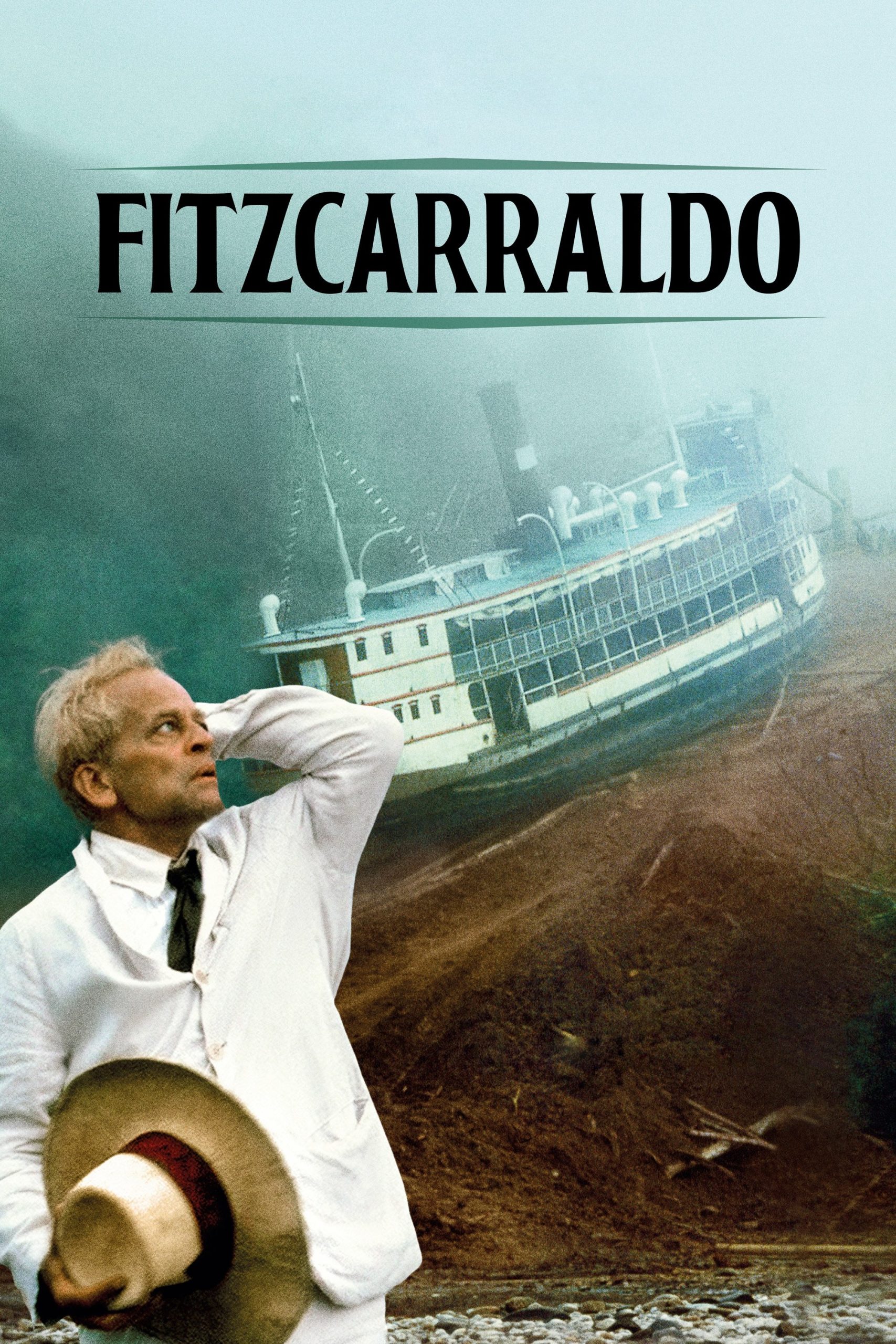
Is This Film Based on a True Story?
When I first encountered “Fitzcarraldo,” I was immediately struck by the grandeur and audacity of its central premise—a single-minded Irishman determined to haul an enormous steamship over a mountain in the heart of the Peruvian Amazon, all to bring opera to a distant jungle outpost. Initially, I wondered how such an outrageous tale could be anything but pure invention. However, as I dug into its background, I realized “Fitzcarraldo” occupies a peculiar place between truth and fiction. The film is not a direct retelling of precise historical events, but it is inspired by the exploits of real-life entrepreneurs and adventurers in turn-of-the-century South America. The Iguana steamship move never occurred in exactly the way Werner Herzog’s camera shows, yet its spirit echoes figures who were very much real. So, if I had to place the film on a scale from absolute fabrication to documentary truth, I’d say it fits firmly in the center: inspired by true events, but heavily dramatized with many liberties taken for narrative effect.
The Real Events or Historical Inspirations
I find myself fascinated by the mesh of reality and myth that underpins “Fitzcarraldo.” The character Brian Sweeney Fitzgerald—who local Peruvians refer to as Fitzcarraldo—is loosely modeled after the Irish-Peruvian rubber baron Carlos Fermín Fitzcarrald. When I trace the story’s roots, I come across Fitzcarrald and his notable exploits in the Peruvian Amazon during the late 1890s. Fitzcarrald did in fact play a pivotal role in expanding the rubber trade, powering steamboats up and down the labyrinthine rivers of Peru. Most crucially—and this is what grabbed my attention—he orchestrated a now legendary logistical feat. His Indigenous laborers dismantled a small steamship, carried the parts over a land bridge between two river systems, and reassembled it on the other side. This daring endeavor allowed Fitzcarrald to bypass a series of prohibitive rapids and gave him control over an untapped rubber territory. The episode fueled many local legends and inspired journalists and chroniclers across the world. Herzog, known for weaving mythic grandeur into reality, found his cinematic gold in these tales.
This historical foundation amazes me because it blurs legend and biography. By that, I don’t mean that Herzog simply adapted Carlos Fitzcarrald’s life to a screenplay; rather, he siphoned off the most cinematic essence of those exploits—the rivers, the ship, the improbable crossing—then infused them with his own obsessions. When I read deeper, I even see how the director’s own production experiences mirrored the story’s intensity. Herzog famously insisted on actually dragging a 320-ton steamship over a hill in the jungle, a choice that turned the filming itself into a kind of life-imitating-art legend. But as far as historical documentation, Carlos Fitzcarrald’s real crossing involved moving a much smaller, lighter boat in several pieces, not a fully intact steamship. Still, the raw inspiration is undeniably drawn from the annals of Amazonian history, from a place where enterprising outsiders often remade the landscape in pursuit of riches or dreams.
What Was Changed or Dramatized
The most intriguing aspect of “Fitzcarraldo’s” origin story for me is just how freely Herzog and his collaborators depart from the historical record. The most literal difference, and one I can never ignore, is the actual feat at the heart of both the film and the legend. In reality, Carlos Fitzcarrald’s ship was a modest and relatively lightweight vessel, which his workers disassembled and portaged piece by piece over the isthmus separating the Madre de Dios and Ucayali river systems. This process, painstaking as it was, involved ingenuity and raw labor, but never the brute spectacle of hauling an entire, working steamship—rope, paddlewheel, boilers and all—across a mountain intact. Herzog’s decision to amplify this detail for cinematic impact marks a clear leap from even the wildest Amazonian legend.
On a thematic level, I see that Herzog also transformed the motives and obsessions of his protagonist. Fitzcarrald, the real rubber baron, was driven primarily by a desire to dominate trade routes and increase his rubber profits. Werner Herzog’s Fitzcarraldo, however, emerges as an eccentric dreamer—his drive is not wealth alone, but the importation of European opera culture into the remote jungle. This character’s vision of building an opera house in Iquitos, with Enrico Caruso himself singing on opening night, is never mentioned in accounts of the historical figure. Instead, it’s an invention that gives the film its distinctive tone of quixotic obsession. When I reflected on this, I realized that Herzog seems to be channeling not just the past, but the idea of artistic obsession itself, perhaps his own as a filmmaker.
Even the supporting characters are mostly fictional. I note that Fitzcarraldo’s loyal companion, Molly (played by Claudia Cardinale), has no real antecedent in Fitzcarrald’s story. Her presence, and the romantic idealism she brings to the project, are creative additions for narrative richness. The film’s depiction of Indigenous tribes as participants in the ship-hauling endeavor also exaggerates and reshapes historic reality. In real life, Indigenous workers were conscripted, often under duress, for Fitzcarrald’s expeditions, but Herzog imbues his version of events with a symbolic, almost mystical collaboration between Fitzcarraldo and the unnamed tribe. This portrayal, as I interpret it, injects an additional layer of metaphor not present in the sparse historical records.
Finally, the film condenses and reorders events to heighten dramatic stakes. Scenes of natural catastrophe, sabotage, and interpersonal drama—while thematically resonant—add emotional tension absent from historical documentation. The film’s steamship adventure unfolds as a perilous, almost cursed campaign, which may echo the chaos of early industrialists in the Amazon, but not with the precise events as lived by Carlos Fitzcarrald. For me, this chasm between history and fiction is what gives the film its sense of poetry and myth, but it means that anyone looking for a documentary recounting of the Peruvian rubber boom should look elsewhere.
Historical Accuracy Overview
After poring over accounts of both the film and the lives it draws upon, I’ve come to appreciate just how complex the film’s relationship to historical fact really is. Certain core elements are grounded in truth: there truly was a Fitzcarrald, he truly did operate steamships in Peru, and he did orchestrate an expedition that involved dragging parts of a ship over land to circumvent an impassable river section. These are significant foundations, and I see why Herzog found them ripe for adaptation. Even the landscape, with its feverish greenery, treacherous currents, and volatile climate, reflects the diaries and memoirs of early Amazonian explorers.
Yet “Fitzcarraldo” repeatedly ventures into the realm of fable. In place of practical rubber trading motives, it substitutes artistic and fantastical ones. I notice that Herzog’s script imbues Fitzcarraldo with qualities closer to a mythic hero—or perhaps an antihero—than a real baron of commerce. For example, there is no historical evidence of any desire on Carlos Fitzcarrald’s part to bring high culture, and certainly not grand opera, to the Amazon. Instead, opera functions as an emblematic device, expressing longing, ambition, and perhaps the folly of overreaching visionaries.
The method and scale of the ship-hauling scene diverges sharply from reality. No historical expedition involved keeping the ship in one piece and inching it up and over a jungle mountain while perilously balancing it amid the vines and trees. Lifting a 320-ton steamship in that fashion, as seen in the film and famously enacted by the production team, is unprecedented in the annals of jungle exploration. What the real Fitzcarrald achieved was logistically impressive, but much more mundane in mechanical terms.
When I examine the treatment of Indigenous peoples, I see a tapestry woven from dramatic invention and selective truth. The use of Indigenous labor was historically accurate—Peru’s rubber era was notorious for its exploitative working conditions and coercive labor practices. However, the film emphasizes an almost sacramental unity between Fitzcarraldo and the tribesmen, casting the steamship’s journey as a mystical or ritualistic trial. Historical sources, by contrast, underscore power imbalances and conflict, not the willing partnership depicted by Herzog.
This creative license extends to Fitzcarraldo’s interpersonal relationships as well. The passionate supporter and lover Molly is apparently an invention. Similarly, rivals and associates in the film are amalgams or outright fabrications, designed to serve the story’s emotional arc rather than strictly mirror recorded events. The entire tone of the plot—and its connection to art, music, madness, and nature—bears Herzog’s unique fingerprint, not the nuance of 19th-century rubber barons’ biographies.
All told, I would say “Fitzcarraldo” is highly inventive in its details and motives, anchored by a few key historical touchstones. Its vision of the Amazon is at once authentic (in its landscape and mood) and mythologized (in its characters’ ambitions and deeds). Herzog, as always, is less concerned with the letter of historical fact than with the spirit of excess and obsession he saw both in the era and the man who inspired it.
How Knowing the Facts Affects the Viewing Experience
Every time I revisit “Fitzcarraldo,” I find that my awareness of the film’s historical roots profoundly colors my engagement with it. The more I learn about the real Carlos Fermín Fitzcarrald, the Peruvian rubber boom, and the logistical struggles of river shipping in the Amazon, the more I appreciate the film’s blend of truth and myth. This background knowledge transforms my viewing from one of simple absorption in an epic adventure to a more layered experience, where I am constantly parsing what might have actually happened from what is cinematic invention.
For me, understanding the actual events lends an air of irony and gravity to the story. I know that the real Fitzcarrald’s exploits were driven by economic necessity and personal ambition, which makes Herzog’s turn to artistic obsession all the more poignant, even if surreal. The gap between rubber trade realities—a world marked by harsh labor, colonial expansion, and stark power imbalances—and the film’s operatic quest for transcendence becomes a point of reflection. I find myself tugged between admiration for the grandeur of Herzog’s vision and awareness of the real-world suffering that exploitation in the Amazon entailed.
Knowing that the film’s central image—hauling a fully intact, massive steamship up a hillside—never occurred in history, I start to view this spectacle less as a literal feat than as a metaphor. It becomes, in my reading, a symbol of the immense, almost hubristic ambition that can seize individuals in unfamiliar landscapes. This knowledge strips away some of the awe I might feel if I believed the actual physical feat had occurred, yet it sharpens my sense of the story as allegory, illustrating the clash between human aspiration and the indifference of nature. For me, the film no longer reads as a straightforward period adventure; instead, it becomes a reflection on vision, willpower, and their sometimes catastrophic consequences.
Context about Indigenous involvement also shifts my perception. The film’s depiction of Fitzcarraldo as an unlikely ally of local tribes comes across as more a product of narrative necessity than anthropological fact. Having learned about the complex, and often traumatic, interplay between Indigenous communities and rubber barons, I bring a more critical, nuanced expectation to these scenes. I watch, not for reenactment, but for how the story uses these relationships to deepen the film’s themes of exchange, exploitation, and reverence for nature.
My knowledge of the film’s production history—Herzog’s insistence on literalizing the impossible and the many dangers endured on set—gives the whole film an added meta-textual layer. The story of making “Fitzcarraldo” nearly rivals the story of Fitzcarraldo himself. I find myself watching for echoes of the real life struggles of cast and crew, matching the quixotic will of both director and character. The blurring between historical Fitzcarrald, fictional Fitzcarraldo, and real Herzog feels inescapable, making the film as much about the madness of creation as about history itself.
So in the end, knowing the film’s factual underpinnings—and where fact leaves off—shapes my expectations and enriches my interpretation. I approach each viewing not as a hunt for literal accuracy, but for resonance between history, performance, and myth. Herzog’s film, for all its liberties, remains deeply rooted in the actual fever dreams and impossible ambitions of a not-so-distant past.
After learning about the film’s origins, you may want to see how audiences and critics responded.
🎬 Check out today's best-selling movies on Amazon!
View Deals on Amazon