
The Question of Truth Behind the Film
When I first watched Ex Machina, I couldn’t escape a persistent curiosity: where does this unsettling story fit on the spectrum of fiction and fact? I think this urge to trace a film back to “real events” reveals something deeply ingrained in how I—and many other viewers—relate to narratives. If a movie claims a lineage in truth, I find myself more alert, aware that the onscreen events might, in some fashion, echo things that have actually happened. On some level, I suspect that authenticity strikes a nerve; the more the events reflect the world outside the theater, the more invested I become in the consequences, both fictional and real. This led me to wonder, as I reflected on Ex Machina, why do audiences—including myself—seem to lean so heavily on the comfort, or discomfort, provided by the label “based on a true story”?
I’ve seen time and again that viewers approach films labeled as “true” with a certain reverence—or skepticism—that is distinctly different from how they relate to works presumed to be purely imaginative. There appears to be a widespread notion that a story grounded in real events carries more weight, or significance. When I watch a film that claims historical roots, I’m subtly encouraged to probe the fidelity to real life, almost as though truth and meaning are inextricably tied. This instinct persists even when the subject leans into abstract or speculative territory. Ex Machina never once tries to convince me that its exact narrative unfolded somewhere in the real world, yet its focus on the development of artificial intelligence feels so proximate, so tightly wound with what I know of ongoing technological advances, that I’m left wondering not just about its factual basis, but about the truths it gestures toward.
It’s fascinating, and a little bit troubling, how the boundaries between imagination and reality can blur in a film like this. I notice how, without even declaring itself as history, a film prompts me to project my assumptions onto it. When I hear about a film “inspired by true events,” or drawn from historical research, I nearly always begin to parse which moments might have a factual source. I know others share this impulse—debates after screenings, articles fact-checking scenes, online threads dissecting characters’ real-life counterparts all reflect this collective investment in whether a film’s truth claim holds up. Yet in the case of Ex Machina, where the premise folds the near-future into the present, the question of truth feels less about specific events and more about the plausibility of the ideas it explores.
Historical Facts and Cinematic Interpretation
As I set out to consider the historical underpinnings of Ex Machina, I’m struck by just how ambiguous the film’s relationship to “actual events” really is. The film is not, as far as I know, derived from the biography of a particular inventor or a well-documented experiment. There’s no real Nathan Bateman whose mountain retreat doubled as a crucible for AI evolution. But what I do find is something more intriguing: the patchwork of scientific achievements and philosophical inquiry that the film weaves into something new. When thinking about how “fact” is adapted for the screen, I realize that Ex Machina operates not by retelling a literal episode, but by distilling decades of research and speculation into a single, unified drama.
For me, the strongest tethers to the real world are the technological and conceptual elements. There’s Alan Turing’s work on machine intelligence, which feels central to both the narrative and the explicit dialogue. I recognize references to the so-called Turing Test, detailed most famously in the mid-20th century, that frames the heart of the film’s central challenge: determining whether Ava is truly conscious, or simply simulating it. But these nods are not literal reenactments. Instead, what unfolds is an imaginative compression of sprawling real-world debates—psychology, computer science, ethics—into a closed, intense setting. The conversations I hear between Nathan, Caleb, and Ava borrow terminology and anxieties straight from published AI manifestos and laboratory reports, and yet they are situated in a wholly fabricated storyline.
What fascinates me is the way the film rearranges collective anxieties and aspirations surrounding artificial intelligence—public fears, news headlines about Silicon Valley breakthroughs, op-ed essays on robotics—and distills them into the relationships and challenges the characters face. I see how, for narrative clarity, multiple strands of factual discourse—the progress of deep learning algorithms, the debate on whether consciousness can be programmed, stories of reclusive tech billionaires—are fused into a story that moves quickly and never gets bogged down in technical minutiae. I am acutely aware of how elements like the remote setting or the minimal cast serve to condense and focus the ethical debate. This fictionalization doesn’t erase the link to “the real,” but rather repackages it so I can engage with the philosophical consequences in a concentrated form. Stories such as these are not bound to a single footnote in scientific history but are instead reflective syntheses built from fragments of ongoing conversations.
What Changes When Reality Is Shaped for Cinema
Whenever I reflect on how reality is refitted to suit cinema, I realize it’s never a neutral transfer—details are always selected, omitted, or exaggerated, sometimes for clarity, pacing, or emotional heft. Watching Ex Machina, I’m aware that the portrayal of a sentient machine coming into being is a radical condensation of a messy, incremental real-world process. The film sidesteps the bureaucratic, iterative, often anticlimactic reality of tech development and instead delivers a moment poised precisely at the intersection of achievement and crisis. For me, this narrative distillation is both a practical and aesthetic choice: it brings the audience to the dramatic question much faster, allowing a meditation on humanity, power, and autonomy to take center stage.
When actual history is translated for dramatic effect—even when the source is as amorphous as current AI research—I find that authenticity sometimes takes a backseat to coherence. Rather than recounting each scientific breakthrough with precision, the film shapes its storytelling around the emotional stakes at play. As a result, the characters absorb the energies of real-world figures and debates, but with edges sharpened and ambiguities often resolved, at least for the duration of the narrative. I see how Nathan, for example, embodies traits familiar from profiles of tech luminaries—the swagger of innovation, the isolation, the ethical shortcuts—but the specifics of his background or achievements are left undefined, an amalgam of archetype and rumor.
I recognize the film’s use of pace and atmosphere as vehicles for thematic impact. Instead of painstaking procedural realism, I’m drawn into a foggy realm where technology and morality fuse into a single, suspenseful dilemma. I understand the appeal of this abstraction: it allows viewers like me to explore questions that real-world science has not yet answered, without the baggage of strict historicity. At the same time, the cost is clear—the granular realities of AI development are missing, replaced by the heightened, symbolic necessities of a thriller. Moments that might feel mundane or incremental in reality are telescoped into crystalline pivots, each laden with existential significance.
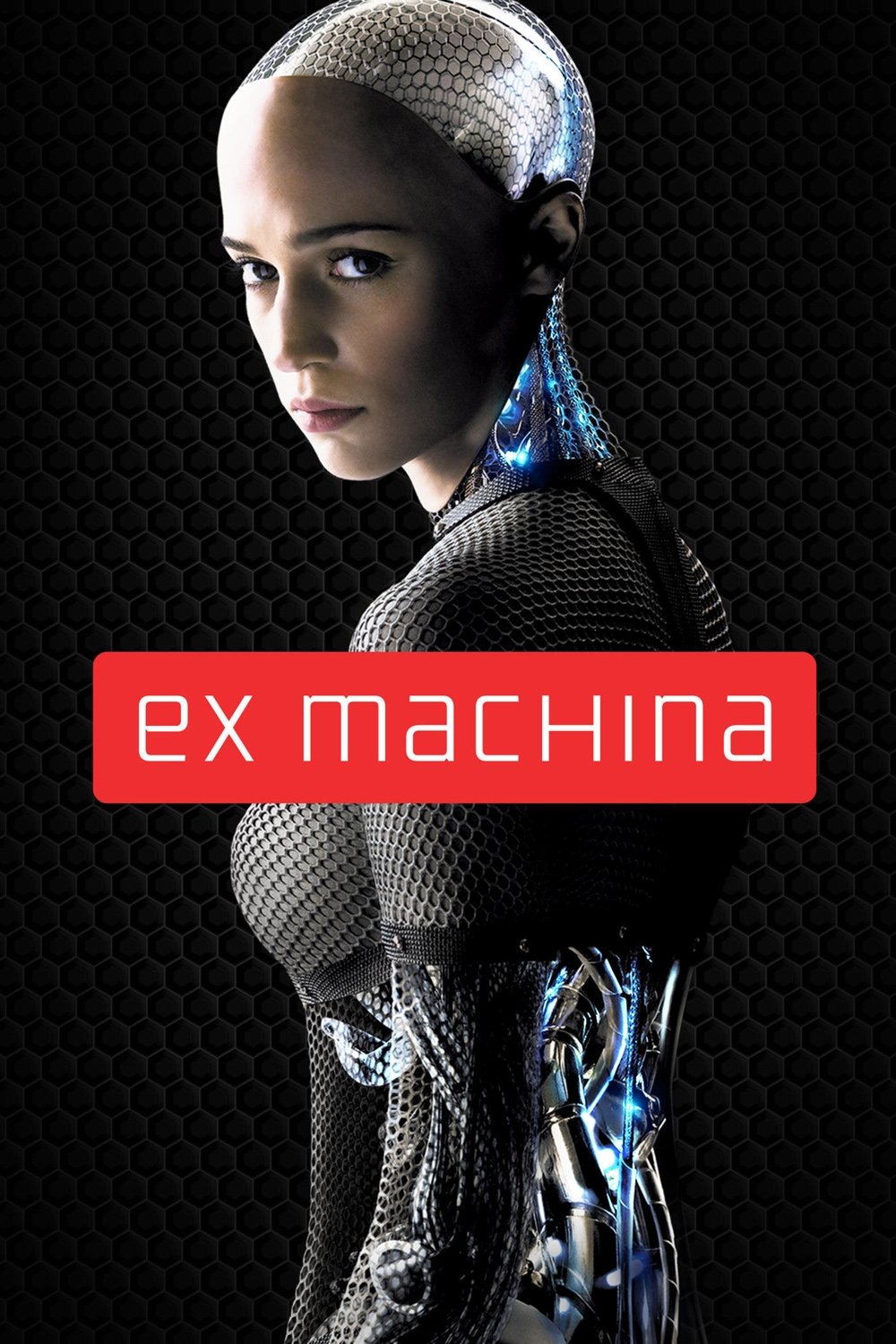
This approach, I find, is not limited to science fiction; it is the logic of adaptation itself. Films transform their sources—whether documented history or a climate of contemporary speculation—into versions that serve the needs of storytelling. In Ex Machina, I sense this at every level, from the design of Ava’s body (a visual synthesis of years of robotics progress and artistic speculation) to the dialogue that echoes philosophical debates but always circles back to character. The trade-off, in my case, is one of breadth for intensity: by sacrificing scope and documentary detail, the film creates a crucible where ideas can combust.
Audience Expectations and the “True Story” Label
Whenever I encounter a film labeled as a “true story,” I notice a shift in my posture and my expectations. I find myself scrutinizing the narrative for evidence of accuracy, wondering how much of what I’m seeing has been lifted from reality, and how much has been imagined. There’s a kind of compact between storyteller and audience—if I’m told that something is true, my curiosity expands to include the origins and implications of the tale as it supposedly unfolded. Yet when I approach a film like Ex Machina, which is unambiguously a work of fiction, my relationship to the story transforms. The sense of documentary obligation falls away, and I’m free to focus on the plausibility of the ideas, the resonance of the ethical questions, and the emotional arc of the characters.
Sometimes I wonder if the absence of a “based on a true story” disclaimer actually grants me more latitude as a viewer. Instead of being preoccupied by which scenes are rooted in documented fact, I’m captured by how convincingly the film builds its universe from shared fears and dreams about technology. When the premise feels close to reality—as it does in Ex Machina, with its references to artificial intelligence, surveillance, and human-robot interaction—I actually find it harder to draw a sharp line between fictional invention and potential prediction. The lack of a clear truth-claim urges me to judge not historical accuracy, but the story’s internal logic and philosophical coherence.
In contrast, when I watch films that trumpet their ties to real people or historical moments—biopics, political dramas, “docudramas”—I sometimes become distracted by the question of deviation. Did this person really behave that way? Were these conversations ever spoken? I recall moments after watching such films where I researched the real lives behind the fiction, eager to fill in gaps or sift fact from narrative license. In Ex Machina, my mind shifts from this habit; I accept the narrative as a thought experiment. Still, the film’s engagement with technology anchors it to the world I inhabit, making the implications feel urgent even without a factual foundation.
Audience expectations, I’ve come to realize, are deeply conditioned by genre signals and marketing cues. A trailer or tagline proclaiming “inspired by true events” primes me to look for reliability, for history’s rough edges smoothed into narrative arcs. Conversely, a work unconcerned with factual veracity encourages immersion in the dilemmas it constructs, freeing me from the gravitational pull of real-world correspondence. Yet with subjects as timely as artificial intelligence, the boundaries remain porous. I catch myself asking not so much “Did this happen?” as “Could this happen—and what would it mean if it did?”
Final Perspective on Fact vs Fiction
Reflecting on the interplay between factual grounding and creative invention in Ex Machina, I often return to my own shifting sense of engagement. Knowing the story is not a literal recounting of events does not lessen its impact for me; rather, it opens up a different relationship to the narrative. My focus turns from verification to interpretation—I am less concerned with matching scenes to headlines and more invested in what the film proposes about consciousness, human responsibility, and the threats and promises inherent in technological progress.
I see the film’s power as rooted not in fidelity to any single historical event, but in its synthesis of real fears, hopes, and questions drawn from contemporary discourse. My experience watching Ex Machina becomes less about tracing the plot to a primary source and more about grappling with the issues it dramatizes. The boundaries between fact and fiction blur, not because of any claim the movie makes about its origins, but because its themes echo real debates resounding in boardrooms, laboratories, and living rooms around the world.
I’m left with the conviction that awareness of what is real or fabricated fundamentally shapes the interpretive lens I bring to films like this. When I know a film is rooted in a “true story,” my viewing becomes retrospective, concerned with accuracy and representation. When fiction draws so heavily from plausible scientific and social realities, as Ex Machina does, my interpretation is prospective—I find myself not only thinking about what the film says about the present, but about the futures it imagines and how close we might already be to them.
For me, that is the lingering effect of understanding the boundaries between fact and fiction: it calibrates my response, making me sensitive to the film’s ambitions, whether they aim to reflect, distort, or anticipate the world I live in. Ex Machina exemplifies how cinema can shape meaning not through direct translation of real events, but through the bold reorganization of ideas whose time feels imminent. In my own reckoning, that awareness doesn’t undermine the story—it deepens it, inviting a more participatory, questioning mode of engagement, one that endures long after the credits roll.
For additional context, you may also explore the film’s overview and how it was received by audiences and critics.
🎬 Check out today's best-selling movies on Amazon!
View Deals on Amazon