
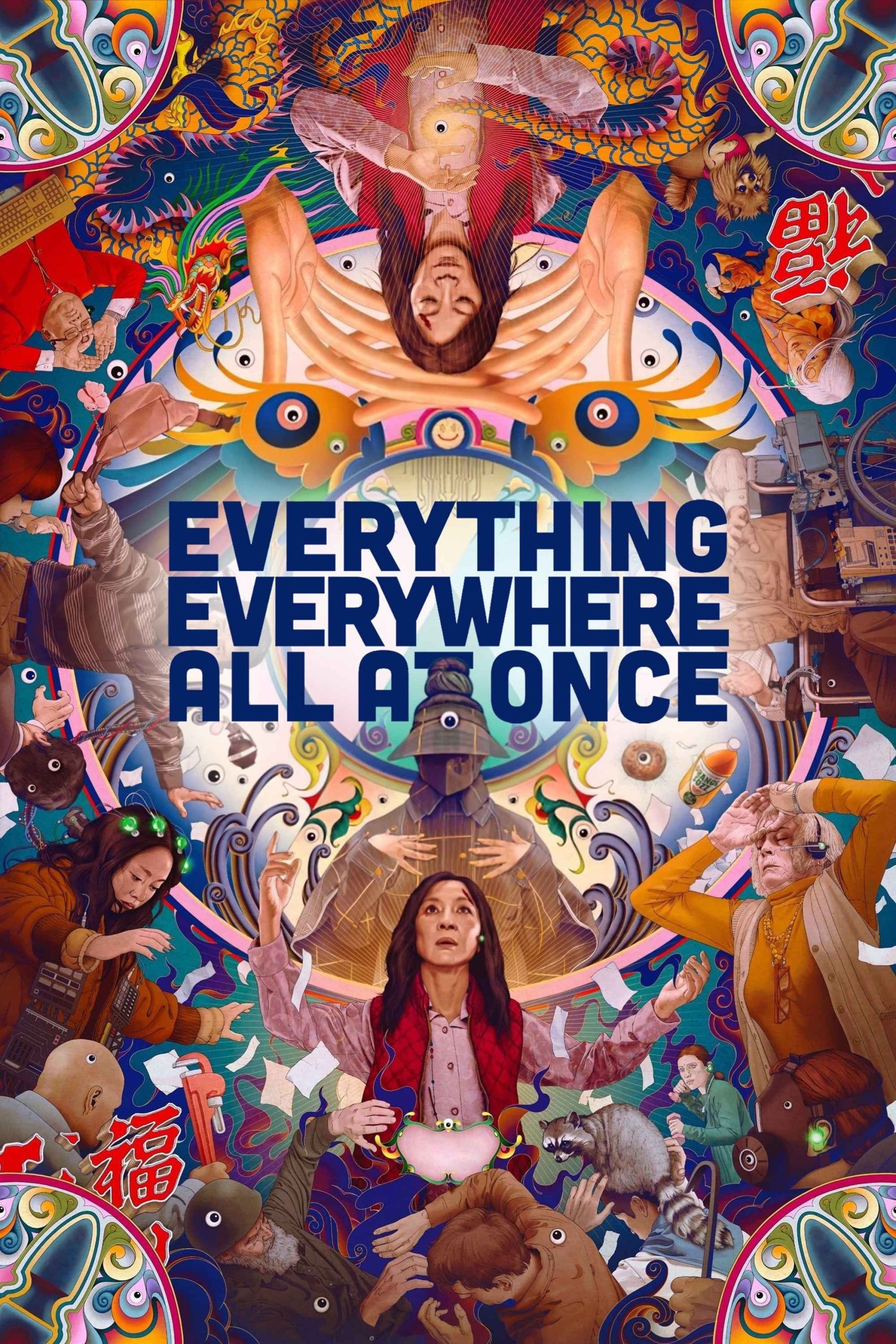
Is This Film Based on a True Story?
The first time I watched Everything Everywhere All At Once, I was completely immersed in its kaleidoscopic visuals and outlandish storytelling. That sense of being tossed between realities left me wondering if any of it was moored in historical fact or drawn from someone’s lived experience. After researching its origins, I can confidently say that Everything Everywhere All At Once is a wholly fictional narrative. Nothing about the film is based directly on true events, documented cases, or specific historical figures. The plot’s wild journey through multiverses, its depiction of parallel lives, and even its micro-level family dynamics are not direct retellings or inspired versions of actual occurrences. While aspects of family and immigrant experience feel emotionally truthful, they are crafted hypothetically rather than from established or verifiable records.
The Real Events or Historical Inspirations
Thinking about whether any real-world events, historical records, or documented individuals inspired this film, I found myself drawn to the unique way Everything Everywhere All At Once blends disparate influences. The movie doesn’t cite any biographical or journalistic source material. There is no court case, memoir, or true story at its heart. The Daniels — the directing duo of Daniel Kwan and Daniel Scheinert — are known for their surreal, inventive approach to storytelling, and in this film, they’ve constructed a world entirely of their own invention rather than one rooted in documented history.
However, as I situate the film within a larger cinematic and literary context, it’s obvious that the creative use of the multiverse as a concept owes much more to traditions in science fiction and speculative fiction than to reality. The idea of parallel universes has been a recurring motif in science, philosophy, and, more recently, in popular culture, ranging from speculative quantum mechanics theories to comic book narratives. Everything Everywhere All At Once is much more closely related to thought experiments than it is to verifiable events or actual people.
I did notice that some have drawn loose comparisons to broader societal narratives — for instance, the Asian-American immigrant struggle, generational conflict, and cultural assimilation in the U.S. Yet, unlike films such as Schindler’s List or The Social Network, which are famously tied to documented people or incidents, Everything Everywhere All At Once never asserts a documentary relationship with specific real-life stories. Rather, it builds a scenario that’s fictionally representative of certain emotional truths many find relatable.
In personal reflections, I saw that the character of Evelyn embodies aspects of a universal human struggle: balancing personal desires and family obligations, navigating multiple identities (as a business owner, wife, daughter, etc.), and dealing with the daunting web of choices that define a life. While those dynamics mirror real experiences, they are presented here in a thoroughly fantastical context, not in a way that signals documentary intent or biographical authenticity.
What Was Changed or Dramatized
What I found particularly striking is that Everything Everywhere All At Once doesn’t “change” or “dramatize” actual events; rather, it invents everything from scratch, using real-world struggles as a springboard into total creative freedom. That gives the filmmakers the latitude to incorporate whatever elements serve the emotional stakes and metaphorical aspirations of the story.
If I compare it to films that base their drama on true events, those usually make noticeable alterations to timelines, composite characters, or dramatize mundane activities for the sake of entertainment — like The Imitation Game altering the nature of Alan Turing’s relationships, or A Beautiful Mind fictionalizing key events in John Nash’s life. Here, by contrast, all the major plot points — from universe-hopping via outlandish physical actions to sentient everything bagels — emerge from the screenplay’s original, internal logic rather than a process of adaptation.
However, I do see the film playing with and amplifying real emotions. For example, the generational tension between Evelyn and her daughter is a recognizable, even archetypal, conflict for many second-generation immigrant families. The pressure-cooker feelings around unfulfilled dreams, cultural identity, and the fear of letting loved ones down are rendered in ways that feel “true” in an emotional sense, even though the events themselves are deeply surreal. In this way, I see the film dramatizing the private emotional landscapes of those experiences rather than historical incidents. The use of the multiverse format allows everyday choices and regrets to be exaggerated into world-altering consequences, all in the spirit of narrative fantasy rather than biographical fidelity.
I also noticed how popular culture icons and tropes surface in playful homage throughout the film — from martial arts homages to subtle references to classic Wong Kar-wai romance framing. But there is no evidence, based on any interviews or production notes I reviewed, that these were inserted to recreate real situations or historic moments. Instead, they serve the film’s pastiche style, rooting the story in the shared language of genre rather than documentary truth.
Historical Accuracy Overview
When I try to assess this movie in terms of historical accuracy, it becomes clear that the very framework resists such an approach. Since Everything Everywhere All At Once doesn’t reference or reconstruct a particular era, individual, or recorded occurrence, I can’t measure its depiction of events, costuming, or behavior against established fact — the way I would with films like Apollo 13 or Dunkirk. The film operates entirely in speculative and metaphorical territory, employing the “multiverse” device not as a scientific proposition but as an allegorical engine.
Of course, many background elements do look and feel “true” to life, particularly the depiction of everyday environments: the laundromat’s details, the immigrant family’s mixed-language conversations, and the pressures of small business ownership. These come across as authentic not because they are re-enactments of precise historical contexts, but because they tap into shared cultural observations. I feel that these realistic settings act as a grounding mechanism, anchoring the movie’s flights of fancy in a world the viewer can recognize, even as the narrative leaps headlong into the implausible.
So, in short, if I try to sort everything into “accurate” or “not accurate,” the distinction is almost meaningless here. There is fidelity to emotional realities — anxiety about family cohesion, ambivalence about unrealized potential, the omnipresence of everyday chaos — but not to verifiable, historical particulars. For viewers hoping to glimpse old newspaper headlines or see faithfully recreated historical events as in more conventional true-story cinema, Everything Everywhere All At Once steers in the opposite direction, making no effort to tie its events to the timeline of reality or collective memory.
That being said, I do recognize the film’s ability to channel certain cultural and generational anxieties that are historically rooted, even if its story never purports to accurately reflect them. In using fantasy to approach real concerns, the movie provides a kind of symbolic accuracy — it’s emotionally resonant, albeit historically untethered.
How Knowing the Facts Affects the Viewing Experience
When I approached Everything Everywhere All At Once for the first time, lacking any background research, I let myself ride the wave of absurdity, wondering if there was some hidden “true story” kernel lying under the mountain of wild invention. After diving deep into the movie’s origins, it’s obvious that there is no underlying historical scaffolding — and that knowledge fundamentally changes my orientation as a viewer.
Knowing that this film is not based on true events or inspired by a particular real narrative, my expectations shifted. I found myself engaging with it more as a philosophical and emotional exploration than as an interpretive exercise in historical accuracy. Without the need to parse fact from fiction, I could simply immerse myself in the themes it presents: regret, the unpredictability of choices, and the search for meaning amid apparent chaos. I didn’t find myself pausing to interrogate whether a character “really existed” or a particular event “actually happened.” Instead, the point of reference became my own life, or universal emotional experiences, rather than some external benchmark from history.
For me, that frees up a lot of cognitive energy. I don’t have to worry about whether specific scenes do justice to a real person’s experience or whether historical liberties were justified. The family struggles and generational divides depicted carry their own kind of authenticity for those who relate, untethered from the imperative to judge them by historical standards. Every bizarre tangent — from the raccoon chef to the outlandish fanny pack fight scenes — becomes an opportunity to see how far fiction can go in visualizing inner turmoil, rather than a dramatization of a verifiable event.
Yet, I also noticed that some viewers found themselves emotionally blindsided by just how much the film feels “real,” even in its most preposterous moments. That’s because it leverages the language of real life — marital squabbles, tax problems, generational misunderstandings — before turning those moments inside out. Knowing the film’s fictionality, I tuned in more to the underlying metaphors: how do our decisions across time create alternate lives? What might unite us across those choices, and how do we grapple with the enormity of possibility?
That said, my awareness that the film is not a true story — in fact, is radically uninterested in documentary fidelity — lets me appreciate its ambition on different terms. I engage with it as a mirror and a funhouse at once: it holds up emotional realities, even as it laughs at the notion of “reality” at all. If I were looking for historical fidelity or a biographical lesson, I would look elsewhere. But as a testament to the elasticity of imagination in cinema, Everything Everywhere All At Once thrives, unburdened by the weight of real-world expectation or accuracy.
After learning about the film’s origins, you may want to see how audiences and critics responded.
🎬 Check out today's best-selling movies on Amazon!
View Deals on Amazon