
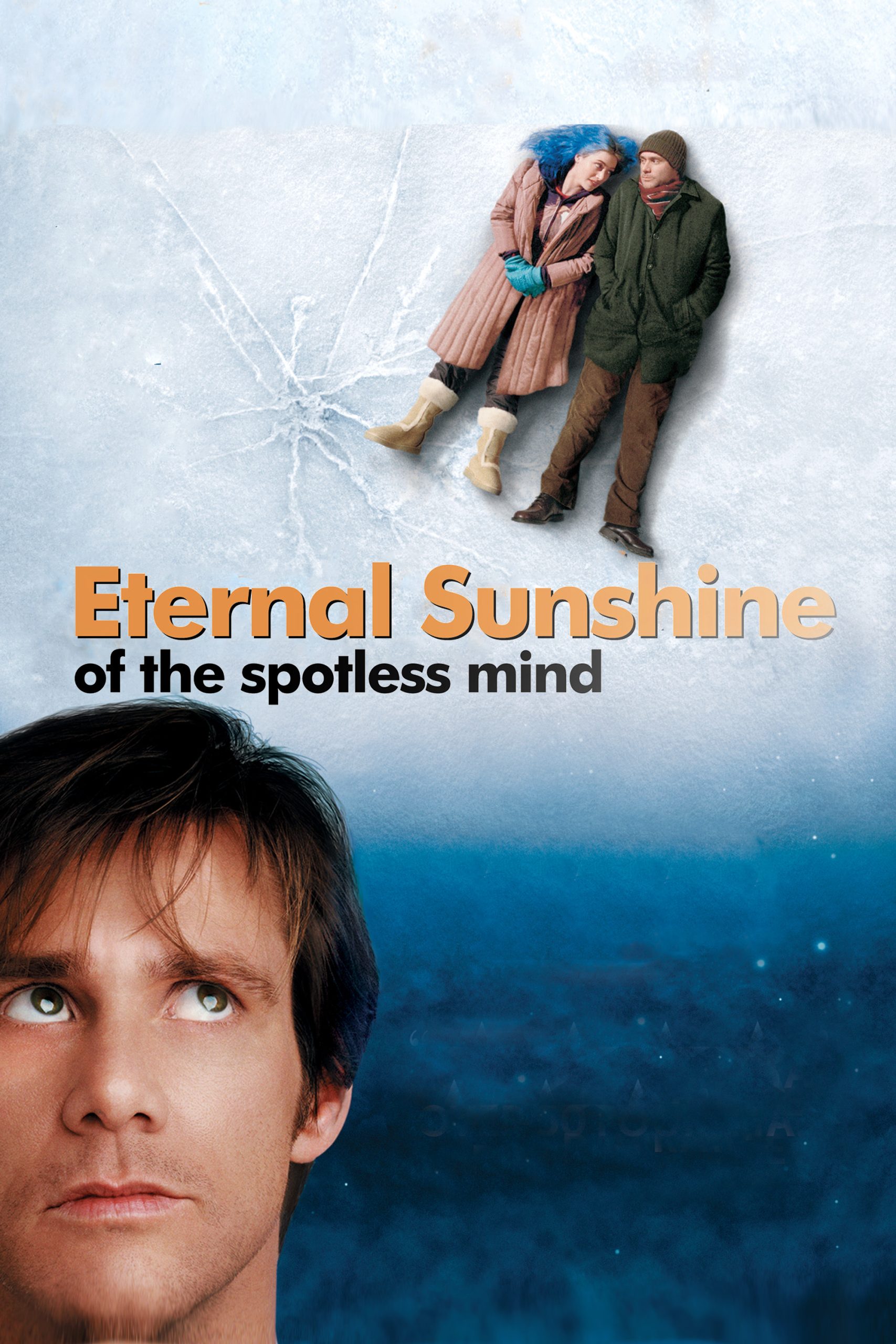
The Question of Truth Behind the Film
I remember the first time I watched “Eternal Sunshine of the Spotless Mind,” I surfaced from its kaleidoscopic narrative feeling a swell of emotion that was more than simple entertainment. I found myself, as I often do with deeply affecting films, wondering if any piece of it was rooted in truth. There is an almost reflexive urge to trace those raw moments of heartbreak, awkward intimacy, and fragile hope back to the real world. I think this instinct says as much about cultural ritual as personal curiosity—we are drawn to the promise that “this happened to someone” because it validates our own messy lives. When a movie advertises itself as “based on a true story,” I feel as though I’m being invited to witness something authentic, an act of emotional archaeology. This assurance colors my expectations and deepens my engagement; I approach the material differently, less as fantasy and more as a documentary of the soul.
Yet I’ve come to recognize the subtle assumptions that trail behind the label of “true story.” There’s a hunger for meaning when we believe real events underpin a narrative, a readiness to extract lessons or warnings. I notice that my viewing habits shift—do I look for accuracy, faithfulness to lived experiences, or am I simply seeking to empathize with the characters on a deeper level? Sometimes I catch myself questioning how much is embellished. As a critical viewer, I’ve realized that the “truth” in cinema isn’t merely about literal facts, but about emotional resonance. Still, knowing whether a film claims historical fidelity frames every interpretation; I compare my own life to the portrayed struggles, measuring them with a ruler borrowed from reality. The tension between fact and fiction in film is more than academic—it fundamentally reshapes my relationship to the story being told.
Historical Facts and Cinematic Interpretation
With “Eternal Sunshine of the Spotless Mind,” I approach an unusual dilemma: despite its astute insights into memory and relationships, it frankly isn’t anchored to an historical event. Instead, the story—whose screenplay was penned by Charlie Kaufman—emerges from a speculative “what if” scenario in the tradition of speculative fiction. This makes it distinct from films that reconstruct public or private lives for the camera. Unlike works dramatizing political uprisings or biographical legends, this film builds its world forensically, dissecting the emotional purchase of memory alteration. I don’t find factual anchors here in the traditional sense, yet I find I detect strands of lived emotional truth woven throughout. The grief, longing, and self-deception that thread Joel and Clementine’s odyssey are, in my reading, no less authentic than events transposed from a nonfiction memoir.
When a film does borrow from actual events, as I’ve noticed in many biopics or war dramas, there’s invariably a process of artistic distillation. Scenes are streamlined, characters combined or omitted, and chronology capitulates to the arc of narrative clarity. I think about the tension between what happened and what is shown—I have seen the way directors frequently condense timelines, heighten conflicts, or insert imagined dialogues to crystallize the emotional core of the story. Even documentaries—those most overtly wedded to reality—select and arrange footage for maximum coherence. In the case of “Eternal Sunshine,” I interpret the science-fiction conceit as an interpretive framework for examining universal psychological experiences, rather than as a commentary on real technologies. Although memory erasure is fictional, the devastation of heartbreak and the temptation to selectively forget pain are intensely real sentiments. In viewing the film, I juxtapose the narrative’s speculative device against my own recollections, sensing that its fictional shell contains kernels of familiar truth.
What Changes When Reality Is Shaped for Cinema
For me, watching films that manipulate reality for the sake of storytelling has revealed the delicate balancing act at the heart of cinematic adaptation. When I know a film owes its genesis to specific real-life occurrences, I am attuned to the calculus involved in dramatizing those facts: what must be omitted for coherence, what is condensed for rhythm, and what is reimagined altogether. Is the spirit of the event preserved, or has it been bent to accommodate the logic of plot and spectacle? These questions pulse beneath my appreciation of films that tread the line between fact and invention. Even more so with “Eternal Sunshine,” where the central device—a clinic that erases memories—serves as both artistic liberty and structural necessity.
I find the practical trade-offs fascinating. When filmmakers hew closely to historical accuracy, the payoff, in my estimation, is an atmosphere of specificity and a certain gravitational pull—audiences feel they are witnessing the plausible texture of the past or a lived emotional reality. Yet, fidelity to events can mean sacrificing momentum or narrative symmetry. Conversely, allowing for imaginative reconstruction can generate concentrated emotional impact, but risks alienating viewers who crave authentic representation. In “Eternal Sunshine,” the narrative’s refusal to anchor itself to an actual scientific breakthrough or specific trauma frees it to explore symbolic associations—memory as disjointed, love as nonlinear, regret as cyclical. I am drawn to these choices not because they mirror my experiences directly, but because their abstraction speaks to broader truths. Although the film sidesteps historical precision altogether, it achieves what I’d call emotional authenticity through metaphor.
There is no one formula. Sometimes, I feel immersed precisely because of the liberties taken; other times, strict adherence to the facts roots me in a recognizably flawed human environment. Watching “Eternal Sunshine,” I have often reflected on how the malleability of memory—presented here through surreal visual language and fragmented structure—mirrors how I actually recall my own past. What the film lacks in reporting, it compensates for with insight. Thus, rather than discount it for lacking “real” events, I read its adaptation choices as invitations to consider how any narrative, real or invented, is shaped by the desire for coherence, catharsis, or closure.
Audience Expectations and the “True Story” Label
When I sit down to watch a film that proclaims “based on a true story,” I find I enter with a completely different set of expectations than I do with purely fictional works. There’s a kind of gravity to supposedly factual narratives; I anticipate learning something about the world, perhaps expecting the film to offer insight into historical moments or remarkable personal journeys. I might scrutinize details for plausibility, speculate on what’s embellished, or later research what actually happened. This instinct is particularly persistent with stories of trauma or heroism—I want to know if the pain and triumph onscreen mirror what someone, somewhere, really endured. The “true story” label shifts my stance from imaginative engagement to investigative, almost journalistic, curiosity.
On the other hand, I find the freedom of a film explicitly labeled as fiction to be liberating in a different way. With “Eternal Sunshine,” I feel released from the obligation to cross-reference or compare; I can enter the emotional architecture on its own terms. Yet, I am still struck by how keenly it resonates—how the intensity of Joel and Clementine’s connection, the ache of their disintegration, and the desperation to start anew feel grounded in experiences I recognize, if not from the news, then certainly from my own personal history or collective cultural narratives. I have noticed how conversations around the film often drift back to questions like, “Would you erase memories if you could?” as if the premise itself were a psychological experiment, testing the boundaries of what humans might really choose under such fantastical conditions. The laughter, sighs, or even discomfort that ripple through audiences in these moments show me that the line between fiction and felt truth is, at times, impossibly thin.
When a film is “inspired by real events,” I experience a third kind of expectation—an occupying space between authenticity and reinvention. I am primed for artistic license, but still seek a tether to plausibility. Although “Eternal Sunshine” does not claim this middle ground, its hypothetical scenario echoes with the ring of something universal. Through my lens, the film plays a clever trick: it never asks for belief in the literal, but it does ask for emotional investment. Here, fact blends with fiction in the responses the story incites, rather than in the details it references. Memory, love, regret—these are not just dramatic devices, but touchstones of human life, and the film’s genius is in making the imaginary feel so plausible that the literal distinction recedes. In reflecting on audience reactions, I find that what is “real” becomes less about biography and more about how closely the film’s emotional world shadows our own.
Final Perspective on Fact vs Fiction
As I reflect on the interplay between fact and invention in cinema, I find my appreciation for films like “Eternal Sunshine of the Spotless Mind” only deepens. What’s real and what’s imagined become less binary categories and more like coordinates on a spectrum—a tension that defines how I interpret, rather than how I appraise, what’s on screen. Knowing a film is fictional frees me to focus on psychological or thematic resonance, rather than on benchmarks of accuracy. I notice myself more willing to open up to metaphor, to linger on symbolism, and to interrogate what the film asks me to feel, not what it demands I believe.
If I had found out that “Eternal Sunshine” was based on an actual scientific endeavor or on a real couple’s story, my engagement would have turned analytical: I’d weigh its plausibility and guess at what was omitted or dramatized. Instead, the film’s foundation in invention frees me to treat it as a speculative map of emotional territory—each sequence a conjecture about what memory, love, and loss mean in a runaway fantasy made real through cinematic technique. My own history shapes how I respond, and I watch the film both as a personal memento mori and a cultural artifact, even though it doesn’t claim historical authority.
What I am left with, ultimately, is the sense that awareness of a film’s relationship to reality shapes not only how I decode individual scenes, but how I store the film in my own memory. I’m less preoccupied with questions of “Did this really happen?” than with “Does this feel true to lived experience?” The difference, for me, is elemental: fact can sharpen empathy, fiction can evoke profound recognition. The thrill—and the challenge—of watching any film lies in how it blurs these boundaries, encouraging me to reexamine not just its story, but the stories I carry within myself. In this regard, whether the seed of a film is factual or fictional often matters less in my ultimate experience than in the richness and honesty with which it explores what it means to be human.
For additional context, you may also explore the film’s overview and how it was received by audiences and critics.
🎬 Check out today's best-selling movies on Amazon!
View Deals on Amazon