
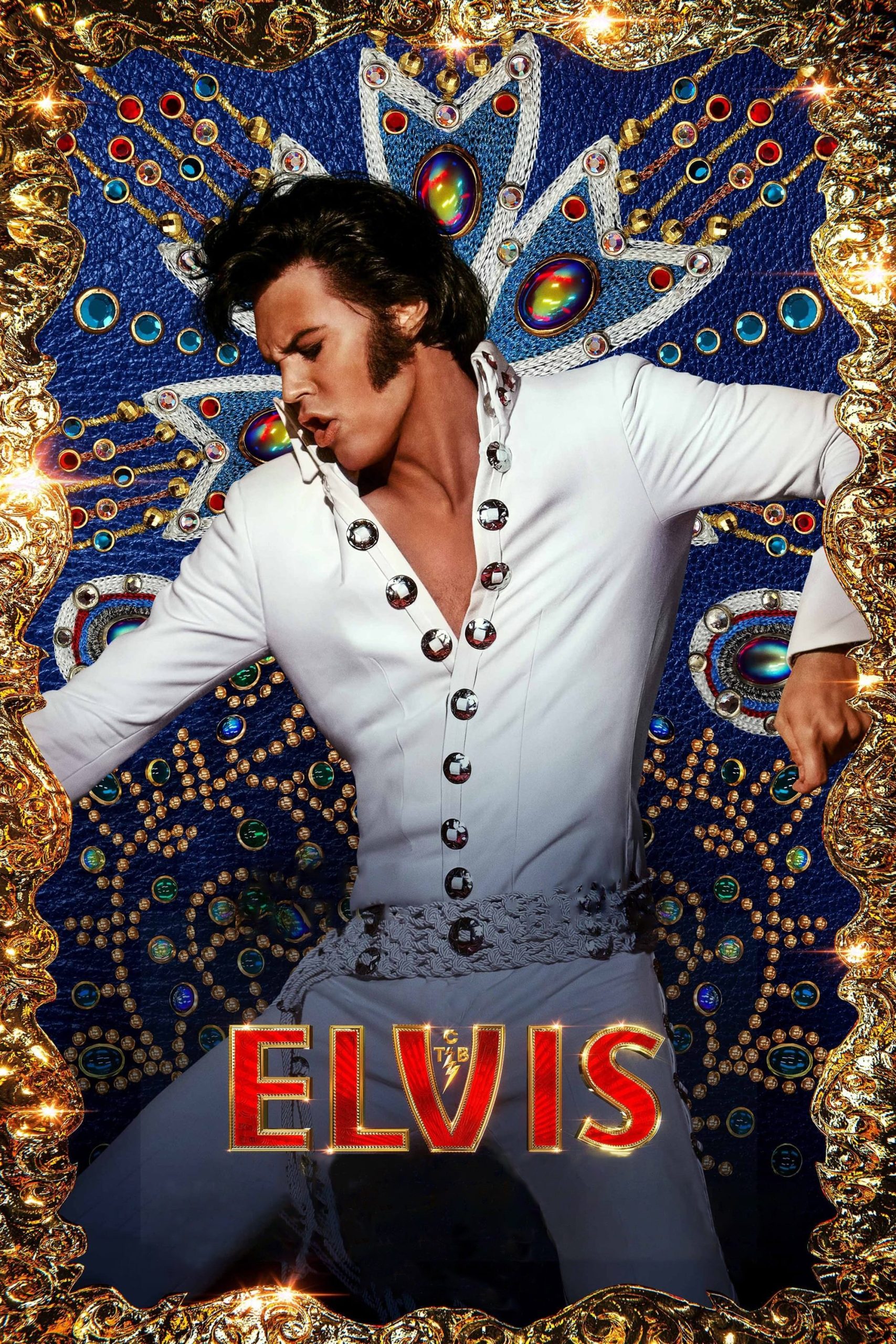
The Question of Truth Behind the Film
From the moment the first bombastic musical cue erupted in Baz Luhrmann’s Elvis, I felt a distinct tug-of-war between reality and reinvention. I find myself, as many do, questioning what portions of these dazzling biopics are inherited from historical record, and what is spun from the filmmaker’s imagination. There’s this almost irresistible urge to divide scenes in my mind—did it really happen like this? Was Presley’s rise genuinely that meteoric, that tragic, that mythic? With films like Elvis, which parade themselves (whether explicitly or subtly) as portraits plucked from real lives, I notice audiences, myself included, approach with a particular set of assumptions. We often expect fidelity to fact, or at the very least, an honorable proximity. The phrase “based on a true story” feels like a promise, sometimes a challenge, daring us to compare onscreen representation with archive footage, interviews, and the layers of public memory. Yet, I’m increasingly aware that this expectation says as much about our hunger for narrative order as it does about our reverence for truth. In my experience, what most people truly seek isn’t so much documented accuracy but a story that feels authentic—emotional coherence that matches the legend we’ve absorbed over years.
Historical Facts and Cinematic Interpretation
Every time I watch a film inspired by a famous figure—especially one as culturally embedded as Elvis Presley—I’m struck by how readily lived events are shaped into something suited to the rhythms of cinema. In Elvis, I recognized a pattern familiar from other biographical films: sprawling lives and fiercely complex circumstances are condensed, rearranged, and colored in such a way that the narrative pulses with momentum. I found that the timeline in the film, for instance, plays loose with the sequencing of Elvis’ musical breakthroughs, his relationship with Colonel Tom Parker, even the chronology of personal and historical upheavals like the assassination of Martin Luther King Jr. and Robert Kennedy. Scenes that, as far as I could determine from biographical sources, happened years apart are sometimes woven into a single feverish montage. Conversations that never occurred in real life are dramatized to punctuate major themes—racism, celebrity, exploitation—necessitating a blend of documented quotes and imagined dialogue.
What intrigues me most is how these reinterpretations aren’t simply cosmetic. In reshaping events for the screen, I notice filmmakers are often clarifying the emotional journey of their protagonist. In Elvis, for example, the tension between Elvis and Parker is amplified far beyond the subtler, more protracted conflicts described in biographies and interviews. The film foregrounds Parker’s manipulation in a nearly operatic fashion, bringing to life the sense of betrayal and control that the historical Presley may have experienced, but perhaps without such melodramatic punctuation. Certain real-life moments—the 1968 comeback, Presley’s Army service, his rapid-fire Las Vegas shows—are telescoped for dramatic effect, truncated or elongated to serve the film’s thematic arc. I’m reminded that every act of adaptation is, in a sense, an act of translation, where factual sequences are reordered for narrative clarity, sometimes at the cost of exacting detail.
What Changes When Reality Is Shaped for Cinema
Whenever the historical record is sculpted into cinematic narrative, I notice the practical trade-offs are both unavoidable and fascinating. Seeking to retain an audience’s engagement, films like Elvis frequently have to collapse intricate relationships and multi-year developments into a handful of emblematic exchanges. I find myself weighing what’s gained—emotional immediacy, narrative propulsion—against what is altered or omitted. The choice to frame events through Colonel Parker’s unreliable narration, for example, underlines the film’s interest in perspective rather than strict chronology. Here, Parker’s voice colors everything; even scenes that might not have included him in Elvis’s real life are shaped by the shadow of his influence. In a way, it becomes difficult, as a viewer, to distinguish Parker’s version of events from Presley’s more elusive inner world.
As a cinema essayist, I’ve come to expect characters to be composites, dialogues to be sharpened, motivations to be clarified beyond what any living person could express in real time. Elvis stages its pivotal moments—the Beale Street influences, the confrontation with television censors, the infamous “International Hotel” performances—like transformative epiphanies, clean chapters in a personal mythology. But real life, as I reflect on my own and others’, is rarely so neat. The jagged edges are sanded down, the messy ambiguities reshaped so that the audience may travel a smooth emotional arc in the space of two and a half hours. While authenticity is a north star, films inevitably operate with different tools: montage, symbolism, and heightened spectacle that might not align with memory or documented fact, yet which serve the broader themes.
Audience Expectations and the “True Story” Label
When a film like Elvis presents itself as a biographical account, I sense a quiet contract forming between filmmaker and viewer. With the “based on a true story” tagline—or even the mere knowledge that Presley was a real figure—I find audiences, myself included, enter the theater with heightened critical antennas. There’s a tendency to search for the edges where fact meets fiction: Which elements have been invented, which preserved? Some viewers, I’ve observed, are deflated when they learn a moment of drama was created wholesale for effect. Others seem more invested in the tonal fidelity, feeling satisfied if the essence of a performer’s life—the struggle, genius, or heartbreak—feels “true,” even if the scenes are fabricated.
I often witness that the impact of the “true story” label is most apparent in post-screening conversations. Casual viewers may ask, “Did that really happen?” or seek out fact-checking articles, perhaps hoping for reassurance that the film they loved (or questioned) isn’t entirely the product of invention. Personally, my relationship with these films changes once I know what is drawn from the historical record and what isn’t. Sometimes, knowing a moving moment was invented for narrative symmetry doesn’t dampen its power; other times, it sharpens my awareness of artifice. I’ve noticed the stakes feel different: If I think a pivotal scene truly happened, its emotional charge lingers in my memory with particular force, as though the story has become part of my own inherited history. If I know it’s an invention, the moment becomes, for me, a lens into the storyteller’s craft—a glimpse of how cinema constructs meaning rather than simply transmitting it.
What’s especially fascinating is how the “true story” label can act as both an invitation and a defense. Audiences drawn to documentaries or docudramas may expect a certain educational value or sense of “witnessing” history. In contrast, with a more openly fictionalized approach, the same viewers might lean back and accept departures from fact as legitimate creative license. Elvis walks this line so brazenly—with an aesthetic that feels both reverential and hyper-stylized—that I caught myself suspending disbelief, trailing the visuals even as I kept a mental ledger of historical accuracy. This shifting orientation—as fact-seekers, then as story-seekers—fundamentally alters how we metabolize each scene.
Final Perspective on Fact vs Fiction
Having followed Elvis through its whirlwind of glitter, grief, and spectacle, I’m left more aware than ever of how my understanding of the film is shaped by what I know, suspect, or discover afterward about its factual basis. When I recognize a scene as grounded in verifiable history, I approach it with a distinct kind of engagement—sometimes an almost reverent attention, as if privy to a momentous reenactment. Conversely, when I recognize fabrication, or even deliberate rearrangement, my focus turns to how those changes inflect the film’s message, its emotional hues, its chosen emphases. This awareness rarely spoils the experience for me; instead, it unlocks additional layers of meaning. For instance, knowing how the film condenses Presley’s complex and often contradictory relationships into a handful of vivid, symbolic encounters makes me more attuned to its priorities—what it wishes to communicate about identity, celebrity, and exploitation in America’s midcentury.
In my experience, films that blur fact and fiction, especially those as flamboyantly interpretive as Elvis, serve as prompts—encouraging audiences to interrogate not just what really happened, but why certain stories persist over others, and how cinematic storytelling uniquely immortalizes or distorts public memory. Rather than offering a final verdict on Presley’s life, I see the film as a kind of palimpsest, layering interpretation over the architecture of real events. The more I learn about where the movie departs from history, the more I appreciate how it crafts an emotional logic all its own—a narrative truth that may not be factual in every particular, but which nevertheless resonates with a mythic power. For me, the most meaningful effect of parsing fact from fiction is that it trains my attention: I become sharper, more reflective, more curious about how history is continually retold to fit the needs of each new era and its storytellers.
For additional context, you may also explore the film’s overview and how it was received by audiences and critics.
🎬 Check out today's best-selling movies on Amazon!
View Deals on Amazon