
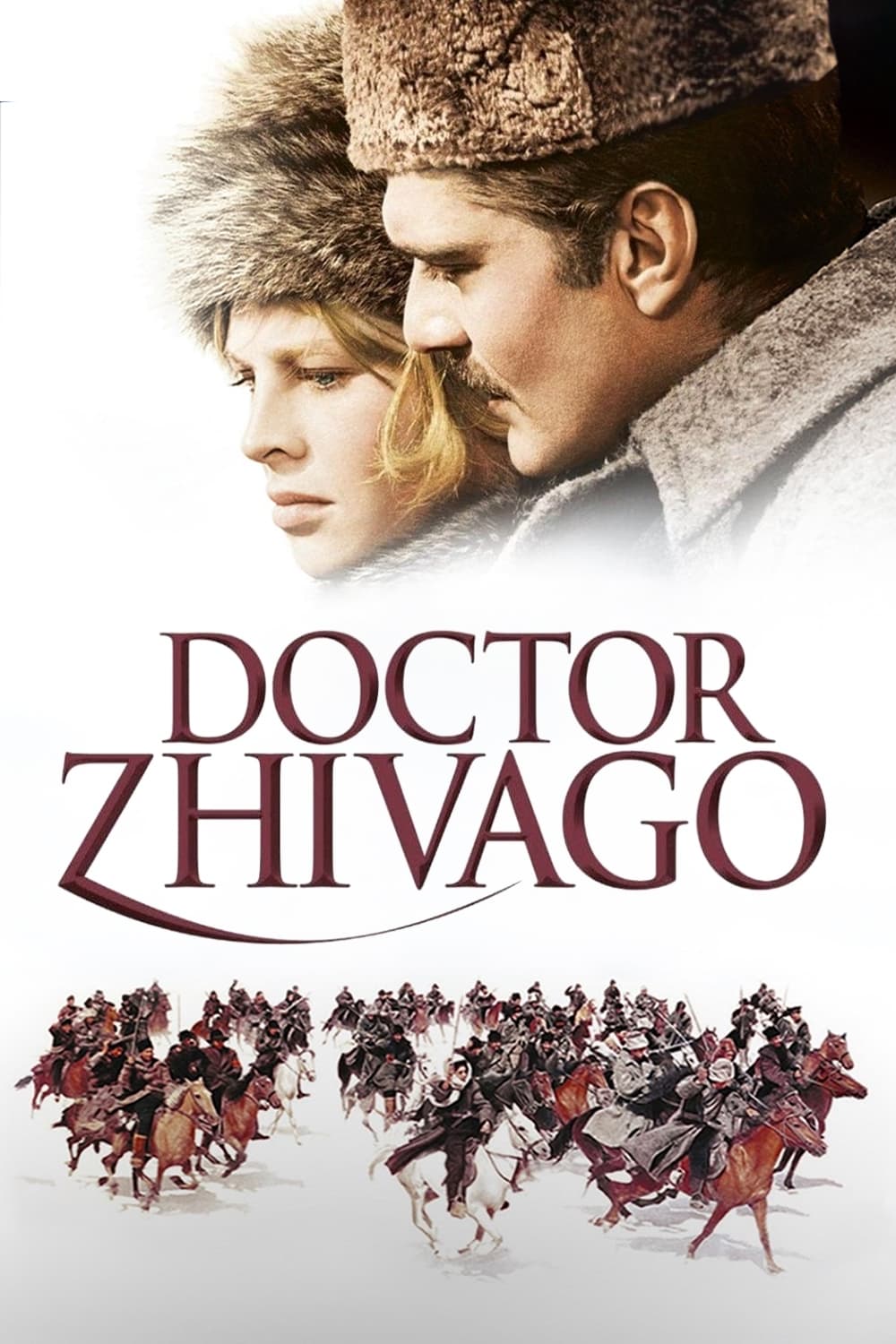
The Question of Truth Behind the Film
“Doctor Zhivago” has always drawn me into a space where the boundaries of fact and fiction feel uniquely porous. I remember the first time I watched it, and how I couldn’t help but ask whether Yuri Zhivago himself had ever existed. This question, I believe, is not just born of idle curiosity—the sweep of war, revolution, and personal upheaval stirs a desire to anchor the film’s emotional currents in something tethered to actual history. Whenever I encounter the phrase “based on a true story,” it immediately changes how I internalize what unfolds on screen. I find myself scanning the narrative for evidence of lived reality, as if fact itself lends a kind of sanctity to suffering and endurance. In the case of Doctor Zhivago, that instinct pushed me to wonder: what does it mean for a film to wear the cloak of history, and how does that affect the stories it feels authorized to tell?
In my own experience, audiences often bring expectations—even subconscious ones—to films that assert a basis in truth. The more momentous the backdrop, the stronger our urge to parse what’s authentic from what’s invented. For me, there’s almost a double-layered viewing—the obvious narrative, and the secondary act of interpretation: what can I trust, what is imagined, and what are these choices meant to illuminate? In connecting with Doctor Zhivago, I couldn’t ignore how my own investment in its characters hinged partly on the premise that their losses, choices, and passions might reflect the real traumas and complexities of the Russian Revolution. Assumptions about the “true story” label run deep, often positioning us to expect both a history lesson and a dramatic experience, even if those aims sometimes pull in opposite directions.
For additional context, you may also explore the film’s overview and how it was received by audiences and critics.
Historical Facts and Cinematic Interpretation
The epochal sweep of Doctor Zhivago—its frozen landscapes, teeming crowds, and undercurrents of revolution—invites consideration of which aspects are grounded in specific moments of Russian history. For me, the visual and emotional tapestry conjured by David Lean’s adaptation feels undeniably evocative of the era between World War I and the Russian Civil War. Yet, as I look closer, it becomes apparent that the raw material of history is refined and rearranged with meticulous intention. The sheer force of the 1917 Revolution, and the ways it reverberates through families and lovers alike, reflects real societal upheaval. But whenever I compare the film’s depiction of events to documentary sources or scholarly accounts, I’m struck by the selectivity—entire battles are alluded to; years of deprivation are compressed into months; and anecdotal experiences morph into emblematic moments meant to communicate broader truths.
One vivid example is the way Doctor Zhivago treats the chaos of the Revolution. Rather than rendering every turn of history in granular detail, it distills the experience of civil war to a handful of symbolic encounters—a train journey across ‘a nation at war with itself,’ an estate overrun by soldiers, and a vanished world glimpsed through the snow. These tableaus don’t exist as precise historical recreations, but as cinematic shorthand for vast, complicated processes. I notice the emphasis is less on which regiment occupied which city, and more on how ordinary people—Zhivago, Lara, Tonya—negotiate a shifting reality. The historical framework exists, but it’s rearranged to serve narrative arcs more than strict accuracy. Even the imagined towns and unnamed villages seem representative, rather than specifically mapped to any one place or incident.
It’s interesting to me how personal stories get shaped as analogies to broader social convulsions. While individual characters might not correspond directly to verifiable figures, their struggles reflect what I recognize as plausible historical dilemmas. Still, the leaps in chronology and elliptical plotting suggest to me that the demands of narrative coherence outrank comprehensive historical citation. In Doctor Zhivago, the messiness of real timelines is smoothed into a continuous dramatic current, selecting only the most resonant episodes—the freezing journey, the disappearance of loved ones, the irretrievable past—and arranging them to highlight the story’s thematic preoccupations. In that sense, the film’s version of history is both recognizable and stylized: it’s not untrue, but neither is it exhaustive or documentary.
What Changes When Reality Is Shaped for Cinema
As I reflect on Doctor Zhivago, I’m acutely aware that every historical adaptation grapples with trade-offs. For me, the process of translating sprawling, decades-long upheaval into a single cinematic narrative always requires pruning, rearrangement, and an editorial eye for what is dramatically vital rather than merely factual. When I immerse myself in the film, I feel how the rhythms of cinema—its need for momentum, its focus on individual agency, its demands for emotional closure—inevitably alter the way history is presented. An event that might have been gradual and ambiguous in reality becomes instantaneous on screen. Causality is sharpened, connections are clarified, and the chaotic interplay of politics and private life is reframed in ways that are designed to be digestible and evocative for a modern viewer.
In my view, the choice to fuse multiple experiences or real stories into a composite character alters the texture of the film’s reality. For example, Zhivago himself seems, to me, less an individual pulled wholesale from the past than a mosaic of various experiences, moods, and social pressures documented throughout the era. Similarly, the romance between Zhivago and Lara incorporates elements that might, in actual cases, have played out in very different circumstances—or not at all. These creative liberties aren’t arbitrary, but I see how they simplify or stylize complex relationships and events, ensuring that everything serves a movable, evolving dramatic structure. The compressed timeline is one such device: revolutions that in real life unfurled over many years are telescoped into a background for a generational family saga. That compression, though necessary for storytelling economy, inevitably requires leaving some realities unrepresented.
I find myself attentive to the subtle recalibrations: the way dialogue is crafted to encapsulate political arguments, the use of landscape as an emotional barometer, or the introduction of composite events that are rooted in truth but fictionalized for clarity. These are choices, not inaccuracies—each one motivated by the logic of cinema’s need to engage and clarify. Sometimes I pause to consider what stories or perspectives are omitted when this kind of focus is applied, and whether the result is a kind of poetic truth rather than journalistic fidelity. The film’s artistry, for me, lies in its ability to conjure an emotional sense of an era, even as it reshuffles the facts for structure and theme.
Audience Expectations and the “True Story” Label
Whenever I approach a film like Doctor Zhivago, I’m struck by the way audience knowledge—or absence thereof—can color one’s emotional and intellectual experience. If I walk in believing what I see is a direct translation of real events, I might invest more emotional weight in the characters’ fates; every hardship and glimmer of hope feels amplified by the sense that it actually happened, somewhere, to someone. But the moment I become aware of a film’s creative interventions—when I see “inspired by” instead of “based on,” for example—my posture shifts. I find myself more attuned to signs of invention or adaptation, and I start reading the film not just as history, but as interpretation.
There’s a fascinating tension in that shift: I’ve noticed that when a film overtly claims its “true story” status, audiences—including myself—may come with built-in standards for authenticity or factual rigor. Every deviation can become a point of contention or curiosity. Yet, in cases like Doctor Zhivago, where the story is based on a novel already blending fiction with a historical canvas, I sense a kind of productive ambiguity. I can surrender to the narrative fully, even while asking where it diverges from the historical record. I realize that such ambiguity invites a richer—but also more complicated—conversation about the film’s relationship to reality: am I watching what happened, or what might have happened, or what some imagined as possible within the constraints of a particular time and place?
For me, the knowledge that Doctor Zhivago is rooted in Boris Pasternak’s novel, which itself was inspired by the author’s reactions to the tides of Russian history and not by explicit biography, tempers my expectations. I’m released from the duty to scrutinize dates and details, and instead, I can engage with the emotional and philosophical territory the story traverses. Yet I can’t help but notice that some viewers react differently; they may yearn for fidelity to the past, or be unsettled by creative liberties, especially when the events depicted involve largescale loss and transformation. I think that the labeling—be it “based on” or “inspired by”—conditions us to read each dramatic turn as either evidence of historical processes or as an artistic meditation on human nature amid change. My own experience oscillates between these poles, and I suspect many others feel that same tug between wanting to learn history and to feel it, even through artifice.
Final Perspective on Fact vs Fiction
What stands out to me after all these reflections isn’t a preference for either fact or fiction, but rather a heightened awareness of how knowing the difference alters my engagement. When I watch Doctor Zhivago with a clear sense of its origins—a novel spun from the historical storms of early 20th-century Russia, rather than a straight chronicle of survivors and combatants—my interpretation becomes more layered. I search for emotional and psychological truths more than for concrete dates or names. Yet, had I believed uncritically in its status as pure fact, I might be tempted to treat its narrative decisions and imagery as direct evidence of the Russian Revolution’s granular realities, rather than as guided responses to history. This awareness changes the register on which I receive the film: I see it as a meditation on how seismic change shapes intimate lives, rather than as a definitive record of one individual’s fate amidst upheaval.
For me, acknowledging that Doctor Zhivago stands somewhere between evocative fiction and selective historical portraiture doesn’t dilute its resonance. Instead, it deepens my understanding of how the film interacts with the past, using invention as a means to probe the moral and existential questions that real events provoke. I see the blending of truth and creation not as an obstacle, but as an opportunity to reflect on the ways stories help us process the chaos of history—by narrowing our focus, heightening our empathy, and distilling overwhelming events into forms we can hold and contemplate. My own appreciation for the film—and for historical cinema more broadly—rests in embracing this complex interplay, where fact and fiction collaborate to illuminate, rather than simply to record, what it means to live through transformative times.
🎬 Check out today's best-selling movies on Amazon!
View Deals on Amazon