
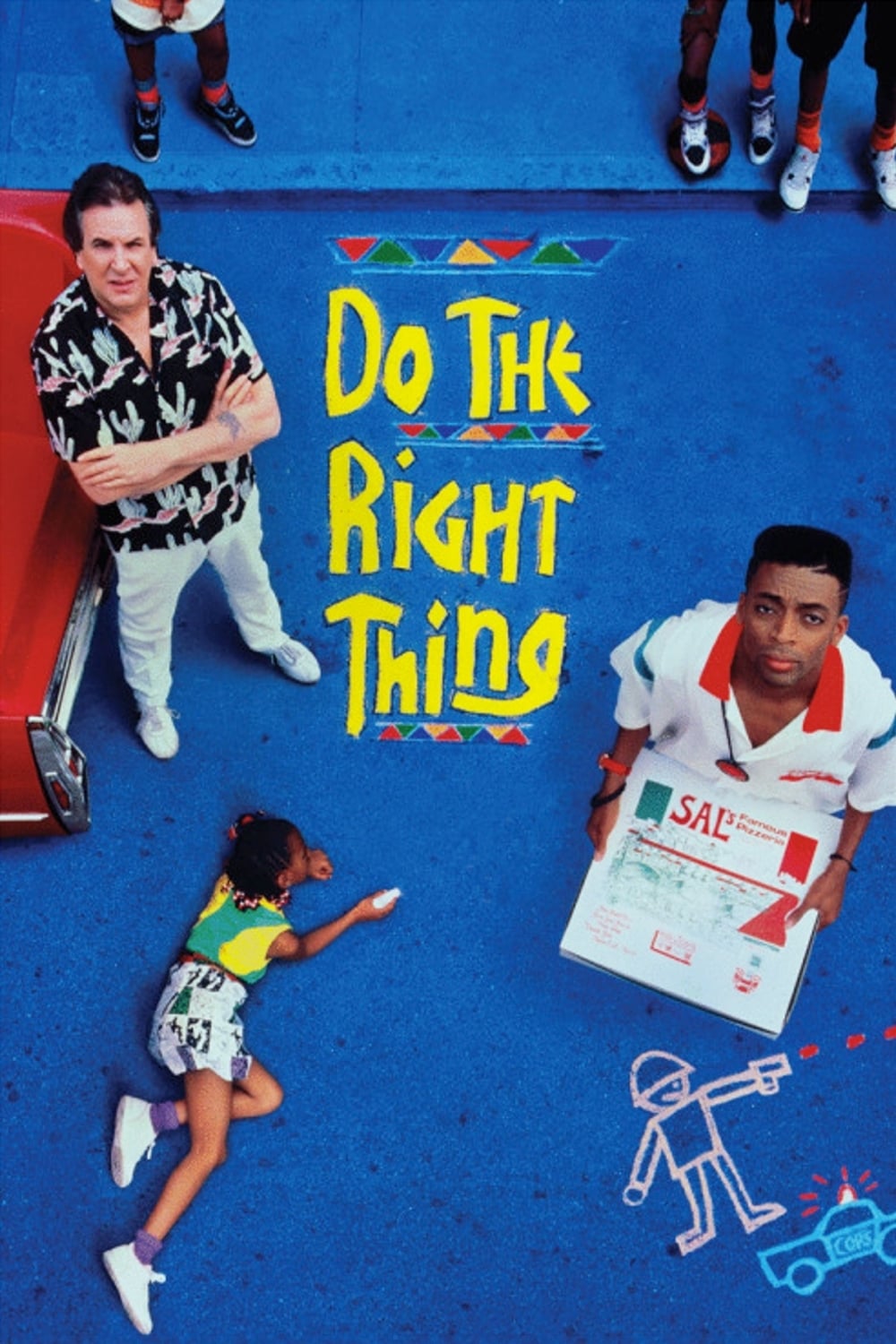
Is This Film Based on a True Story?
When I watched “Do the Right Thing,” I was completely absorbed by how real the story felt—every moment buzzing with energy, tension, and human complexity. Still, as authentic and immediate as the characters and situations seemed to me, I eventually realized that the film itself is not a literal retelling of real-life events. As I investigated the origins, I learned that “Do the Right Thing” is, in fact, a fully fictional narrative. While it captures real social dynamics and incorporates plenty of recognizable truths about urban life, racial tension, and community in late-1980s Brooklyn, there isn’t a single news event or person whose story is directly dramatized here. Rather, I recognized that the film is informed by a collective reality—a tapestry of lived experiences and broad social currents, rather than a documentary account of one specific event or individual.
The Real Events or Historical Inspirations
What immediately struck me when reflecting on the world Spike Lee crafts in “Do the Right Thing” is how rooted it is in a particular place and time. Even though this story wasn’t taken directly from headlines, I picked up on connections to the ongoing racial unrest and several high-profile incidents that punctuated the cultural landscape of the 1980s. While the script was wholly original, Lee pulled inspiration from the climate of New York City, from media coverage of police brutality and urban poverty, to political debates swirling about integration, gentrification, and race relations. As I read interviews and production histories, I came to view the film as a cinematic distillation of Lee’s experiences growing up—and living—in Brooklyn. He tapped into a social atmosphere thick with frustration and hope, anger and resilience. For instance, the death of Eleanor Bumpurs at the hands of New York City police in 1984 and the racially charged Howard Beach attack in 1986 seemed to me unmistakable backdrops to the screenplay’s creation, even though neither case is reenacted outright in the movie.
To my eyes, Lee was not striving for journalistic retelling. Instead, he presents a microcosm—a single block on the hottest day of the year—echoing the larger social fires burning across America at that time. The film’s setting, Bed-Stuy in Brooklyn, and the lives of the residents there, gave Lee a kind of living, breathing set of source material. I can recognize that Sal’s pizzeria, the neighborhood residents, Radio Raheem’s boom box, the ice-cold beer and relentless sun are drawn not from literal news stories but from the lived reality of the borough—including the pressures and tensions that were bubbling up in those years. As a film researcher, when I look at “Do the Right Thing,” I see an artist stitching together dozens of news clippings, conversations, and urban details into a narrative whole. The film acknowledges the climate in which incidents like the Michael Stewart case—where a 25-year-old Black graffiti artist died in police custody in 1983—informed public awareness around issues of policing, race, and civil unrest. Even though those incidents are not directly dramatized, they provided a kind of social DNA for the film’s atmosphere.
I was also deeply aware that Lee brings in literary and musical references to underline the film’s cultural lineage. The fiery motivational speech by Samuel L. Jackson’s DJ Mister Señor Love Daddy, the famous “Tawana told the truth!” sign, and Public Enemy’s “Fight the Power” on repeat, all root the narrative in the musical, activist, and media environment of Lee’s youth. These choices tell me that the film’s realism is cumulative—a reflection of place, time, and continuous exposure to the headlines, rather than one single inspiration adapted point-for-point.
What Was Changed or Dramatized
Watching “Do the Right Thing,” one of the strongest impressions I had was the sense of spontaneity, as if the camera just happened upon real people at a breaking point. Despite that verisimilitude, Lee made deliberate choices to intensify dramatic effects and accelerate social tensions for cinematic purposes. To start with, the day depicted in the film is fictional—a crucible where everyday annoyances and unspoken resentments ignite into open conflict. There never was a single street corner where this exact drama unfolded; instead, I see Lee compressing the experiences of thousands of city blocks and countless stifling days into a single, landmark event.
The explosive confrontation that forms the heart of the movie—the death of Radio Raheem during a scuffle with police, and the subsequent destruction of Sal’s pizzeria—was not a recreation of a documented event in Bed-Stuy, but I can trace echoes of many incidents with tragic similarities. The dramatic escalation, complete with neighborhood arguments, personal provocations, and the literal and metaphorical heat, is heightened for narrative unity. Those shouting matches, the shouted slurs, the strained relationships between business owners and longtime residents—these combine artistic exaggeration with a fidelity to the truths felt by many New Yorkers at the time. Lee invents specific characters like Sal, Buggin’ Out, Mookie, and Da Mayor, each designed to represent different generational and cultural perspectives. Their conversations and conflicts often serve more as vehicles for broader commentary than as literal re-creations of actual occurrences.
Additionally, in the process of distilling the broad issue of systemic racism and community anger into a manageable, two-hour narrative, Lee made some necessary compressions and composite characterizations. For example, Radio Raheem’s tragic encounter with police draws on both contemporary and earlier accounts of police violence against Black residents, but focuses those themes through a highly individualized lens. I never saw Lee claim to tell “the” definitive story of any one person; his approach, as I interpret it, is more allegorical. Even the setting, though realistic, was carefully constructed—Lee and his production team built the exterior of Sal’s Famous from scratch on Stuyvesant Avenue, giving the neighborhood a kind of planned unity that let interactions feel more charged and fateful.
I noticed that Lee uses visual motifs and repetition to dramatize racial tension: the stylized montage of residents hurling ethnic and racial insults into the camera is a fiction that lets viewers feel the volatility of the block in a way news reports never could. In blending stylization with documentary realism, Lee is not so much presenting a single true story, but amplifying the pressure points in society and inviting viewers to feel and question them for themselves.
Historical Accuracy Overview
Reflecting as both a film enthusiast and a researcher, I see “Do the Right Thing” as straddling an intriguing line between authenticity and invention. From an accuracy standpoint, the film is honest about the emotional realities and structural inequities that marked late-1980s Brooklyn. I find its evocation of urban geography, neighborhood dynamics, and the interconnectedness of residents thoroughly faithful to the lived experience of the place and era, especially for working-class Black communities. When I look at Sal’s pizzeria and the gathering of characters on stoops and sidewalks, it’s uncanny how closely these scene elements resemble archived photographs and oral histories I’ve come across.
Where the narrative diverges from strict factuality is in its particular incidents and character arcs. Sal, Mookie, and others are not drawn from verifiable historical personalities, but are composites—drawn from multiple sources, perhaps mixed with elements from Lee’s own background. The riot and property destruction at the film’s climax, while reminiscent of disturbances described in 1980s news coverage, are a dramatic extrapolation; police records do not point to a singular incident quite like the one depicted on this fictional day.
Despite these departures, I sense that the thematic core of the film—questions about who feels welcome in American public space, how law enforcement is experienced by different communities, and the subjective nature of “doing the right thing”—remain absolutely germane to real-world discussions. The film’s use of Public Enemy’s anthem and its interspersed news-style references ground its fictional world solidly in the cultural discourse of the moment. At the same time, visual choices like the color-saturated cinematography, animated transitions, and heightened dialogue remind me that I’m experiencing an interpretation, not a documentary.
If I compare the movie’s depiction of racial tensions and NYPD responses to period journalism from outlets like The New York Times or New York Daily News, I find that the outlines are accurate, but the specificities are invented. There’s fidelity to mood and circumstance more than a direct recreation of specific events. For example, the fear and suspicion that shape encounters between residents and police often match real testimony from the era, but Lee’s rendering trades in a broad sense of unease and frustration, then channels it into a fictional confrontation that becomes symbolic rather than literal. This approach, as I interpret it, is what gives the film its power—a kind of emotional truth that frequently feels more immediate than a strictly factual retelling might provide.
How Knowing the Facts Affects the Viewing Experience
Understanding the origins and inspirations behind “Do the Right Thing” fundamentally shaped how I experienced the film. Knowing it is not a documentary—not even a biopic of a real neighborhood or an official historic moment—freed me from searching for direct factual accuracy in every scene. Instead, my attention was drawn to the feelings, relationships, and underlying meanings woven throughout the film’s fabric. I recognized many allusions to cases and situations reported in the media, and found new significance in the script’s little details. It was fascinating to realize that, although I was not witnessing a literal reenactment, I was still being given real insight into the ways that everyday tensions can build—sometimes invisibly—toward explosive results.
I also noticed that Lee’s approach invites me, as a viewer, to bring my own experiences and knowledge into the narrative. Whenever I see news stories about flashpoints between police and Black communities or heated debates about representation and respect, I see how the film serves as an archetype—a way of organizing and wrestling with problems that remain unresolved. Because the characters are shaped by, but not shackled to, specific counterpart individuals, I am able to read their struggles and choices as both intimately personal and undeniably universal. The fictionality becomes liberating: I’m not distracted by details of what did or didn’t “really” happen to a particular person, but instead find a resonance with wider truths.
I’ve found that knowing the film’s background intensifies the sense of tension and sadness in its later scenes. When the police arrive, when the violence erupts, it’s impossible for me not to remember that such moments have happened offscreen, in real streets, before and since. Lee doesn’t tell me what to think about Mookie’s actions or Sal’s pain, but he does make plain that these dilemmas exist—a fact reflected not in courtroom transcripts, but in the endless churn of news cycles and public debate. My own research means I watch with both empathy and a sense of foreboding; the drama, while fictitious, never lets me forget the broader context from which it springs.
The more I learned about the film’s production and inspirations, the more I appreciated Lee’s fusion of the documentary and the allegorical. For anyone new to the film, or returning after years away, I believe that grasping the collective reality—the real injustices, anxieties, hopes, and heartbreaks informing every frame—expands the movie’s impact. It becomes less a story with answers, and more an invitation to confront ongoing questions. In my experience, that awareness only deepens the film’s relevance, urgency, and emotional weight.
After learning about the film’s origins, you may want to see how audiences and critics responded.
🎬 Check out today's best-selling movies on Amazon!
View Deals on Amazon