
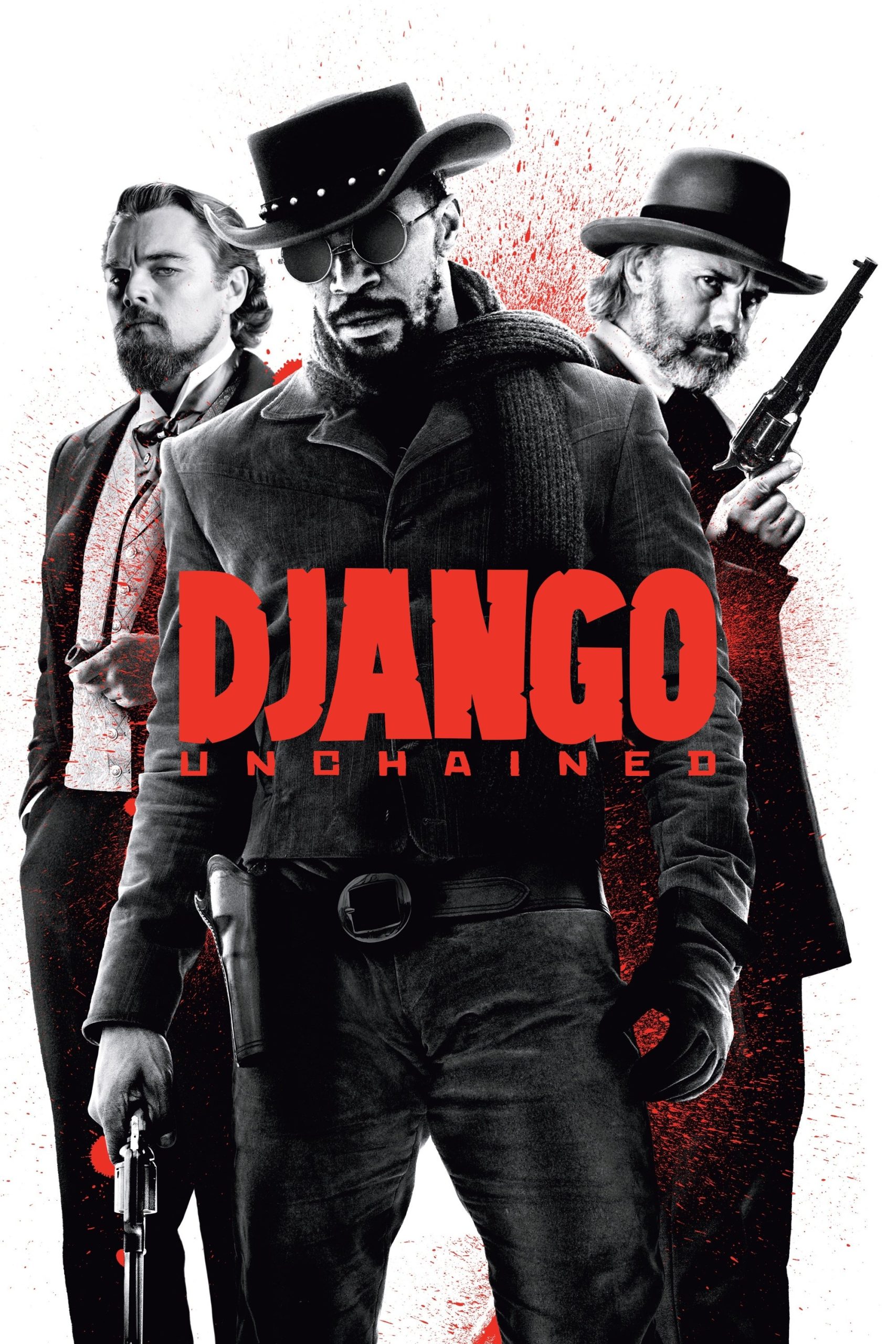
The Question of Truth Behind the Film
Whenever I engage with a film like Django Unchained, I immediately find myself wrestling with the slippery boundary between reality and invention. The experience is colored by the ever-present question: “Did this really happen?” I notice how often I, along with other viewers, look for clues pointing to a film’s basis in history, as if unmasking its factual substrate might unlock a deeper or more legitimate understanding. There seems to be an almost instinctive desire in me—and I imagine in many others—to seek an anchor in truth, as though uncovering ‘the real story’ will validate or amplify the impact of what unfolds on screen. This reflex says much about our inherent trust in cinema’s persuasive power; even when watching stories filtered through fiction, I cannot help but wonder about their proximity to lived human experience, especially when films burden themselves with recognizable settings or issues. The label “based on a true story” often comes laden with unspoken assumptions for me: seriousness, authenticity, moral weight. In the absence of such a label, I notice how my expectations subtly shift, leaving me more open to extravagance or fantasy, but perhaps less likely to treat the film’s ideas as commentary on actual historical circumstances. With Django Unchained, which never claims documentary fidelity but situates itself in a past that was real and brutal, I am acutely aware of my tendency to search for truth within stylized fiction. The urge to ask, “Did this really happen?” does not always mean I expect literal truth, but it frames how I interpret character motivations and the forces shaping the plot—am I entering an imagined world merely for entertainment, or am I being asked to grapple with a representation of real injustices?
Historical Facts and Cinematic Interpretation
When I watch a film set amidst a specific era such as pre-Civil War America, my mind automatically begins drawing a mental map of real events alongside what the filmmaker has chosen to show. In the case of Django Unchained, I’m keenly aware that, while the movie offers vividly rendered plantation environments and alludes to the horrors of enslavement, it does not directly lift its story from the historical record. For me, this means that the recognizable framework of slavery-era America functions largely as a canvas, more so than as a meticulously reconstructed backdrop. I often notice the ways in which historical realities are condensed in the interest of focus and rhythm—multi-faceted conflicts become personal vendettas, broad injustices coalesce into the suffering of a handful of protagonists, and sprawling social systems are distilled into isolated, often cinematic, set pieces.
While there were bounty hunters and, more tragically, countless men and women enduring the atrocities of forced labor, I realize the dynamic partnership between Django and Dr. King Schultz is a notably creative arrangement, constructed out of genre conventions and narrative expediency rather than rigid fidelity to any specific set of historical figures. The very idea of a Black slave becoming a professional bounty hunter during this timeframe seems more a product of narrative invention than recovered historical occurrence. Yet, I recognize that the film’s depiction of violence, brutality, and dehumanization—though heightened and at times outlandishly stylized—does draw upon genuine aspects of 19th-century American life. My understanding is shaped not by expecting a literal recounting, but by noticing how kernels of truth are extrapolated into imaginative scenarios, perhaps borrowing just enough reality to ground flights of creative storytelling. The historical record becomes a palette, selectively invoked to lend emotional weight or social resonance without anchoring the film to a rigid chronicle of events. That, for me, is the essential distinction: the film reconfigures fragments of collective history, blending fact and fiction in a way that compels me to ask not what is real, but what is possible within the artistic vision at play.
What Changes When Reality Is Shaped for Cinema
I often find myself reflecting on what consciously gets traded away when a director reshapes raw historical material for the demands of cinematic storytelling. In the case of Django Unchained, I am struck by how the film opts for vivid, almost operatic emotional arcs rather than the messier, often ambiguous contours of documented history. I notice that clarity and brevity frequently win over accuracy; sprawling timelines are compressed into a digestible sequence of events, painstakingly intricate realities are channeled into accessible, even archetypal, characters. For someone like me, who is fascinated by the fidelity-filmmaking tension, these adaptations are not acts of dishonesty but pragmatic choices reflecting a different kind of truth—the truth of audience engagement and narrative momentum.
Watching Django Unchained, I’m aware that the moral universe it creates is, by necessity, more sharply defined than the tangled grey zones of historical record. I experience the emotional impact of Django’s journey within a universe of clear antagonists and allies—figures who may echo real people but are ultimately sculpted to serve the cathartic highs and lows of a revenge narrative. The film seems to extract the emotional essence of oppression, distilling collective injustices into personalized quests—Django’s search for Broomhilda becomes a symbolic stand-in for broader desires for liberation, justice, and dignity. I find that this approach amplifies certain feelings and messages, even if it leaves out details or nuances that might complicate the central arc.
For me, the stylized violence and exaggerated confrontations don’t necessarily undermine the film’s engagement with history, but they do establish a tone that prioritizes sensational narrative payoff over granular formal accuracy. Moments that might feel implausible by the standards of a documentary or memoir are, within the context of cinema, opportunities for spectacle or catharsis. My sense is that these choices signal a broader trend: in the transition from history to screenplay, events are stripped to their narrative core and then re-inflated with genre conventions (in this case, spaghetti western and blaxploitation influences). This trick of cinematic adaptation fascinates me—not because it always gets the facts right, but because it foregrounds story, emotion, and audience experience. The reality of the past becomes, in effect, a kind of mythic substrate, reshaped into something fundamentally different when viewed through the lens of entertainment.
Audience Expectations and the “True Story” Label
I often find myself pondering how my relationship to a film shifts depending on whether it is advertised as a narrative springing from factual events or as a work of sheer invention. When I encounter a ‘true story’ claim, my watching becomes almost forensic—I scrutinize the screen for details that seem authentic, I cross-reference scenes against what I recall or have read about actual history. With Django Unchained, absent any explicit assertion of historical biography, I notice I’m more receptive to the film’s genre flourishes and storytelling liberties. My critical faculties are less preoccupied with disproving inaccuracies and more attuned to the broader cultural statements that might be embedded in the fiction. Yet, I know that even in these circumstances, the film’s use of the real context of slavery anchors my response, lending gravity to even the film’s most extravagant inventions.
The label ‘based on real events’ creates a heightened sense of responsibility in me as a viewer. It positions the film as a window onto the world, something akin to a testimony or record, making me more alert to the implications of what is shown and omitted. I notice this even when a movie is only “inspired by” rather than strictly adapted from history. In those cases, I find myself hovering between disbelief and belief, questioning not just whether things could have happened this way, but what the creative distortions might mean about the present-day culture that produced the film. When a film makes no such claims—and Django Unchained certainly does not—my expectations adjust. I look for coherence within the story rather than fidelity to the archive.
Yet, my knowledge of the historical period invariably informs my viewing, regardless of disclaimers. The emotional and ethical punch of a film set during slavery is amplified by my awareness of the real suffering and injustice that took place. I am struck by how an audience’s understanding of what is real or fictional alters the stakes: when I know that key events or characters never existed, my focus turns to the filmmaker’s choices—what has been imagined, what has been exaggerated, and why. If I believed that Django’s story were a hidden chapter of American history, I would expect the film to offer a different kind of insight. Instead, the film’s liberating distance from literal fact frees both me and the narrative to explore the territory of fantasy, allegory, or even wish-fulfillment, while still inviting me (perhaps indirectly) to reflect on the realities that inspired it.
Final Perspective on Fact vs Fiction
Reflecting on my experience with Django Unchained, I realize how essential the interplay between fact and fiction has become in shaping my interpretation of not just this film, but any story that draws on history. My reaction is always filtered through a kind of internal dialogue: how much is invented, how much is adapted, and what does that mean for the messages I’m taking away? This awareness doesn’t prompt me to weigh the film’s value—that’s a different question altogether. Instead, it frames the nature of the engagement: do I see the film as a commentary on a lived past, as speculative fiction, or as something suspended somewhere between the two?
I find that knowing the degree to which events are real or fictional shifts the meaning and resonance of certain moments. When I understand that Django Unchained is an intentional blending of genres and historical imagination, my reading of the film becomes alert to symbolism rather than journalism. I enjoy the license to interpret Django not as a literal figure, but as a kind of mythic protagonist, embodying desires for justice and dignity that echo beyond any one era. The stylized violence, the sharp character contrasts, the hyperbolic confrontations—these choices invite me to reflect less on their historical precision and more on the emotions and cultural questions they provoke. At the same time, my knowledge of the very real atrocities of slavery provides a sobering counterpoint, reminding me that even in tales of dramatic vengeance and fantasy, the echoes of actual suffering and struggle remain unavoidable.
For me, the film’s artistic departures from literal fact do not erase the realities that inform its creation. Instead, they create space for reinterpretation, critique, even discomfort—a sense of both engagement and detachment, which shapes the entire viewing experience. The awareness of fiction within fact, of invention within history, becomes the very ground upon which my understanding stands. This perspective frees me to appreciate the imaginative dimensions of storytelling while never losing sight of the lived experiences that give such stories their lasting power. The tension, for me, is not something to resolve, but something to embrace whenever I enter the richly contested territory where history and cinema meet.
For additional context, you may also explore the film’s overview and how it was received by audiences and critics.
🎬 Check out today's best-selling movies on Amazon!
View Deals on Amazon