
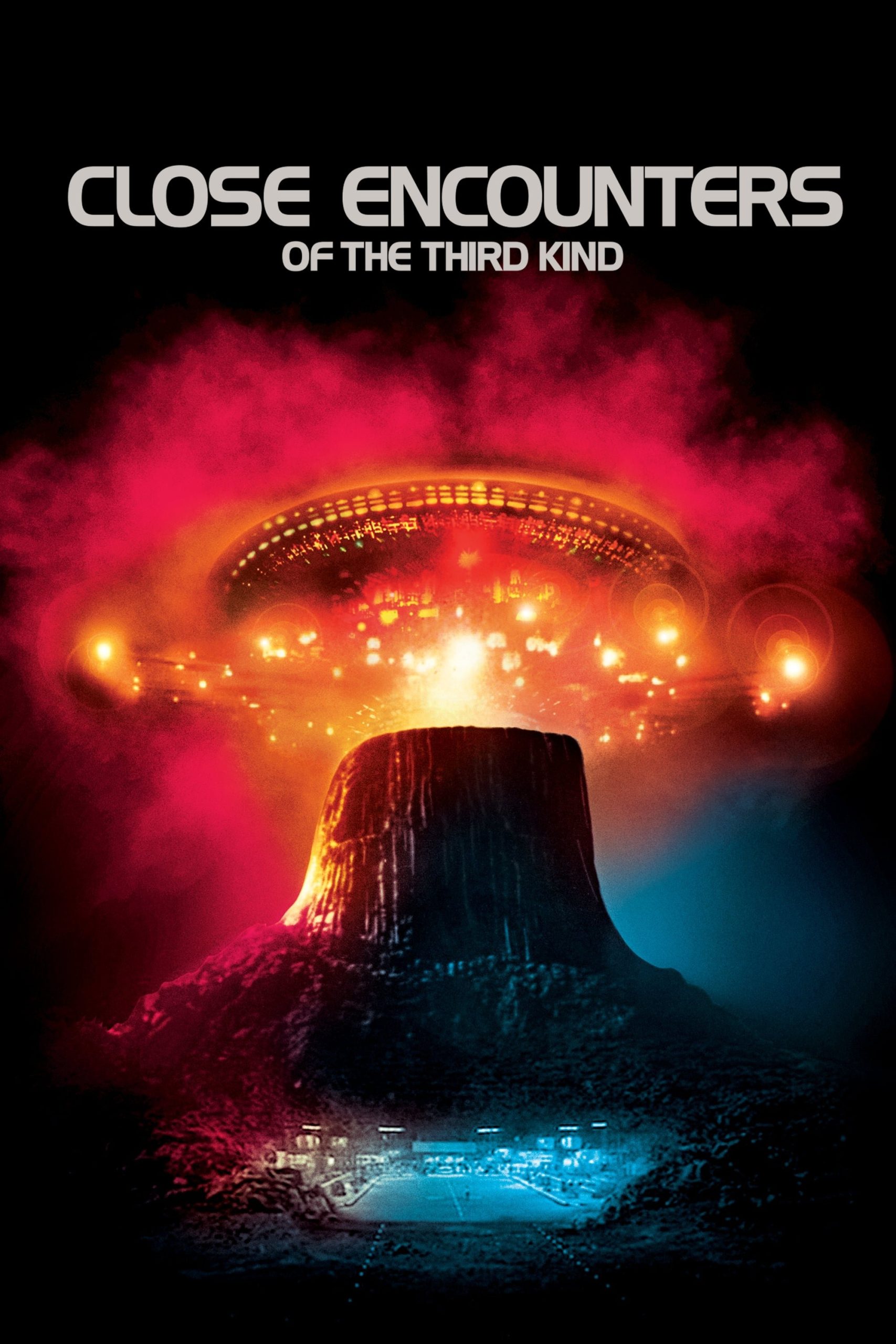
The Question of Truth Behind the Film
The first time I watched Close Encounters of the Third Kind, I found myself entirely consumed by its sense of possibility. There was a feeling—almost childlike—that these events might somehow be rooted in reality. This impulse, I’ve realized, is common not just to me but to the wider audience. When we sit down for a movie that touches on mysteries just beyond everyday experience—like UFOs, government secrecy, or cosmic communication—there’s an almost inescapable urge to ask: did this really happen? I think this question springs from a deep curiosity, but also a hope that what we are witnessing is anchored, even loosely, to lived truth. The label “based on a true story” has become a kind of shorthand for credibility, almost a permission slip for us to emotionally invest and, at times, suspend our disbelief just a bit less. Yet I’ve also noticed that when a film proclaims itself as pure fiction, my mind shifts into a different mode—more analytic, less vulnerable to wonder.
For me, the attachment of “truth” to any film changes the kind of questions I ask of it. I become less focused on allegory or metaphor, and more attuned to what the narrative could reveal about my own world. If Close Encounters had opened with a title card declaring it a factual recounting, I know I would have watched for signs of authenticity in behavior, technology, and government response. Instead, the film’s deliberate ambiguity opens latitude for speculation, inviting me to ask not just what happened, but what it would mean if it did. The line between historical reality and the fiction of cinema isn’t just about content; it’s about how I approach what I see, and what I let myself believe.
Historical Facts and Cinematic Interpretation
When I examine Close Encounters of the Third Kind, the interplay between real reported phenomena and their cinematic rendering is especially striking. I’ve always been fascinated by how the film borrows liberally from contemporary accounts of UFO sightings and alleged government responses. The late twentieth century was awash with stories—borne on the airwaves, in tabloids, and whispered in quiet communities—of lights in the sky, inexplicable radio signals, tales of abduction. As someone immersed in both history and film, I notice that Spielberg’s narrative does not reenact any singular, well-documented event. Instead, it distills years of cultural anxiety and curiosity into something cohesive.
What always stands out to me is how the film condenses sprawling, chaotic reports into carefully orchestrated scenes. When I see Roy Neary’s obsession grow and the global phenomena sync up, I’m reminded of the editorial process that transforms the raw material of history into digestible storylines. Real incidents—the brisk, uncertain interviews recorded by investigators, the patchwork of folklore and government files—are streamlined. In Close Encounters, the randomness of supposed “close encounters” is replaced with a steady escalation of contact that gives the story its momentum. The long sweep of reports—sometimes contradictory, messy, or defiant of logic—becomes a tightly plotted sequence, each event ratcheting up the emotional and narrative stakes.
At the same time, I recognize elements that feel almost documentary-like. The film’s use of government figures, scientists speaking in multiple languages, and technical jargon lend an air of authenticity. Yet I’m always conscious that this represents a selective adaptation, drawing on well-known motifs: secretive air bases, experts working behind glass, the looming uncertainty of official silence. Even the iconic five-note musical motif, while central to the film’s artifice, echoes the real-world search for universal languages between disparate cultures. In the process, Close Encounters becomes less an account of a particular event, and more an adaptation of a moment in cultural consciousness shaped by decades of rumor, speculation, and scientific aspiration.
What Changes When Reality Is Shaped for Cinema
I’ve come to accept that cinema, at its core, requires choices that often conflict with the intricacy of historical fact. When I analyze a film such as Close Encounters of the Third Kind through the lens of adaptation, I am struck by the spectrum of alterations imposed, not out of malicious intent, but necessity. Historical accuracy, in its raw form, rarely unfolds in dramatic arcs or neat resolutions. Instead, real-life investigations into UFO phenomena are marked by delays, dead ends, and persistent lack of closure. The film, by contrast, delivers a holistic sense of closure that offers satisfaction—a reconciliation between humanity and the unknown.
I often find myself reflecting on the practical reasons necessitating such changes. Audiences, myself included, crave a throughline—a thread that binds disparate elements into coherence. Close Encounters presents Roy’s journey as a personal odyssey, giving viewers an emotional anchor. In actual historical accounts, individuals involved in UFO sightings may never receive answers, and their stories often fade into obscurity or ridicule. Yet for narrative clarity, the film grants resolution: a meeting, a revelation, and a sense of peace which is almost absent from the original accounts.
Another trade-off that occupies me is the film’s construction of atmosphere over factual precision. Real-life reports about unidentified aerial phenomena are notoriously inconsistent and lack the dramatic intensity necessary for mass appeal. In shaping these ambiguities into legible fear, awe, and wonder, the film replaces the mundane with the mythic. Visual effects, dramatic weather patterns, and the mysterious behavior of technology elevate otherwise prosaic phenomena to the level of the extraordinary. The same applies to the government’s role. Historically, agencies like Project Blue Book were more concerned with cataloging sightings than orchestrating elaborate cover-ups or first contacts. Here, the government is rendered almost as a character itself—stoic, knowledgeable, ambiguous.
For me, the result is that the movie walks a delicate line between credibility and invention. While I am always aware it is fiction, the sense of realism is so immersive that, momentarily, I allow myself to believe. The careful balance of known facts—such as the behavioral consistencies in certain “encounter” accounts—and imaginative speculation gives Close Encounters its lasting power. Yet, any hope for precise historical accuracy must be set aside in favor of the broader emotional and philosophical truths the film pursues.
Audience Expectations and the “True Story” Label
My experience with films “based on a true story” has always guided my expectations even before the first scene unspools. If a film presents itself as a faithful retelling, I scrutinize the details much more closely. I imagine many viewers do the same, measuring what’s onscreen against what they believe or have learned. With Close Encounters of the Third Kind, Spielberg avoids the explicit “true story” label, positioning the narrative in a liminal space between historical possibility and pure invention. I’ve found that this freedom encourages me to focus on interpretation, not forensic analysis.
When a film wears its inspiration from real events openly, I find myself asking not just what happened, but what was omitted, softened, or exaggerated. There’s an implicit commitment between filmmaker and audience when reality is invoked—a promise, however elastic, that something essential is preserved. In the case of Close Encounters, the lack of this explicit claim shifts my engagement. I start to look for resonances: the way the film echoes the public’s fascination with and fear of the unknown, the cultural anxieties of the 1970s, and humanity’s longing to connect beyond itself.
Contrasting this with films that locate themselves firmly within fiction, I can’t help but notice how these stories often feel liberated to explore more extravagant or abstract possibilities. Yet, the ambiguity surrounding Close Encounters creates a particular kind of allure. I am left constantly questioning: if such events are not exactly factual, might they nonetheless reveal some deeper psychological or philosophical truth? The absence of a definitive historical source means I am interpreting the film’s metaphors—about communication, isolation, and transcendence—rather than measuring its dialogue or chronology against a factual record.
There’s also the peculiar phenomenon of retroactive mythmaking. Over decades, as Close Encounters has become a touchstone in the popular imagination, its proximity to supposed “real” encounters has been amplified by fans and conspiracy theorists alike. While I recognize the film as a work of fiction, I see how it shapes, and is shaped by, ongoing beliefs about extraterrestrial life and official secrecy. I believe this reciprocal relationship between film and public fantasy is both inevitable and endlessly fascinating.
Final Perspective on Fact vs Fiction
Weaving between what is real and what has been imagined, I find myself continually reconsidering the significance of Close Encounters of the Third Kind. Awareness of the film’s lack of direct historical foundation does not diminish its resonance for me; if anything, it sharpens my sense of what the movie achieves. As I watch, knowing that its sources are not strictly factual but rather rooted in cultural myth and collected anecdotes, my appreciation shifts from the realm of documentation to the thrill of speculation. The boundaries between truth and invention feel intentionally porous—inviting me to contemplate not what has happened, but what could happen, or rather, what I want to believe is possible.
In my view, the distinction between fact and fiction serves less to separate films into opposing camps, and more to establish reference points for audience interpretation. What I bring to the film—the knowledge of 1970s UFO mania, the skepticism regarding government disclosure, the persistent desire for contact—colors every aspect of my experience. A purely factual film might constrict imagination, binding me closer to known outcomes. In contrast, a fictionalized account like Close Encounters allows my mind to wander, to imagine alternate histories and potential futures. That liberty to dream and doubt, fueled by the ambiguity at the film’s core, is what keeps it alive for me long after the credits roll.
Ultimately, I have found that knowing where reality ends and fiction begins does not hinder my engagement; it enriches it, providing a framework for continual reinterpretation. Close Encounters of the Third Kind, for all its speculative drama, offers not just a story but a mirror to my own questions about belief, evidence, and the limits of understanding. The factual ambiguity compels me to navigate between skepticism and wonder—a journey that mirrors, in its own humble way, the very heart of the film itself.
For additional context, you may also explore the film’s overview and how it was received by audiences and critics.
🎬 Check out today's best-selling movies on Amazon!
View Deals on Amazon