
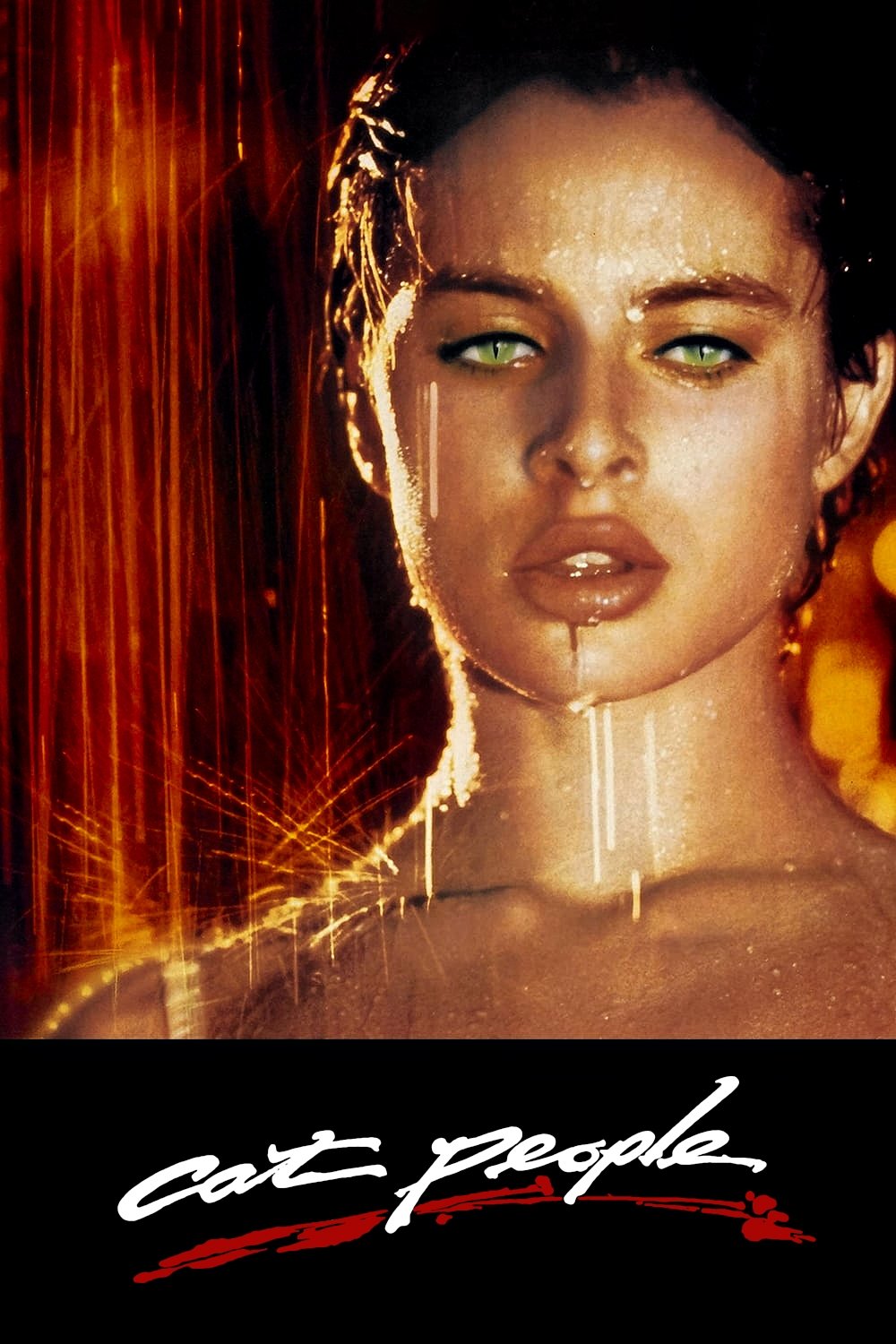
The Question of Truth Behind the Film
Every time I return to “Cat People” (the 1942 original), I find myself reflecting on how persistent the question of “truth” is in cinema. For me, watching this particular film always prompts a curiosity about what, if anything, is drawn from reality. I notice that many people, myself included, often subconsciously yearn for confirmation that a story—especially one as strange and psychologically charged as this—is grounded in fact. There’s almost a craving for the authority that comes with the “based on a true story” label, as though it lends extra weight to the viewing experience. When I’m confronted with a film that feels uncanny or unnerving, I instinctively ask: could this have happened? Or even, did someone believe this ever happened? This impulse says more about the relationship between storytelling and belief than it does about cinema itself. The presence—or absence—of factual roots changes the emotional register with which I receive the events onscreen. Sometimes, I notice a strange comfort in believing “it’s only a story,” and other times, the suggestion that real life inspired the narrative makes what I’m seeing feel even more potent, almost dangerous. And with “Cat People,” this negotiation between myth, legend, and cinematic form has special resonance, because the film hovers on the boundaries between psychological realism and folkloric fantasy. That space, in my experience, is fertile ground for thinking about why we care whether stories are true at all.
Historical Facts and Cinematic Interpretation
When I look into the making of “Cat People,” I quickly realize that its origins are anchored less in concrete historical events than in broad traditions—folklore, superstition, esoteric belief. There is no newspaper clipping or real-life file that charts the tale of Irena Dubrovna, the haunted protagonist. I see this absence as an intentional choice on the filmmakers’ part, reflecting a desire to evoke rather than document. This approach compels me to pay attention to the textures of storytelling, to notice how the film draws from legends surrounding shapeshifters and old-world curses. The story’s Eastern European undertones, with whispers of a cursed village and inherited doom, are not direct transplants from reality but creative amalgamations. I’m reminded that cinematic narrative often collects scraps from various sources — in this case, perhaps witch trial history, medieval bestiaries, or the psychological anxieties of wartime America — and weaves them into something singular. In “Cat People,” I observe how these influences are condensed and rearranged for clarity and atmospheric effect. Superstitions become plot mechanism; cultural fears are personified through character. For me, this process blurs the boundary between what is known historically and what is invented for emotional intensity. Rather than being hindered by the lack of a factual case study, I find myself drawn to the way “Cat People” becomes a shifting mirror for collective anxieties and desires. The so-called facts behind the story are not literal histories, but cultural energies—reshaped and intensified for the purpose of the film.
What Changes When Reality Is Shaped for Cinema
I often think about the creative transformations that happen when filmmakers work with real-life events or source inspirations drawn from the world’s tangled history. With “Cat People,” these processes are subtle but significant. Since the film isn’t a strict adaptation of a true account, I see its truths as those of suggestion, mood, and unspeakable tension. The demands of cinematic storytelling lead to practical choices: ambiguity over certainty, suggestion over explicitness. For instance, the film’s use of shadow, unspoken desire, and offscreen threat feels like a deliberate departure from the kinds of straightforward exposition that a purely factual retelling would require. I’m aware that these stylistic choices are not accidental; they serve a narrative efficiency and drive emotional engagement in ways that strict adherence to “what actually happened” never could. When filmmakers shape reality—or even just the mythic suggestion of reality—they often have to trade historical complexity for narrative clarity. In “Cat People,” much is left unsaid or unresolved, not because the facts are unknown, but because the effect is heightened that way. This selective process also means the resultant story can tap into deeper psychological truths. The feline curse is not a matter of public record, yet it mirrors the real emotions people felt: alienation, erotic anxiety, and fear. For me, this negotiation doesn’t diminish the impact of the film’s themes; instead, it sharpens them. The act of choosing which details to amplify and which to obscure is, in my view, an essential part of how cinema creates resonance, especially when operating in territories where fact and invention are intertwined.
Audience Expectations and the “True Story” Label
As a viewer, I always feel my own approach shift depending on how a film is presented—factual, inspired by life, or entirely imagined. With “Cat People,” the absence of a “true story” label actually alters my expectations and my way of engaging with the material. I don’t find myself evaluating the plausibility of the characters’ decisions by any historical standard, nor do I attempt to map them onto real-life counterparts. Instead, I sink into the allegorical aspects, allowing metaphor to do its work. Still, I’m conscious that for many, a disclaimer about truth or fiction at the film’s front transforms the relationship between audience and narrative. If a film is asserted as factual, I watch for authenticity, for the accuracy of behaviors, and the careful recreation of time and place. Conversely, when the story is announced as a myth or fantasy, I find I’m more open to abstraction and ambiguity. This speaks to an implicit contract between filmmaker and audience: the claim to truth brings certain expectations, sometimes even a sense of obligation to historical figures or events. “Cat People” sidesteps this by inhabiting an oneiric, almost archetypal realm. In my opinion, this allows it to hold a different kind of fascination. Its intensity comes not from its adherence to life as it was lived, but from its evocation of inner experience, shared dread, and primal longing. That distinction fundamentally changes how I relate to what happens onscreen. Instead of measuring the gap between cinematic version and historical “truth,” I measure the impact of images and sounds—the unseen, the half-suggested, the spectral. This, to me, is a different but equally valid form of engagement with cinema.
Final Perspective on Fact vs Fiction
After spending considerable time reflecting on “Cat People” and its ambiguous relationship with historical truth, I’ve come to recognize that my awareness of its origins—or lack thereof—deeply influences my interpretation. When I know a film is based explicitly on fact, I inevitably bring a set of critical tools: cross-referencing, scrutinizing deviations, seeking out the ethical or documentary dimensions. When faced with pure fiction or folkloric invention, as in “Cat People,” a different part of my sensibility is activated. I read for symbols more than facts, for atmosphere more than accuracy. My personal engagement becomes less about measuring up to reality, and more about understanding the film’s internal logic—its emotional fidelity rather than its historical one. This awareness changes the way I assess significance and meaning. I notice that, freed from the constraints of the factual, I’m able to approach the film as an exploration of psychological truth: the way people’s fears, desires, and mythic inheritances shape their experiences. There’s still a responsibility to grapple with what the film is really doing with its chosen materials, but that responsibility is toward the internal coherence and evocative potential, not the public record. What is real, then, becomes less about material correspondence and more about affective resonance. In this way, my perception of “Cat People”—and indeed any film with mythic or legendary roots—remains dynamic, shaped as much by what I bring as what the filmmakers present. This ongoing negotiation between the factual and the fantastic, I find, is central to how cinematic storytelling operates, and it continues to enrich my experience with each viewing.
For additional context, you may also explore the film’s overview and how it was received by audiences and critics.
🎬 Check out today's best-selling movies on Amazon!
View Deals on Amazon