
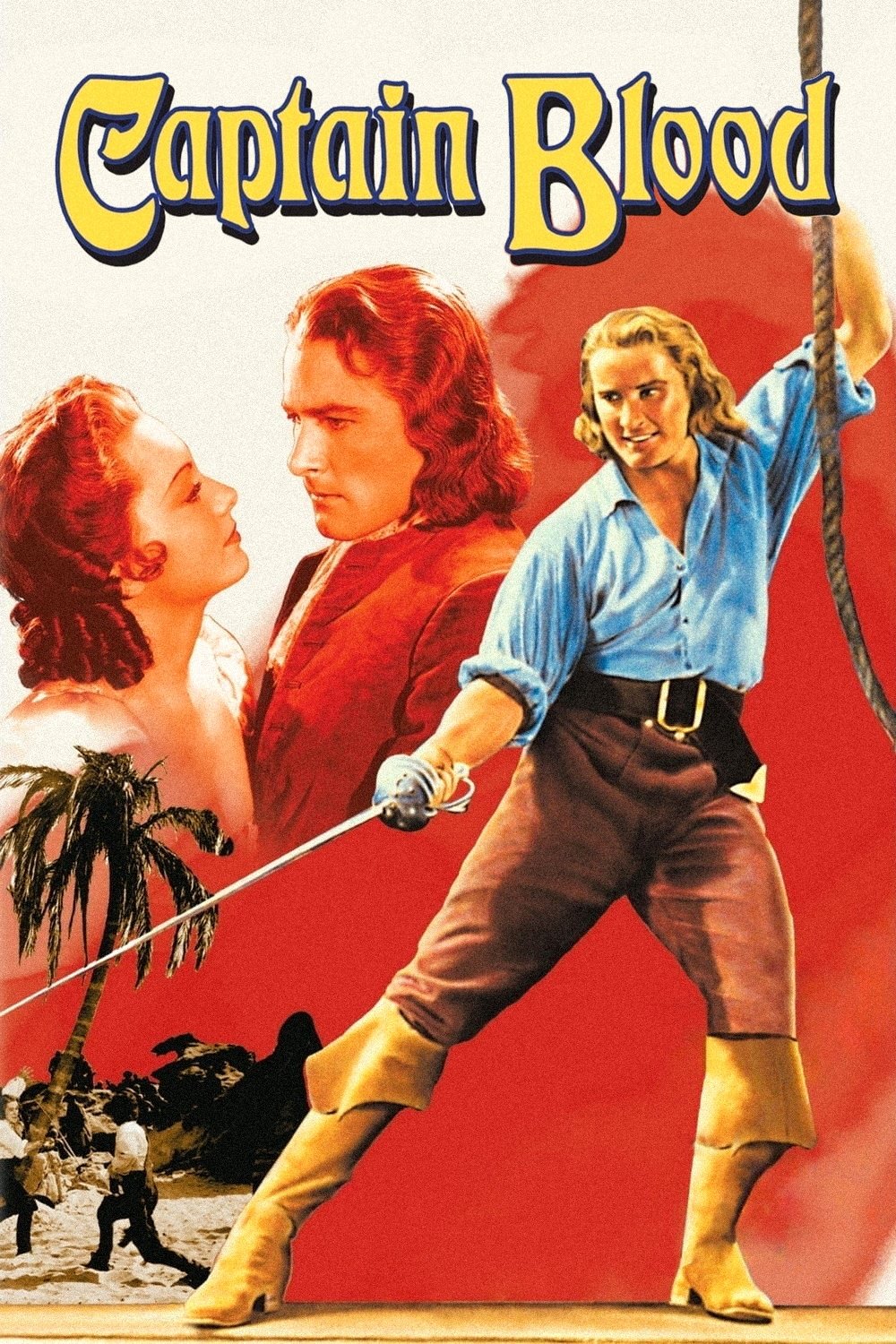
The Question of Truth Behind the Film
Watching “Captain Blood,” I found myself contending with that recurring curiosity: is any part of this dazzling onscreen adventure grounded in real events, or does it emerge entirely from fictional imagination? This question is hard to ignore—especially with period films whose worlds bristle with historical detail, stirring the sense that I’m witnessing echoes of truth rendered in spectacle. For me, asking whether a film like “Captain Blood” is inspired by real occurrences is more than idle wondering; it sets the stage for how I engage with its narrative, its characters, and even its morality. When confronted with a story set centuries ago, on pirate ships and colonial soils, the label of “based on a true story” attaches a particular sort of legitimacy. It’s as though the film can stake a claim to a deeper importance, a direct channel to our shared past. Yet I also catch myself weighing the assumptions this label invokes: that the film’s events are true in some measurable way, or that the people on screen lived as shown. Despite knowing how often cinema reimagines reality, I’m aware that suggesting authenticity can subtly shift my expectations—and sometimes, even my capacity for skepticism about what I see.
Historical Facts and Cinematic Interpretation
When I sift through the context surrounding “Captain Blood,” what strikes me is how historical reality and narrative license intertwine. The film is adapted from Rafael Sabatini’s novel, which itself is a work of fiction—albeit one that borrows shadows and outlines from authentic moments in the history of piracy, exile, and colonial life. The broader setting—the late 17th century Caribbean during the so-called “Golden Age of Piracy”—is indeed rooted in historical fact. I’ve read accounts of figures like Henry Morgan and stories of transportation from Britain to the colonies as punishment. However, I can’t find any record of a real “Peter Blood” who lived precisely these adventures. Instead, I see how the movie cherry-picks from the era: it reconfigures bits and pieces—legal details of English penal transportation, elements of West Indian colonial structures, and the infamous buccaneer backdrop—into a tapestry intended to feel authentic, if not strictly accurate.
As I experience the film, I’m reminded that simply using actual places or historical laws doesn’t make the screenplay a retelling of events. The characters and their arcs are inventions, shaped to fit dramatic needs. The court scenes, the Spanish raids, even the code of conduct among the pirates—these seem like amalgams, constructed for clarity and pacing above all. Real history, as I understand it, is dense and often chaotic, while the film presents a streamlined world where conflicts and ideals play out with a narrative logic that’s inherently cinematic. This reshaping doesn’t feel like deception to me; rather, it is a familiar remixing—a way of distilling complexity into something graspable within two hours of runtime.
What Changes When Reality Is Shaped for Cinema
As I sit with the way “Captain Blood” transforms loose historical references into a focused adventure plot, I’m forced to acknowledge the compromises inherent in this kind of storytelling. To me, every historical film exists on a continuum: on one end, the ambition to capture the past with faithful accuracy; on the other, the pull of streamlined drama and archetypal characters. I notice how the film takes broad strokes from the era—piracy, British legal customs, colonial rivalries—and rearranges them to emphasize certain themes. There’s a pressure in filmmaking, I imagine, to create momentum, to clarify motives, and to condense the messiness of real life into a shape audiences can easily follow. In doing so, actual people and incidents are frequently merged or omitted; lengthy legal proceedings become a single, pointed trial scene, and sprawling years of hardship collapse into a handful of montages.
I don’t judge the success or failure of such choices, but I do trace how these adaptations mold the emotional and intellectual experience of watching the film. Details that would confound or distract—the minor squabbles between rival pirate factions, the tedious bureaucracy of English penal law, even the unromantic aspects of colonial labor—are often omitted, in favor of vivid archetypes and satisfying conflicts. What comes through in the final product is, to my eyes, a version of history that rings emotionally true, if not literally so. But it also means I receive a kind of narrative shorthand: complex histories boiled down to recognizable tropes, rewarding me with catharsis or identification, but potentially blurring the lines between impression and documentation.
Audience Expectations and the “True Story” Label
As I compare my own reactions to those of others, I see how labeling a film as “based on real events” or insisting on pure invention primes us in divergent ways. When I expect strict veracity, I find myself watching for accuracy, questioning the fidelity of costuming, the mannerisms, the plausibility of escapes and courtroom verdicts. The knowledge that “Captain Blood” draws from a novel rooted in period flavor, not documentary evidence, tempers these reactions for me. I walk in ready for heightened romance and mythmaking, less inclined to pick at anachronisms or deviations from recorded fact. Yet, for some viewers, even the faintest whiff of historical grounding can paradoxically heighten the desire for truth, making each invention feel suspect, every flourish suspicious.
There’s a kind of collective contract, it seems, between filmmakers and viewers when the “true story” moniker is invoked: an expectation that what follows will both entertain and inform. I notice that critics and audiences alike can be unsparing when a film violates what they perceive as reality’s boundaries, particularly if the work was initially presented as factually rigorous. Conversely, when a film clearly designates itself as fiction, as “Captain Blood” tacitly does by transparent reliance on swashbuckling tropes, it’s as if my mind relaxes into the rhythm of story, uncoupled from the demands of strict reportage. This, for me, doesn’t mean that historical details become irrelevant, but rather that their function shifts—from conveying data to enriching atmosphere and plausibility, providing a context for the characters’ journeys more than a record to be scrutinized.
Final Perspective on Fact vs Fiction
Contemplating “Captain Blood,” I’m left musing on how factual awareness colors the film-watching experience—not so much changing my enjoyment, but redirecting my interpretation. When I know that the hero at the center and the events wrapping around him are fictional, yet tethered to a plausible historical environment, I tune into the symbolic dimensions: the way the narrative illustrates ideals of freedom and justice in an age of authority and cruelty, rather than offering a treatise on actual pirate governance or English colonial law. My expectations aren’t diminished by this knowledge; instead, they shift. I find myself examining the film’s era for broad truths—the atmosphere of uncertainty, the violence and opportunity of the times—while allowing the details to perform their narrative function.
It occurs to me that this balance is the very heart of historical cinema. My awareness of what is real or invented doesn’t narrow my scope; it broadens it by inviting me to appreciate the artistry of transformation. I marvel at how the film evokes the sensation of a lost world without insisting on perfect fidelity to the archives. Rather than policing the boundary between fact and fiction, I embrace the interplay—a dialogue between what was and what might have been, as filtered through imagination. “Captain Blood,” in this sense, becomes something multilayered: a meditation on possibility as much as memory, on the stories we need to make sense of the past, regardless of whether they can ever be fully disentangled from fiction.
For additional context, you may also explore the film’s overview and how it was received by audiences and critics.
🎬 Check out today's best-selling movies on Amazon!
View Deals on Amazon