
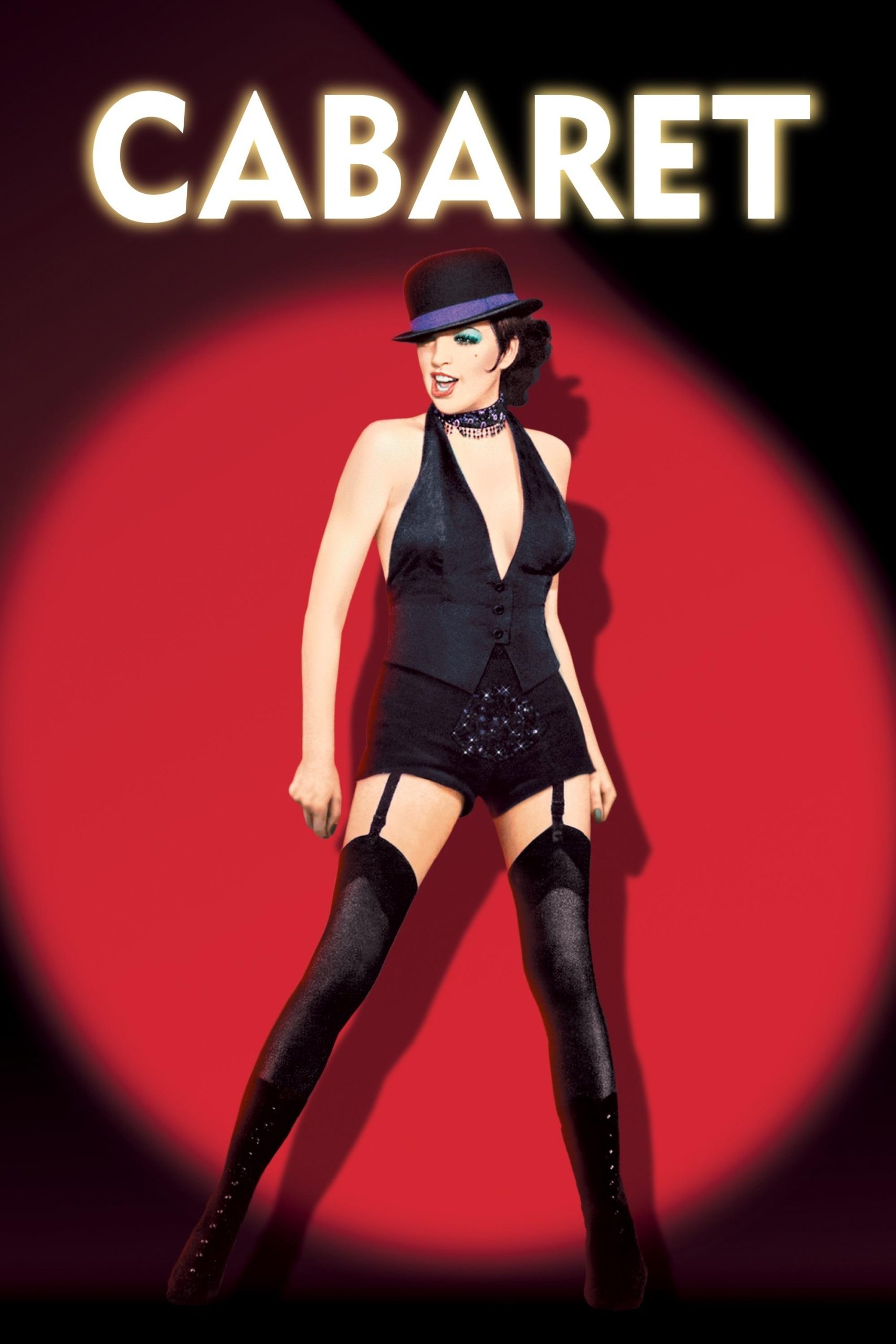
The Question of Truth Behind the Film
Whenever I settle into a film like Cabaret, my mind is already negotiating the border between what might have truly happened and what is being sculpted for maximum effect. I realize there’s something magnetic about knowing whether a story derives from documented moments in history, especially when those moments are electrified by the charged atmosphere of pre-World War II Berlin. Often, I notice audiences ask, “Is this real?” not out of idle curiosity, but from a deeper desire to anchor their emotional reactions. For me, the phrase “based on a true story” acts as an invisible contract; it promises a grounding in actual events, but also quietly signals that liberties will inevitably be taken. Behind that label, I sense a shared assumption that seeing people, costumes, and conflict on screen transports us closer to lived reality, even if some part of me knows film is always a reconstruction—a selective reassembling rather than a direct window. Each time I am faced with this question, I find myself weighing how much I allow that “true story” expectation to mediate my engagement. It’s not just about authenticity; it’s about how I participate in the process of believing or suspending disbelief. I’ve observed that the truer a film claims to be, the stronger my own responsibility feels in parsing what I see—not simply as entertainment, but as a potential act of historical witnessing. That negotiation is both a rich site of meaning and a persistent source of tension for me.
Historical Facts and Cinematic Interpretation
Contemplating Cabaret through the lens of history, I am always aware that the roots of its story reach back to Christopher Isherwood’s semi-autobiographical writings about his time in Weimar Berlin. Yet, I find the journey from lived experience through literary distillation, theatrical adaptation, and finally film transformation to be a fascinating palimpsest. In my reading, these layers mean that what emerges on screen is not history found, but history made anew. Moments that were once diffuse and lived in the muddy immediacy of Isherwood’s Berlin are, when transposed through Joe Masteroff’s musical and Bob Fosse’s cinematic eye, reconfigured for clarity and dramatic effect. For example, Sally Bowles was reportedly inspired by Jean Ross, but in the film her persona is shaped as a mosaic of exaggeration and poetic license, rather than a portrait closely resembling her original. The Kit Kat Klub itself, the symbol that animates so much of the film’s energy, feels to me more like a heightened echo of actual Berlin nightspots than a faithful duplication.
What fascinates me most is how certain events—like the rise of the Nazi party or the social realities of 1931 Berlin—are compressed to fit within a two-hour window. The film, as I experience it, is interested less in the documentary detail of every march or manifesto, and more in the rising tension and shifting climate that these details once animated. The choreography around pivotal scenes, such as the barnyard performance of “Tomorrow Belongs to Me,” operates as an emblematic condensation, drawing real antecedents into a sharply composed dramatic moment. Realism, here, is achieved not always by restaging precise dates or locations, but by threading a sense of inevitability—of cultural shift and toxic change—through character arcs and musical numbers. For me, this is where fact is distilled for narrative clarity; lived history becomes expressive tableau, aiming not for archival accuracy but for emotional and thematic resonance. I walk away feeling that the film’s interplay with history lies not in documentary veracity, but in the density of implication each scene carries.
What Changes When Reality Is Shaped for Cinema
Stepping back to consider the mechanics of adaptation, I am always intrigued by the practical trade-offs that seem to govern every cinematic retelling of real events. Cabaret stands out to me as a study in how storytelling leans on selection, emphasis, and often omission to serve the rhythm of film. In watching it, I sense that certain realities—such as the drawn-out progression of fascism or the interiority of Berlin’s queer communities—are necessarily streamlined or even set aside to clarify the broader thread running through the film. This is not an act of deception in my view, but an unavoidable artifact of the medium’s limitations and strengths. Editing, time constraints, and the demands of narrative drive decisions about what survives the leap from source material to screen.
I find that when real lives and events are reframed for cinema, nuance is sometimes lost even as meaning is concentrated. The intense focus on a few principal characters and locales, for example, is meant to make the story cohere for me as a viewer, but I can’t help being aware of the many lived experiences that remain in the margins. The vibrancy and danger of interwar Berlin—its political ferment, its creative ferment—are left to be evoked by atmosphere and song, rather than fully rendered in complex, sprawling subplots. The simplification of Brian Roberts’ sexuality, for instance, or the highlighting of the Sally-Brian-Max triangle, reflects a negotiation between what I know to be historically plausible and what the narrative needs to communicate efficiently. Sometimes I’m left wishing for the messier richness of real life, but I remind myself that films must work within their chosen scope. The risk, as I see it, is that certain structures of feeling or patterns of causality can appear more linear or inevitable than they were in reality. These choices, while they often amplify dramatic tension or thematic coherence, alter my sense of what history might have felt like to those who lived it.
Looking closer, I notice that music itself becomes a tool for emphasizing or commenting on events that the film otherwise leaves ambiguous. The absence of musical numbers outside the confines of the Kit Kat Klub is, to me, an artistic device that shapes my perception of where “performance” ends and “reality” begins. The result is a double vision: what I see on stage comments on, but does not always directly reflect, the world outside. I find this blurring to be both evocative and destabilizing, as it reminds me again and again that I am watching a mediated reality, shaped less by fidelity to the letter of history than by the power of art to organize experience.
Audience Expectations and the “True Story” Label
When I reflect on my own viewing habits, I notice that my expectations shift considerably depending on whether a film announces itself as a true story, a work inspired by real events, or pure invention. With Cabaret, my experience is inflected by knowing its indirect connection to Isherwood’s Berlin, as well as the broader historical setting of the Weimar Republic’s last, desperate years. The closer a film cleaves to documentary fact, the more I scrutinize its details—wondering if haircuts or political symbols match what might have truly appeared in Berlin in 1931. The farther a story wanders from that claim, the more freely I allow for idiosyncrasy and artistic flourish.
What’s interesting for me is that the “true story” label often licenses a particular kind of trust. When I am told, however subtly, that a film is rooted in real events, I begin to treat what I am seeing as an account—a testimony of sorts—even as I remind myself of the smoothing necessary for a film to exist at all. If a story declares itself purely fictional, I adjust by welcoming ambiguity and accepting that characterization, theme, and incident are more malleable. Cabaret occupies a curious middle ground for me. It is neither documentary nor outright fantasy; its pleasures and provocations land somewhere in the spaces between those extremes.
This shifting of expectations isn’t trivial. I notice that how much emotional investment I contribute, and the quality of that investment, is mediated by my appraisal of the story’s factual claims. When I sense that material is more “real,” I might feel a sharper pang at tragedy, or a keener unease at violence or betrayal, as though I am not only seeing something invented but confronting something that actually happened to someone. In Cabaret, my awareness of factual and fictional elements co-existing creates layered responses. I am drawn in by the immediacy of character emotion, yet also stand back, aware that I am reading history through a particular, stylized lens.
The audience around me often seems to grapple with similar tensions. I have encountered reactions where viewers voice surprise or even frustration upon learning that resonant plot points or lines of dialogue have no basis in fact. Others express relief, as though the abstraction of cinema offers distance from the sometimes unbearable truths of history. In my own view, this dynamic—between closeness and detachment, authority and artifice—renders films like Cabaret enduringly alive in the public imagination. The interplay between what is claimed as truth and what is acknowledged as fiction underwrites not only how I interpret the film, but how I engage in conversation about it long after its credits roll.
Final Perspective on Fact vs Fiction
Thinking back on my many encounters with Cabaret, I appreciate how the permeability of the fact-fiction boundary shapes not just my intellectual interpretation, but the entire affective register of my viewing. When I know the antecedents—the Weimar Republic’s fragile democracy, Isherwood’s real-life wanderings, Jean Ross’s lived experience—I am compelled to ask how these histories drive the emotional force of the film. Yet, I’m also aware that the film’s authority lies not in being a perfect record, but in stirring historical sensibility and personal reflection. The impact is twofold: factual awareness gives me context and sharpens my understanding of stakes; at the same time, the artistry of adaptation invites me to read beyond what was literally true, and toward what might be emotionally or symbolically true.
My final sense is that knowledge about what really happened, and what never did, operates as a kind of lens, focusing and sometimes refracting the story I see. I don’t consider this an obstacle to enjoying or learning from the film—instead, it feels like an invitation to inhabit several realities at once: the constructed world of the movie, the contested history beneath it, and the subjective world I bring with me as a viewer. The interplay between fact and fiction makes Cabaret richer for me. It allows my understanding to oscillate—one moment invested in the fate of its characters, the next pondering the resonant echoes of a lost world. For me, this oscillation is where meaning accrues, always provisional, always subject to discovery with each new viewing.
For additional context, you may also explore the film’s overview and how it was received by audiences and critics.
🎬 Check out today's best-selling movies on Amazon!
View Deals on Amazon