
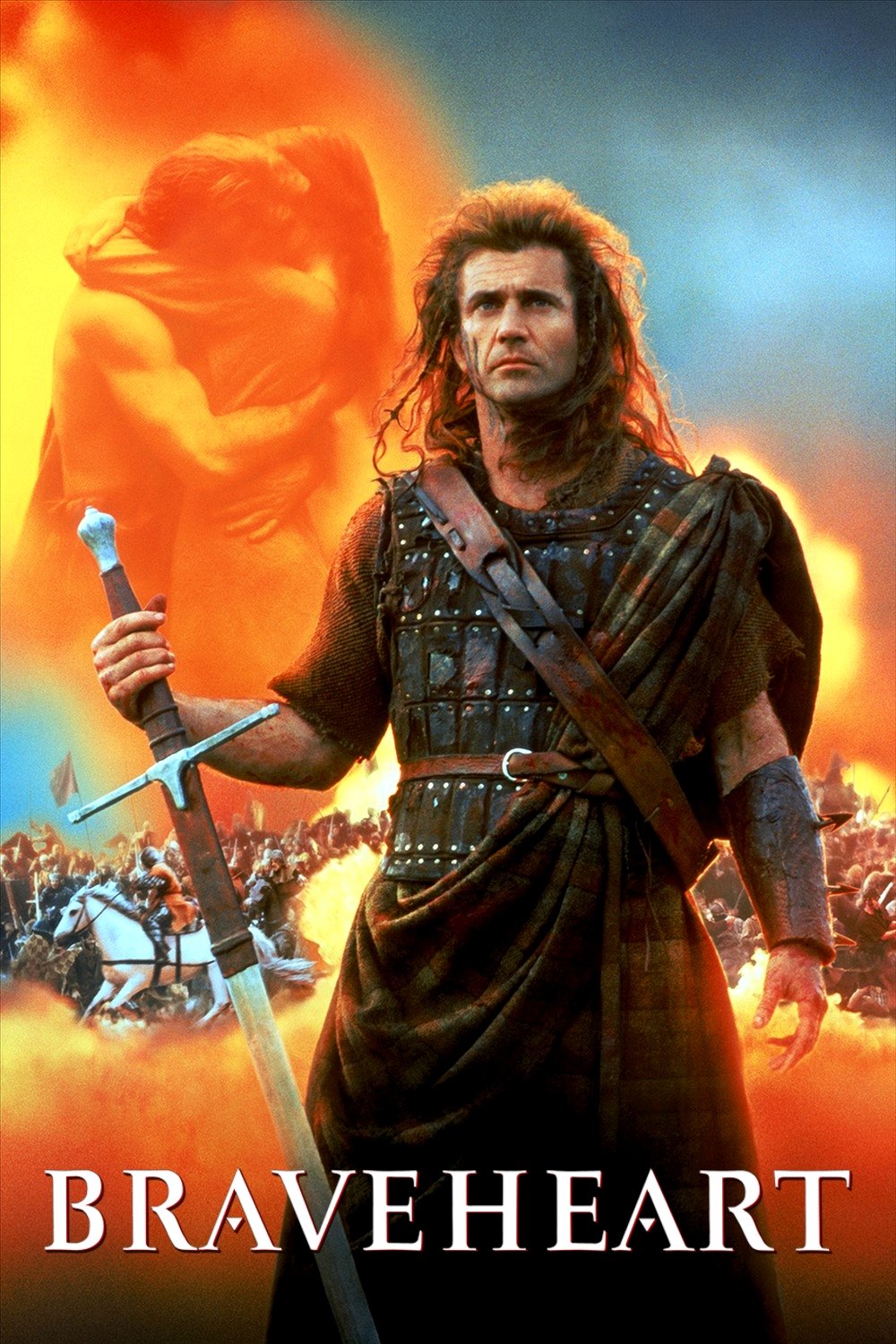
The Question of Truth Behind the Film
Every time I watch a film that claims some connection to real events, I find myself subconsciously reaching for the factual scaffolding underneath its dramatic flourishes. With Braveheart, I distinctly remember my first viewing being colored by the quiet thrill that the images unfolding on screen were somehow tethered to the tapestry of actual Scottish history. That label—”based on a true story”—is more than marketing to me; it invites the belief that I am witnessing not merely artistic invention but echoes of lived experience. Whenever this phrase ushers in a story, my expectations shift, almost imperceptibly. I begin sifting the narrative for elements that ring true or feel embellished, challenging myself to discern where fact may dissolve into fiction.
I’ve always wondered why this sense of authenticity matters so profoundly to me and, judging by audience reactions, to so many others. Perhaps it’s because factual grounding gives the story a kind of sacred weight. Knowing that a film is based on true events can transform otherwise ordinary moments into resonant, shared cultural memories. When I hear that a film is “inspired by” rather than “based on” real life, I adjust my posture; I allow more space for fantasy, for interpretive leaps. But when the word “true” gets attached, I feel almost a sense of responsibility—to honor history, to judge depictions carefully, to see more than just a thrilling narrative. Braveheart is a prime example of how my assumptions about “truth” shape my emotional investment from the outset, demanding that I re-examine what it means for cinema to capture the historical record.
Historical Facts and Cinematic Interpretation
Diving into Braveheart, I remember being struck by how the film presents the Scottish hero William Wallace as a larger-than-life emblem of rebellion. But after sifting through historical accounts and reading scholarly critiques, it became clear to me that much of this cinematic portrait owes far more to narrative necessity than to archival evidence. As I try to disentangle the threads, I notice how certain pivotal events—battles, relationships, betrayals—are rearranged, condensed, or expanded in ways that support the film’s emotional momentum but depart from the timeline recorded by historians. For instance, the depiction of Wallace’s romance with Princess Isabella always stood out as a narrative centerpiece. Yet I learned that, historically, Isabella was a child in France during Wallace’s lifetime, making the romance entirely fictional. Here, I see the filmmakers opting for symbolic significance—using Isabella as a narrative device—rather than strict adherence to fact.
This isn’t just about character arcs but also about how entire conflicts are framed. The film’s depiction of the Battle of Stirling Bridge notably omits the bridge, shifting the spectacle into a cinematic set piece. For me, this visual choice doesn’t just relocate history; it reforms the stakes and spectacle at the heart of the narrative. The portrayals of Scottish unity and betrayal are equally stylized, sometimes amplifying the role of certain nobles or inventing characters outright for the sake of coherent storytelling. The antagonism between Wallace and the future King Edward II is dramatized to provide a more direct, almost mythic clash. I find these departures both fascinating and inevitable. Cinematic storytelling, as I see it, so often demands simplification and condensation—creating a tapestry of events and personalities that, while rooted in genuine episodes, are sculpted for maximum clarity and audience engagement. This interplay between documented fact and creative adaptation is omnipresent in Braveheart.
What Changes When Reality Is Shaped for Cinema
Whenever I consider the choices made to turn historical episodes into cinematic drama, I see a fundamental balancing act: the need to engage and move an audience versus the imperative to respect factual realities. This is where I become acutely aware of the trade-offs inherent in storytelling for the screen. If a filmmaker were to include every nuance, contradiction, and uncertainty from the historical record, I suspect the result would feel sprawling, episodic—perhaps powerful in a documentary sense, but often dramatically inert.
With Braveheart, I see how compressing decades of conflict into a tight three-hour arc creates immediacy and urgency. Introducing composite or fictionalized figures clarifies motivations that are otherwise ambiguous in medieval chronicles. Even the visual language—highland landscapes, language choices, costume designs—gets reimagined, not always to match evidence but to conjure an atmosphere viewers instinctively link with either “Scotland” or “heroism.” I find myself noticing how these decisions rarely aim for total falsehood, but rather for an internal logic that cinema demands: a through-line that binds the experiences of Wallace and his compatriots in a way that can be staged, scored, and edited into an absorbing whole. Each adjustment becomes a trade-off, sharpening focus and heightening emotional resonance, but, as I see it, running the risk of obscuring historical contingency and complexity.
These choices do not inherently damage my appreciation or understanding of the film, but they do influence how I receive its message. When facts are shaped for drama, I have to remind myself that what I am seeing is a version of events—interpretation rather than transcription. I find the tension between the real and the dramatized to be one of cinema’s most compelling paradoxes: the closer a movie gets to the “truth” of lived experience, the more artfully it must navigate the limits imposed by runtime, structure, and audience expectation.
Audience Expectations and the “True Story” Label
The reactions I have—and I suspect others share—to films like Braveheart hinge on their invocation of truth. When a film announces itself as a “true story,” I tend to watch it with a heightened sense of scrutiny, toggling between immersion in the narrative and a desire to catch glimpses of the “real” history behind it. This push and pull affects my emotional alignment with the film and with its protagonists. The more a movie insists on its factual grounding, the more responsible I feel for questioning its choices—even as I’m swept up by the performances and the spectacle. This dynamic was particularly strong for me while watching Braveheart, because its central themes—freedom, sacrifice, identity—are so deeply entwined with a sense of national mythology.
I notice that audiences, myself included, often grant a kind of license to films that are upfront about being “inspired by” rather than “based on” true events. When filmmakers signal that creative liberties will be taken, I instantly recalibrate my expectations. I’m willing to embrace invention and metaphor, reading the film as commentary rather than chronicle. But with movies marketed around their historic pedigree, the impulse to treat them as quasi-historical documents lingers. This expectation can shape long-lasting perceptions. After Braveheart, I found myself asking whether what I’d seen was truly representative—a feeling echoed by friends and fellow viewers. The “true story” branding, as I experience it, is powerful: it fuses fact and myth, making it easy to remember the movie’s more dramatic inventions as genuine history. At the same time, I know that this fusion colors discourse around national identity, legacy, and cultural memory, often long after the film itself has faded from the box office spotlight.
For me, learning about the actual William Wallace and Scottish history after seeing the film became a kind of corrective exercise. It made clear how much the act of labeling something as true shapes how I, and many viewers, process what we see. A film doesn’t need to be perfectly faithful to history to affect me deeply, but its claims to reality prompt me to approach it differently, challenging me to distinguish between story and record with greater care.
Final Perspective on Fact vs Fiction
The act of watching Braveheart—or any so-called historical epic—became, for me, an ongoing negotiation between admiration for its cinematic craft and curiosity about the realities underlying its narrative. Whenever I revisit the film after learning more about its departures from fact, my viewing shifts. I find myself less inclined to accept every episode at face value, more attuned to the creative liberties taken in service of drama. This awareness doesn’t diminish my experience; rather, it adds an extra layer, prompting me to reflect on how movies shape cultural myths as much as they recount history.
Knowing which elements of Braveheart have been invented or exaggerated changes the nature of my engagement. I begin to see Wallace not just as a character, but as a symbol—one crafted from both the imagination of filmmakers and the hazy outlines of historical memory. This realization guides me toward a more nuanced understanding of what the film accomplishes: not a documentary rendition of medieval Scotland, but a cinematic legend, crafted for a modern audience. As someone deeply invested in how stories are told, I find this intersection compelling—relishing the tension between the film’s emotional power and its flexible relationship with the truth.
For me, recognizing the boundary between fact and invention doesn’t lessen the impact of a story; it clarifies what can be drawn from it. I think about how the adaptation of history—and the choices made along the way—reveal as much about the present as about the distant past. My relationship with Braveheart has evolved from that of passive viewer to active interpreter, balancing appreciation for its artistry with a sharpened skepticism about its historical claims. In the end, knowing what is real and what is fictional changes how I interpret the film’s message and its resonance in the cultural conversation, ensuring that each viewing is an act of dialogue between past and present.
For additional context, you may also explore the film’s overview and how it was received by audiences and critics.
🎬 Check out today's best-selling movies on Amazon!
View Deals on Amazon