
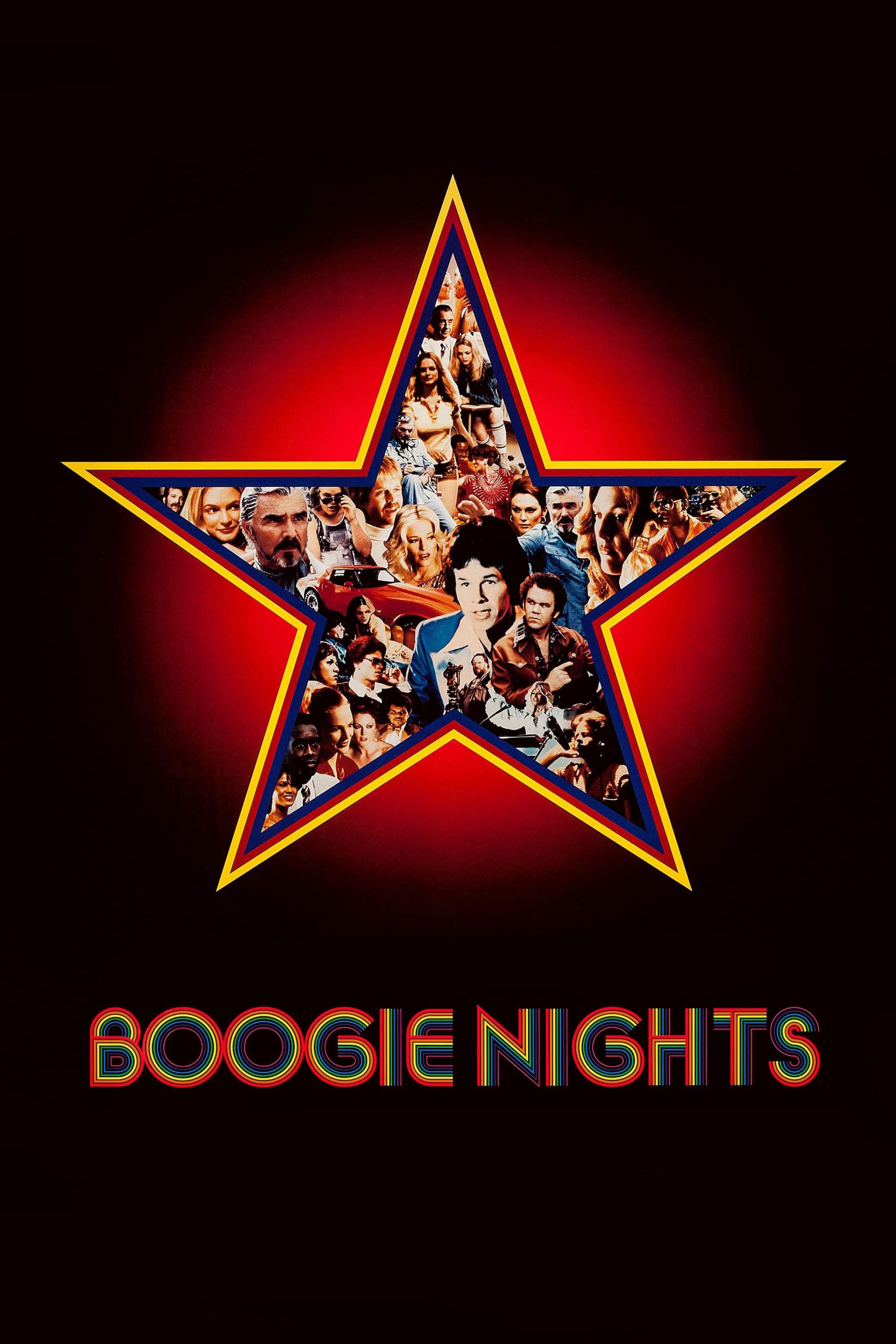
The Question of Truth Behind the Film
Every time I watch “Boogie Nights,” I can’t help but ask myself: is this truly how things happened, or am I being swept along by an invented current? There’s something irresistible about searching for real-world roots beneath the surface of a movie—an urge I’ve noticed isn’t unique to me. I think many of us instinctively want to know whether a story comes personally from a filmmaker’s imagination or from the broader, shared landscape of cultural memory. When I sit down to a film labeled “based on a true story,” my whole viewing posture shifts; I start scrutinizing scenes for authenticity, wondering which details emerged from real life and which are just clever fiction. There’s an underlying assumption that “true” means accurate, important, or perhaps even more valuable—or at least worth paying closer attention to. Yet, I’ve found that label can be a double-edged sword. It makes me more invested in the events’ accuracy, but also more prone to disappointment if I discover liberties were taken. “Boogie Nights” complicates this dichotomy beautifully. From the outset, the movie’s hyper-vivid world of the San Fernando Valley’s adult film industry in the late ’70s and early ’80s feels unsettlingly plausible, but slickly heightened. That sense of ambiguity—hovering between reality and invention—is exactly what draws me deeper.
Historical Facts and Cinematic Interpretation
When I reflect on “Boogie Nights,” I’m struck by how Paul Thomas Anderson threads together bits of real history but never lets the facts become shackles. I see evidence throughout that Anderson started with the broad contours of a known place and time—rows of houses under sun-bleached skies, a parade of real-life adult film icons, the booming porn industry—yet the film doesn’t function as a documentary or a biopic. Instead, it feels like a collage, taking inspiration from multiple true accounts while stripping away individual specifics. For example, as I learned about the film’s loosely acknowledged inspiration in the career of John Holmes, a notorious adult film star, it became clear to me that Anderson never intended his main character, Dirk Diggler, to be a direct recreation. Dirk’s story is built from selective fragments: Holmes’s notoriety, the criminal infamy, the emotional decline. But the screenplay freely invents new motivations, new relationships, and scenes that exist purely for dramatic or thematic effect. To me, this blend is more than just a convenience; it allows Anderson to evoke an era with truth while never being held hostage by it.
That approach, as I see it, acts like a filter—focusing on truthfulness rather than literal truth. Instead of pinpointing single incidents from the historical record, the film borrows moods, anxieties, and social realities. Take the ensemble cast: the composite characters are inspired not merely by Holmes or people like Bill Amerson but by the culture that thrived around them—managers, directors, hopeful newcomers, and those disillusioned by the business. Scenes that unfold in parties, movie sets, and suburban homes echo thousands of testimonies and reminiscences I’ve come across through interviews and documentaries on adult film history. Yet, the narrative structure is wholly Anderson’s construction, compressing many years’ worth of change—artistic, technological, emotional—into two concentrated hours. As a result, I perceive the events less as a strict chronology and more as a mosaic, where the point isn’t what happened exactly but how it felt for those thrust into that industry’s orbit.
To me, this reshaping is central not just to the film’s entertainment value, but to its ability to communicate a certain kind of psychological or cultural accuracy. By sidestepping literalism, Anderson opens the door for “Boogie Nights” to say something broader about ambition, longing, and disappointment, even if no single event played out in precisely the same way back in the day. The process always entails a degree of omission or embellishment: composite scenes where tension builds faster than real-life events would allow, dialogue sharpened for impact—these aren’t betrayals of fact, but rather, ways to bring the audience quickly and powerfully into the world’s emotional heart.
What Changes When Reality Is Shaped for Cinema
I’m often reminded, while watching films like “Boogie Nights,” that truth and storytelling follow different rules. When Anderson (or any filmmaker) brings a real era to the screen, I notice how certain trade-offs are unavoidable. For me, realism is often less compelling than a film’s ability to distill experience down to its most vivid essence, and that means condensing timelines, simplifying relationships, and fabricating details for clarity or emotional resonance. The film’s compressed timespan—covering just a handful of transformative years—takes what might have occurred incrementally over a decade and merges it into a high-voltage rise-and-fall arc. I can’t help but find this artifice paradoxically revealing. Collapsing time in this way allows the narrative to trace the arc of a culture’s innocence, hubris, and decline in a way that real life, full of slow decay and gradual transitions, rarely does as starkly.
Some of the most memorable moments in “Boogie Nights”—the bravado of Dirk’s arrival, the tension of the Alfred Molina scene, the mosaic of party excess—strike me as carefully crafted rather than purely reported. The film seizes on the stylistic markers of the era, using costumes, music, and set design to conjure a period authenticity that never entirely tips over into caricature. Sometimes the trade-off is visible in the condensation of complex industry mechanics—censorship, economics, evolving technology—into encounters between two or three key players. As a viewer, I see that I’m being presented with the emotional gist, not an academic breakdown.
This process doesn’t just affect information—it reframes character. I think of Julianne Moore’s Amber Waves as a synthesis: she resonates with the stories of several real-world performers, but exists chiefly to embody ideas about yearning, maternal longing, and the loneliness of fame. Her arc is distinct, self-contained; it isn’t subservient to any single source’s biography. This labor of adaptation, I find, sometimes clarifies complexities rather than obscures them, translating them into sharable, discussable drama. The cost, of course, is that some real-life ambiguities or messiness get lost along the way. Yet, as I see it, this is the art of dramatic focus, sharpening sprawling truths into concentrated feeling. I don’t judge it—rather, I observe how these artistic decisions lend the story shape and drive.
Audience Expectations and the “True Story” Label
I’ve always noticed that labeling something a “true story” instantly shifts audience engagement. When I first learned about the factual origins lurking in the background of “Boogie Nights,” my reaction was a mix of curiosity and skepticism. The phrase “inspired by true events” primes me to watch more closely, seeking proof in every costume, piece of slang, or narrative twist. It almost feels as if audiences, myself included, become active detectives, searching for kernels of reality to validate the film’s world. But when that claim is absent—as it is for “Boogie Nights,” which never directly markets itself as “true”—my suspension of disbelief softens, and I focus more on immersion than verification.
There’s a fascinating tension here: when a film aligns itself with “the real story,” I feel a latent obligation to weigh it against historical fact. Any deviation—anachronistic music, invented dialogue—feels, for me, like a potential breach of trust. Without that framing, as with “Boogie Nights,” I grant the film more latitude. I appreciate subtle nods to real-life figures or events, but I’m not blindsided if details don’t line up with the historical record. This altered expectation, I think, is why the movie can swing so freely between comedy, drama, and tragedy without leaving me feeling manipulated. I’m not constantly comparing it to Wikipedia; I’m interpreting its internal logic, and the way the story moves emotionally.
I also find that the audience’s own knowledge base plays a role. For viewers familiar with adult film history, watching “Boogie Nights” is a game of connect-the-dots: Dirk Diggler’s rise and fall, the shadow of the Wonderland murders, echoes of various real personalities, all fuel an added dimension of engagement. When I talk with friends who bring no prior awareness, however, it’s striking how they take the film more as an allegory about excess and identity than as a coded historical document. The “true story” label—or lack thereof—shapes, in my experience, both the degree of scrutiny an audience applies and the kinds of meaning they draw from what’s on screen.
Final Perspective on Fact vs Fiction
Reflecting on my experience, I recognize that the line between fact and fiction in “Boogie Nights” isn’t merely academic—it fundamentally changes how I process the narrative. When I approach the film aware of which elements draw from real events, I find myself mapping the story’s broad arcs against true histories. It becomes a kind of double viewing: on one level, I’m watching Anderson’s fictional world come alive, and on another, I’m relating what I see to fragments of the era’s oral histories or biographies. If I know nothing about the source material, I move more intuitively, allowing the film’s patterns of hope, failure, and yearning to stand on their own. There’s an intimacy in that—being unencumbered by the question of what is “real” lets me absorb the movie’s atmosphere and characters without an invisible checklist in hand.
Yet, when I do recognize traces of reality—whether in a song choice, a plot point, or the echo of a notorious headline—I feel myself recalibrating. The stakes feel both higher and narrower; every invented moment risks being weighed for plausibility, and every factual note takes on symbolic resonance. My interpretation grows layered: at times, the knowledge that a particular storyline is inspired by something real adds gravity; at others, it feels distracting, pulling me out of the film’s self-contained world. I notice that knowledge doesn’t always enrich understanding, but it never fails to alter the texture of the viewing experience. There’s no single best way to receive a hybrid film like “Boogie Nights”—it reveals different faces depending on what I bring to it, what I know, and how much historical scaffolding I use to support the fiction.
Ultimately, my sense is that the power of knowing what is real or fictional lies in how it shifts the audience’s relationship to what unfolds onscreen. It alters our sense of possibility, our openness to surprise, our desire to learn more or to simply be moved. Whether its truths are historical, emotional, or purely invented, “Boogie Nights” for me remains an invitation: to look harder at both the stories we tell and the realities we’re drawn to believe, making every viewing a negotiation between what was, what might have been, and what never was at all.
For additional context, you may also explore the film’s overview and how it was received by audiences and critics.
🎬 Check out today's best-selling movies on Amazon!
View Deals on Amazon