
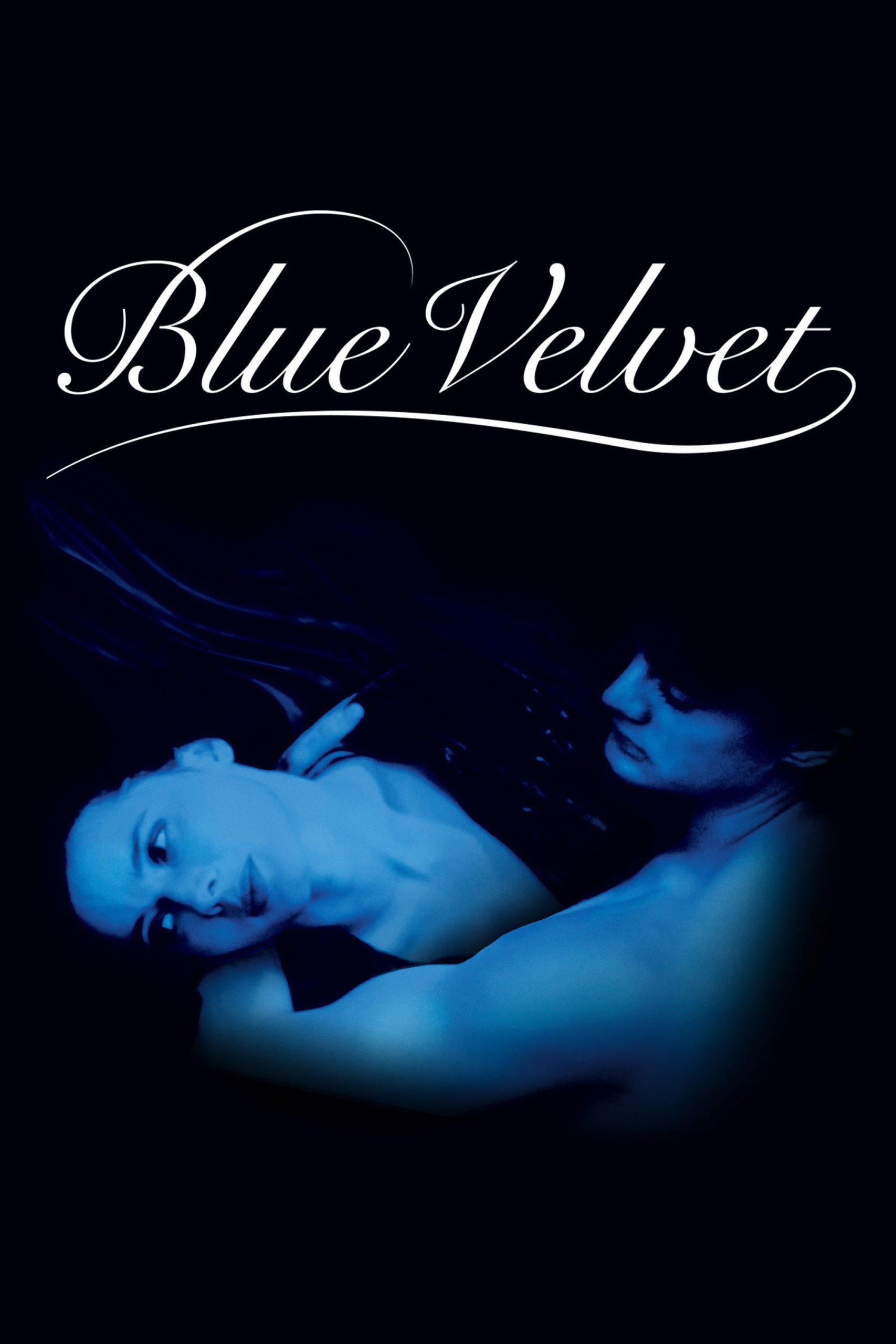
The Question of Truth Behind the Film
Sometimes when I’m confronted by a film as fiercely strange and unsettling as Blue Velvet, I find myself grasping at the question of reality—as if pinning down what’s “true” about it might offer some anchor in the swirl of its images. So often, viewers—myself included—are eager to know if a film is based on real events or even loosely inspired by the contours of a factual story. There’s a kind of relief, maybe even a sense of order, that comes from believing a film either belongs wholly to fiction or carries the “based on a true story” label. I’ve noticed that designation conjures a set of expectations: a certain fidelity, an implicit promise that the events I’m about to experience have roots in something that actually happened. For me, that shifts my way of watching—the emotional stakes and the boundaries of disbelief rearrange a bit in response to how the film positions itself. When something is said to be “true,” I am more attentive to the relationship between art and lived experience, and I start measuring what unfolds on screen against a mental background of what might have really occurred.
But in the case of Blue Velvet, there’s an interesting ambiguity. The film never claims to be taken from a specific real-life incident, though its portrait of small-town America and its dark undertow resonates with the feeling of lived spaces and familiar anxieties. I think this uncertainty is part of its lasting effect on viewers; it exists at a strange distance from straightforward historical adaptation, yet still feels deeply connected to broader truths about human psychology and suburbia. When I sit down to watch Blue Velvet, I am not seeking affirmation that its grotesque mysteries are cut from factual cloth, but at the same time, its unnerving power seems heightened by a nagging sense that, on some level, the ugly secrets it reveals might be versions of ones that exist in any given town—even if the actual details are the inventions of the filmmaker.
Historical Facts and Cinematic Interpretation
Whenever I watch a film that appears to borrow elements from real life—even in passing—I become curious about how those facts have been reshaped. In the case of Blue Velvet, much of the story doesn’t trace back to a headline or a specific episode in history, but instead to a tapestry of cultural anxieties and period details that feel as if they might just as easily have been reported in small-town newspapers as conjured from imagination. For me, it’s less about a direct reference to real-life events and more about an atmosphere: the tonal and visual language that evokes the closed world of postwar American suburbs. I’ve often reflected on how Lynch uses familiar markers—white picket fences, tidy flower beds, neighborhood patrol cars—as a point of entry. These are not historical events in a literal sense, but are so recognizably American that they carry the weight of collective authenticity regardless.
What strikes me most, as I look for signs of reality in the fabric of the film, is its reliance on the logic of dreams and memories, which are themselves profoundly subjective forms of history. Even moments that seem outlandish—Frank Booth’s violence, the buried horrors in plain sight—carry the unsettling charge of “this could happen,” because they play on archetypes and whispered fears rather than specific, documented incidents. In this way, the film condenses and reorganizes the messy sprawl of real life: it extracts certain anxieties from the culture, then concentrates them into a stylized narrative. When I compare this to films directly claiming historical inspiration, I notice that Blue Velvet is more concerned with emotional plausibility than with literal accuracy. For me, those gestures of realism—faces in a crowd, unspoken small-town codes—function as a kind of shorthand for truth, even in the absence of official factual referents.
I’ve observed that films which do draw directly from real events often face the challenge of condensing years or decades of complexity into the manageable arc of a cinematic narrative. Even though Blue Velvet does not present itself as a dramatization of an actual crime or personality, it still borrows from a recognizable American ethos, paring it back and reassembling details in service of mood and metaphor. I’m reminded of how adaptations often merge composite characters or reorder major events not for the sake of deception, but purely to produce a cohesive film experience. Lynch, in crafting this film, seems to borrow from the atmospheres and emotional landscapes of an era rather than its specific happenings, and I find myself fascinated by how this method both blurs and intensifies the boundary between fact and fiction on the screen.
What Changes When Reality Is Shaped for Cinema
When I watch a film that leans into elements of realism, I always notice how its creators choose between the messiness of true events and the demands of the screen. In my own view, the process of translating life into cinema involves a series of necessary trade-offs—choices that shape not just what is represented, but how it resonates. With something as stylized as Blue Velvet, I’m especially aware of how any potential connection to reality becomes subservient to themes and atmosphere. If the story were directly based on true crime, for example, there might be pressure to respect chronology or to keep certain details unembellished. But in this film, I see a willingness to stretch, warp, and recompose elements—combining the recognizable with the surreal in ways that would be nearly impossible in a strict adaptation of fact.
My sense is that even subtle gestures—a certain brand of costume, a snatch of period music, the cadence of dialogue—carry enormous weight in suggesting authenticity to the audience. Yet these choices are rarely matters of strict documentation; instead, they become tools to evoke the feeling of an era or a place rather than a transcript of its events. I’ve always thought of this as a kind of cinematic sleight-of-hand, a principled use of artifice to lead the viewer somewhere deeper than the literal. In their pursuit of impact, filmmakers often reshape reality, compressing timelines, emphasizing certain characters or motifs, and heightening reactions to create a unified emotional journey. When watching Blue Velvet, I’m acutely aware of where the seams of reality have been let out or pulled in tight—not in a way that ruins immersion, but in a way that reminds me of film’s inherent subjectivity.
There is, for me, a kind of paradox at work. The more that a film distills its inspiration into a tightly controlled narrative, the more it risks moving away from strict factuality but achieves a singular vision. I don’t feel betrayed by these choices; I am, rather, pulled closer to a new reality constructed by the film. I see this expansion of truth—where psychological depth is valued over precise reconstruction—as both an invitation and a challenge to my understanding. Rather than fact-checked storytelling, I receive a concentrated dose of what the world might feel like were it revealed in dreams or heightened moments of clarity. Watching Blue Velvet, I’m reminded that the pursuit of emotional or thematic truth within the fictional context sometimes delivers insights about reality itself, albeit by other means than direct reporting.
Audience Expectations and the “True Story” Label
When I encounter a film that declares itself a “true story,” my expectations shift dramatically. I approach the film almost as a document, searching for traces of verifiable reality, imagining its characters and scenarios as people and moments pulled from the archive. I feel a certain gravity to the proceedings—a sense that my emotional reactions should be informed not just by the artistry of the work, but by respect for the events and people it purports to represent. This difference in stance can be subtle, but it runs deep. Films “inspired by real events” often leave me in a gray zone, hovering between suspension of disbelief and forensic skepticism, as I weigh how much license the creators might have taken with the source material. Pure fictions, by contrast, allow me to surrender control and accept the internal rhythms of the story without checking for correspondence to my understanding of history.
What I find especially intriguing about Blue Velvet is that it makes no explicit promise to truth, yet it produces an uncanny sensation that what is on screen is somehow reflective of invisible realities. I find myself relating to its dreamlike logic less as fantasy and more as an exposure of something lurking beneath the surfaces of everyday experience. The absence of a “true story” label grants the film space to roam—its symbolism, psychology, and disjointed narrative become invitations rather than constraints. When I show this film to others, I notice a similar phenomenon: viewers bring their own knowledge and suspicion, projecting personal meanings onto the symbolic canvas. Some may even retroactively search for real-life events that might “explain” the film’s darkness, as if disbelief needs to be negotiated after the fact.
For me, the “true story” label acts as both a frame and a fence. It can lend poignancy and urgency to a viewing, but it can also limit interpretation, orienting the audience toward verification and fact-checking at the expense of immersion and allegorical richness. With a film like Blue Velvet, I feel released from those constraints. I am free to respond emotionally, associatively, and imaginatively, threading connections between its images and the world outside while still recognizing that what I’m seeing arises from creative invention. Conversely, I also recognize that some viewers crave the security of history—a sense that the film is teaching or witnessing rather than simply speculating or emoting. That gap between expectation and delivery can deeply color how each audience member reacts.
Final Perspective on Fact vs Fiction
Looking back over my shifting reactions to Blue Velvet, I recognize how much my understanding of the film is shaped by what I believe about its roots in reality. With no single incident anchoring the narrative to headline or history, I find myself more attuned to its tone, allegory, and mythic qualities. The lack of a factual underpinning opens the film up, at least for me, to interpretations that are both deeply subjective and widely resonant. Yet this very ambiguity creates a persistent tension: Was what I saw somehow “real,” if not in the documentary sense, then in the emotional or cultural sense? My answer shifts every time I watch, colored by my mood, my context, and my own memories of suburban spaces both idyllic and fraught.
The boundary between fact and fiction, I’ve come to realize, acts less as a dividing line and more as a moving threshold that changes what I demand—consciously and unconsciously—from a film. If I believe a cinematic world is drawn from real life, I look for accuracy and moral fidelity; if it is a work of imagination, I lean into the experience itself, seeking to understand what truths might be revealed through invention. When a film blends the two—as Blue Velvet does, by drawing from cultural memory and lived atmosphere rather than direct documentation—it fosters both ambiguity and interpretive freedom.
What I take from this, as someone who wrestles with both the facts of history and the inventions of art, is that my awareness of a film’s factual or fictional foundation doesn’t simply affect how convincing or moving I find it—it actively shapes the types of questions I ask, the evidence I seek, and the value I ascribe to its revelations. Blue Velvet strikes me as powerful not because it is true in any formal, newsworthy sense, but because it creates a space where a viewer like me can test the boundaries of what “real” even means. That testing is, for my own experience, a vital part of the cinematic encounter: a way not just to watch a story but to interrogate the world—and myself—through it.
For additional context, you may also explore the film’s overview and how it was received by audiences and critics.
🎬 Check out today's best-selling movies on Amazon!
View Deals on Amazon