
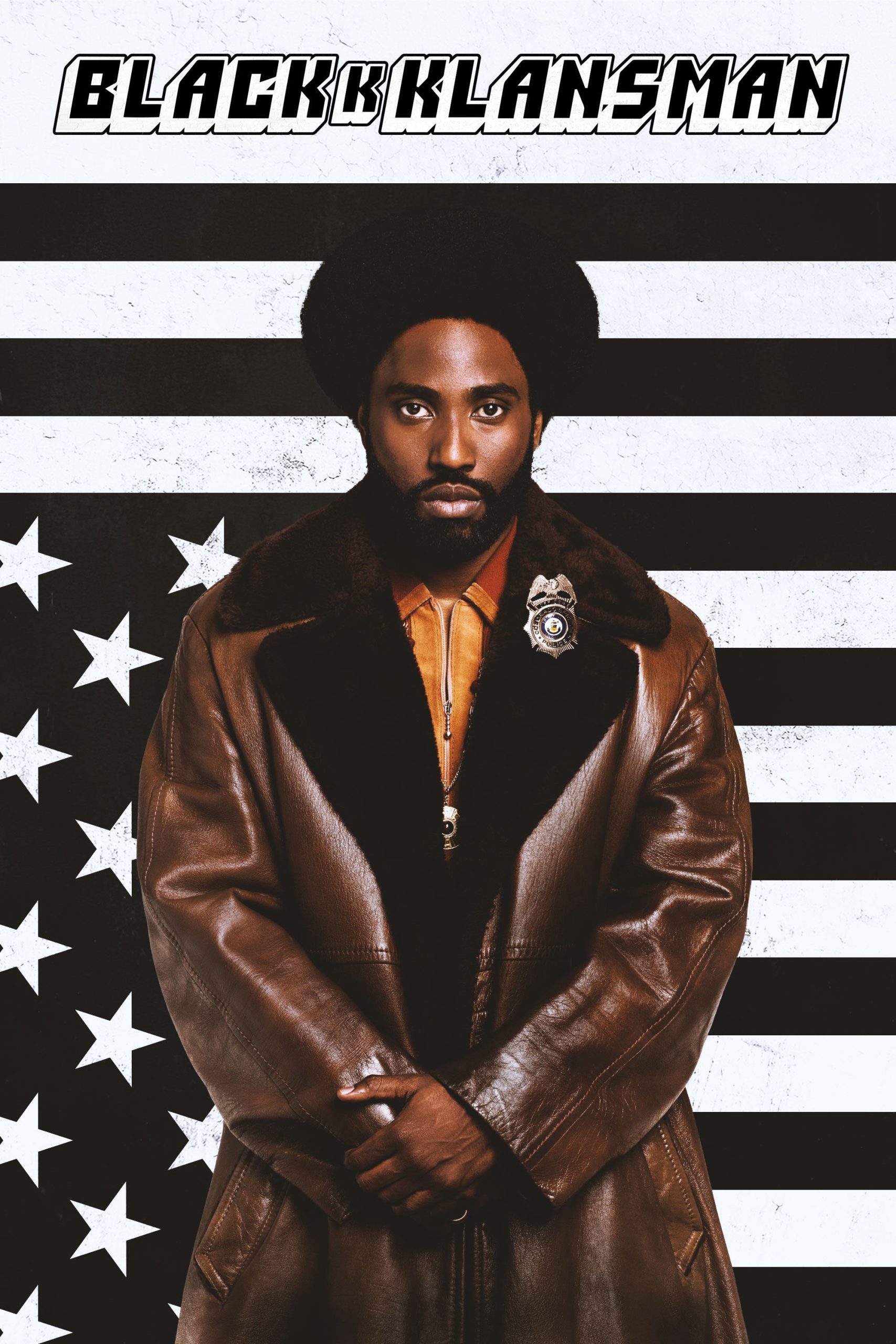
The Question of Truth Behind the Film
Watching “BlacKkKlansman” for the first time, I remember being pulled into its world with the lingering question: how much of what unfolds here actually happened? This urge to dig beneath the surface isn’t unique to me. I notice that many viewers—including myself—are constantly curious about what’s real and what’s embellished, especially when a film proclaims to be “based on a true story.” I’m always intrigued by what that label offers or withholds. It seems to suggest a promise that I’ll glimpse an actual slice of history, presented in a way that’s both informative and emotionally engaging. Yet, I also notice I carry certain assumptions when I see such a label: I expect a fidelity to real people and actual events, even if some remains behind a veil of artistry and interpretation. That promise of authenticity naturally raises my expectations for accuracy while also priming me for moments of storytelling departure. Each time I encounter a “true story” film, I ask myself where authenticity ends and narrative craft begins, because the phrase itself has become slippery—a marketing device, but also a frame for how I interpret what’s on the screen. My curiosity about this question often shapes how invested I become in the film, and even how willing I am to suspend disbelief in moments that feel especially improbable or grandiose.
Historical Facts and Cinematic Interpretation
As I reflect on “BlacKkKlansman,” I can’t help but think about the interplay between its roots in Ron Stallworth’s real-life story and the ways the film reimagines or compresses these events to make them resonate on screen. It’s fascinating to me how the messiness of actual history is often at odds with the streamlined narrative structure that cinema demands. As I understand it, the core premise—a Black police detective infiltrating the Ku Klux Klan in Colorado—did indeed happen, but in practice, many of the film’s striking scenes and set pieces seem designed to maximize dramatic impact, not to serve as strict historical record. For example, the composite character Flip Zimmerman, who represents Stallworth in person during face-to-face Klan meetings, is a fabrication typical of adaptation. When I examine the real events, I see how several figures are merged for simplicity, both in terms of characterization and to create a more coherent dramatic arc. Timelines are telescoped, individual episodes are magnified for emphasis, and subplots are introduced—such as the student activist romance—presumably for thematic balance and heightened tension. For me, these artistic choices signal the hand of adaptation at work, engaged in reshaping history so that it fits within the boundaries of a two-hour film, complete with narrative beats designed to evoke emotional response. All of this reflects how the translation from memoir or archive to cinema isn’t a direct transfer, but a complex process of selection and invention—not only to entertain, but also to make sense of chaotic real-life events through a focused lens.
What Changes When Reality Is Shaped for Cinema
One aspect that stands out most to me is the selective nature of cinematic adaptation. By necessity, filmmakers must distill sprawling, often ambiguous historical material into moments that are legible and cohesive. this transition requires trade-offs. I often see granular factuality—who said what, who was in the room, what order events truly occurred—conceding ground to emotional clarity and symbolic coherence. For example, I notice how real investigative police work, which likely unfolded slowly and inconspicuously, is depicted with a pace and sharpness that tracks more closely with genre convention than archival reality. This isn’t just about dramatic tension but also about the audience’s need for closure and satisfaction within a limited runtime. The introduction of invented or composite characters—like Flip—serves practical purposes: they allow the filmmaker to provide a point of dramatic contrast, to highlight particular themes, and to eliminate the inefficiency of portraying every minor real-life participant. Similarly, events that played out over many months are compressed into a matter of days or weeks, endowing the story with greater momentum. When I watch with these mechanisms in mind, I realize how the shaping of reality is less about distorting truth for its own sake and more about forging a communicative bridge: inviting viewers, like myself, to engage emotionally while also connecting to the broad arc of the actual events. The challenge lies in deciding what must be preserved versus what can be bent or omitted for the sake of a compelling, digestible narrative. Each adaptation is a negotiation between the weight of historical record and the logic of storytelling.
This negotiation isn’t just an abstract concept for me; it alters my experience of the film as I move through scenes that seem too perfectly orchestrated. Some sequences—like explosive crosscutting between a Klan initiation and civil rights activism—strike me as more poetic montage than lived experience. Yet I accept that such moments are common in adaptations, designed to foreground connections that might not have felt so immediate to those present at the time. I wrestle with the idea that sometimes invention enables broader truths to resonate: perhaps a conversation that never happened accurately distills a social atmosphere that’s otherwise too diffuse to capture. Still, recognizing these trade-offs, I remain attuned to the inherent give-and-take: something essential is gained in clarity and impact, but something is simultaneously set aside—notably the untidy or uncinematic elements of reality. For me, the question becomes not only “what happened” but “what does the film want me to feel or understand about what happened?”
Audience Expectations and the “True Story” Label
Every time I sit down to a film stamped with “based on a true story,” I notice a shift in my attention. With “BlacKkKlansman,” this expectation became a lens that shaped how I weighed each scene. My guard went up—I found myself scrutinizing the details, wondering whether events played out as depicted. I’ve observed among friends and peers that there is a general tendency to treat films labeled as factual as something akin to a history lesson, whether the fit is tight or loose. The phrase “inspired by true events” operates differently for me: it signals a looser connection and gives me more room to accept invention without disappointment. When a film is boldly fictional, I focus my attention on allegory, tone, or character arcs, not on factuality. But with “BlacKkKlansman,” I always hover in between, reminded continually of its nonfiction anchor yet aware that some story elements wear theatrical exaggeration on their sleeve.
I’m fascinated by how the “true story” label appears to invite a double reading. On one hand, I feel pulled into a sense of documentary authenticity: I want to trust that the fabric of what I’m seeing is reality, particularly in moments that seem stranger than fiction. On the other hand, when parts of the story are obviously heightened or stylized, I reset my expectations and remind myself that cinema is a medium of artifice. Occasionally, I sense myself wanting to “fact-check” the movie while watching—a tension that’s less prominent with purely fictional tales. My own interpretation of key sequences, such as Stallworth’s dialogues with David Duke, is colored by this dynamic. Did the exchanges happen verbatim, or are they heightened for effect? Sometimes, the film’s overt references to contemporary events push me to consider the material through a modern lens, not as historical record but as social commentary. In those moments, whether a scene is strictly true or not can either heighten its relevance or provoke skepticism. I recognize that I, like many viewers, approach films like “BlacKkKlansman” as both an entertainment and a history lesson, even when the two orientations may not always align. That push-pull underlines how much the “true story” label inflects both the viewing and the subsequent conversation, prompting debate or reflection even after the credits roll.
Final Perspective on Fact vs Fiction
Stepping back after watching “BlacKkKlansman,” I become even more aware of how my understanding is continually shaped—and sometimes reshaped—by what I learn about the actual events. Researching the real Ron Stallworth made me appreciate both the courage at the heart of the original investigation and the imaginative leaps the film takes to dramatize those circumstances. Knowing how the film diverges from reality didn’t lessen its effect for me; if anything, it made me read its choices with more nuance. As I pieced together which portions were strict fact and which were the product of cinematic necessity, I found my interpretation deepening: passages that once felt merely entertaining now appear as purposeful constructions, meant to highlight certain tensions or contrasts that pure documentation might not reveal so succinctly.
The gap between what really happened and what appears on screen never feels like a betrayal to me so much as an invitation to consider how stories about the past are always being reframed through the medium’s demands. My sense of the film’s meaning isn’t static—it evolves as I learn more about the context, the process of adaptation, and the needs of storytelling itself. This is especially true for a work like “BlacKkKlansman,” where the awareness of invention prompts me to ask why certain details were shaped the way they were, what the omissions might highlight by contrast, or how an altered sequence may shed light on broader truths.
Looking at the relationship between fact and fiction, I don’t find myself privileging one at the expense of the other. To me, their interplay is central to what makes cinema a compelling form for exploring history. My understanding of the film’s themes—identity, infiltration, the fraught politics of race—are amplified, not diminished, by knowing which parts are crafted for cinema and which arose from lived experience. The more attuned I become to that interplay, the more confident I am in reading the film as both a narrative work and an interpretive act with its own internal logic. “BlacKkKlansman” exemplifies for me how the cinematic retelling of historical events isn’t so much a question of outright truth or invention but of selecting, arranging, and presenting what matters most for a given audience, in a given moment. By approaching it with awareness of both its origins and its adaptations, I find my own engagement enriched—neither simply an act of belief nor of skepticism, but of reflection about how stories from the past are continually retold to meet the needs of the present.
For additional context, you may also explore the film’s overview and how it was received by audiences and critics.
🎬 Check out today's best-selling movies on Amazon!
View Deals on Amazon