
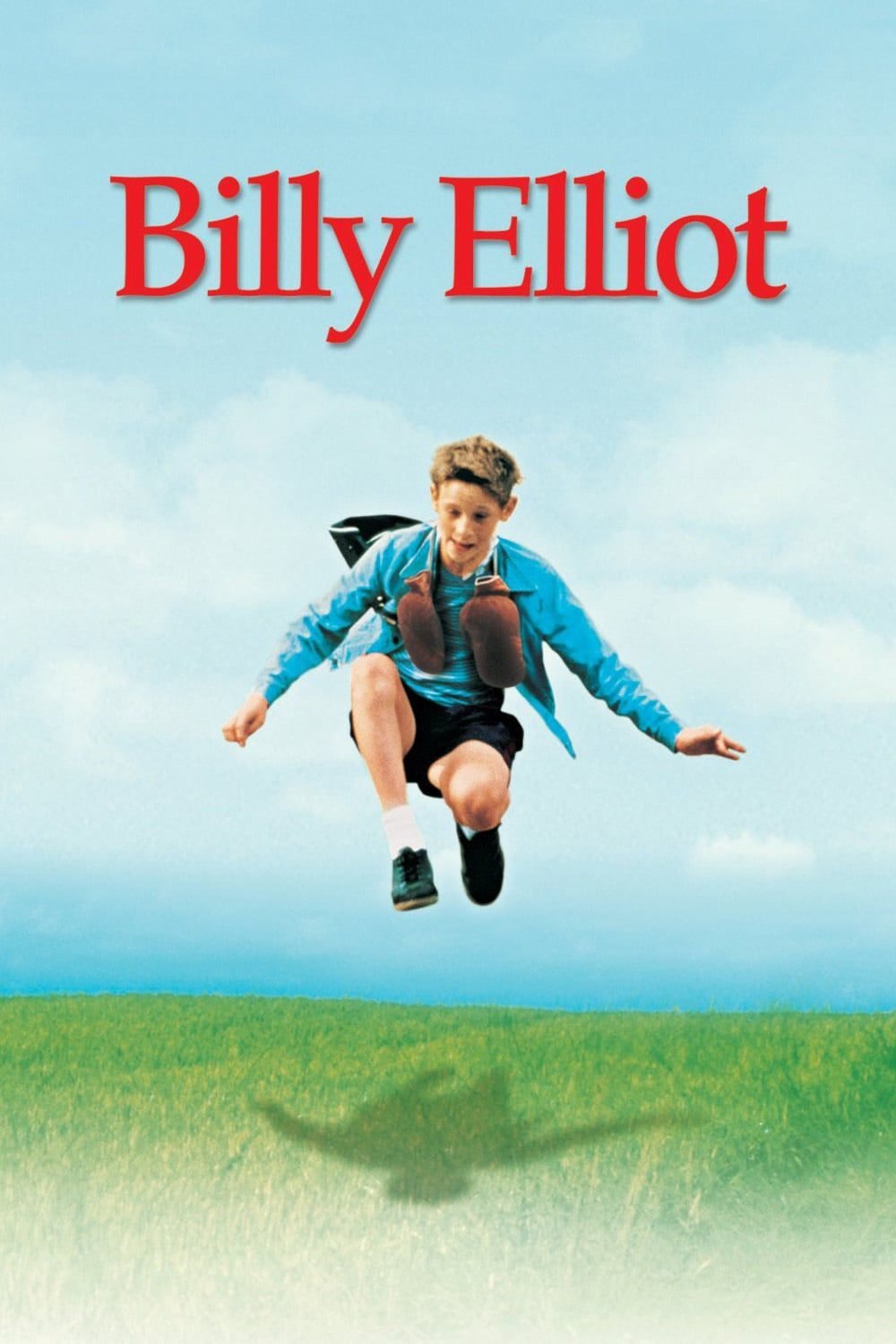
The Question of Truth Behind the Film
The first time I watched “Billy Elliot,” I found myself returning again and again to a single, nagging question: how much of what I had just seen actually happened? It’s a question that seems to linger after many films, but especially ones rooted in a recognizable place and period. I’ve noticed that when a movie feels emotionally real or when it is set against a backdrop I imagine must have existed—like the British miners’ strike in the 1980s—I begin to wonder whether the characters and their struggles actually belong to history or if they spring entirely from a screenwriter’s imagination. For me, the urge to ask, “Is this based on a true story?” is more than curiosity; it holds the promise that what I have witnessed onscreen might carry a certain documentary weight or authenticity.
Yet with that promise comes a set of subtle expectations. When something is labeled “based on true events,” I often gear up to experience not just a piece of art, but a slice of truth—a kind of emotional or historical education. If I learn instead that the story is wholly fictional, my frame of viewing alters slightly; I become less focused on the accuracy of details and more on the themes or craftsmanship of the narrative. In the case of “Billy Elliot,” I remember a sense of ambivalence about its factual grounding. The film never explicitly markets itself as the life story of a single person, but it anchors itself in such a clearly defined moment of British history that I, like many others, quickly sought out what was real and what was artifice. The label “true story” seems to promise a transaction: in exchange for my emotional investment, I will receive insight into lives and times I might never have known. Whether or not a film is entirely factual changes how I process its emotional highs and lows, and it frames my anticipation of what truths—personal or social—it might illuminate.
Historical Facts and Cinematic Interpretation
For me, the setting of “Billy Elliot”—the austerity, tension, and camaraderie of a small Northern mining town in the mid-1980s—felt so immersive and specific that it seemed it must be drawn from lived experience. And in many ways, it was. The British miners’ strike was a historical event marked by hardship and fierce loyalty, and the atmosphere in the film reflects the economic desperation and social division I’ve read about from that time. But I’m continually struck by how the movie takes these broad strokes of history and molds them into an intimate, character-driven story. To me, this is not a simple retelling but a process of selection, compression, and reorganization—almost a distillation—of real events.
While Billy Elliot himself is not a historical figure, the screenplay draws upon countless individual and communal narratives from the era. The strike, the threat of pit closures, and the domestic pressures are all realities that many families faced. Whenever I rewatch the film, I can sense how the emotional rhythms of the story have been calibrated to illuminate these themes, even as the particulars of Billy’s journey—his passion for ballet and the obstacles he faces—are inventions. The historical backdrop is not documentary in approach, but it provides the story with an anchor of plausibility. I’ve found that filmmakers often do this: they gather the real textures of an era and plant within them fictional seeds, aiming for emotional accuracy if not always precise, journalistic truth.
The mining strike is condensed into a narrative arc that mirrors Billy’s own struggles, and events that may have unfolded over years are presented with cinematic urgency—protests, police confrontations, family tensions. The process reminds me that historical film is as much about the strategic omission and reorganization of facts as it is about inclusion. Scenes are orchestrated to drive home the resilience of communities or the conflicts between generations. I sometimes reflect on how the film’s authenticity comes not from a meticulous ticking-off of real events, but from its ability to render settings, attitudes, and emotional truths that resonate with the documented reality.
What Changes When Reality Is Shaped for Cinema
When I consider the balance between reality and cinematic adaptation, I’m immediately aware of the choices that must be made to transform raw history into a compelling narrative. In truth, history doesn’t unfold in neat, dramatic arcs. Lives aren’t always punctuated by cathartic breakthroughs at the exact moment of a pivotal event; often, change comes much more slowly, or not at all. The filmmakers behind “Billy Elliot” compress the timeline of the miners’ strike into the narrative heartbeat of Billy’s coming-of-age story, reshaping a prolonged, complex conflict into a backdrop that can be understood, by the audience, in a couple of hours. I’ve come to recognize this as a necessary compromise—a kind of practical editing made in service of narrative clarity and emotional coherence.
Inside this process of adaptation, some historical elements are emphasized while others are simplified or omitted entirely. The film, for instance, foregrounds the economic deprivation of the mining community and weaves it directly into Billy’s personal journey. This streamlining allows audiences like me to follow the interplay between individual aspiration and collective hardship without having to navigate the granular specifics of labor history. Moments that might represent weeks or months of struggle are distilled into a single, powerful montage or confrontation. Sometimes dialogue that rings with truth is actually an invention—a line meant to encapsulate the spirit of a time more than to replicate a factual exchange. I’ve noticed that these narrative shortcuts, while potentially smoothing over some of the messier contradictions of the era, give the story a focus and resolution that lived history rarely offers.
For every trade-off between historical fidelity and narrative efficiency, there is an accompanying gain or loss in the film’s resonance with history. If a minor historical detail is changed, I may not notice—or mind—if the change serves a broader thematic exploration. When the film presents a police line or a battered community center, these images feel drawn from a societal memory rather than one person’s recollection. Cinema operates at this intersection, where the need for emotional engagement—so crucial to the art of film—requires a different kind of truth than the historian’s ledger. I encounter these choices not as evidence of unreliability, but as moments in which cinema allows for new forms of empathy or understanding. Essentially, the adaptation process means some specifics are sacrificed on the altar of universality; the result may not be history, but something closely allied to it.
Audience Expectations and the “True Story” Label
My experience has been that the way a film is described—whether it’s “inspired by real events,” “based on a true story,” or “entirely fictional”—shapes my expectations in powerful, if often unconscious, ways. When I sit down to a film that claims to reproduce history, I subconsciously prepare myself to weigh what I see for its accuracy and its relationship to established fact. I often search for traces of the real world in character names, events, or even in the details of costume and setting. In contrast, when a film like “Billy Elliot” avoids any claim of direct biography while still embedding itself in the recognizable framework of a genuine historical struggle, my stance shifts: I focus more on interpretation, less on verification.
I’ve felt, and sometimes seen among others, that there is a kind of pleasure in recognizing reality onscreen—even if only partly rendered. However, that pleasure is mixed with a certain vigilance: if I know the film is offering itself as truth, I become more critical about what it omits or fictionalizes. I recall, for example, my own reaction to the mining strike backdrop in “Billy Elliot.” I wondered which specific towns or individuals, if any, directly inspired the depiction. When I learned that Billy’s story was an amalgam of many children’s experiences rather than a literal biography, my attention turned instead to the symbolic power of his journey. Instead of fact-checking, I became attuned to the broader social resonance of the film’s depiction—the portrayal of family dynamics, the persistence of tradition, the struggle for acceptance against expectations rooted in real-life hardship.
This dynamic pulls me in multiple directions as an audience member. There is reassurance, perhaps even justification, in believing a story is “true”—that the emotions it evokes have a kind of historical legitimacy. On the other hand, fiction liberates the viewer (and the filmmaker) to chase meaning unconstrained by strict accuracy. I find that some viewers crave validation: did somebody like Billy really break through class barriers through ballet? Others value universality more: whether or not there was one “real” Billy becomes less important than the symbolic meaning he represents. The differences in audience response illustrate how the “true story” label—used or withheld—serves as a kind of navigational guide for how one approaches, absorbs, and interprets the material onscreen.
Final Perspective on Fact vs Fiction
After many viewings and discussions about “Billy Elliot,” I have come to see that my understanding of the film—the lens I use to interpret its themes—shifts meaningfully based on what I know about its relationship to real events. If I approach the film as a documentary surrogate, I might become preoccupied with dates, locales, or whether any child from Easington actually rose to international ballet fame during the miners’ strike. But if I remind myself that the film is rooted in the emotional, rather than the literal, experiences of that era, I free myself to encounter the story as a parable about resilience, transformation, and hope. What grounds the film for me is not the verification of each fact, but the resonance of the struggles and dreams it portrays within a recognizable historical landscape.
This awareness changes what I draw from the viewing experience. Knowing that Billy is not a direct transposition from a single real person, but an amalgamation of many stories, allows me to appreciate the film’s broader themes about breaking through social and personal restraints. Conversely, understanding the accuracy of the strike’s representation provides a baseline that helps me gauge the believable truths of class, conflict, and community in the film. But I always return to the idea that the strength of “Billy Elliot” doesn’t rest solely on its factual alignment with history. Rather, its power seems to arise from a synthesis—emotional plausibility tethered gently to documentary fact.
For me, the knowledge of what is real and what is fictional within “Billy Elliot” doesn’t weaken the film’s message but reframes it. The boundary between fact and fiction is not, in my experience, a dividing line; it’s a space for engagement. By understanding what is adapted, condensed, or invented, I become a more active viewer, thinking not just about what happened, but what the film is encouraging me to feel and consider. Instead of being disappointed by the absence of a singular “real” Billy, I am often more moved by the idea that his struggles represent the hopes of countless young people who longed for something different in difficult times. The result: my interpretation is richer, layered, and more nuanced, and I leave the film with deeper questions—not just about what was, but about what could be, for individuals and communities alike.
For additional context, you may also explore the film’s overview and how it was received by audiences and critics.
🎬 Check out today's best-selling movies on Amazon!
View Deals on Amazon