
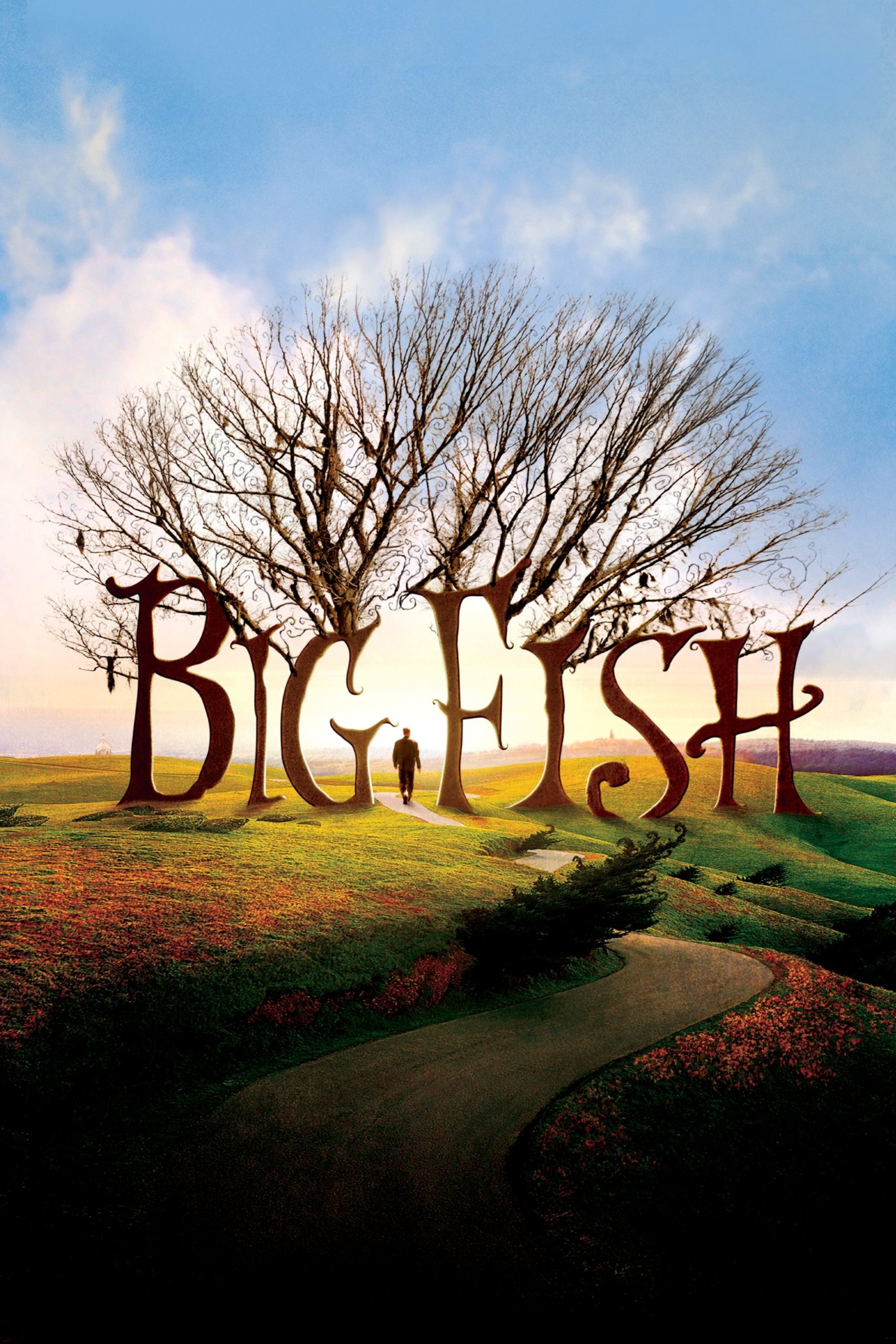
The Question of Truth Behind the Film
Nearly every time I sit down to watch a film that weaves together the ordinary and the fantastical, I find myself asking: “Did any of this actually happen?” Big Fish is a movie that draws this question to the surface almost immediately, not simply because of the tall tales told within, but because the distinction between fact and fiction feels so deliberately porous. When people ask if a film is based on a true story, I think it signals a hunger for a certain kind of authenticity. There’s an expectation—that the dramatic highs and emotional lows become more powerful if they sprang from actual events. This expectation is layered with assumptions: that true stories possess meaning simply by occurring in real life, or that a narrative based in history earns a special weight that pure invention cannot. I find myself torn between two impulses. On one side, I’m drawn to the reliability of truth, the sense that these characters once breathed the same air as me. On the other, I understand the instinct to embellish, to smooth over inconsistencies and highlight moments that carry a certain resonance. Big Fish, which opens with lush exaggeration and ends with ambiguity, invites me to examine these assumptions about what truth in cinema really means.
I tend to believe that when a story is labeled as “true,” audiences want something verifiable, something that connects directly to the world outside the theater. There’s a collective desire to trace back and uncover the ‘real’ Edward Bloom—to see if he really did encounter a witch, walk through a mysterious town, or befriend a giant. The notion of truth in cinema has an alluring, almost magnetic pull. It quietly promises validation: if these things happened, perhaps the emotions I feel while watching them are justified. Yet, as I watch Big Fish unravel, it’s obvious that the film is less interested in strict veracity than in the personal truths we construct to make sense of our lives and relationships. My own expectations, shaped by years of biopics and historical dramas, sometimes bump up uncomfortably against the film’s whimsical mythology. I’m forced to adjust, to accept that ‘truth’ in this context is less about factual chronology and more about emotional resonance, filtered through memory and imagination.
Historical Facts and Cinematic Interpretation
Big Fish doesn’t claim roots in specific historical events in the way that political dramas or biographical films do, but it undeniably draws from the well of mid-20th-century American cultural memory. What fascinates me in examining this film is how it takes the broad strokes of a particular era—small-town Alabama, the traveling salesman, the postwar boom—and reframes them in the language of fable. Even though I know that, on a factual level, Edward Bloom never existed, I can see that the events are shaped by real cultural and social currents. Cinematically, these elements are multiplied, condensed, and rearranged to serve the generational conflicts between father and son, and the sense of nostalgia that permeates the story.
In the transition from Daniel Wallace’s novel to the screen, I notice how Big Fish condenses the novel’s episodic structure into a stream of vivid, neatly packaged anecdotes. These moments—the giant in the town, the enigmatic circus, the bank robber—don’t attempt to reproduce a historical record. Instead, they transform everyday reality into legend. While the setting of Ashland, Alabama might evoke a real place and time, the events themselves are stretched into the realm of the mythic. From my perspective, the film is less about presenting a historical world as it was, and more about capturing the way stories are handed down and embellished over generations. Unlike a documentary, which might scrutinize source material and corroborate facts, Big Fish unapologetically embraces the slipperiness of memory. Watching it, I’m struck by how the layering of fact, fiction, and narrative necessity blurs any clear distinction between what ‘actually’ happened and what was imagined.
It’s also worth noting how the cinematic adaptation reshapes the story for dramatic impact. While the book leaves much ambiguous, the film makes the emotional through-line—the reconciliation between father and son—far more central. Characters introduced in the book as fleeting figures become fleshed out symbols through color and performance. I notice how even the fantastical elements are grounded with small, familiar details from American life: the soda fountains, the marching bands, the rural landscape. These serve as touchstones that ground the outrageous in plausibility, even as reality becomes something malleable. As I watch, I realize that any semblance of history exists to give contour and context to emotional experience rather than to document specific realities. This, to me, is the essence of cinematic interpretation—rewriting history not for accuracy, but for meaning.
What Changes When Reality Is Shaped for Cinema
Every film that touches on supposed ‘real life’ walks a tightrope between what could have happened and what feels right to the story. When I reflect on Big Fish, I see that the film’s freedom from literal truth is what allows its fables to breathe. The trade-offs are immediate and tangible. Condensing time periods, inventing characters, or dramatizing relationships can cloud the historical waters, but they offer clarity for the viewer’s emotional journey. I am reminded that, in cinema, emotional impact often takes precedence over journalistic accuracy.
For example, I observe how the film rearranges Edward Bloom’s timeline, compressing decades into a seamless narrative rhythm. This may blur biographical detail, but it gives me a sense of a life that’s been lived large—much larger than any collection of calendar dates could convey. The creation of composite characters, such as the giant Karl, makes internal struggles tangible and visible. Rather than presenting facts, the story expresses themes—mortality, reconciliation, wonder—in bold, visual strokes. As a viewer attuned to both film and history, I find myself weighing what’s sacrificed in this process. The specificity of actual historical moments might disappear, but the movie achieves a kind of universality.
The blending of fact and fiction in Big Fish opens up a unique storytelling space, where memory and myth coexist. I notice the result in my own response: even without a factual anchor, the story’s constructed world feels emotionally truthful, if not historically precise. Scenes are orchestrated not for accuracy but for poetic effect—the daffodils blooming overnight, the forest paths that seem to shift and glow. These choices, while technically ahistorical, allow me to engage with the material on a level that transcends documentation. As the lines blur, I become less concerned with what is real and more invested in what the film makes me feel and consider about family, identity, and the stories we tell.
Still, there’s a part of me that acknowledges the limitation introduced by this reshaping. If I relied on the film to teach me about a real Edward Bloom, or the actual social history of small-town Alabama, I’d be left with little more than suggestion and metaphor. Cinematic choices often mean clarity of vision at the expense of complexity and ambiguity. As a result, I’m reminded that cinema, at least in films like Big Fish, is as much about what is left unexplained as what is presented. It asks me to fill in the gaps, to accept uncertainty. The very act of reshaping reality—selecting and arranging moments for maximum impact—becomes part of how meaning is constructed, both by filmmakers and by me as the viewer.
Audience Expectations and the “True Story” Label
Labels have a subtle but profound effect on how I approach a film. When I encounter the phrase “based on a true story” or “inspired by real events,” there’s an automatic recalibration of my expectations. With Big Fish, the lack of a factual claim makes it clear that what I’m about to see is presented as fantasy threaded through the fabric of everyday life. Yet, I can’t help but filter even the most outrageous episodes through the possibility of some kernel of truth. My mind goes searching for the metaphorical heart beneath the spectacle, trying to reconcile what might be real with what is clearly invented.
When a film is marketed as a true story, I subconsciously become a detective, matching scenes to facts and peering around each corner for inaccuracies. I find my emotional responses tempered by doubts about authenticity; revelations that would otherwise feel moving can falter if I suspect artistic license. With films like Big Fish, which openly embrace invention but are rooted in the author’s own relationship with his father, I am free to surrender to the narrative flow. I can enjoy the ambiguity, letting the story work on me in a different register. I see the spectacle as an invitation, not a promise. Rather than assessing it as a historical document, I’m engaged by its ability to articulate the types of “truth” that only story can reach.
This shifting landscape of expectation changes not only what I feel, but how I feel it. My reactions to the film’s emotional beats—the reconciliations, the acts of courage—are unmediated by rational analysis of whether events are strictly possible. Instead, I’m offered a different kind of truth: the way stories used to explain or justify family relationships can be more revealing than any mere recital of the facts. As I reflect on the film, I realize that its refusal to clarify where fact ends and fantasy begins is not a failing, but an intentional feature. It perfectly mirrors the central relationship, where the quest for “the real story” becomes less important than understanding the reasons stories are told in the first place.
Even among friends and fellow viewers, I’ve noticed how the lack of a “true story” label changes the tone of post-film conversation. Rather than debates about accuracy or fidelity, discussions revolve around symbolism, metaphor, and personal interpretation. We’re permitted to take the events figuratively, to search for meaning within our own memories. As someone who has often been preoccupied with historical accuracy, I’m surprised how refreshing it feels to be freed of that obligation, to take the story simply as it is—a mosaic of truths both emotional and invented. That’s a freedom many films based heavily on real events do not allow, and I value the difference.
Final Perspective on Fact vs Fiction
As I turn these questions over in my mind, I find myself returning to the central theme of Big Fish: the relationship between story and identity. For me, knowing whether the events are historically accurate or entirely fictional profoundly shapes how I interpret the film. When I watch, armed with the knowledge that Edward Bloom is not a figure drawn from the pages of history, I understand that the movie is offering me a meditation on memory, imagination, and the shifting nature of truth. I can approach each scene as symbolic, not just potentially factual, and let my own associations inform what I take away from the experience.
This awareness does not lessen my engagement—it just changes its direction. I’m freed from the expectation that each plot twist or grand gesture must be verified against real events. Instead, I focus on what the film reveals about how people make sense of their lives through stories. The question of fact versus fiction becomes a lens for my own emotional exploration. I interrogate the stories my own family tells, the subtle shifts in detail from one retelling to the next, and the way myths, memories, and facts intermingle. My interpretation of the film deepens, because I recognize that its central lesson is not about proving the past, but about reckoning with it.
When a film like Big Fish isn’t shackled by the demand to teach history or reproduce events precisely, I believe it speaks to a wider set of experiences. I’m invited to find my own truths in its narrative twists. The awareness that the events are fictional shifts my attention from verification to interpretation. I become less interested in whether a giant or a circus performer really existed, and more attuned to what their presence in the story says about longing, loss, and connection. This process is both liberating and challenging; it forces me out of passive consumption and into active engagement with the questions posed on screen.
Reflecting on my viewing, I realize that factual knowledge changes everything and nothing at the same time. It alters the framework through which I interpret the film, influences my understanding of what I should seek in its details, and yet, it doesn’t limit the film’s capacity to resonate. If anything, the line between what is real and what is fictional enriches the tapestry, allowing me to inhabit multiple meanings simultaneously. This interplay between fact, fiction, and storytelling becomes the true legacy of Big Fish for me: its enduring reminder that the stories we tell—regardless of their literal truth—are often the ones that shape us most deeply.
For additional context, you may also explore the film’s overview and how it was received by audiences and critics.
🎬 Check out today's best-selling movies on Amazon!
View Deals on Amazon