
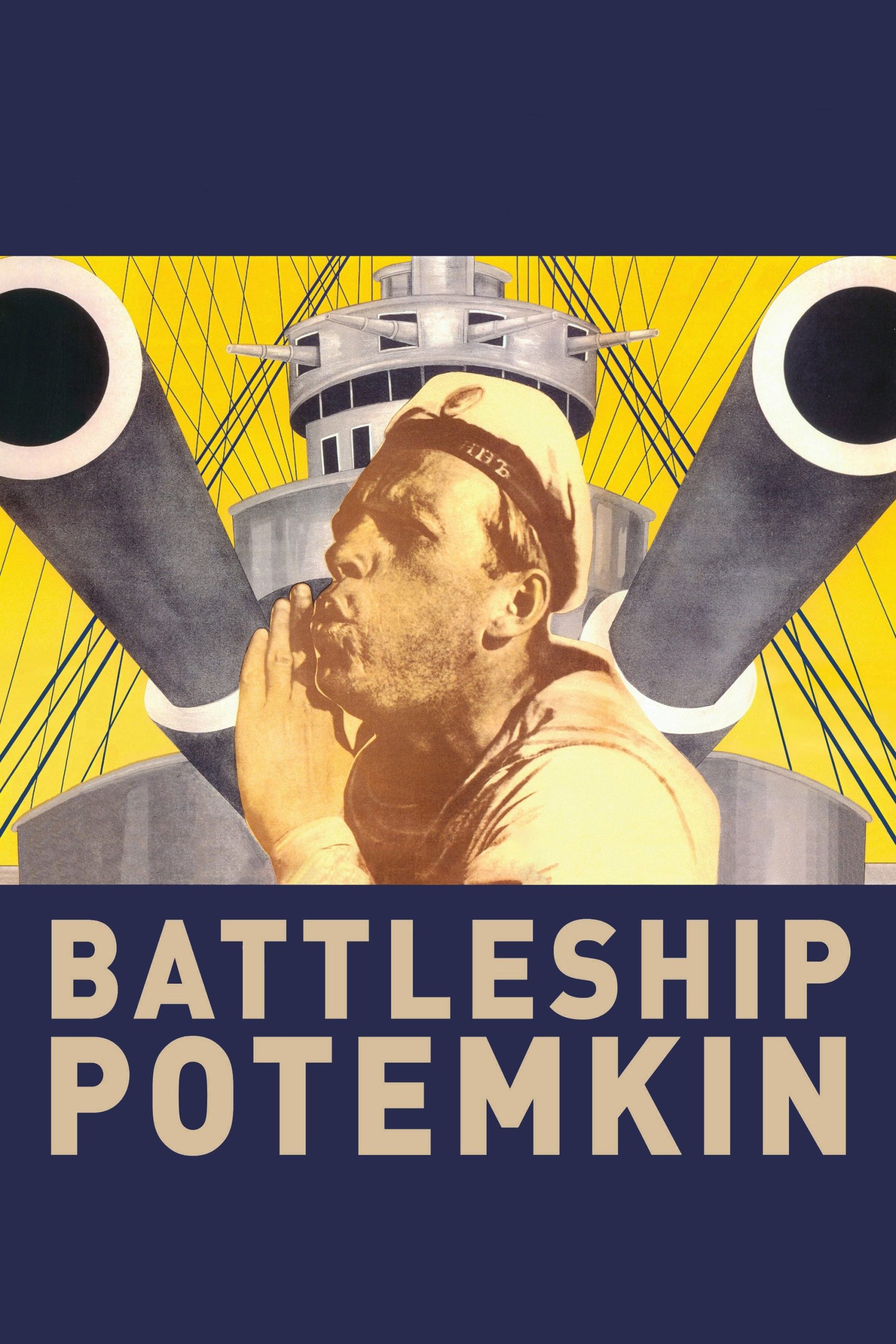
The Question of Truth Behind the Film
Whenever I revisit “Battleship Potemkin,” I find myself wrestling with a question that’s as old as cinema itself: does it really matter to me if what I’m watching actually happened, or only that it feels true? I think about how people in the theater must have felt in 1925, seeing the sheer force of Eisenstein’s images, wondering which fragments of history were dramatized and which were honestly retold. When I’m told a film is “based on true events,” my mind begins to work differently—I start searching for the seams, pondering how much artistic invention was involved, weighing what’s documentary and what’s dramatized. That moment transforms the experience from pure story-absorption to something more analytical; I become a detective, not just a witness. I think audiences—myself included—tend to expect a certain contract when “truth” is invoked; we look for echoes of reality, for kernels of fact that anchor the spectacle. The implication is that if it’s true, it matters differently, the moral or historical significance somehow heightened just by proximity to real events. That assumption, in itself, starts to shape how every subsequent frame is absorbed.
Historical Facts and Cinematic Interpretation
The factual root of “Battleship Potemkin”—the 1905 mutiny aboard the Potemkin in Odessa—is what initially drew me to the film’s lore. Yet the more I examine Eisenstein’s choices, the more aware I become of how little I actually know about the genuine details solely from the film’s narrative. I see how he reworks the timeline, compressing months of unrest into an afternoon of charged revolt. The Odessa Steps sequence, with its tumbling stroller and faceless soldiers, looms so large in cultural memory that it takes on the weight of documented history—but as I learned, this entire massacre was invented for emotional and symbolic effect. This blend of fabrication and repurposed fragments of the real 1905 uprising pulls me into a meditation on which elements Eisenstein deems worth adapting. For instance, instead of strictly recounting the Potemkin’s sailors’ mutiny, I see him drawing out a vivid, almost mythic struggle between the oppressed and their oppressors, which means abbreviating, amalgamating, and outright inventing moments to serve a grander narrative.
What fascinates me most is the elasticity of an event once it becomes source material. Researching the historical record, I find that the actual Potemkin mutiny didn’t end with such a seismic, city-wide uprising, nor are there records of a mass civilian massacre on the Odessa Steps. The famed baby carriage, the faceless czarist troops—these elements strike me as tools, not facts. The film’s structure isolates key ideas, essentially distilling the complex currents of 1905 unrest into potent scenes that audiences could digest, remember, and rally behind. By blending actual sailor accounts with more universal images of injustice, the film pushes me to consider not just what happened, but also how memory itself can be crafted and deployed. In my view, Eisenstein isn’t focused on documentary truth; he’s shaping a legend, one immediately accessible but deeply informed by collective hopes, anxieties, and the Soviet need for shared myths. So, while there are roots of reality, the tree that grew from them is shaped artfully, even strategically, rather than faithfully chronicled.
What Changes When Reality Is Shaped for Cinema
I often reflect on the negotiation at the heart of any “true story” adaptation: the tension between fidelity to fact and the demands of cinema. For me, the experience of watching “Battleship Potemkin” is colored by an awareness that something has to give. Dramatizing a revolution for the screen compels filmmakers to impose order, momentum, and emotional signals, even when these aren’t handily available in an unruly historical record. In Eisenstein’s film, the historical truth is less the literal events and more the emotional landscape. When I watch the sailors’ fury bubble over, or see innocent bystanders mowed down on the steps, I recognize these as carefully orchestrated to provoke within me a sense of urgency—anger, empathy, hope. These reactions aren’t always possible if a film clings to the patient ambiguity of primary sources.
Cinema not only simplifies, it amplifies. In the case of “Battleship Potemkin,” entire scenes are heightened to iconography. The image of the white-gloved officer, his shadow looming, or the steeled, unswerving faces of ordinary citizens gunned down—the film chooses sharp, visceral visuals over complexity. From my vantage, this works as a strategy to maximize the clarity of conflict, sacrificing the splay of real motivations and uncertainties that might otherwise muddle the story’s impact. I notice that in bringing history to the screen, Eisenstein must erase nuance: not all officers were faceless monsters, not every sailor was a paragon of the working class, the march of events was not quite so clean. The bold black-and-white morality of the film is a cinematic device, designed to leave no room for equivocation in the audience’s response.
At the same time, I recognize practical constraints that shape how reality is adapted. Limitations of time, economics, and political expediency mean that many underlying truths get blurred. Eisenstein’s film blends montage with metaphor, using cross-cutting to merge private grief into collective rage. The cost is a certain flattening of character and causality, but also a lasting power—I still feel the emotional charge, even if I know the underlying event was more ambiguous. For me, the film serves as a vivid demonstration of how cinema, in seeking to embody truth, often achieves it only by relinquishing detail for resonance.
Audience Expectations and the “True Story” Label
Whenever I watch a film that proclaims itself a “true story,” I find my viewing habits shift. The promise of authenticity draws me in closer, leading me to scrutinize set design, language, and character arcs for signs of historical legitimacy. “Battleship Potemkin,” with its propagandistic fervor and mythologized scenes, unsettles that expectation. There’s a gulf between what I expect and what I receive: I’m not given a transparent documentary account, but rather, a story engineered for impact. When the film first screened, I imagine audiences might have adopted its images as historical record—the shock of the Odessa Steps massacre, for example, etching itself into memory as fact. Even now, I find it difficult to cleave the film’s imagery from the actual history I later research, a testament to the movie’s persuasive power.
I notice something more—the “true story” label injects a credibility that fiction rarely enjoys. Films that are “inspired by” or “based on” real events promise a special kind of engagement; I feel as though I am learning, not simply feeling. Yet with films like “Battleship Potemkin,” I’m forced to confront the malleability of that promise. Knowing which scenes originated in Eisenstein’s own imagination (like the infamous baby carriage sequence) makes me less likely to take the film’s testimony at face value, but more likely to reflect on why such embellishments matter. The blending of reality and invention doesn’t lessen my engagement, but it certainly changes its tone—from awe at the events themselves, to admiration for the methods of their construction.
This dynamic carries implications for reception. When I learn that a detail was fabricated, it can momentarily push me outside the film’s emotional current. But then, I’m drawn back in by the realization that even invented moments can reflect deeper “truths”—the psychological or political reality of a particular era. Sometimes, it seems, audiences are willing to forgive narrative license if the end result animates history in a way that is meaningful, if not strictly accurate. My own expectations become fluid: I vacillate between fact-checker and rapt audience. “Battleship Potemkin” thus becomes both a lesson in history’s plasticity and a meditation on how films earn influence and credibility, even when they stray far from strict documentation.
Final Perspective on Fact vs Fiction
The more I dig into the interplay of history and invention in “Battleship Potemkin,” the more I find my reaction is not simply about what is “true” or “false,” but about how my understanding is broadened or shifted by knowing which is which. I return to the film’s images—some grounded in verifiable incident, others pure fabrication—and notice that the power of these moments does not live solely in their factual basis. Instead, my awareness of what is invented compels me to see the film as both a product of its time and a tool for shaping collective understanding.
When I examine the real events, I see a mutiny that sparked ripples rather than tidal waves, small acts of rebellion magnified for screen and symbol. The film’s tendency to recast the mutiny as a sweeping, heroic triumph reminds me that cinema’s ambitions often lie beyond retelling; it aims to reframe, persuade, and immortalize. This realization doesn’t flatten my engagement, but rather, complicates it. Knowing the gaps between fact and fiction, I watch “Battleship Potemkin” with layered awareness—marveling at its artistry, but also considering which aspects resonate as historical lesson, and which as potent myth.
For my part, I find that distinguishing between cinematic interpretation and historical reality changes not only what I think about the events depicted, but also how I understand the broader functions of cinema as a force in culture. The film does not simply tell me what happened; it tells me how to feel, who to side with, what to remember. My sense of the film’s legacy is thus enriched, not diminished, by knowing where invention steps in. I am better equipped to parse what is intended to move me emotionally from what is presented in service of ideological clarity. The more I learn about the real Potemkin mutiny, the more I see the film’s storytelling choices as a mirror—not just of an event, but of the anxieties, aspirations, and techniques of its era. Fact and fiction intermingle in my mind, producing a reaction that contains both analytical distance and genuine feeling. As often as cinema draws from history, it seems to me that our engagement with it depends on accepting, and sometimes savoring, that interplay.
For additional context, you may also explore the film’s overview and how it was received by audiences and critics.
🎬 Check out today's best-selling movies on Amazon!
View Deals on Amazon