
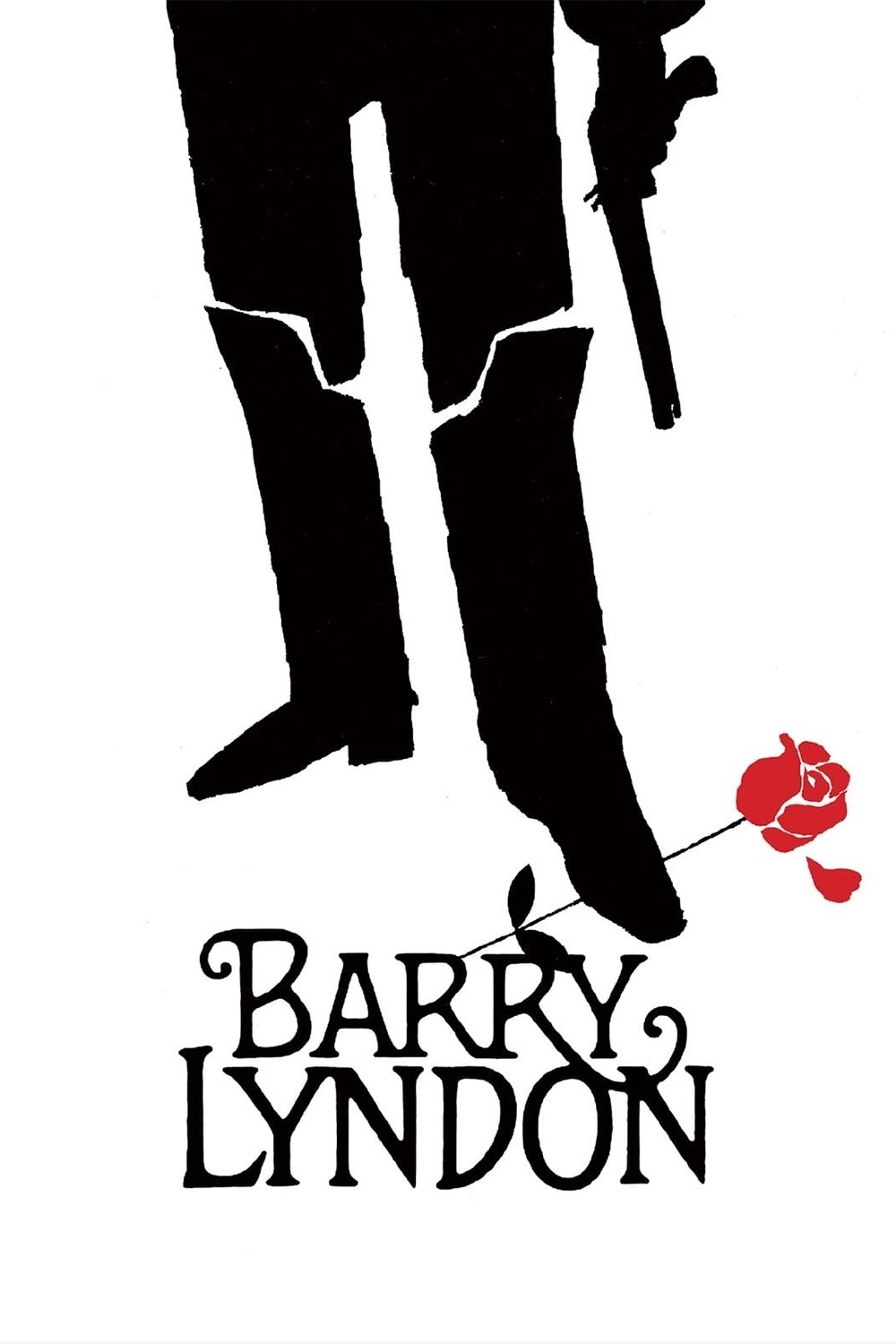
Is This Film Based on a True Story?
When I first saw “Barry Lyndon,” I couldn’t help but marvel at how convincingly it captured the atmosphere of 18th-century Europe—so much so that I initially wondered whether the film was a direct dramatization of genuine historical events. After some deeper investigation, I learned that “Barry Lyndon” is not directly based on a true story. Instead, it is an adaptation of the 1844 novel “The Luck of Barry Lyndon” by William Makepeace Thackeray. That novel, and thus the movie, are products of imaginative fiction rather than documentary reality. While aspects of the narrative intersect with real social dynamics of Georgian and Regency-era Britain and Europe, the central character, Redmond Barry, and his escapades are not based on any real individual. For me, this knowledge adjusted my expectations—I’m watching a meticulously researched reenactment of a historical period, not a retelling of an actual life.
The Real Events or Historical Inspirations
When I look at how “Barry Lyndon” was constructed, it’s fascinating to see the lengths to which both Thackeray and Kubrick—through his adaptation—went to ground their fiction in the realities of the time. I see the film as a living tableau inspired by real events and mores of 18th-century aristocracy, warfare, and social mobility. While there were innumerable Irish fortune-seekers, professional soldiers, gamblers, and social climbers during that era, and the backdrop of the Seven Years’ War is real, neither Thackeray’s book nor Kubrick’s movie draw from the biography of an actual person named Barry Lyndon.
In my experience researching the era and figures depicted, I’ve discovered that Thackeray intended his satirical novel to both mock and pay tribute to the era’s picaresque rags-to-riches tales. He drew upon widely-known societal trends: the dangers faced by Irish Catholics in England, the fluid loyalties among European armies, and the rigid codes of dueling and etiquette among the gentry. These are not direct historical recreations, but rather a composite of archetypes, customs, and historical backdrops. Kubrick’s film adaptation takes this a step further, mirroring historic paintings and period details so precisely that it often feels like peering into the past, even though I know that the story itself remains a work of fiction.
Other than using the Seven Years’ War as a setting, Kubrick and Thackeray both include passing references to genuine historical figures (such as Frederick the Great) and real places and battles, lending an air of authenticity to the narrative. However, these act as stage dressing—no principal event within the plot tracks a true occurrence, nor does the protagonist cross paths with contemporary recorded figures in a meaningful or historically attested way. Instead, what I see is an intricate tapestry meant to evoke the period, rather than to record it. Thus, while no “Barry Lyndon” lived and prowled the courts of Europe, the circumstances in which he operates echo authentic possibilities from the historical record, even if they never coalesced into this specific tale.
What Was Changed or Dramatized
What I find particularly striking about “Barry Lyndon” is the way it uses the framework of the era’s realities while reimagining and embellishing them for dramatic effect. Thackeray’s original novel, while grounded in the traditions and social currents of its time, embraces the conventions of picaresque fiction—meaning it’s built on exaggeration, irony, and the deliberate bending of “truth” for entertainment. The book already took considerable liberties in its depiction of period life, and Kubrick’s adaptation carves its own path, emphasizing certain elements and minimizing others for cinematic resonance.
One of the most apparent creative flourishes for me lies in the characterization of Redmond Barry himself. He’s portrayed as a sort of everyman-turned-aristocrat, a blank canvas onto which all the vices and ambitions of the age are painted. But he’s not modeled after a visible figure from the history books, nor do his adventures follow the documented life of any real soldier or gambler from the time. Similarly, many supporting characters, such as Lady Lyndon, Lord Bullingdon, and the Chevalier de Balibari, are inventions or composites rather than portrayals of known personalities. Their actions and fates are crafted to serve the narrative’s structure, not historical accuracy.
The timeline of events in the film and the construction of Barry’s rise and fall deviate from plausible documentation of a real individual’s life. While duels, exile, marriage as a means of social advancement, and bankruptcies were real phenomena, the specific sequence and dramatic escalation in “Barry Lyndon” are structured for literary and cinematic effect. Certain scenes, such as the highly formal duels and the courtship sequences—shot in natural light and candlelight to replicate paintings—are chosen not because they represent precise historical fact, but because they create atmosphere and thematic resonance. The choice to heavily rely on 18th-century art for visuals—while stunning—presents a romanticized impression of the period, not an unvarnished document.
Even costumes, while obsessively accurate in their detailing, reflect a blend of various sources and Kubrick’s own artistic preferences as filtered through his production team. I noticed that the soundtrack, featuring classical pieces by Mozart, Schubert, and Handel, contributes further to the sense of historicity, even though these works don’t always line up chronologically or geographically with the scenes depicted. Here, music is used as historical color rather than as a strict marker of events.
Historical Accuracy Overview
From the perspective of someone obsessed with both film and historical research, “Barry Lyndon” is a fascinating hybrid: a fictional story that lives and breathes in a meticulously researched world. When I look at what the film gets right, several aspects stand out. The settings and costumes are crafted with the utmost care; I can see that Kubrick’s team poured over art, furnishings, and fashion sources from the 18th century, and the results evoke the era with remarkable fidelity. The depiction of the social order—who commands respect, how titles and marriages are leveraged, the precarious status of the Irish in England—is informed by scholarly understanding of social mobility, gender, and class dynamics of the time.
Military scenes, such as the recruitment and rigid battlefield tactics during the Seven Years’ War, seem directly inspired by contemporary accounts. I find details like the methodical pacing of infantry and the use of period-accurate uniforms and weaponry to be especially immersive. Financial and legal issues, such as inheritance rules, property rights, and the vulnerability of women in aristocratic marriages, are woven into the plot with a sensitivity to documented historical anxieties. Even the dueling scenes—complete with loading of pistols and elaborate rules—appear to be drawn from period manuals and letters.
But even with this attention to surface accuracy, significant departures jump out to me. The most notable is the central conceit: Redmond Barry’s story never actually occurred. While hundreds of Irish adventurers existed, I can’t point to a single one who traced Barry’s precise trajectory. The film compresses and conflates various places, battles, and social situations to enhance narrative drama. At times, Kubrick’s highly composed shots and tableaux reflect the look of period paintings more than the harsher realities of the era’s countryside or battlefields.
Some of the interpersonal relationships, while plausible, are heightened for effect—Barry’s marriage, Bullyingon’s rebellion, and Lady Lyndon’s suffering are distilled into sharply drawn conflicts that would make sense to a viewer in the 1970s, but may be less plausible when scrutinized against diaries and records of the time. Even the soundtrack, however transportive, doesn’t always align seamlessly with the era depicted, sometimes leading me to feel that history and artifice are intimately—if deliberately—blended.
In weighing these elements, my assessment is that “Barry Lyndon” excels as a recreation of the period’s visual and cultural atmosphere, while making few claims to factual storytelling. The film’s devotion to historical detail impresses me, but its story remains an imaginative exercise rather than a factual case study.
How Knowing the Facts Affects the Viewing Experience
Coming into “Barry Lyndon” with an understanding of its fictional origins, I’m able to appreciate the film for what it tries to accomplish—namely, offering an immersive, painterly vision of 18th-century society through the lens of a fabricated but plausible life. When I first watched the film, I was hypnotized by its beauty and the gravity of its world, and I wondered whether I was seeing an authentic slice of history. Realizing that the narrative was invented helped me to focus on how the film uses historical stylization to comment on ambition, social class, fate, and self-destruction.
I notice that, without rooting for or against the film’s protagonist as a real historical figure, I’m free to interpret his exploits as a parable or satire. Thackeray’s original was written in first person, with Barry as an often unreliable narrator, and Kubrick mirrors this by using a detached, third-person narration that keeps me at arm’s length. This narrative style, combined with my understanding that Barry’s actions are not those of a real individual, allows me to concentrate on the film’s ideas: the arbitrariness of fate, the machinery of social advancement, and the ironies of fortune and class.
If I had believed the story was strictly true, I might have been distracted by wanting to know more about “the real Barry Lyndon’s” legacy, or digging up supporting documents. But knowing the film’s creative roots, I can focus on the verisimilitude of the production design and the psychological plausibility of the characters, rather than their biographical accuracy. The historical care enhances my immersion, while the fictional structure grants artistic license that, for me, makes the moral ambiguities and reversals more poignant and universal.
For viewers like me who are fascinated by the intersection of history and storytelling, “Barry Lyndon” offers an opportunity to observe how art can recreate, refract, and interpret an era in ways that pure history cannot. The line between historical truth and artistic fiction is purposefully blurred, prompting thoughts not just about the specifics of 18th-century Europe, but about the timeless patterns of human ambition and downfall. Instead of searching for the “truth” of one man’s extraordinary life, I find myself engrossed in the textures, rituals, and mythmaking of an age, and in the ways those trappings continue to influence our understanding of drama and history today.
After learning about the film’s origins, you may want to see how audiences and critics responded.
🎬 Check out today's best-selling movies on Amazon!
View Deals on Amazon