
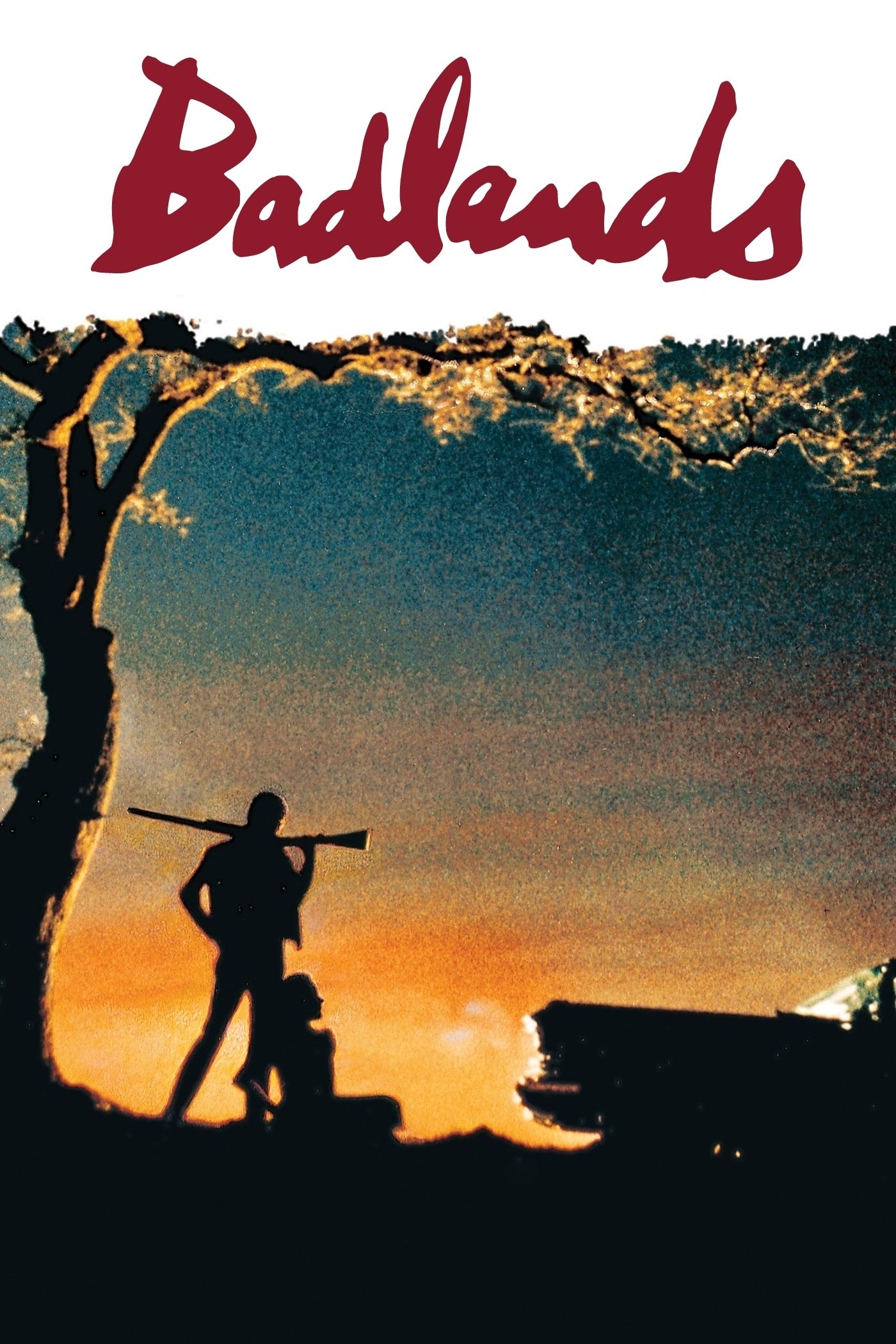
The Question of Truth Behind the Film
The first time I watched “Badlands,” I found myself gripped less by the violence and more by the sense of dreamy detachment that underpinned every scene. I couldn’t help but wonder: why does it matter so much whether a film like this is rooted in real events or entirely fabricated? For me, the label “based on a true story” functions almost like a secret key, unlocking a different kind of emotional reaction. I am not just experiencing a narrative; I am navigating someone else’s memory, or at least a filmmaker’s version of collective memory. When audiences walk into a screening equipped with the knowledge—or even just the suspicion—that what they’re about to see is grounded in actual history, the experience subtly transforms. I notice a kind of heightened vigilance in myself, a desire to weigh each moment against what might have truly happened. It’s as if the word “true” invites an ethic of observation: is this an honest depiction, or is it a transformation in the service of the story?
I’ve come to believe that the persistent question—“Did this really happen?”—reflects more than just idle curiosity. It reveals an implicit assumption most of us carry: that films based on real events carry a special kind of authenticity, even authority. This is especially noticeable with films involving crime or social upheaval. In a movie like “Badlands,” which deals so obliquely with its supposed source material, my preoccupation turns not just to what the events were, but why they were selected and interpreted in this way. Some viewers seem to want a film to “teach” them something about the actual world, so the reality-fiction divide becomes central. I often catch myself negotiating with the movie, even as I am seduced by its aesthetics. Does it honor the truth, or does it shape truth for dramatic effect? And does that distinction even matter as much as I think it does, or is my very need to distinguish somehow conditioned by the cultural cachet of the “true story” label?
Historical Facts and Cinematic Interpretation
When I peel back the layers of “Badlands,” I encounter a case study in the reshaping of factual events for cinematic purposes. The film loosely draws inspiration from the infamous 1958 killing spree perpetrated by Charles Starkweather and Caril Ann Fugate in Nebraska and Wyoming. But what fascinates me is how little Terrence Malick’s adaptation feels like a factual accounting and how much it reverberates as its own creation. I can trace the broad outlines of the source events—young lovers on the run, the unfolding trail of violence across the American plains—but the specifics have been edited, blurred, and reordered, as if to insist that the essence of the story lies elsewhere.
My reading is that historical adaptation isn’t about slavish reproduction of events; it’s more akin to translating poetry across languages. Real-life details are often condensed for narrative clarity. In “Badlands,” the moral ambiguity and emotional restraint of its characters create a kind of distance that feels distinct from the more lurid accounts found in police reports or news stories at the time. For instance, the original events were marked by a shocking brutality and certain explicit details, but the film eschews sensationalism in favor of a heightened, almost mythic atmosphere. Scenes that might have unfolded over days or weeks in real life are compressed into brief, elliptical moments. The personal histories of the characters, too, are pared down to archetypes. Kit, played by Martin Sheen, isn’t an imitation of Charles Starkweather so much as a stylized construct: the greaser, the rebel, the hollow-eyed avatar of 1950s alienation. Holly, interpreted by Sissy Spacek, stands in for innocence but not in a strictly biographical sense; she’s equal parts unreliable narrator and passive observer.
The more I look, the more I notice how adaptation choices remove the rough edges of factual reality in favor of atmosphere. Actual names are replaced, geography is rendered indistinct, and the story’s timeline morphs to accommodate both pacing and symbolism. This is a pattern I see in many films that spring from real events, but “Badlands” fascinates me for its deliberate indirection. I sense that reality has been distilled, not simply as a matter of convenience, but as a way to reach something emblematic—a type of American dream gone sour, more timeless than timely. The events are present, but always at a slant. For me, this is not a failure of historical recreation, but a meditation on the unreliability of stories themselves.
What Changes When Reality Is Shaped for Cinema
As I reflect on “Badlands,” I’m constantly reminded how film as a medium almost requires transformation, especially when engaging with real events. There’s no such thing as pure fidelity to history in the movies; every decision—what to include, what to leave out, how to sequence and frame—reorganizes reality so that it is digestible within a two-hour format. For me, one of the immediate trade-offs is between the messiness of true experience and the streamlined structure that films demand. Life seldom presents itself in neat acts or with clear emotional trajectories, but narrative cinema all but insists on them. This urge to pare down, to shape and select, might sacrifice granular historical detail, but it can yield a clarity that pure documentation rarely achieves.
I notice that in “Badlands,” moments of violence are depicted with a curious calm—not because the events were less chaotic in reality, but because the style of presentation reinterprets how those incidents land emotionally. For me, this doesn’t erase the truth so much as remix it, pushing me to respond to the implications of the story rather than its literal timeline. I often wonder if, in translating reality, a filmmaker loses granular authenticity but gains thematic resonance. In making Kit and Holly into avatars rather than biographical figures, the film opens up broader questions: How do youth and disaffection intersect with violence? Where does passive complicity end and genuine agency begin? These are questions reality rarely frames so neatly.
Sometimes, I find that the omissions in a cinematic narrative are just as instructive as what’s included. “Badlands” notably sidesteps lengthy legal procedures, family dynamics, or the visceral aftermath of crime—all of which are present in the factual account. These gaps are not just omissions for the sake of running time; they’re acts of interpretation, redirecting audience attention to atmosphere, tone, and underlying ideas. I often catch myself piecing together what is absent, imagining the story’s alternate versions had certain threads been followed more rigorously. It strikes me that no film adapted from real life is ever just about transcription. In “Badlands,” the act of shaping reality is itself the point: the dreamy voiceover, impressionistic imagery, and emotionally muted performances tell me as much about the mythology of American violence as they do about the specifics of a particular 1950s crime spree. Cinema, in this light, becomes a prism, not a mirror.
Audience Expectations and the “True Story” Label
My conversations with fellow viewers often return to one persistent tension: does the “true story” designation make a film more affecting, or does it place it under a different kind of scrutiny? Personally, when I approach a film introduced as “factual” or even “inspired by true events,” I feel myself measuring each scene against a hypothetical record. I become an amateur historian, cross-checking what I see against what I know—or what I think I know—about the period in question. With “Badlands,” however, the ambiguity of the source material complicates my expectations. This isn’t an overt docudrama or a rigorously faithful biopic. Instead, I experience it closer to the realm of legend, where the aura of truth lingers but the specifics are elusive. The effect, for me, is one of suspension: I’m both distanced and drawn in, never fully forgetting that the roots of the story are tangled up in reality, but also keenly aware that I’m being asked to surrender to the film’s internal logic.
The psychology of audience expectation fascinates me. I’ve noticed that the clearer a film is about its relationship to reality, the easier it becomes for viewers to relax into its narrative. “Based on a true story” triggers an analytical mindset, prompting questions about which scenes are historically documented and which are dramatic invention. “Inspired by real events” signals a much looser affiliation, offering permission to focus on mood or character without the same burden of factuality. When a film is presented as total fiction, I myself am simply looking for internal coherence, not external validation. With “Badlands,” the interplay between these categories is especially complex. I find myself oscillating between wanting to know the “real story” behind Kit and Holly, and acknowledging that much of the film’s power is derived from its refusal to nail down the historical record.
For me, these varying expectations reflect a much deeper negotiation about the purpose of storytelling itself. Some viewers, I’ve observed, feel betrayed if a film deviates from documented fact; others appreciate a looser approach, especially when the essence or spirit of the events is preserved. “Badlands” sits in an intriguing liminal space. Its atmosphere and characterizations feel authentic to a certain emotional reality, even if the facts are fuzzy. When I talk with others who have seen the film, I hear similar ambivalence. Knowing that the film is not an exact retelling—more of a meditation than a report—reshapes the ways we engage with it. The true story label, then, becomes less a guarantee of accuracy and more a prompt to read between the lines, to question how and why certain elements have been selected as representative.
Final Perspective on Fact vs Fiction
Reflecting on my experience with “Badlands,” I realize how much the interplay between fact and fiction frames my interpretation. My engagement with the film is layered; I’m moved not just by what happens on the screen, but by the shifting relationship between history and invention that underpins each scene. When I know—or suspect—that a story is based on actual events, my mind becomes a battleground between the desire for truth and the appreciation of artistry. I often find myself parsing scenes, asking which details might have been preserved from the real events and which have been carefully constructed for dramatic effect.
I’ve come to see that awareness of a film’s factual foundations doesn’t necessarily dictate my emotional response, but it does color the questions I bring to the viewing. In “Badlands,” that coloring is particularly subtle. The knowledge that the film riffs on a real crime spree doesn’t resolve my search for meaning; it complicates it. I’m encouraged to hold two truths at once: the narrative’s autonomy as an art object, and its indebtedness to historical precedent. This dual awareness opens up a wider interpretive field. Rather than seeing fact and fiction as a binary, I view them as coordinates on a spectrum—each influencing the texture of my experience.
Ultimately, my sense is that knowing what is real or fictional in “Badlands” doesn’t close off interpretation. If anything, it invites me to ask deeper questions about what stories are for and how they function. The film’s dreamlike presentation and selective attention to detail lead me to reflect not on what “really happened,” but on the various ways history and myth can intersect. Whether I prioritize literal accuracy or narrative articulation, the very act of watching becomes an act of negotiation. The factual origins may inform, but they do not prescribe; the cinematic retelling may diverge, but it does not diminish the resonance. In “Badlands,” I find a film that acknowledges its historical roots even as it cultivates a sense of enigma. My understanding, then, is shaped less by certainty than by the pleasure of inhabiting the gray space where truth and imagination coexist.
For additional context, you may also explore the film’s overview and how it was received by audiences and critics.
🎬 Check out today's best-selling movies on Amazon!
View Deals on Amazon