
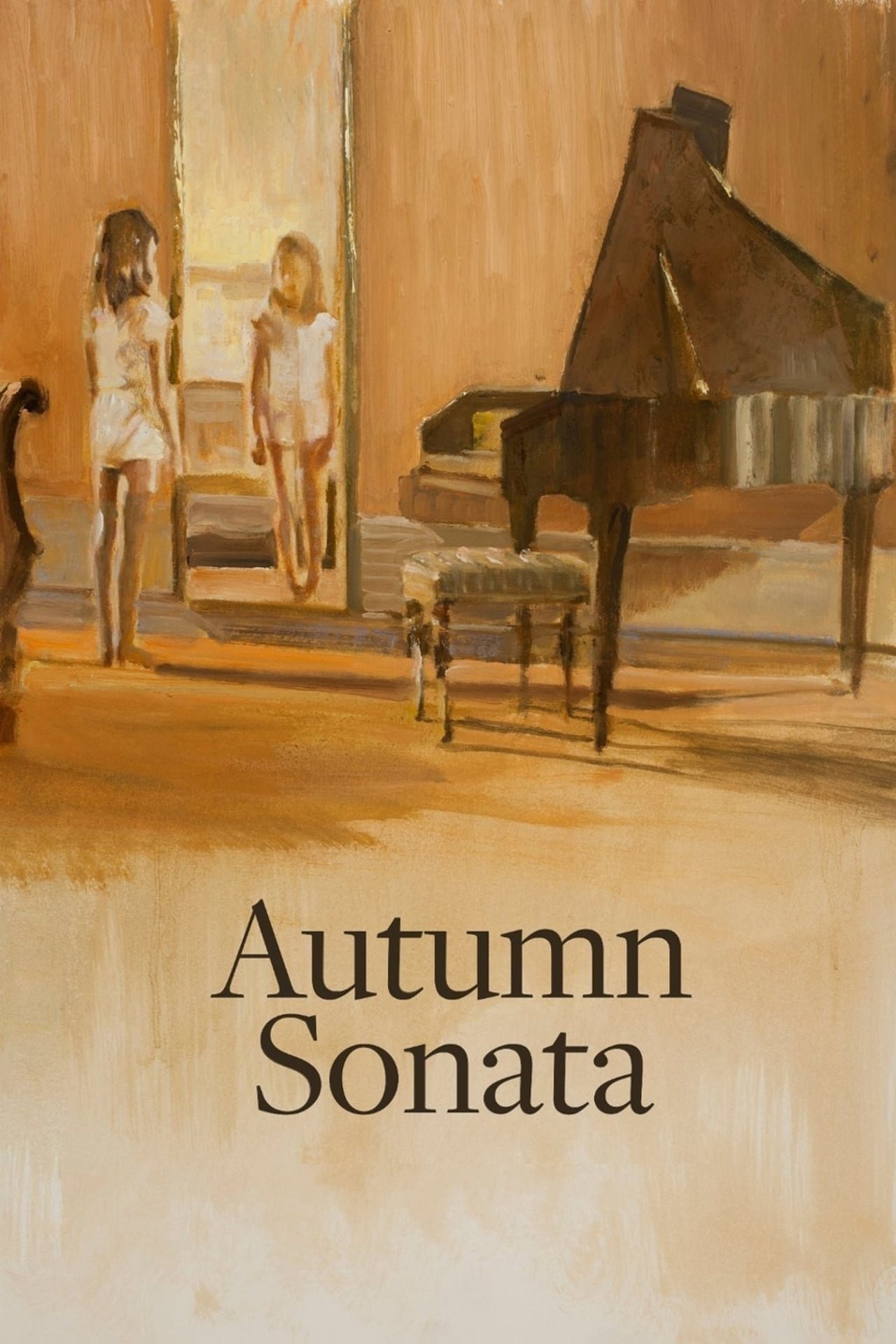
The Question of Truth Behind the Film
Walking away from my latest viewing of Autumn Sonata, what lingers is the unique ache of its personal conflicts—raw, simple, fiercely intimate. For me, one of the persistent questions is not merely what the film depicts, but why I instinctively reach for a sense of whether its world is anchored in any real-life story. Reflexively, I’m drawn to categorize: is this a recounting of an actual mother and daughter, or an imagined emotional crisis? When I know—or suspect—a film like Autumn Sonata springs from the tangible experience of someone’s past, I find myself watching differently, scrutinizing subtle gestures, searching for emotional evidence as if each word or look is a snippet of autobiography. The “based on true events” label, I’ve noticed, comes bundled with a set of assumptions: first, that what unfolds onscreen has literal counterparts outside fiction; second, that its emotional pain or insight has been weathered by someone real, granting it a certain legitimacy, as if the pain is more valid for having truly happened. This preoccupation with authenticity isn’t limited to Autumn Sonata, but here, where the emotional wounds are so exposed, I find the boundary between invention and reality matters in a distinct, almost visceral way.
For me, the drive to know what is real is often about finding reassurance: that even the jagged relationships and spoken betrayals have a precedent beyond the screen. The desire to trace the film’s drama back to actual events or historical figures is entwined with a fascination about how art interprets life. Sometimes, I wonder if that label makes me expect a certain respectfulness from the story—or, conversely, if I’m braced for elements that might be uncomfortably honest. When a film is tagged as true, it invites me to treat its characters and their suffering not as convenient narrative devices but as shadows—however distorted—of lived experiences. That expectation shapes not only how I watch, but how I let the story’s emotional truths settle within me.
Historical Facts and Cinematic Interpretation
With Autumn Sonata, I’ve often questioned which parts, if any, owe their existence to real life. Ingmar Bergman’s script doesn’t cite an explicit historical event, and the plot avoids reference to specific dates or newsworthy incidents. Instead, I interpret the film as a distillation—perhaps an amalgamation—of personal and universal struggles. If there are any factual kernels, they are buried deep within the general emotional landscape of family relationships rather than carved from documented biographies. When I read interviews or historical context, I sometimes sense faint echoes of Bergman’s own life, as well as that of his lead actress, Ingrid Bergman, but the film refuses narrow categorization as direct autobiography.
In experiencing the film, I notice how its emotional structure could plausibly arise from the powerful but ordinary stories of strained parent-child bonds that exist everywhere and nowhere in particular. What I have come to appreciate is that, even if mediated by pure imagination, the film’s world feels borrowed from real psychic territory. If cinematic storytelling does edit or abbreviate real events for clarity or pacing, it is often by boiling down protracted, convoluted histories into intense, focused exchanges. I see the way Autumn Sonata reshapes the broader realities of generational tension, parental absence, and deferred longing. Dramatic confrontations that, in real life, might unfold over years or with less articulate precision, are here concentrated into a single unforgiving night. Such condensing and reorganization are, for me, all about narrative economy: the need to illuminate the emotional truth without wandering through every tedious or contradictory detail.
I notice that the film’s structure—one location, limited characters—magnifies this effect. It feels almost like the emotional experience of memory itself, layers collapsed into a single, feverish moment. I realize that, if there is any real source, it has been filtered not just through fictionalization but through a deliberate distortion for dramatic effect. This reorganization paradoxically makes the film more universal. I never assume that the mother and daughter onscreen are direct analogs for anyone specific in history or public life; the choices made in adapting any factual components instead aim to evoke recognition from many viewers, as if inviting anyone to step into these emotional roles. The particulars of fact become blended, abstracted, and then poured back out as something hauntingly familiar and resonant for me as an audience member.
What Changes When Reality Is Shaped for Cinema
I’ve always found the tension between strict historical fidelity and the demands of storytelling to be endlessly intriguing. Watching Autumn Sonata, I am reminded that no matter how truthful a film strives to be, the medium—by necessity—demands selection, emphasis, and omission. In condensing a lifetime’s worth of misunderstandings into a few hours, I see the sharpness of conflict heightened, the ambiguities often smoothed for clarity, the mundane details omitted unless they serve the dramatic arc. This act of shaping, I realize, is not a betrayal of truth, but a practical negotiation. Audiences are rarely asked to sit through every argument, silence, and minor gesture as they truly unfold. Instead, filmmakers—here through Bergman’s careful scripting—extract the marrow of the emotional conflict and sculpt it for intake in a single sitting.
This process inevitably involves trade-offs. If filmmakers rigidly adhere to factual minutiae, I might be left with a sprawling, unfocused narrative that exhausts rather than engages. On the flip side, when dramatizations become too tidy, I occasionally sense a loss of the messy unpredictability that characterizes real emotional life. In Autumn Sonata, what stands out to me is that decisions about pacing, character development, and event selection prioritize the psychological journey over any attempt at chronology or external accuracy. The result is a film where each character’s arc is enriched by the fictional device of confrontation, a device that real life rarely offers with such clean lines.
Decisions about point of view shape my experience most acutely. The story is filtered through Eva’s perspective, which imbues every exchange with her longing and ambivalence. This focus on a single subjectivity is itself a storytelling choice, not a neutral presentation of fact. If the film were based directly on a historical record—or were attempting a documentary style—it would likely offer multiplicity of viewpoints and contradicting testimonies. Instead, I am drawn deep into the interiority of one woman’s reckoning, and that subjectivity, complex and raw, is partly a function of fiction’s freedom. The “truth” I’m left with is emotional rather than historical, and I believe that is by design.
Audience Expectations and the “True Story” Label
Every time I watch a film that presents itself as factual—or is received as such—I notice that my attention shifts. I find myself evaluating performances and story details for plausibility, comparing them against an imagined yardstick of what “really” happened. If I know a film is a faithful adaptation of real events, I view its emotional conclusions with a different sense of gravity. The “true story” label, in my experience, implicitly promises both accuracy and a certain respect for its original sources. I catch myself policing the narrative, alert for moments that don’t “feel” authentic or seem heightened for effect.
With Autumn Sonata, by contrast, nothing assures me that what I’m seeing happened to anyone in particular. The film does not trade on the authority of documented pain; instead, it operates within the space of the plausible—an emotional reality that could belong to almost anyone. The lack of a “true story” claim alters my stance: I am freed from the duty of cross-referencing events or characters. What I bring to the film, then, is a set of expectations about coherence, symbolism, and psychological insight rather than factual accuracy. I start to treat the narrative as a thought experiment, a meditation on guilt and reconciliation, rather than a case study. The drama feels less about preserving the dignity of actual people and more about shaping shared experience into art.
That said, I also notice that the absence of the true story label does not diminish my engagement. If anything, I am more open to the film’s risks with subjectivity and invention. I accept the possibility that these characters may be composites, that the mother-daughter relationship is molded from fragments of many stories or imagined futures. This realization invites me to bring my own experiences to bear, to see the film as a mirror rather than a window onto someone else’s life. It’s not that veracity becomes irrelevant, but that my expectations become oriented toward psychological authenticity rather than factual confirmation. Some viewers I know crave the reassurance of a factual scaffold, arguing that it enhances the emotional impact; I find the opposite can be true. Fictionalization allows me to enter the ambiguities, to explore what might be true emotionally even if never factually documented.
Final Perspective on Fact vs Fiction
When I reflect on all of this, I find that my interpretation of Autumn Sonata is itself colored by my evolving awareness of its origins. Knowing that the film is not rooted in a singular true story, I approach its emotional intensity with a different mindset than I might with a biopic or a dramatization of historical events. I stop asking “did this really happen?” and instead ask “could this happen, or has it happened in a hundred unseen ways?” The difference is subtle but profound: I focus less on the specifics of event and more on the universality of feeling.
This insight doesn’t render either mode—fact or fiction—superior to the other for me. Instead, it reorients my response. When I know a film is based in fact, I am sensitized to its possible ethical implications, to its accuracy, and to the echo of real suffering. When I know I am dealing primarily with fiction, I surrender to the filmmaker’s version of truth, acknowledging that sometimes emotional honesty exceeds the reach of the factual. In Autumn Sonata, the meticulously constructed confrontation between mother and daughter may never have happened exactly as shown; yet, I experience it as true in the sense that it recreates the familiar aches, accusations, and confessions I recognize from life.
For me, awareness of the film’s ambiguous factual basis does not lessen its significance. Instead, it draws my attention to the ways stories are shaped, interpreted, and felt. I don’t demand a literal blueprint from a work like this, but I do admire how thoroughly it convinces me of its plausibility—even as it remains officially unmoored from historical record. My understanding of the film shifts with this knowledge: I read each line and gesture less as a documentary transcript and more as a poetic distillation of human conflict. What is real in Autumn Sonata may not be its events, but its effect. My engagement as a viewer is deepened, paradoxically, by the awareness that what I am seeing is at once carefully crafted artifice and—at least for me—a genuine invocation of the pain and longing that run through the fabric of family life.
For additional context, you may also explore the film’s overview and how it was received by audiences and critics.
🎬 Check out today's best-selling movies on Amazon!
View Deals on Amazon