
Is This Film Based on a True Story?
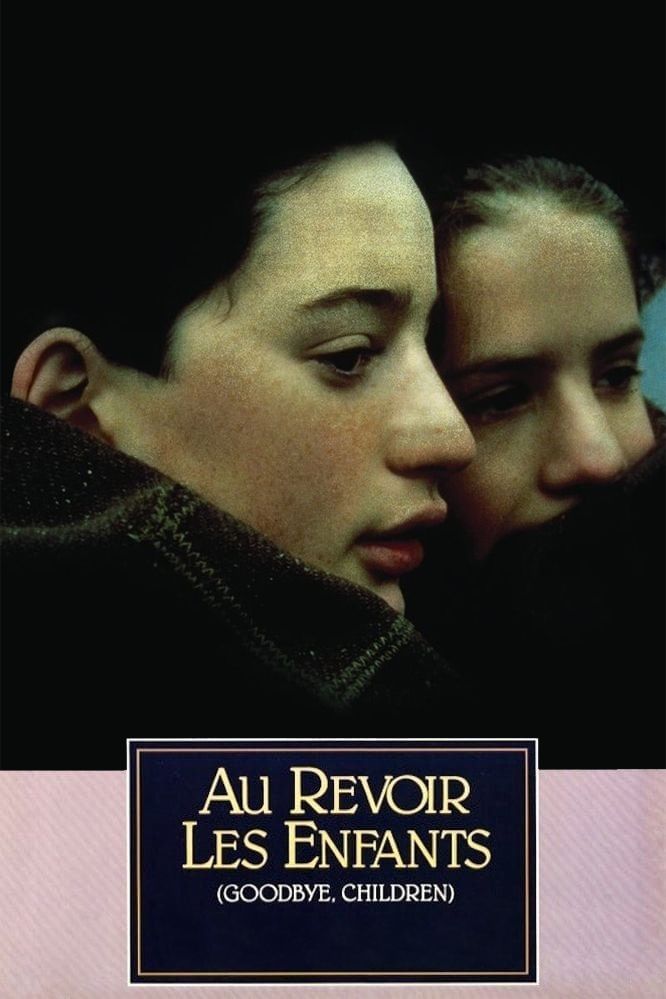
The first time I watched “Au Revoir les Enfants,” I was struck by the raw immediacy of its narrative—it didn’t feel merely like a crafted story, but as if I was peering directly into the past through someone else’s memory. To answer the central question head-on, I’ve found that this film is indeed rooted in true events, inspired quite specifically by the experiences of its writer-director, Louis Malle. The story is not an outright documentary recreation of a particular historical incident, but I see it as a deeply autobiographical reflection, where real events are recounted with emotional fidelity and, at the same time, reinterpreted with some fictional framing for dramatic clarity. This means it occupies a ground closer to “inspired by real events” rather than being fully factual or entirely imaginary. My understanding is that most of what takes place onscreen is drawn from lived experience, with elements merged or adapted for narrative effect, making the story both a testament to history and personal memory.
The Real Events or Historical Inspirations
I can’t watch “Au Revoir les Enfants” without feeling the resonance of lived history beneath its quiet surfaces. The inspiration stems directly from Louis Malle’s own wartime childhood at a Catholic boarding school in Nazi-occupied France. What struck me while researching the film’s background was just how closely the character of Julien Quentin parallels the young Malle. This autobiographical layer goes beyond broad strokes—Malle, as a boy, attended the Collège-Notre-Dame de Sainte-Croix in Avon during World War II, which sheltered Jewish children under assumed identities, just as depicted in the film.
The most pivotal event portrayed—Gestapo storming the school and taking away hidden Jewish boys and the priest who harbored them—actually happened in January 1944. Malle said publicly, and more than once in interviews and writings, that he witnessed this traumatic scene firsthand at age eleven. The priest, Père Jacques (in real life, Père Jacques de Jésus), was indeed arrested alongside three Jewish students who had been hidden within the school walls, much like the tragic fate of Père Jean and Bonnet in the film. The moral courage of this headmaster was later recognized; Père Jacques is honored as Righteous Among the Nations at Yad Vashem in Israel, and posthumously admired for his quiet resistance.
The accuracy of these references, to me, is not purely anecdotal—it’s documented in various French archives and recollections from surviving students. Malle’s own reminiscences, television interviews, and the testimony of school survivors validate that the source material is grounded in reality. However, personal memory, especially from childhood, is selective and imbued with emotion. Malle has described how the guilt and confusion he felt over these events shaped his later recollections. In making the film, he aimed to process that guilt, reconstructing the fateful winter when, as a boy named Louis, he lost his classmates to a knock at the door that changed everything.
For anyone looking to connect the film to broader history, the context is vital: I can trace Malle’s depiction of day-to-day life under occupation to actual conditions in Vichy France—scarcity, surveillance, ingrained anti-Semitism, and the profound risks taken by clergy and citizens in offering sanctuary. The way the film threads these through the routines and friendships at a boarding school is, by all accounts, true to the harsh realities many French children encountered, though most didn’t witness such betrayals unfold so closely.
What Was Changed or Dramatized
As much as Malle’s childhood trauma anchors “Au Revoir les Enfants,” artistic choices and adaptation inevitably shape the final product. When I dig into the specific ways reality was altered for filmic purposes, I see several deliberate adjustments. First, the characters themselves—while many are based on real people, names have been changed. Malle’s stand-in is “Julien Quentin,” not “Louis Malle.” The Jewish boy, “Jean Bonnet,” is a composite character, symbolizing more than one of the hidden students. Père Jean, too, although inspired by Père Jacques, is not an exact portrayal but an emblematic figure, designed, I think, to represent the broader heroism of quiet resistance.
I noticed some compression of timelines: the actual Gestapo raid and its aftermath, which in life would have unfolded over days, are structured to create a single moment of ultimate tension for the film’s climax. Other dramatizations abound: scenes where tension between students leads to accidental betrayals, such as Julien’s moment of hesitation that becomes a turning point. Here, the film departs from testimonial accuracy; Malle himself said he never consciously betrayed his classmates, but rather felt the collective guilt of helplessness. By introducing this near-betrayal, I sense that the story aims to externalize internal conflicts—complicity, fear, survivor’s guilt.
Daily interactions at the school are also imbued with literary clarity—the friendships and rivalries, the moments at mealtimes where scarcity is underlined, and the games and jokes of boys. While based on Malle’s experience, these are sharpened for narrative efficiency. The teachers and supporting characters, though undoubtedly drawn from real types, are amalgamations and not literal representations of Malle’s remembered mentors or peers.
I always find myself reflecting on the film’s ending, and the stark line “Au revoir, les enfants”—a final goodbye without sentimental catharsis. Malle explained later that he left the afterword because, in life, he never truly understood the fate of those taken away at that time; he learned what happened to them only as an adult. The film dramatizes the emotional finality in a way history rarely allows children to understand as events unfold.
Historical Accuracy Overview
For me, the fact that “Au Revoir les Enfants” emerged from an eyewitness’s recollections gives it a weight seldom found in historical dramas. I find the backbone of the narrative—school life in occupied France, the tension of clandestine identities, the sudden violence of Nazi intrusion—accurately rendered. Accounts from Malle’s schoolmates and historical documents confirm the existence of hidden Jewish students, the specific actions of Père Jacques, and the tragic result of Gestapo arrest. These crucial points, from daily routines to larger acts of resistance, are corroborated by multiple records, lending the film a persuasive authenticity.
Not everything aligns perfectly with the historical record, and I see this as the product of dramatization rather than distortion. Names, as I mentioned, are changed, and the individual students’ stories are merged into composite figures for cinematic clarity. The timeline of events surrounding the arrest is condensed, with some sequences rearranged for emotional effect. Where memories conflict—for example, the amount of knowledge the students had about their classmates’ identities—Malle’s perspective prevails. His construction of Julien’s relationship with Bonnet projects longing for both friendship and atonement, rather than simply reporting fact.
I’ve read accounts suggesting some of the dialogue, particularly the moments of quiet camaraderie amid scarcity, are written with hindsight to convey historical atmosphere, rather than transcribed from memory. The characterization of the Gestapo’s sudden arrival likewise stands as a composite of several smaller incidents remembered from Malle’s childhood, illustrating how trauma can shape recollection into something more emblematic. Still, I find that the underlying historical framework—the social texture, institutional complicity, and ambient threats of the era—is well supported by scholarship on wartime France and survivor testimony.
Overall, I would describe the film as a highly accurate emotional reenactment rather than a minute-by-minute factual retelling. The major events truly happened, the emotional resonance reflects a child’s authentic experience, but the specific details often serve a broader narrative purpose. For me, this blend makes “Au Revoir les Enfants” powerfully true in spirit without claiming the unfiltered exactitude of documentary footage.
How Knowing the Facts Affects the Viewing Experience
I honestly can’t separate my own emotional reaction to “Au Revoir les Enfants” from my awareness of its real-world roots. When I learned about Louis Malle’s personal connection—his own innocent complicity, his unresolved guilt—the film began to feel less like a fictional tale and more like an act of witnessing. Knowing that these events are not imagined but remembered and reconstructed gives each quiet glance and hidden fear on screen a heavier weight, almost as if I, too, am shouldering a piece of that history.
The scenes at the boarding school, for instance, are so specific—trading food, forming alliances, whispering secrets in code—that they felt, to me, like authentic memories, passed from one generation to the next. Learning about the real Père Jacques’ fate, and his posthumous recognition for bravery, recast the film’s depiction of Père Jean as more than a symbolic presence. Each moment of resistance, every understated risk, took on the urgency of real stakes, not just narrative devices. When Julien peers at Bonnet—knowing now that their friendship mirrored an actual boy and a real loss—the slight gestures and lingering silences seem all the more meaningful.
I also found that understanding the facts heightened my sense of the era’s moral ambiguity. The students’ ignorance, the teachers’ half-understood warnings, and even the complicity of some staff are subjects many films might simplify. Here, knowing that Malle himself struggled with what he saw and didn’t see inspired me to approach the film with empathy for people swept up by history, rather than easy judgments. The historical backdrop—the collaboration of the Vichy regime, the omnipresent threat of denunciation—makes the film’s moments of kindness and betrayal alike land with greater force.
But the most profound effect of knowing the facts, to me, is the sense of loss that lingers after the credits roll. “Au Revoir les Enfants” doesn’t offer closure; it leaves the question of guilt, memory, and forgiveness unresolved, much like the real events haunted Malle himself for decades. The weight of historical truth means the film can never really be enjoyed as pure fiction. Each rewatch becomes a re-engagement with the past, a reminder of what was actually at stake for children who, in another time, might have simply come of age with innocent worries.
For viewers like me who seek more than plot twists—who want to know whether they are learning something real when they watch a film—understanding these roots makes each emotional beat in “Au Revoir les Enfants” resonate with double force. The story’s truth may not lie in its literal recounting of every biographical detail, but in its faithful conveyance of fear, tenderness, uncertainty, and the indelible impact of a single wartime winter. It’s a portrait drawn from memory and conscience, and, for me, knowing that transforms the viewing experience from passive observation into quiet commemoration.
After learning about the film’s origins, you may want to see how audiences and critics responded.
🎬 Check out today's best-selling movies on Amazon!
View Deals on Amazon