
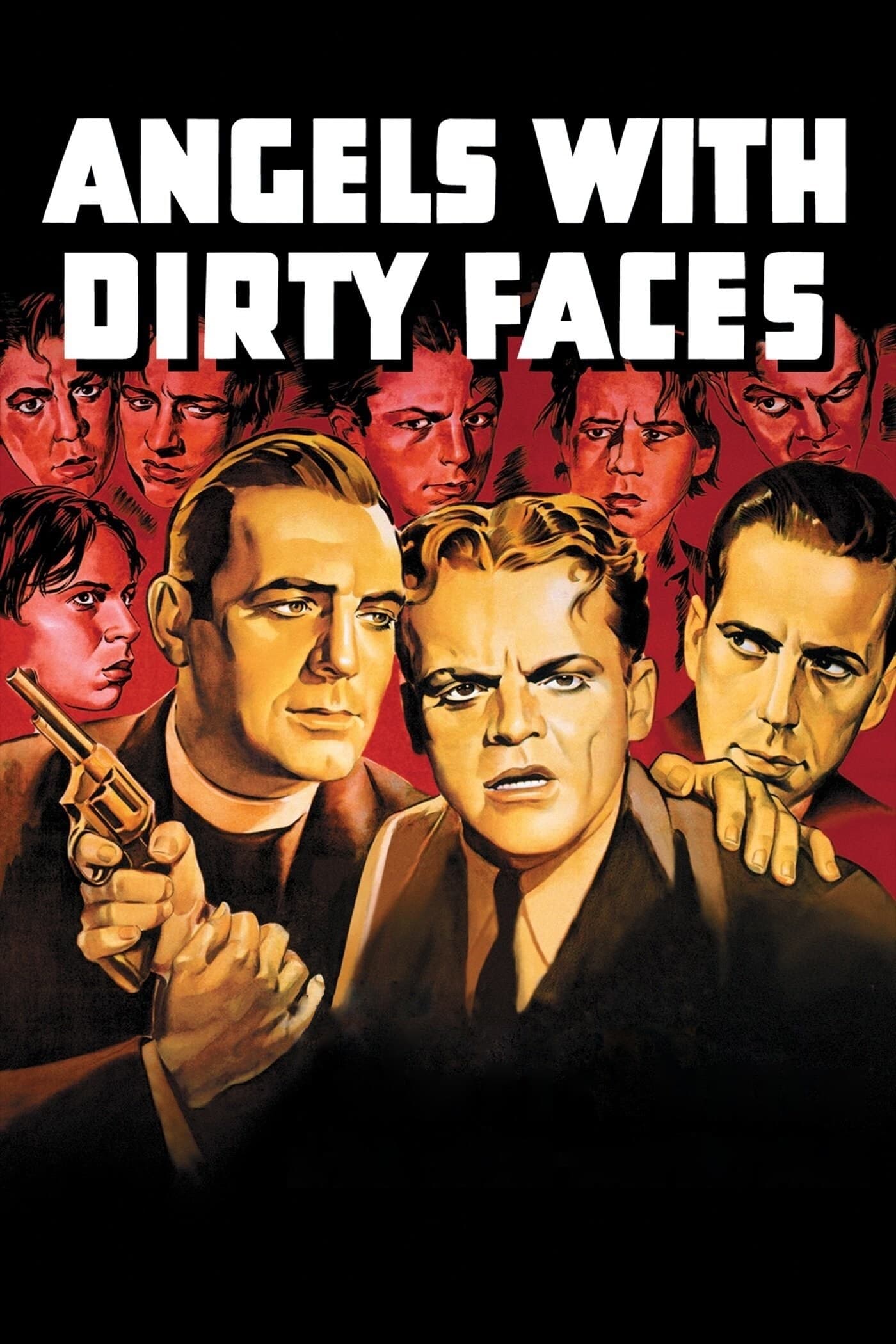
The Question of Truth Behind the Film
When I first watched “Angels with Dirty Faces,” it struck me how the allure of old Hollywood crime dramas often rests on the tantalizing question of whether the narrative springs from actual events or pure invention. There’s a certain tension I feel whenever a film hints at real-life inspiration—suddenly every frame feels charged with the possibility that “this really happened.” For me, the urge to seek out the factual basis behind a film is almost reflexive. I catch myself scanning for evidence in the credits, wondering whether the protagonists have real analogues, or if the undercurrents of desperation and loyalty were ever truly lived by anyone outside the soundstage. What I find telling is how, when a movie is labeled as “based on a true story,” it subtly changes the relationship I have with its characters. Their choices feel less like screenwriting maneuvers and more like echoes of genuine human drama. That label—“true story”—isn’t just informational; it teases my imagination, pushes me to mentally reconstruct the world as it might have been, not merely as the filmmakers imagine it. With “Angels with Dirty Faces,” I found myself toggling between acceptance of its stylized vision and curiosity about the grittier, less varnished history it might be riffing on. I’m reminded that my assumptions about what counts as “truth” in cinema are inevitably shaped by the film’s presented context, and by my own willingness to blur the borders between fact and artistic license.
Historical Facts and Cinematic Interpretation
My investigation into the origins of “Angels with Dirty Faces” has always been colored by a fascination with how stories calcify into legend. Though the film doesn’t pin itself to a specific historical episode or notorious gangster, it clearly emerges from the sociocultural ferment of 1930s America—a time when stories of urban crime, juvenile delinquency, and the specter of organized racketeering dominated headlines and imaginations alike. Watching the film, I sense a deliberate extraction of motifs and archetypes from a broader pool of criminal lore rather than a direct reenactment of any single real-life trajectory. The milieu—the decaying tenements, the shadowy pool halls, the gangs of streetwise youths escaping stark poverty—feels historically resonant, even if not strictly factual in the biographical sense. What I find most interesting is the way the film distills elements from real-world crime reporting: salacious newspaper tales, high-profile gangster trials, and fluctuating public anxieties over urban morality. These components, when woven together by the filmmakers, create an atmosphere where fact and narrative invention dance closely. Instead of reconstructing a specific crime or figure, the film organizes a patchwork of attitudes, fears, and aspirations that I can trace to headlines and public discourse of its era. Such condensation isn’t accidental; I see it as a pragmatic response to storytelling demands, allowing for a narrative that feels grounded yet unburdened by the complexities of actual case history.
Whenever I reflect on cinematic interpretations of loosely historical source material, I’m drawn to moments in the film where a certain dialogue, gesture, or choice seems to ring with a truth independent of documented fact. For example, the character of Rocky Sullivan embodies traits I associate with legendary gangsters—charisma, bravado, moments of unexpected tenderness—even if his life story is an amalgam. I find the screenwriters’ approach akin to a jazz musician riffing on a well-known standard: the notes are familiar, but the arrangement is entirely new. That process, in my view, amplifies the larger truths audiences were wrestling with in the 1930s—a distrust of the justice system, the thin line between heroism and infamy, the power of redemption and public spectacle. These resonate with historical evidence of public fascination with crime figures, even as the specific details are invented or compressed. My sense is that the film’s historical fidelity lies less in precise events and more in its tonal accuracy—capturing the emotional and psychological reality of an era, rather than its documentary minutiae. I come away appreciating the alchemy involved in blending reality and imagination, recognizing that the film’s grounding in “the real” is more impressionistic than literal.
What Changes When Reality Is Shaped for Cinema
I’ve always been intrigued by the challenge filmmakers face in adapting historical ideas for cinema. With “Angels with Dirty Faces,” I notice that authenticity is often a matter of atmosphere and implication, not exact replication. The world onscreen feels lived-in, shaped by the urban anxieties of its time, but the specific plotlines and character motivations rarely align with any one newspaper article or police record. This isn’t a failing; instead, I see it as a calculated negotiation between fidelity to real life and the formal requirements of engaging drama. When I’m watching, I sense the inherent trade-offs: the filmmakers prioritize clarity of message and impact over exhaustive accuracy, choosing composite characters and dramatized conflicts that serve the story’s thematic backbone. By focusing on the dynamic between Rocky Sullivan and Father Jerry Connolly, for instance, the script distills sprawling social debates about crime, reform, and youth into a manageable, emotionally coherent narrative arc.
That process is particularly evident in the film’s treatment of the “Dead End Kids” and their moral tug-of-war between criminality and redemption. I recognize that the reality of urban youth gangs in Depression-era New York was messier, more nuanced, and certainly less melodramatic than the film’s depiction. Yet, by selecting certain elements—like the presence of charismatic older mentors, the cyclical nature of poverty, and the lure of street respect—the filmmakers create a story that can communicate its primary concerns in a direct, resonant way. For me, this is where cinema’s interpretive powers shine. Instead of getting bogged down in the sprawling realities of police budgets, juvenile justice reform, or sociological data, the film narrows its lens on archetypal figures and their moral choices. This makes the story accessible to viewers who might not know or care about the historical intricacies, while still gesturing at the social realities its creators want to highlight.
I’ve learned to view these cinematic choices not as betrayals of history, but as alternate means of accessing historical meaning. In compressing timelines, dramatizing relationships, and inventing speeches that would never have been spoken, the filmmakers create a concentrated version of the debates and dilemmas of their era. Sometimes, of course, this means important complexities are left out. I notice, for example, that the film eschews deeper explorations of race, ethnicity, and systemic corruption that were vital components of the real crime landscape. Yet, I find that such omissions are rarely accidental—rather, they are editorial decisions made in the service of telling a focused, compelling story in under two hours. When I examine these choices, I see their costs and benefits: clarity sometimes comes at the expense of fullness, but the emotional impact of the film’s message remains intact.
Audience Expectations and the “True Story” Label
Whenever I discuss films with friends or students, the topic of “based on a true story” almost inevitably sparks the strongest reactions. I’ve noticed that labeling has a surprising power to sway audience engagement. My experience with “Angels with Dirty Faces”—which does not market itself as a recreation of particular events, but draws heavily from the era’s criminal zeitgeist—reminds me of how, if a movie presents itself as factual or inspired by truth, it primes viewers to approach it with heightened scrutiny. I often see viewers parsing scenes, searching for elements that “feel real,” or reacting skeptically to narrative flourishes they deem implausible. Conversely, when a film is openly fictional, people tend to grant it more latitude for invention and exaggeration, focusing on the coherence of its themes instead of the authenticity of its details.
Personally, knowing the boundary between fact and fiction doesn’t diminish my experience, but it does alter the lens through which I interpret what I see. With “Angels with Dirty Faces,” I find I’m more attentive to the broader truths the filmmakers are attempting to crystallize, understanding that the film’s value lies in its commentary on its moment rather than its function as a historical record. If I had believed the events onscreen to be exact retellings, I might invest differently in the moral choices characters make, or measure my reactions against my knowledge of real-world criminal justice. The lack of explicit “true story” framing lets me focus on the narrative as a reflection, rather than a transcript, of societal anxieties. Audiences who crave veracity might find this liberating or unsatisfying, depending on whether immersion or information is their primary goal.
For me, this phenomenon illustrates the importance of managing expectations. The impact of a film’s emotional and thematic core can hinge on whether audiences believe they are watching history reenacted or merely evoked. I’ve heard viewers claim that learning about a film’s fictional liberties can either enrich their understanding—by highlighting creative choices—or disrupt their engagement by calling into question the authenticity of everything they’ve just witnessed. In the case of “Angels with Dirty Faces,” the film’s ambiguous relationship to real history frees me to grapple with its characters as everymen, not historical case studies. I can explore the dilemmas of loyalty, sacrifice, and public redemption as universal experiences, shaped but not confined by the politics and press clippings of their origin. This flexibility, I’ve found, is one of cinema’s greatest strengths when dramatizing “inspired by real events” stories.
Final Perspective on Fact vs Fiction
Reflecting on “Angels with Dirty Faces” and its interplay between historical inspiration and narrative invention, I’m left with a sharper awareness of how my understanding is shaped not by what happened, but by how the film reframes “what might have happened.” For me, recognizing which aspects are real and which are constructed doesn’t undermine the film’s impact—it clarifies it. Knowing that Rocky Sullivan is a composite and not a direct biographical portrayal allows me to see him as a vessel for broader social questions, rather than a stand-in for a specific historical figure. Instead of anchoring my response to whether his final actions “really happened,” I can tune in to how the film invites contemplation of fate, agency, and the performance of redemption.
I find that the more I learn about the historical context the film channels—Depression-era poverty, the rise of celebrity gangsters, the complicated role of the Catholic Church—the more I appreciate the film’s selective fidelity. The details the filmmakers choose to omit or alter reveal as much about the cultural climate of late-1930s America as the plot points themselves. My engagement now becomes a two-way dialog: not only do I interrogate the film for its take on the world, but I also consult contemporary sources to enrich my grasp of what anxieties the film is translating for its audience. It’s not a matter of catching the film in inaccuracies, but of tracing the creative impulses that turn complex history into potent storytelling.
Ultimately, I’m convinced that an audience’s awareness of a film’s factual origins operates less like a truth serum and more like a lens—it doesn’t determine what I see, but it does focus my perception and draw my attention to different textures within the story. In the case of “Angels with Dirty Faces,” this awareness infuses my viewing with layered meanings: the narrative becomes a meditation on both individual and collective memory, on who gets to control the story, and on the enduring desire to find sense in the chaos of history. Whether labeled as strictly factual or explicitly fictional, the film’s relationship to reality is not a static ingredient but a dynamic process that shapes, and is shaped by, each viewer’s curiosity and critical engagement. This, to me, is the special power of cinema at the crossroads of fact and fiction—a power always contingent on what I bring to the screen, and how I choose to navigate the boundary between what was and what is imagined.
For additional context, you may also explore the film’s overview and how it was received by audiences and critics.
🎬 Check out today's best-selling movies on Amazon!
View Deals on Amazon