
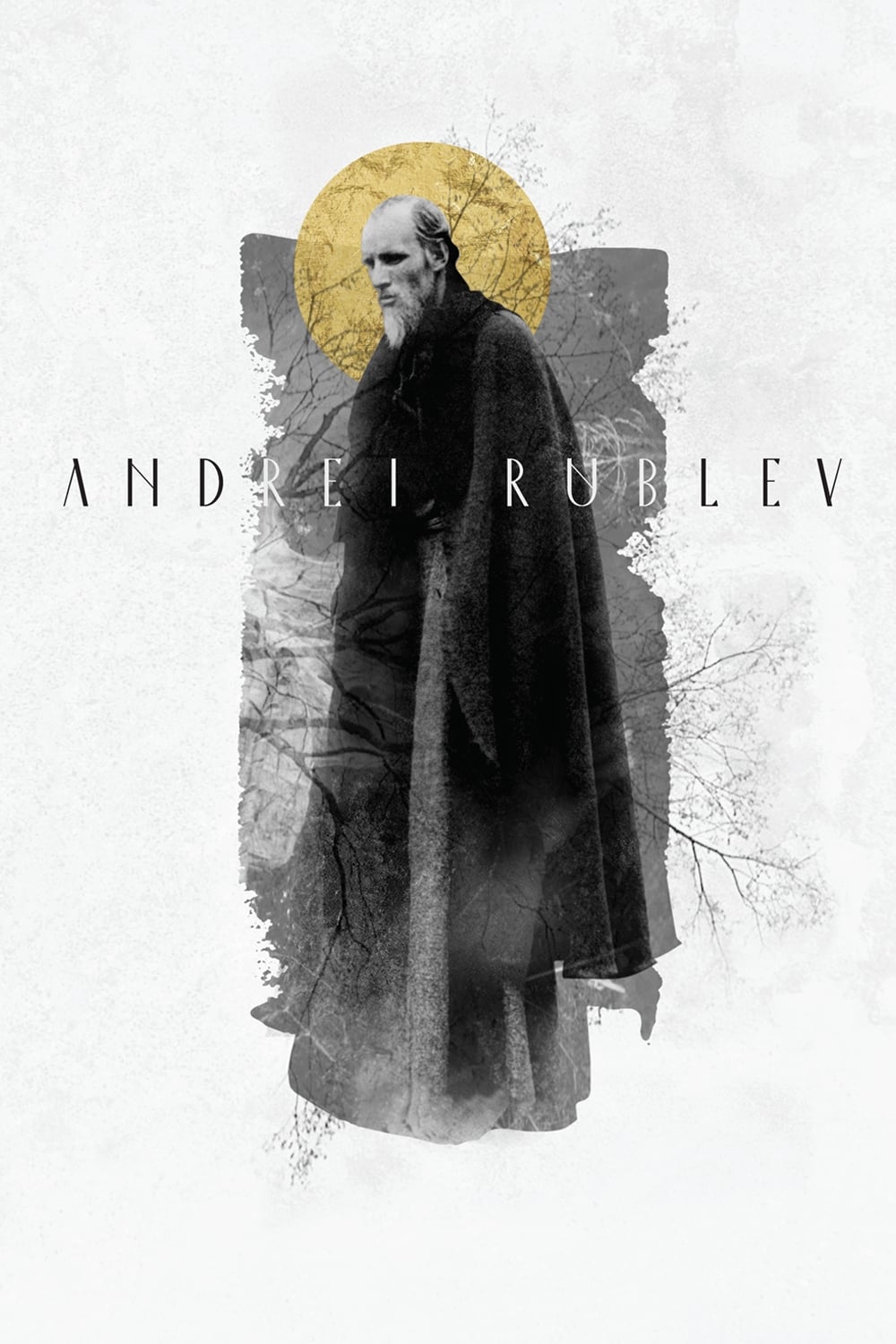
Is This Film Based on a True Story?
My encounter with “Andrei Rublev” left me in that rare state where the lines blurring truth, myth, and heightened reality feel purposeful rather than accidental. If I had to define it plainly, I would say that this film is best described as inspired by real historical events, anchored around a genuine historical figure, yet it takes wide creative latitude in its storytelling and interpretation. As someone who values the underlying threads of truth behind such works, I found that while the central character—Andrei Rublev—truly existed, and the film draws from sweeping events and textures of early 15th-century Russia, many of the stories, encounters, and dramatic turns woven through the narrative are imaginative constructs. So, I’d say the film is partially true: its emotional and cultural landscapes mirror real history, but its episodic structure and several character arcs are marked by significant invention. There’s an energy in its approach to truth; I never felt bound by a documentary fidelity, but rather swept up in an evocative vision sparked by real roots in the past.
The Real Events or Historical Inspirations
My curiosity often leads me to question what lie beneath the surface of biographical films, especially when approaching icons like Andrei Rublev, the Russian painter and monk whose name is so tightly bound to religious art. As I dove into the factual background behind Tarkovsky’s 1966 work, what struck me was the scarcity of concrete details about Rublev’s life. Most of what’s historically known stems from fragments: a few records about his birth and death, the celebrated icons attributed to him such as the “Trinity,” and archival evidence linking him to religious communities like the Andronikov Monastery. Beyond that, his existence is wrapped in mystery—no surviving personal writings, letters, or diaries; just the celebrated works themselves, the greatest records of his presence. When the film references the crafting of the Annunciation Cathedral’s frescoes, or the Moscow monastic atmosphere, it’s working from the limited records and scholarly reconstructions I found in monographs and exhibition texts concerning Russian iconography.
The reality is, what stands as inspiration for much of the film is the broad historical setting. I explored studies on Russia from the late 14th to early 15th centuries, a period riven by political instability, invasions, and spiritual revival. Mongol rule loomed large in the collective psyche. I can see traces of true events in the depictions of Tatar raids and the fragmentation among Russian principalities. The struggles of artists, artisans, and the Orthodox Church at the time reflect genuine questions of national identity and spiritual survival, themes that the film immerses itself in, albeit with plenty of poetic interpretation. The cultural and religious ferment—a transition from medieval despair to the first stirrings of the Renaissance in the Slavic world—is a fact. So, while Tarkovsky’s opus doesn’t rest on a strict biography of Rublev, the spirit of the era and the skeletal outline of the man’s reputation and milieu are rooted in what I recognize as real recorded history.
What Was Changed or Dramatized
One of the most fascinating parts of my journey with “Andrei Rublev” was mapping what elements were dramatically altered or invented entirely. From the moment the film’s episodic structure unfolds, I realized that much of what appears on screen is not drawn from identified moments in Rublev’s life, but rather from Tarkovsky’s thematic imagination. Portions such as the harrowing sequence of the pagan celebration in the woods, or the self-imposed vow of silence following a traumatic act, are fictional episodes created for narrative effect. Although Rublev was an artist in a culture often at odds with pagan remnants, there is no documentation of wilderness encounters or rituals quite as depicted.
Another significant dramatization that piqued my attention is the climactic bell-making sequence. As evocative as it is, there’s no direct historical evidence that Rublev ever collaborated with foundry workers, witnessed molten bronze being poured, or had any involvement with bell-casting of any sort. The boy Boriska, central to this episode, is a composite or outright fictional creation—most historical scholarship makes no mention of such a figure in Rublev’s story. The sequence, I came to realize, serves as an allegory for artistic creation and faith rather than a factual event from Rublev’s biography.
I was also aware that the timbre of interpersonal relationships in the film—conflict with fellow monks, encounters with raiders, deeply personal crises of faith—has no clear analogues in the surviving record. The historical Rublev, as far as documents go, remains silent on these points. This imaginative interpolation, while it gives the film emotional resonance, does not reflect verifiable events. Even the scenes set during the sacking of Vladimir and the subsequent devastation find their roots in real invasions but use dramatically expanded narratives, sometimes adding in fictional acts or composite characters to carry deeper philosophical explorations. For all these reasons, I understood the film to be less a biopic and more an artistic mediation, using Rublev as a kind of archetype upon which bigger questions are mapped.
Historical Accuracy Overview
Whenever I assess a film that straddles the line between historical fiction and reality, I am acutely aware of the distinction between atmosphere and hard fact. My view on “Andrei Rublev” is that its historical authenticity lies more in the accurate evocation of the era’s spirit than in a documentary retelling of Rublev’s life. The film excels in recreating the visual and social textures of medieval Russia—the iron-and-mud architecture, the wooden structures of the monasteries, the costumes, the processes of icon painting, the weathered faces of the peasantry. As I pore over the work of medieval Russian historians and art scholars, I see strong validation for the depiction of Orthodox religious observances, artistic workshops, and the omnipresent shadow of Tatar overlords. Tarkovsky and his team sourced much of their set designs, props, and costumes from bona fide artifacts—this shows in the authenticity of the liturgical music and the period-appropriate iconography.
Yet, the film’s approach to the factual chronology of Rublev himself is hazy by necessity, given how little is definitively known. His spiritual doubts, the nature of his creative inspirations, his interactions with rival artists—these are built from the marrow of what might have been, interlaced with the director’s philosophical vision. I learned that even the practice of fasting, self-castigation, or the specifics of icon-painting were reimagined in ways that fit the movie’s meditative, existential tone rather than necessarily reflecting period practice.
In terms of broad accuracy, I discovered much to admire: the recurring plague, the violence of Tatar incursions, and the marginalization of artisans were parts of the real historical landscape in which Rublev lived. Even so, the dialogue, character development, and more intimate moments—the moments viewers find most stirring—often have no echo in surviving documents. I see the film as historically valid in its grand design, its mood and its philosophical framework, but highly speculative in regards to the protagonist’s personal journey and many specific events. For me, this isn’t a flaw but a deliberate act of creation, placing emotional and spiritual truths on equal footing with factual accuracies.
How Knowing the Facts Affects the Viewing Experience
Every time I watch a historical film with some understanding of the true stories behind it, I find myself more attuned to the tension between what must have been and what might have been. In the case of “Andrei Rublev,” the experience becomes layered with an awareness that I am not watching a documentary account of an iconic painter, but rather an imaginative meditation shaped from the raw material of real history. Knowing that so little is documented about Rublev’s life actually alters my expectations—I no longer anticipate a point-by-point biographical film. Instead, I allow myself to engage with the questions the film poses about creativity under oppression, the possibility of spiritual renewal amid historical catastrophe, and the ambiguous place of the artist in society.
Understanding which moments are dramatized or invented also enhances the film’s resonance for me, rather than diminishing its power. The bell-making sequence, for example, has the weight of epic myth, its emotional truth transcending its basis in onscreen fiction. Even the inclusion of rituals, or the wild, harrowing violence, feels less like a literal assertion (“This happened to Rublev!”) and more an expression of the emotional and psychological realities endured by artists and thinkers during centuries of upheaval. This approach to historical storytelling aligns closely with how I experience art history more broadly—as a medley of fact, myth, interpretation, and longing.
On a subtler level, I find that knowing the limits of historical evidence for Rublev’s biography intensifies my appreciation for the film’s ambiguity. When I see Rublev, played with haunting restraint, wandering the muddy paths of Russia, unsure of his calling and haunted by violence, I see not a straightforward life story, but an imaginative manifesto. This shapes the way I interpret his silence, his bouts of pain, and his return to creative work at the film’s conclusion. Even the structure of the film—its nearly episodic, dreamlike progression—mirrors the patchwork nature of what is actually known about Russia at the time. For viewers who enjoy wrestling with the interplay of art and history, as I do, this opens up a second dimension: the gap between history and storytelling becomes a space for contemplation rather than frustration.
In sum, my sense of satisfaction and meaning comes not from ticking off a checklist of “what really happened,” but from seeing how a film like this uses a historical figure as an entryway into the biggest questions about faith, creativity, violence, and society’s relationship to its artists. The emotional truths may be universal, even as the factual details are often speculative. My engagement with “Andrei Rublev” feels richer for having traced these lines, and for recognizing how carefully—if unpredictably—the film balances between the known and the imagined.
After learning about the film’s origins, you may want to see how audiences and critics responded.
🎬 Check out today's best-selling movies on Amazon!
View Deals on Amazon