
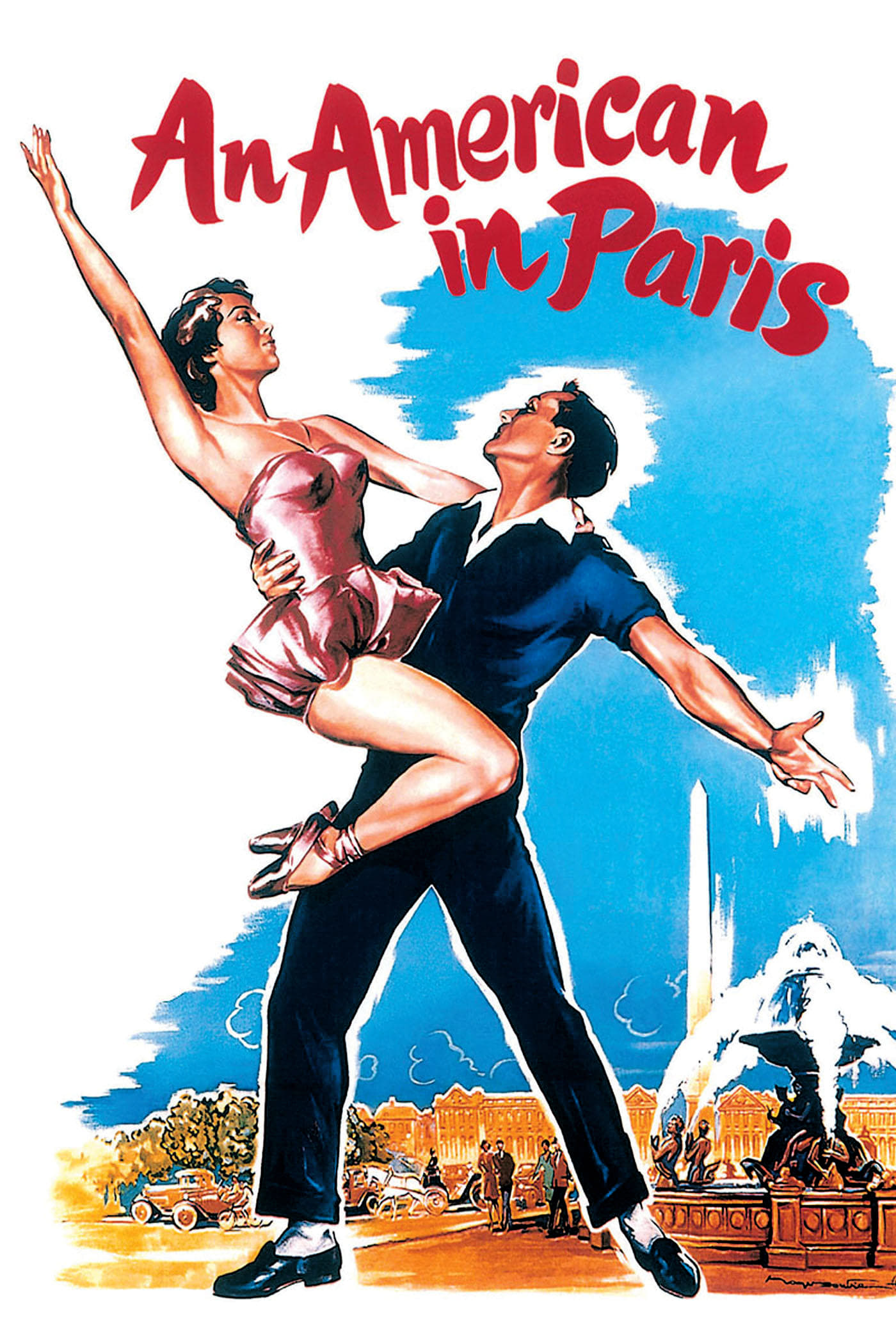
Is This Film Based on a True Story?
The first time I sat down to watch “An American in Paris,” I found myself wondering if there was a dazzling artist somewhere in postwar France whose life inspired its Technicolor world. As I dug into the origins of the film, I realized that, although the narrative feels steeped in a believable period—filled with the optimism and passion you might expect in Paris after World War II—the story itself is not lifted directly from real life. So, to be absolutely clear, “An American in Paris” is not based on a true story. It is a completely fictional narrative created specifically for the screen, although its ambiance and musical backbone are rooted in recognizable artistic traditions and the works of famous composers. While the film might echo real emotions or cultural moods of its era, its plot and characters are entirely the product of creative invention, not an adaptation or dramatization of actual events or individuals.
The Real Events or Historical Inspirations
When I peel back the cinematic layers, I’ve come to see that “An American in Paris” draws its most significant inspiration not from events or people, but from music—specifically, George Gershwin’s orchestral suite of the same name, first performed in 1928. What fascinates me is how the film uses this beloved composition as a foundation, building its colorful story and dance sequences around the spirit and themes of Gershwin’s own vibrant vision of Paris. As a researcher, I see the film as almost an homage to Gershwin’s impressions of France, echoing the exuberance, romanticism, and elegance he captured in his composition.
My deep dive into the production history confirmed that Gershwin himself did spend a memorable period in Paris during the 1920s, where he absorbed local culture and musical styles into his work. However, the movie doesn’t use direct episodes from Gershwin’s life; instead, the city itself—the bohemian spirit, the creative class, and the postwar atmosphere—serves as a loose historical flavoring. The timeline, setting, and overall mood of immediate postwar Paris are genuine, and the filmmakers put genuine effort into evoking an authentic sense of place, from the bustling streets to the artistic communities populating Montmartre.
On further examination, I realized that while the cinematic Jerry Mulligan exudes the freewheeling charm and ambition typical of American expatriates in 20th-century Paris, he is a fictional construct. He isn’t based on Gershwin, a particular painter, or any real American living abroad. The love triangle, the tension between art and commercialism, and the grand ballet finale are inventions designed to breathe dramatic life into the melodies and rhythms of Gershwin’s score. The film’s creators also seemed inspired by the broader context of American artists in postwar Europe, drawing from the collective mythos of that era without trading on specific real-world stories or figures.
In summary, while I see that the plot and characters were conceived wholly for the screen, the movie cannot be separated from the legacy of the music, the real cityscape of Paris, and the vibrant transatlantic artistic exchanges of the late 1940s and early 1950s. These influences are palpable but abstract—more background ambiance than direct narrative adaptation.
What Was Changed or Dramatized
What stands out most to me is how “An American in Paris” freely dramatizes the allure and romance of its setting rather than transforming any factual account. Instead of adjusting real-life details for cinematic effect, the filmmakers invented nearly everything—characters, conflicts, and resolutions. In the process, they heightened the emotional stakes to match the grandeur of Gershwin’s symphonic poem.
For example, Jerry Mulligan’s journey from struggling painter to romantic hero is pure invention. His relationships, including his entanglements with Milo and Lise, as well as his rivalry with Henri, are tailored entirely to suit the needs of a classic Hollywood musical. Any resemblance to the actual lives of postwar expatriates feels more like a generalization than a direct retelling. While many Americans did travel to Paris to seek inspiration or escape in the years following the war, there is no record of any real individual whose experiences precisely parallel Mulligan’s arc in the film.
I am especially intrigued by the way the film treats Paris itself—as both a literal and fantastical place. Despite its eye for picturesque detail, the movie’s Paris is almost a dream version, reconstructed on studio sets, with every element serving the needs of choreography, color, and narrative. This idealized depiction emphasizes charm and romance over social or historical tensions. The real city of 1949 was still very much in recovery, but I see little direct evidence of hardship or austerity woven into the escapist fabric of the movie’s world.
The grand ballet finale—an extended sequence that mesmerizes me every time—is another dramatic flourish that takes full advantage of the medium’s artificiality. Clocking in at almost 17 minutes, this segment abandons even the faintest pretense of realistic storytelling, instead creating a stylized fantasia set to Gershwin’s music. Although inspired by the Ballets Russes and the groundbreaking collaborations between music, dance, and visual art in Paris, the ballet is not based on any real performance or event. It’s a cinematic invention, blending elements of French painting, modern dance, and symphonic structure in a way only Hollywood musicals of that era could achieve.
Other adjustments are more subtle but still noteworthy to me. Character archetypes—the struggling artist, the supportive patron, the unapproachable ingenue—are rendered with broad strokes, shaped by screenwriter Alan Jay Lerner and director Vincente Minnelli to evoke the glamour and internal tensions of both American and European culture. Though these types exist in the real world, the specifics of their relationships are the product of narrative necessity rather than historical research or documentation.
Historical Accuracy Overview
Evaluating the historical accuracy of “An American in Paris” has always brought me back to its dual nature: it’s a fantasy set within a very real time and place. The film’s depiction of Parisian neighborhoods, its sidewalk cafes, and the creative ferment of its artist quarter all reflect genuine aspects of the city in the late 1940s. I admire the filmmakers’ dedication to conjuring a sense of authenticity, even while shooting largely on soundstages in Hollywood. Details like the street markets, the urban bustle, and the easy mingling of artists from around the world are all drawn from the known realities of postwar Paris and its international artistic circles.
However, the storyline, dramatic conflicts, and romantic encounters do not correspond to actual documented events. No records in art history, war memoirs, or cultural chronicles point to a painter named Jerry Mulligan arriving in postwar Paris to become swept up in a transformative romance. While the film does use real events as background—such as the American occupation following liberation, the influx of creative minds to the city, and the lingering mood of optimism—it never attempts to document or reconstruct any specific story. The Paris that I see on the screen is full of life but airbrushed to emphasize beauty and hope rather than ambiguity or struggle.
The relationship between the American and European characters, and the themes of artistic self-discovery and cross-cultural romance, generally reflect the sociocultural vibe of an era when Paris was regaining its footing as a global capital for the arts. These elements are accurate in spirit rather than detail: Americans did flock to Paris, and numerous artists and writers experienced both inspiration and complicated love affairs. But the particulars shown in “An American in Paris,” including character backstories and pivotal events, are inventions created to enhance the audience’s emotional experience in harmony with Gershwin’s sweeping music.
If I try to pin down a single historical “truth” at the heart of this film, I find it more in its mood than its details. The postwar energy, the interplay of old Europe and New World ambition, and the celebration of creativity are broadly faithful to the tenor of the time. The actual plot—the art, the love story, and even the climactic ballet—are masterfully dramatized for the sake of spectacle, not historical documentation.
How Knowing the Facts Affects the Viewing Experience
I always approach films like “An American in Paris” with a different mindset once I know their connection to real events—or, in this case, their lack thereof. When I realized that I wasn’t watching a direct account of someone’s life or a recreation of authentic historical struggles, my focus shifted from fact-finding to absorbing the emotional and creative intentions behind each scene. For me, knowing that the story is fictional actually frees me to appreciate the artistry—the choreography, the set design, the music—without constantly cross-referencing reality.
At the same time, the use of Gershwin’s orchestral suite as a musical and atmospheric framework adds a layer of cultural nostalgia. Understanding that the inspiration comes from a piece of music, and not a person’s biography, deepens my appreciation of how filmmakers adapt not just stories but feelings and moods from source material. Instead of expecting biographical accuracy or period authenticity in every moment, I allow myself to become immersed in the fantastical version of Paris that the movie offers. It’s almost as if the “truth” here is emotional rather than literal: the longing for beauty, love, and new beginnings that would have resonated strongly with audiences in the postwar era—many of whom may have fantasized about running away to Paris themselves.
For anyone curious about film origins, I find that understanding the creative liberties at work in “An American in Paris” opens up the movie to new forms of enjoyment. Watching it as a celebration of Gershwin, of art for art’s sake, and of Paris as an eternal muse lets me embrace its optimism and spectacle without worrying about “what really happened.” There’s pleasure in surrendering to fantasy, especially one woven from so many real-world influences. Much like the grand ballet sequence, the entire film is an imaginative leap, inviting me to see not how things were, but how they might feel in the idealized world of music and dance. For me, this knowledge actually enhances the power of the film; it becomes an homage to dreams, creativity, and the enduring allure of Parisian culture rather than a literal retelling of history.
After learning about the film’s origins, you may want to see how audiences and critics responded.
🎬 Check out today's best-selling movies on Amazon!
View Deals on Amazon