
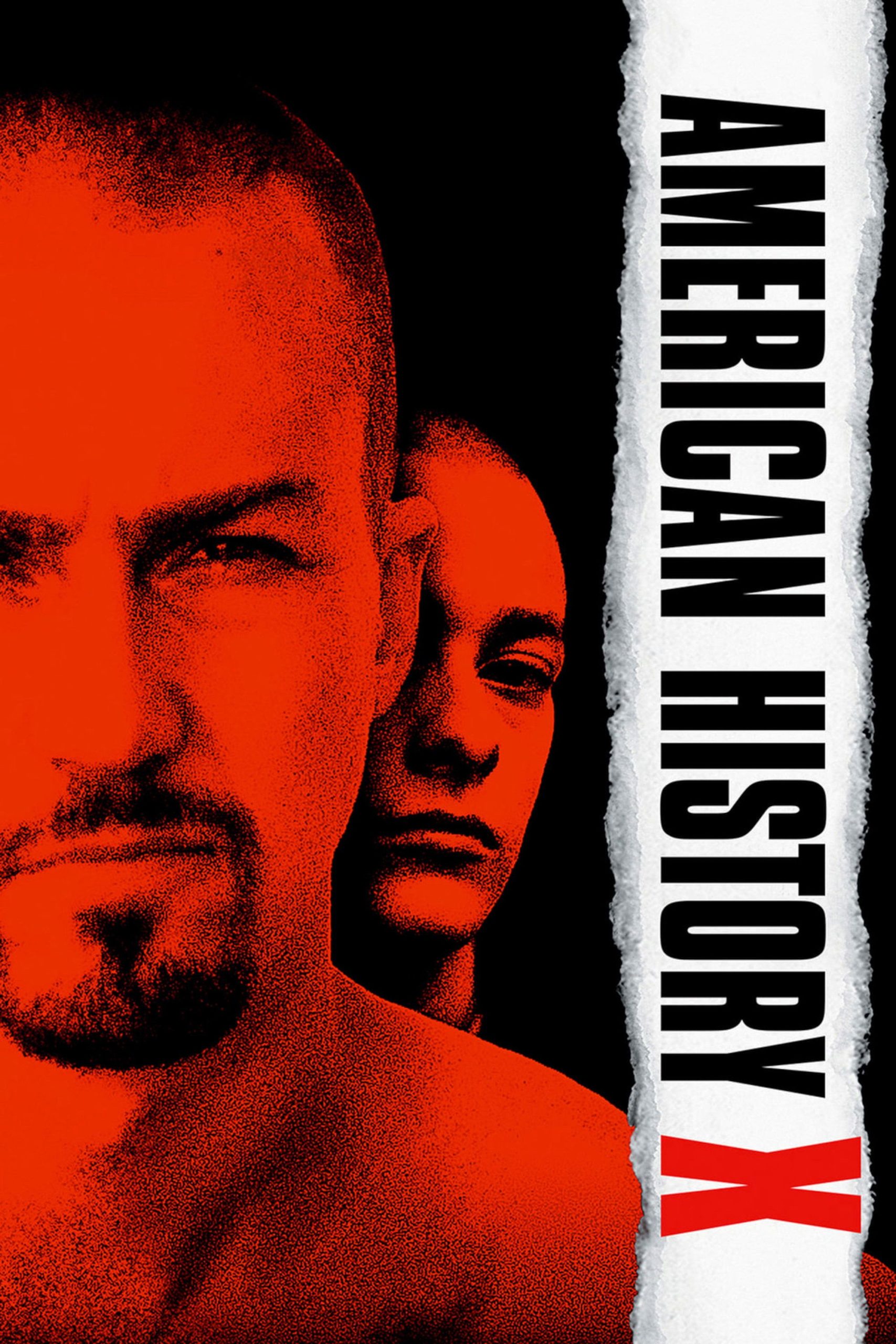
Is This Film Based on a True Story?
When I first encountered American History X, I remember asking myself whether I was watching a direct account from someone’s life or simply a searing narrative meant to provoke reflection. After years studying the histories and inspirations behind films, I can confidently say that American History X is not based on a single, true story or memoir. Its characters—Derek and Danny Vinyard, their family, and the ensemble of neo-Nazi and victimized individuals—are products of fiction. Yet I’ve always recognized that the world they inhabit and the ideologies they wrestle with are not born ex nihilo. The writers and creators drew from the ugly realities of American extremism, but the plot itself is an imagined composite, not an account of actual people or singular incidents.
The Real Events or Historical Inspirations
Personally, I find it fascinating how the film stitches together fragments from authentic social movements, demographic trends, and news reports from 1980s and 1990s California. The scriptwriter, David McKenna, has spoken about growing up in San Diego and encountering skinhead culture in his youth. I’ve read interviews where he described drawing upon those indirect observations as the basis for Derek Vinyard’s character. Unlike historical epics or biopics tethered to archival material, American History X isn’t rooted in a single source text, legal document, or publicized true crime event. Instead, I see the film as absorbing details from the rise of skinhead gangs, white supremacist recruitment, and inner-city racial tensions that marked that era. For me, this kind of origin gives the film a raw, energetic verisimilitude, but at no point do I find concrete references to Derek or Danny existing in reality, or to any one act paralleling the film’s central murder.
I think of the infamous curb-stomp scene or the prison reversals as dramatic manifestations of themes explored in real-world investigative journalism and sociology texts of that time. I’ve noticed how the film borrows iconography and language from recorded hate group culture—bolstered by news footage, documentaries, and even surface-level rituals gleaned from police reports and academic observations. But after combing through historical records, I can affirm that no single event lines up exactly with what the movie depicts. My impression is that the film’s villains and victims are emblematic rather than directly biographical. So, although viewers might sense echoes of the Rodney King riots, the spread of neo-Nazi movements, or broader stories of familial trauma linked to prejudice, all these connections are inferred and thematic rather than literal adaptations.
What Was Changed or Dramatized
When I step back and scrutinize the dramatizations, I notice how the filmmakers distilled and even exaggerated real-life elements to amplify the story’s power. For instance, the transformation of Derek Vinyard from a fire-breathing white supremacist to a remorseful brother seeking redemption is, for me, clearly an accelerated and dramatized process. In reality, the journey out of hate groups—often called “deradicalization”—rarely follows neat narrative arcs or results from singular, pivotal experiences. The film’s prison scenes, particularly Derek’s traumatic awakening and his conflicts with both black and white inmates, are highly condensed for emotional clarity. Everything unfolds over a span of years, yet in the film’s pacing, it feels almost like a sequence of dominos falling rapidly. In my opinion, this is less reflective of long, messy social transitions and more in service of audience catharsis.
I also sense that the relationship between Derek and his younger brother Danny was tailored for maximum contrast. The script draws a direct line between the actions of the elder brother and the fate of the younger, which fits classic narrative structures but oversimplifies how generational prejudices persist or unravel. I don’t see historical records supporting such finely interwoven, cause-and-effect family dynamics in real cases—at least not with the clarity the film projects. Additionally, I observe how certain historical complexities, such as the internal divisions among white supremacist groups, are streamlined. Rather than exploring the fractiousness and regional differences among hate factions, the film elects to portray a more monolithic skinhead community for narrative efficiency. The dialogue and iconography—tattoos, slogans, racist lectures—are outrageously direct, making the underlying ideology more immediately legible, but also less nuanced than the real subcultural lexicon as recorded by scholars and law enforcement profiles.
One of the most pronounced dramatizations, in my estimation, involves the portrayal of inner-city Los Angeles. The film takes liberties with the city’s real geography and sociopolitical tapestry, compressing various tensions into one cohesive—but ultimately artificial—slice of American life. The neighborhood dynamics, for example, become cauldrons of open conflict, with only limited nods to the complexities of coexistence, economic hardship, or the slow encroachment of hate groups into residential areas. From my research, while these tensions are certainly part of Southern California’s past, the speed and extremity with which they manifest on screen strike me as the product of narrative necessity rather than documentary fidelity.
Historical Accuracy Overview
Whenever I assess the historical accuracy of American History X, I weigh how it balances emotional truth with strict factualism. On the one hand, the film nails certain surface details: the visual cues of neo-Nazi culture, from the skinhead attire to the use of Nazi symbols and white power tattoos, come directly from real American hate groups. I’ve read firsthand studies—by organizations like the Southern Poverty Law Center and the Anti-Defamation League—that catalog these aesthetic and rhetorical markers. The methods of indoctrination, some of the strategies for recruitment, and even the lexicon used have verifiable correlates in American subcultural history from the late twentieth century.
Yet, as I parse the film’s main plot beats, I’m always aware that it takes considerable liberties. The path to radicalization, both into and out of hate groups, is rarely so linear or concentrated around a few major events. Prison, for instance, is depicted as a crucible for both hate and transformation, but the reality is frequently more ambiguous, fraught with complex, often incomplete changes. In my view, the relationship between educational institutions and the deradicalization of youth, as shown through Danny’s professor Sweeney, also compresses what would be an extended, multifaceted intervention into a bite-sized narrative.
One recurring question I see raised is whether the profiled versions of violence—such as the home invasion, curb-stomping, and retaliations—are true to statistical reality. While such events have certainly exploded into the headlines on occasion, their presentation in the film is meant to express moral horror rather than reflect everyday criminal statistics. In truth, hate crimes are often shrouded in ambiguity and take many forms, not always aligning with the heightened violence that film dramatizations favor. Based on my own study, the film’s approach to neighborhood power struggles, gang hierarchies, and scenes of open warfare between racial factions is heightened, selected more for psychological effect than sociological accuracy. Still, the central truth—that white supremacist violence is deeply embedded in certain American contexts—is rendered in broad, distressing brushstrokes.
To me, the biggest divergence from history lies within the structure of the narrative: a rapid arc from indoctrination to epiphany, and ultimately to tragic consequence. I’ve found no direct case where such a metamorphosis happened in exactly the way depicted. The film’s power, in my reading, comes from how it synthesizes dozens of true stories, academic findings, and anecdotal reports into one symbolic family drama. This approach captures the underlying reality of American extremism’s roots and costs, even if it doesn’t recount any one case with documentary precision.
How Knowing the Facts Affects the Viewing Experience
I find that understanding the film’s actual origins adds a piercing poignancy to every scene. When I’m watching Derek’s rapid journey from hatred to self-doubt, I remind myself that, while the premise is fictitious, the emotions and conflicts mirror what’s been chronicled in real communities. Because I know these aren’t the annals of a single family but a dramatized echo of many stories, it pushes me to reflect on why storytellers craft such narratives and which details they choose to amplify or mute. It’s not uncommon for friends who learn the movie isn’t based directly on documented events to feel a kind of surprise—sometimes it’s a relief, other times it’s a disquieting realization that the issues are so widespread that a fictional amalgam rings painfully true.
Being aware that the film is rooted in general realities, not specific personalities, I tend to focus more on the ideas and social questions it invites viewers to confront. Without the built-in authority that comes with “based on a true story,” I’m invited to scrutinize every detail. I find myself analyzing whether transformations that occur over hours in the plot would, in real life, take months or years. This doesn’t dilute the movie’s impact for me; in fact, it intensifies my skepticism and engagement. I don’t watch Derek and Danny as avatars of real individuals but as a distillation of phenomena—the powerful, sometimes contradictory, impulses that drive hate, loyalty, and remorse in society.
When I introduce American History X to others, I always clarify its origins. I’ve noticed that, once viewers know the film isn’t a strict retelling but a composite, their questions change. Rather than searching for Wikipedia entries on the “real Derek,” they’re more likely to ask how prevalent these situations are in cities like Los Angeles or how often education genuinely pulls someone from this kind of abyss. For me, this shift is invaluable: it moves the audience from passive consumption to engaged inquiry, from empathy for a single protagonist to a broader concern for systemic roots and solutions.
I also think the knowledge that the story is ultimately fictional shapes how I make sense of the film’s dark resolution. There’s a kind of cathartic horror—especially for those who might expect a “true story” to provide neat closure—that is undercut by the knowledge that this is not a closed chapter in American life, but a symbolic narrative stream. As a researcher and viewer, I respond more to the film’s generative power, the way it offers a distillation of numerous real events even as it takes narrative license. Whether watching alone or in a classroom, I feel the responsibility to separate documentary fact from cinematic metaphor, never letting one wholly eclipse the other.
After learning about the film’s origins, you may want to see how audiences and critics responded.
🎬 Check out today's best-selling movies on Amazon!
View Deals on Amazon