
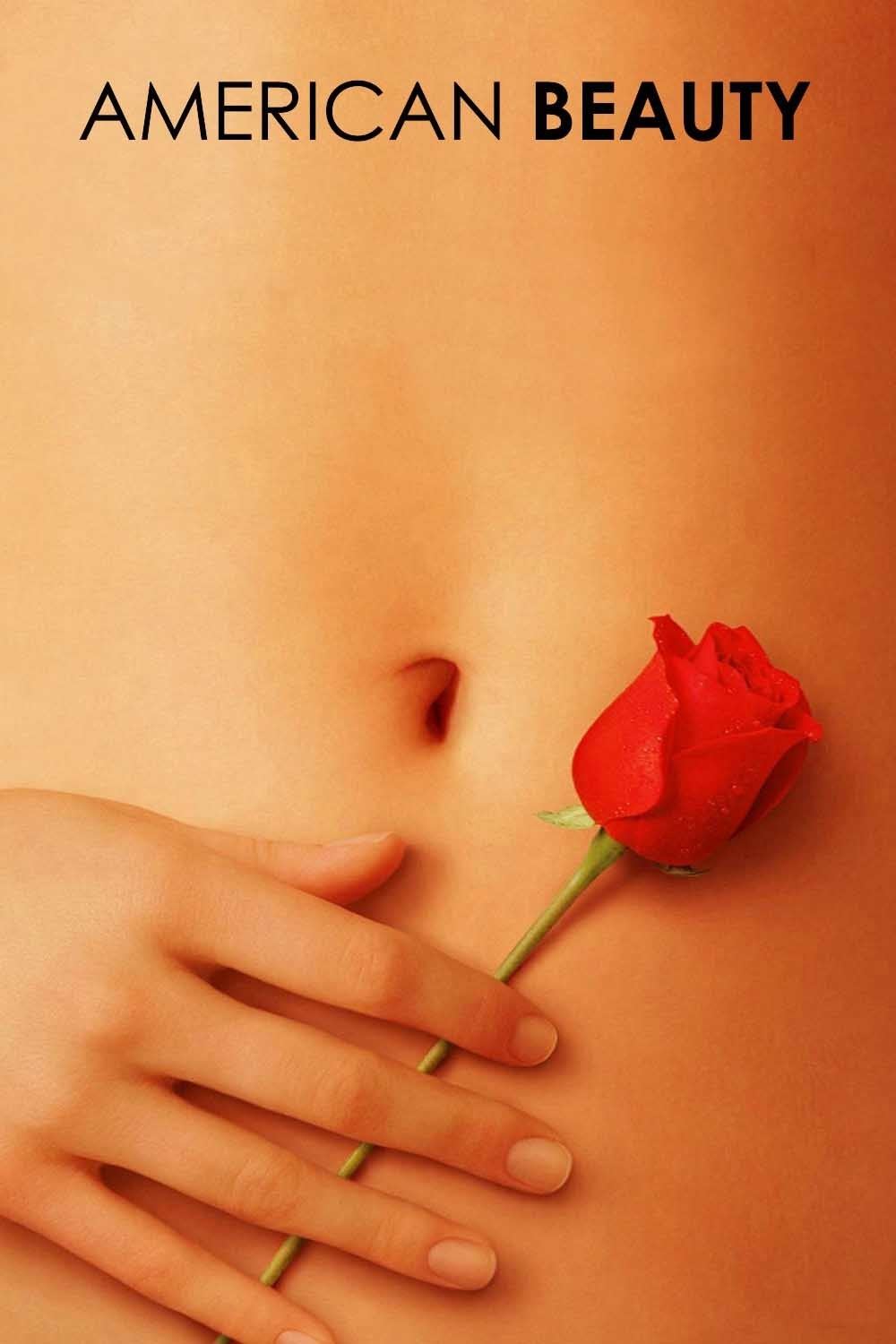
Is This Film Based on a True Story?
The first time I encountered “American Beauty,” I remember pausing almost immediately to wonder: does this all come from someone’s lived experience? From the very first frame, I sensed a story so rooted in the nuances of suburban malaise that it felt almost autobiographical. But after delving into the film’s origins, I discovered that “American Beauty” is, in fact, completely fictional. There is no singular real-life family or event that serves as the explicit basis for the Burnhams’ unraveling suburban existence. All of the main characters, their histories, and their emotional trajectories are products of Alan Ball’s imagination, filtered through his own observations of American culture. The story is not adapted from a memoir, news report, or specific true crime—everything springs from the creativity and personal experience of its writer, rather than direct historical or biographical sources. That realization reoriented my approach to rewatching the film, freeing me to look for the ways it reflects bigger truths about American life, rather than trying to identify hidden biographies behind the drama.
The Real Events or Historical Inspirations
When I sought out real-life touchpoints for what unfolds in “American Beauty,” what stood out is that Alan Ball didn’t cite a single newspaper article or headline as his foundation. Instead, he drew from a tapestry of cultural and societal currents he perceived in late-1990s America. I learned that Ball was inspired by the contradictions and tensions he saw in the suburbs: carefully tended lawns hiding deeper dissatisfaction, families united by appearance but frayed by quiet conflicts. Ball himself has reflected on how certain media stories about violence in suburban settings—particularly the story of Amy Fisher, the so-called “Long Island Lolita,” as well as tabloid coverage of hidden secrets in “good” neighborhoods—sparked his imagination about what people keep hidden behind closed doors. Yet, these influences are not literal blueprints for the film’s characters or events; rather, they are atmospheric—the kind of background noise that might cause a writer to ask “What’s really going on in quiet places?”
What I find most telling is how Ball’s inspiration came from generic cultural anxieties and broader, archetypal social patterns. In interviews, he’s described the genesis of the screenplay as coming from both personal dissatisfaction and the stories he absorbed about people breaking out of social scripts. There are certainly echoes of real-life stories—an unexpected act of violence in an ordinary place, or a family’s hidden dysfunction—but there’s no record of a case like Lester Burnham’s, no news clipping that you could point to as the source. Instead, Ball synthesized countless familiar feelings into a singular script, using imagination as much as observation. For me, the real “source material” then is an unspoken anxiety about American prosperity: what happens when having it all doesn’t feel like enough?
What Was Changed or Dramatized
I find it fascinating how “American Beauty” takes the endemic ennui of the suburbs, something typically invisible or left unspoken, and blows it up into dramatic, sometimes surreal narrative beats. Because the story isn’t beholden to anyone’s lived reality, Ball and the filmmakers had the latitude to heighten every emotion, exaggerate every crisis, and imbue even the most mundane moments with operatic tension. For example, Lester’s wild transformation—quitting his job, blackmailing his boss, buying a sports car, and pursuing his teenage daughter’s friend—has the feel of a hyperbolic fantasy rather than the natural next step in the life of a middle-aged office worker. I can’t recall any direct analogs in suburban news stories where a person’s midlife crisis takes such a flamboyant and cinematic form, though the emotions themselves are universally relatable.
What’s especially striking to me is the film’s use of visual metaphor and dream logic to represent internal states. The recurring motif of red rose petals, Angela’s dreamlike appearances, and Lester’s ecstatic awakening—all of these are dramatizations meant to draw out the characters’ inner desires and conflicts. None of this emerges from real-world documentation, but instead from the creative challenge of finding an aesthetic language for malaise and longing. Even the film’s climactic violence—the shocking death at the end—is structured for narrative irony rather than ripped from a case file or a documented tragedy. In choosing to dramatize, Ball and the filmmakers distilled countless small truths about dissatisfaction and repression into big, memorable moments that stick with me long after the film ends.
I also found that the film’s depiction of secondary characters, like Colonel Fitts and his family, ventures into particularly stylized territory. The storyline involving hidden sexuality, repression, and violence brings together various real phenomena, but arranges them in a way that maximizes dramatic tension without binding itself to the specifics of any actual case. This kind of creative license allows for an exploration of themes rather than the constraints of biography or factual retelling. In some ways, I think the drama is ‘truer than true’—less a recreation of an incident and more a cultural diagnosis, using heightened fiction to reveal the underlying currents that might otherwise go unnoticed in a real suburban neighborhood.
Historical Accuracy Overview
Looking at “American Beauty” with an eye for historical accuracy, what jumps out at me is that the film isn’t concerned with replicating any documented series of events, but rather with conveying emotional and social authenticity. The settings—the tidy homes, the office spaces, the high school—ring true to life; they’re arranged to look like the late 1990s American suburbs familiar to so many. The iconography of lawn care, after-work commutes, school pageants, and dinner tables grounded me in a specific moment of American cultural history. As I watched the characters go through their routines, I often recognized the surface truth of the world: these could be my neighbors, or the parents of my childhood friends.
However, the journey each character undergoes is constructed with deliberate dramatic intensity, rather than journalistic fidelity to real people’s experiences. Lester’s rapid descent into self-indulgence, Carolyn’s obsession with appearances and self-improvement, and Angela’s performative confidence are all credible from a psychological standpoint, but their arcs are orchestrated to have maximum thematic resonance. In actual suburban communities, transformations and crises tend to unfold more gradually, with smaller eruptions rather than the melodramatic events seen in the film. “American Beauty” distills a decade’s worth of slow-boiling tension into a matter of weeks. Even the climactic act of violence, while credible in broad strokes, is rare in the day-to-day world it seeks to evoke.
One area where I notice a strong adherence to emotional reality, if not historical accuracy, is in the film’s depiction of disconnection—the sense that people who live side by side don’t really know what’s going on in each other’s homes. That rings true to my own experience and to the stories I’ve read about suburban alienation. Yet, because there is no specific incident underlying the film, there is nothing to technically “fact-check” about its events. “American Beauty” operates as a mirror for cultural truths rather than as a forensic case study.
When I parse out questions of historical accuracy, I also think about the film’s depiction of the era’s social anxieties: the pressure to succeed, the stigma around homosexuality in conservative communities, the allure and risks of adolescent rebellion, and the desire to break free from conformity. All of these threads date the film clearly to the end of the 20th century, and I recognize them from countless essays and sociological studies about American life at that time. So, while the film is not “accurate” in the sense of adapting a specific series of events, I consider it a time capsule for a certain middle-class discontent—a snapshot of anxieties as they were expressed in culture, if not in one person’s lived drama.
How Knowing the Facts Affects the Viewing Experience
Before I knew the film’s origins, I approached “American Beauty” almost as I would a slice of nonfiction—a piece of creative work that might have, at its heart, a concealed reference to some tragic or notorious real-life occurrence. There’s a peculiar kind of tension that comes with watching a film and wondering, “Could this have happened?” or “Is this someone’s confession or cautionary tale?” Discovering that the story is original—not borrowed from specific true events—changed the texture of my engagement with the film. Instead of searching for analogs in the news or the historical record, I focused on the universality of the struggles it depicts: the desire for reinvention, the risk of chasing fantasy, the cost of hidden pain.
What I find liberating is how this knowledge lets me appreciate the artistry of fiction while connecting it to real social anxieties. Recognizing that Lester Burnham, Carolyn, Angela, and Ricky weren’t based on identifiable people, but instead on generalized observations, encourages me to interpret them as representations or composites rather than as case studies. Instead of demanding fidelity to the facts, I can look for the smaller moments of honesty: the way Lester’s smile wavers at the office, or the exhaustion that creeps into Carolyn’s determined optimism. These moments, which could be missed if I were preoccupied with their factual basis, instead stand out as sharp insights into the specifics of American dissatisfaction.
On repeat viewing, I sometimes look for what the film says about the era in which it was made—the late 1990s, with its booming economy, cultural anxiety, and the feeling that something important was being left behind in the pursuit of upward mobility. Knowing the film’s fictional status allows me to tune into the themes rather than the headlines. I now watch the Burnhams not searching for the “real Lester,” but for what his restless search for meaning tells me about the world I know. The symbolic imagery—plastic bags drifting, roses blooming—becomes part of the film’s language, aiming for a truth that is emotional and collective rather than literal. I find myself tracing my own suburban memories against the film’s backdrop, testing which moments resonate as authentic, even when they are entirely invented.
This blend of fiction and recognizable feeling is what keeps the film relevant. Audiences and critics have debated endlessly whether the situations in “American Beauty” could or would actually happen. Now that I understand its invented nature, I see the film more as a parable than a diary. It doesn’t ask me to believe in every plot twist—it asks me to examine what lies beneath the surface in familiar landscapes. Whether I view the ending as plausible or as heightened drama, knowing the script is a work of fiction transforms it from a factual recounting to a provocation, a means of seeing something true through the artful organization of invented lives.
After learning about the film’s origins, you may want to see how audiences and critics responded.
🎬 Check out today's best-selling movies on Amazon!
View Deals on Amazon