
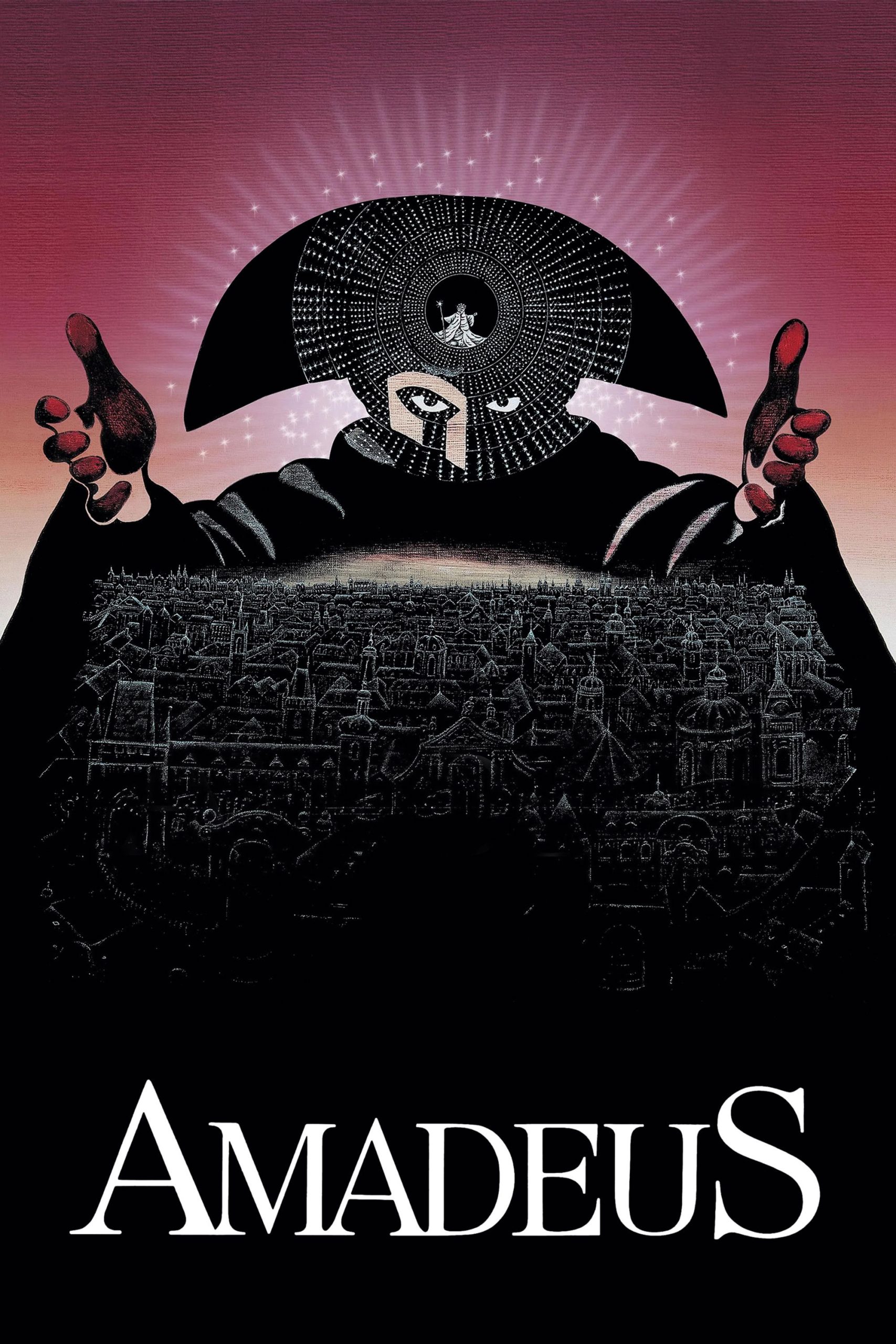
The Question of Truth Behind the Film
Whenever I watch a film that proclaims itself as a portrayal of history, I notice a familiar question echoing in my mind and among fellow viewers: “Did it really happen this way?” Amadeus, with its vivid characterizations and dramatic tension, triggers this curiosity in me perhaps more than many other biographical films. I think this urge to search beneath the surface narrative comes from a deep human tendency to connect what we see on screen to the real world. When I hear that a film is “based on a true story,” I instinctively approach it expecting some measure of authenticity, craving a direct line from history to drama. There’s a sense of privilege, even, in witnessing lives and moments from our shared past brought alive with such detail and emotion.
However, I find that carrying this expectation can bring a set of assumptions: that each character, every major event, is anchored in a truth as rigid as a historical document. This isn’t just about accuracy; it’s about the comfort of believing I am receiving insight into people who actually walked the earth, shaping the soundtracks, jealousies, and revolutions that ripple into my own culture. Yet with Amadeus, it becomes clear that the border separating fact from fabrication is not so simple. This boundary, I’ve realized, doesn’t only impact how I relate to the era or individuals depicted. It colors my whole engagement with the film, urging me to constantly balance awe at its artistry with curiosity—and at times, skepticism—about its origins.
For me, the act of knowing—or at least wanting to know—what really happened is as complex as Mozart’s own music: layered with nuance, sometimes presenting a bold melody of truth, sometimes playing with variations that invite interpretation. Amadeus, I find, becomes both more intimate and more enigmatic as I move through these questions, and my experience watching it consequently transforms from passive consumption to an active interrogation of storytelling itself.
Historical Facts and Cinematic Interpretation
I’m always drawn to the moment when a film takes hold of reality and reshapes it for the screen, and Amadeus offers a fascinating case study. As I unfold my impressions of its handling of history, I can’t help but consider how flesh-and-blood lives become narrative threads—edited, condensed, sometimes reimagined altogether. The real Wolfgang Amadeus Mozart existed, as did Antonio Salieri, and their careers did intersect in 18th-century Vienna. But when I measure what I know of their historical biographies against what the film presents, I see a clear bending of facts in service to something larger than mere record-keeping.
For example, I’ve learned that there is little compelling historical evidence that Salieri orchestrated Mozart’s downfall, and yet the film dramatizes this rivalry with almost Shakespearean grandeur. Scenes—Salieri’s confession to murder, his plotting and jealousy, Mozart’s descent into illness while composing the Requiem under mysterious circumstances—are, to my understanding, far more theatrical than historical. The timelines are compressed, relationships intensified, and emotional stakes clarified for me, the viewer. It’s a choice I see not as carelessness but as calculated reinvention: the film takes hints, rumors, and the barest outlines from letters and anecdotes and uses them to create powerful dramatic arcs.
Thinking more broadly, I notice how the film smooths over numerous historical complexities. The details of court politics, the nuance of social interactions, even the long, arduous processes of musical composition, are all streamlined. I get to see moments of creative ecstasy and despair, but I’m also aware that this is an edited version—a selection of peaks and valleys, not the landscape itself. The result, at least for me, is a portrait of genius and envy painted in bold strokes, designed for emotional resonance rather than chronological fidelity. It makes me wonder, as someone invested both in history and cinematic language, where the line should be drawn between creative liberty and documentary duty.
What Changes When Reality Is Shaped for Cinema
As I watch Amadeus, I’m not only swept into the energy of its dialogue and music, but I’m also made acutely aware of the choices that have gone into its construction. I recognize that translating real lives into cinematic moments always requires trade-offs, and these trade-offs are, in my experience, both inevitable and illuminating. The first shift I notice is the compression of time. Years of careers, relationships, and gradual shifts are distilled into easily digestible scenes. This creates an urgency, a sense that events are rapidly escalating, when in truth the underlying historical processes were far slower and less linear.
I also sense how emotional arcs are simplified. In the film, Salieri’s jealousy appears almost singular, dominating his existence. In actual correspondence and records, I know the relationship was marked by complexity, with mutual respect and professional interaction woven together with rivalry. Yet for a film narrative, layered ambiguity must often give way to clear, simple emotional stakes. I find this kind of adaptation brings clarity to the story at the cost of the polyphonic realities that real people typically inhabit. The trade here, as I see it, is between narrative focus and the messier, often contradictory truths of real lives.
Another aspect I find particularly notable is the characterization of Mozart himself. In Amadeus, he emerges as both a vulgar prodigy and a suffering artist. Historically, accounts confirm his brilliance and eccentric personality, but his faults are scaled up for the drama—he is rendered larger than life, amusing and tragic in equal measure. I sense that the film uses these exaggerations strategically, giving me memorable images and memorable lines, but at the expense of subtlety. The audience, myself included, encounters a personality I understand quickly, but I’m left to wonder about all the facets that remain unexplored.
I find it impossible not to acknowledge how the storytelling lens can filter not only character and emotion but the entire atmosphere of an era. The Vienna of Amadeus is lush, vibrant, and teeming with intrigue. While these touches draw me deeper into the film’s world, I’m aware that they are as much a product of visual imagination as of documented reality. I suppose for someone invested in the intricacies of historical setting, this can be both a gift and a challenge: I am immersed and yet always aware of the scaffolding that holds the illusions in place.
Audience Expectations and the “True Story” Label
Whenever I encounter a film marketed with the “based on a true story” claim, I notice my own attitudes as a viewer shift. There’s an implicit promise I find myself anticipating: that what unfolds on screen will offer some meaningful connection to the past, a glimpse into the lives of real figures whose actions supposedly shaped the world. In Amadeus, this expectation complicates my engagement. Knowing that the core dramatic conflict—the deadly rivalry between Mozart and Salieri—lacks substantial historical corroboration changes the footing on which I stand as a viewer. Instead of feeling like a witness to a hidden truth, I interpret the unfolding events as more allegorical than testimonial.
But I also see that these labels—fact, fiction, inspired by real events—shape collective discussion. When I talk about Amadeus with others who expect strict adherence to history, I often detect frustration or even disappointment when fact-checking comes into play. Someone might say, “Salieri was never convicted of any wrongdoing,” and suddenly, the film’s emotional charges are thrown into question. Alternatively, those who arrive at the film seeking only a compelling narrative may be more forgiving, even relishing the liberties taken as necessary to achieving cathartic effect. I am always fascinated by this divide: some want the foundation of fact beneath the fiction, others are content with metaphorical truth.
For me, the relationship between audience and film is dynamic. When I know a film is fictionalized, my focus shifts from scrutinizing accuracy to examining what the adaptation emphasizes or omits. “Inspired by real events” frees me to appreciate creative choices, but “a true story” anchors me more firmly to a search for connection with the actual past. Amadeus, walking the tightrope between these polarities, has always made me contemplate what I really want from historical cinema: is it verifiable information, emotional resonance, or some mixture of both?
This heightened awareness, I realize, can complicate immersion. The moment I start parsing truth from invention, my viewing becomes almost participatory—I am not just absorbing the story but interrogating its sources, evaluating its omissions, and connecting dots that the filmmakers leave ambiguous. This process can be as enriching as it is destabilizing, changing every beat of the narrative from statement to suggestion, from assertion to hypothesis. My role as an audience member becomes layered—not just recipient, but analyst and critic in real time.
Final Perspective on Fact vs Fiction
Reflecting on how I approach Amadeus—knowing much of its story is artfully constructed rather than painstakingly documented—I’m struck by how this awareness colors every frame for me. The film ceases to function merely as a historical account and becomes a medium through which I can encounter themes that still resonate: envy, genius, patronage, and the limitations of recognition. Understanding the divisions between fact and invention doesn’t diminish my experience; if anything, it makes me more attuned to the artifice and intention shaping what unfolds on screen.
I find the process of distinguishing between what is real and what is fabricated turns viewing into an exercise in interpretation rather than simple absorption. When the events and characters are revealed to be composite sketches or symbolic exaggerations, I read them for their narrative choices rather than their literal truth. The direct impact is that each moment invites two readings: one as pseudo-history, another as metaphorical fiction. This doubling—this constant toggling—can be disorienting, but for me, it makes the film a richer, more interactive text.
What stands out most in my mind is that a factual understanding doesn’t dictate whether I find the story meaningful, but it does alter the ground on which I build that meaning. The revelations about historical liberties in Amadeus are not, for me, either disappointments or triumphs. Instead, they offer reminders that storytelling—especially on screen—operates within its own set of constraints and liberties. My appreciation becomes less about measuring the film against the yardstick of the past and more about exploring why certain liberties were taken and how they serve the film’s larger dramatic architecture.
I find I watch Amadeus now with a different sensitivity: attentive both to what the film invents and what it preserves. The interplay between fact and fiction, rather than weakening my experience, gives it a unique texture—a set of questions always lurking beneath the surface, inviting me to ask not simply, “Is this true?” but, “Why does the story want me to believe it is?” I leave the film not with a clear verdict on its historical worthiness, but with a heightened sense of what adaptation can accomplish, and how my own understanding, as an audience member, shifts according to what I know, expect, and discover in the interplay between reality and invention.
For additional context, you may also explore the film’s overview and how it was received by audiences and critics.
🎬 Check out today's best-selling movies on Amazon!
View Deals on Amazon