
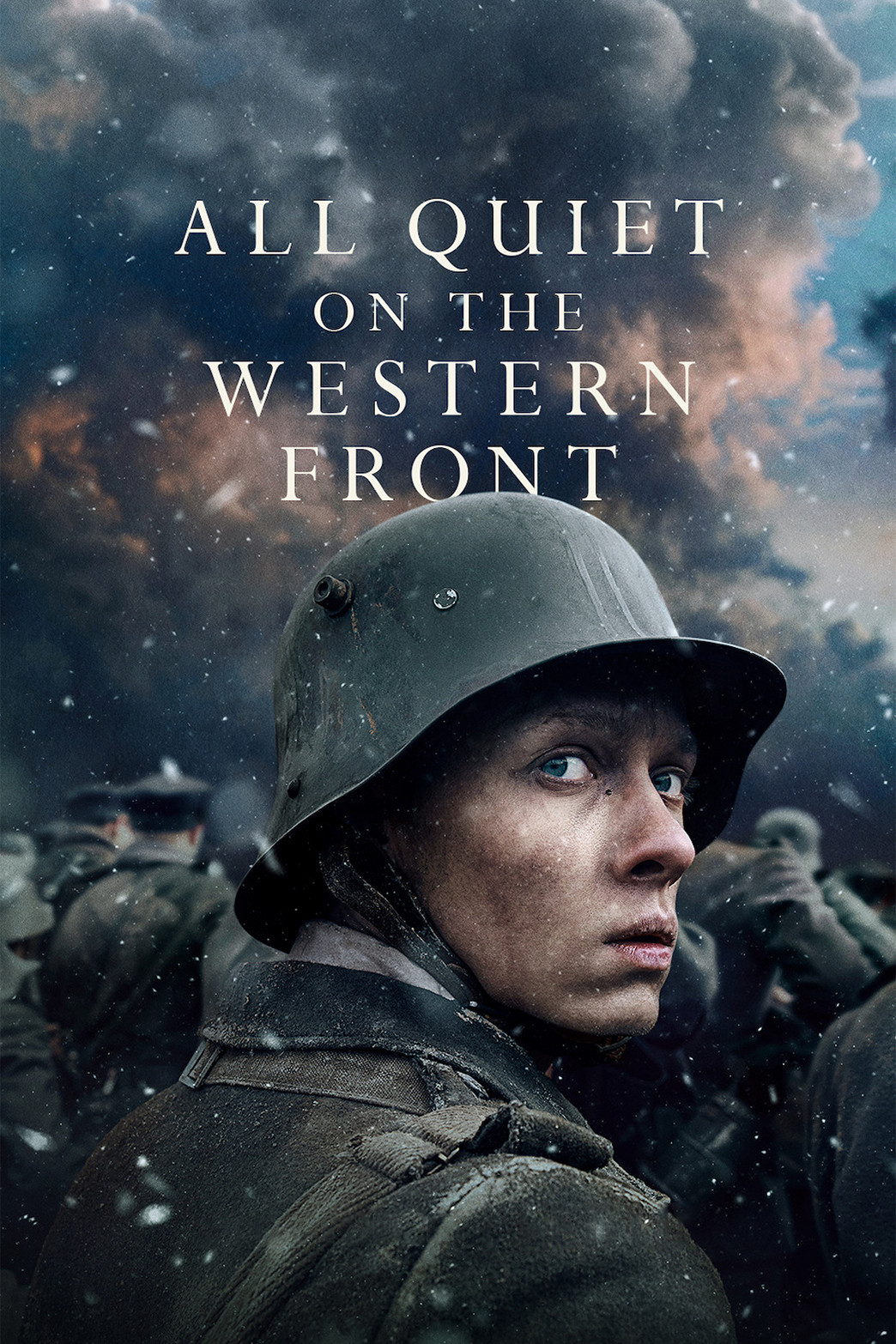
Is This Film Based on a True Story?
Every time I revisit “All Quiet on the Western Front” from 1979, I’m struck by how real the pain, terror, and human cost of war seem. Yet, no matter how convincing the narrative feels, I remind myself that this film is not a literal retelling of actual events or specific individual lives. From my research and the film’s own acknowledgments, I understand that this adaptation isn’t a direct account of true stories, but rather an artistic rendering based on a deeply influential novel. The movie’s source, Erich Maria Remarque’s “All Quiet on the Western Front,” shaped my perception of it as being “inspired by real events,” but not directly based on a true story. Remarque himself was a German World War I veteran, and while his novel drew closely from the trauma and reality of the Western Front, the storylines and characters in this film are slightly fictionalized composites meant to reflect the broader truth of soldiers’ wartime experiences, rather than the strict retelling of documented history.
The Real Events or Historical Inspirations
I often find myself compelled by the spaces where fiction and history overlap. In the case of the 1979 “All Quiet on the Western Front,” that overlap is particularly pronounced. The authenticity I sense in the film comes from its roots in Remarque’s 1929 novel, which itself grew from the author’s personal experiences as a German infantryman in World War I. While the film’s characters—Paul Bäumer and his comrades—are fictional creations, they are unmistakable products of real history.
For me, the most remarkable thing about this film is how it immerses me in the actual conditions of trench warfare. Its depictions echo historical documents, diaries, and photographs from the Western Front. No matter how fictional Paul’s voice may be, the broader context—the mud, the gas attacks, the thunder of endless artillery—mirrors hours of archival study and soldiers’ memoirs. I recognize that the film doesn’t follow specific documented battles or officers. Instead, it acts as a synthesis of collective memory, binding together thousands of individual testimonies into a single, powerful narrative strand.
When I dig deeper, I find that the broader timeline and major military campaigns depicted match historical realities. The spring offensives, the periods of stalemate, and the crushing losses reflect what actually happened between 1914 and 1918 on the Western Front. Even technical details, such as uniforms, weapons, and military protocol, are evident in the 1979 adaptation’s painstaking attention. This is no accident: Remarque’s own wounding and service at the front inspired scenes that pulse with lived reality, from chaotic hospital wards to the volatile rest time behind the lines. The film’s screenplay, by Paul Monash, leans heavily on these historical templates rather than venturing far from the novel’s factual undertones.
In sum, I don’t see the film as a direct history lesson about one regiment or one actual German soldier. Instead, I view it as a dramatic reflection, inspired by real-life trauma drawn from one of the bloodiest chapters of human conflict, about the sort of people who really lived and died in that environment. In the realm of fact versus fiction, “All Quiet on the Western Front” (1979) plants itself firmly within the territory of realistic inspiration, not documented biography.
What Was Changed or Dramatized
As I observe the translation from novel to film, I see where dramatization is both inevitable and intentional. Screenwriters and directors must, by the necessities of cinema, select and sometimes amplify emotional moments to convey what a book might take chapters to develop. Here, the film creates particular emotional and narrative arcs where the source material—though vivid—remains broader and more episodic.
One of the first things I notice is the condensation of time. The relentless cycle of front-line service, leave, and return to battle, so central to World War I, gets streamlined for pacing. The inner monologues and subtle brooding that fill the novel are converted into visual sequences or spoken exchanges. For instance, Paul’s gradual disillusionment with authority is telescoped into a handful of confrontational scenes with teachers and officers, designed to hit the audience with the harshness of that loss of innocence without lingering for weeks or months as the real experience might demand.
Some characters in the story, while evocative, are composites rather than representations of any single individual. I find this particularly true with Paul’s comrades. Their personalities and fates serve as symbols of various trench experiences: the naïve recruit, the experienced sergeant, the wounded friend. These are archetypes, crafted and sometimes exaggerated or simplified to show the wide swath of humanity lost to the war, rather than actual, individually-documented soldiers.
Another layer of dramatization is seen in the visual choices. Real trench warfare, as I’ve read in historical records, could be mundane, marked by boredom and cold as often as terror and violence. Yet the film, to retain cinematic tension, focuses on the most extreme moments—the gas attack, the charge over the top, the face-to-face killing in a shell hole. Such events did happen, but their clustering intensifies the drama, and I can sense where the ratio of horror to daily monotony is skewed for effect. Small details, such as the sequence in which Paul returns to his classroom to confront his old teacher, were structured to deliver a concise anti-war message; the reality would have been more diffuse, threaded by complex social and psychological layers. Here, the film’s creative team sharpened history’s diffuse sorrows into pointed moments of catharsis.
Absent from the movie are the longer passages of camaraderie, the quieter moments of banality that fill so much of a combatant’s actual diary. We get the highlights, often purposely bleak, unified under the anti-war banner that threads through the adaptation. As a researcher, I see this as both an act of storytelling necessity and a way of underlining its thematic focus, rather than strict documentary accuracy. Ultimately, the film uses dramatic compression and selective omission to convey a broad emotional truth—at the expense, at times, of meticulous adherence to the everyday details of factual front-line life.
Historical Accuracy Overview
Whenever I analyze the fidelity of this adaptation, I see a film that’s bracingly faithful to the general reality of World War I, but not a minute-by-minute recitation of fact. I notice that, visually, the uniforms, weapons, and settings capture the era with surprising rigor. The German soldiers’ kit, the design of the trenches, and the depictions of wound care largely match archival photographs and firsthand testimonies I’ve pored over. Even the attitudes—fear, denial, cynicism—expressed by the young recruits ring true to the voices I’ve read in journals from the trenches.
But I also see areas where the film departs from history. Although the overall trajectory of Paul and his classmates is plausible—naïve boys, urged by elders, marching off to unspeakable violence—the specific events, orders, and quotations aren’t taken from actual records. The day-by-day details are inventions, echoing the spirit rather than the specifics of 1914-18. Scenes like Paul’s home leave, where civilian incomprehension is laid bare, reflect reality in broad strokes, but the particulars are arranged for narrative impact.
Another area where I find divergence is in the film’s presentation of certain types of combat. Trench warfare was often a long slog, with a rare, terrifying push “over the top” followed by weeks of waiting and suffering. The movie, for its own reasons, compresses these rhythms, letting viewers move rapidly from stasis to chaos. I also note that, while the psychological toll of war is well depicted—the shell shock, alienation, and detachment—it still utilizes a dramatic framework: we watch Paul symbolize the “lost generation,” rather than see a comprehensive survey of survivors’ diverse fates.
At the same time, I find the film’s anti-war message very much in keeping with the time in which it was set. Accounts by real German, French, and British veterans alike speak of idealism turned into cynicism, friends lost, and the failure of distant leaders to grasp the soldiers’ suffering. While Paul’s fate and the characters’ dialogue are literary inventions, their overall arc mirrors the historic wave of disillusionment documented in postwar Europe. In some sense, I believe the adaptation is “emotionally accurate” even when its facts are shaped for the screen.
So, if asked to weigh up this film’s accuracy, I’d answer that its strength lies in representing the overall psychological and physical reality of the First World War, rather than in the literal accuracy of dates, names, or documented events. Its faithfulness to historical feeling outweighs its occasional liberties with detail, marking it, to my mind, as one of cinema’s most convincing World War I reconstructions, even within its fictional framework.
How Knowing the Facts Affects the Viewing Experience
The more I understand the factual scaffolding behind “All Quiet on the Western Front,” the richer and, ironically, the more painful my viewing seems to become. Every time I watch it with that knowledge, I’m aware that real young men, with real dreams and fears, suffered and died in ways much like those depicted onscreen—even if Paul Bäumer himself never actually lived. The line between fiction and history starts to blur if, like me, you recognize that Remarque’s characters amalgamate thousands of authentic voices from the trenches.
Appreciating the distinction between literal truth and artistic inspiration changes the way I interpret key scenes. When I see Paul trying to explain the front to civilians, or lamenting his inability to feel at home, I realize these are representative emotions described again and again in period letters. This knowledge grounds my experience, making even the most dramatized moments resonate with the echo of reality. But at the same time, I’m not misled into believing that every onscreen event “really happened” in a documented sense.
When friends ask me how much of the film is “true,” I tell them that awareness of the film’s roots—its reliance on Remarque’s partly autobiographical novel, itself a distillation of countless genuine experiences—should inspire both empathy and caution. I appreciate the way the film teaches the emotional landscape of war rather than literal military history. It allows me to absorb the trauma, camaraderie, and loss that defined a whole generation, even as I distinguish between the film’s fictional narrative and the actual, fragmented stories of war veterans.
If you’re a viewer who values authenticity, as I do, understanding where the film merges history with invention can deepen your engagement instead of diminishing it. Rather than seeing the adaptation’s departures from literal fact as flaws, I consider them interpretive acts—ways of focusing the viewer on what the lived experience of conflict might have felt like, rather than just what happened on this or that day at the front. Ultimately, knowing the foundation underneath the movie helps me see it as a bridge between the world’s collective memory and a storyteller’s craft, giving weight and immediacy to history without demanding strict documentary truth.
After learning about the film’s origins, you may want to see how audiences and critics responded.
🎬 Check out today's best-selling movies on Amazon!
View Deals on Amazon