
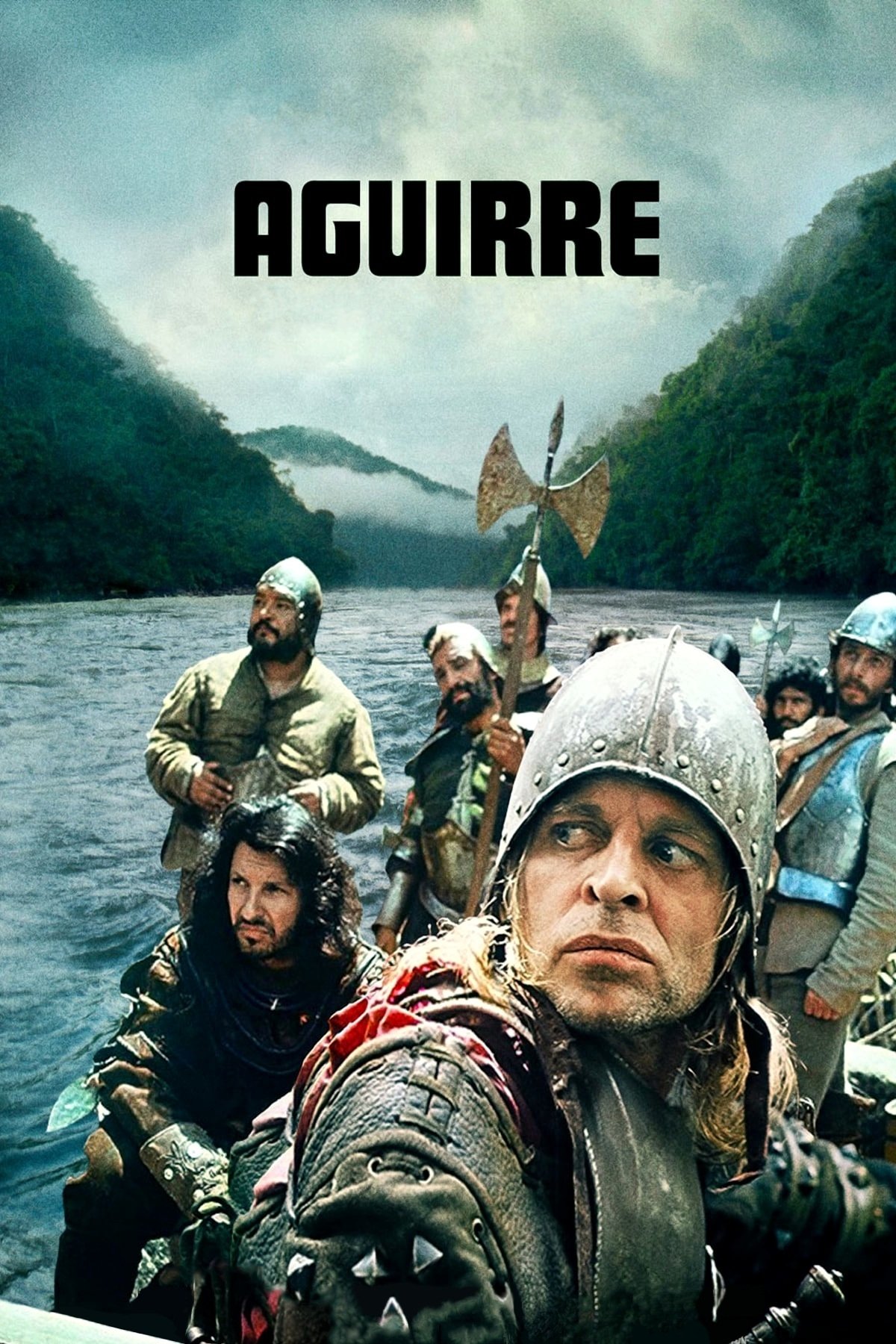
The Question of Truth Behind the Film
Cinema regularly grapples with the tension between historical authenticity and imaginative storytelling, particularly in films that reference the past. When viewers approach a film like Aguirre, the Wrath of God, released in 1972, they often find themselves compelled to ask: “Did this really happen?” This impulse emerges not only from curiosity about the events themselves but also from an expectation that cinema—especially films set in past cultures, events, or epochs—can serve as an accessible portal to history. The label “based on a true story” brings a set of assumptions regarding accuracy, reliability, and the educational value of the film. Audiences may expect that what unfolds onscreen closely echoes actual events or the lives of real individuals, sometimes granting the film an authority almost akin to documentary. In contrast, when a film makes no such claim, or explicitly distances itself from factual basis, viewers might focus more on its artistry, symbolism, or broader thematic concerns. In all instances, awareness of what is real and what is artistic invention alters the fundamental relationship between the audience and the narrative.
Historical Facts and Cinematic Interpretation
Aguirre, the Wrath of God is nominally inspired by the ill-fated 16th-century Spanish expedition led by conquistador Lope de Aguirre in search of the legendary city of El Dorado. Some of the film’s foundational plot points, such as the aspiration to find unimaginable wealth in the South American interior and the journey’s catastrophic dissolution, trace their origin to documented chronicles. However, the historical record itself is fragmentary, shaped by survivors’ reports and colonial documentation, much of which surfaced years after the events. Cinematic adaptation, therefore, does not begin with a clean record, but with an already partial and interpreted history. In Werner Herzog’s film, fact and invention mingle: recognizable figures such as Aguirre and Ursúa are present, but their motives, actions, and even outcomes diverge from established accounts. The journey as depicted is compressed in terms of timeframe, location, and character, focusing on a small, isolated band, while the real events unfolded over a larger geographical range, involved more participants, and were marked by shifting alliances and extended hardship. Dialogue, inner motivations, and visual sequences—most notably the haunting images of rafts drifting through misty river landscapes—are not part of the historical record, but products of cinematic reimagining. These choices reflect a purposeful filtration, where the ambiguous, chaotic sources of history are shaped into a narrative structure occupying the space between documentary and dream.
What Changes When Reality Is Shaped for Cinema
The movement from raw historical source material to the screen inevitably involves negotiation. Makers of historical films balance a desire to evoke the complexity of the past against the practical needs of storytelling: duration, coherence, and emotional impact. For Aguirre, the Wrath of God, condensing months of arduous travel into a film of just over ninety minutes necessitated selecting representative incidents and characters. This often results in composite characters or invented scenes that translate broader truths into digestible episodes. Some real-life episodes are omitted, while others are heightened or reinterpreted to suit the cinematic form.
Furthermore, cinema’s visual language does not always correspond to textual records. The atmosphere of madness and isolation central to the film’s identity is created through location choices, camera movement, and sound design—creative tools unavailable to historical chroniclers. Dialogue delivers inner motivations that in reality may be lost to history, and ambiguous outcomes are given clear representation. These adaptations offer clarity or emotional resonance but come at the cost of strict historical fidelity. Yet such choices are not primarily about deception; rather, they speak to constraints of the medium and to the necessity—within a finite running time and the conventions of dramatic arcs—of selecting which aspects of reality to foreground.
Audience Expectations and the “True Story” Label
How information about a film’s origin is communicated deeply affects viewer engagement. A production marketed as a “true story”—or as being based on specific historical events—tends to attract viewers searching for insight into the real past; they may scrutinize details, measure events against prior knowledge, or use the film as a supplement to what they have read or learned elsewhere. Conversely, when a film is labeled “inspired by real events,” expectations shift subtly; the audience may anticipate thematic resonance with history rather than a precise reconstruction. If labeled simply as fictional, the same film might free viewers to focus less on the verification of fact and more on character, style, or philosophical undertones.
In the case of Aguirre, the Wrath of God, the film exists in an ambiguous zone: it neither claims to be a documentary nor fully detaches itself from its historical subject. This uncertainty prompts a distinct experience, where some viewers may seek evidence of historical accuracy, while others recognize or even embrace the story’s poetic qualities. Knowing that Aguirre himself was a historical figure, and that expeditions in search of El Dorado did occur, can drive viewers to read the film as a commentary on human ambition and folly. Alternatively, those aware of the numerous liberties taken might interpret the film as a meditation on mythmaking and the ways in which history is always partly constructed.
Final Perspective on Fact vs Fiction
Ultimately, the awareness of what is factual and what is fictional in Aguirre, the Wrath of God shapes, but does not dictate, the viewer’s understanding. For some, knowledge of the underlying events adds a layer of resonance, connecting Werner Herzog’s vision to real-world colonial endeavors, and perhaps deepening the impact of the story’s themes of obsession, power, and the limits of conquest. For others, recognition of the film’s departures from documented history provides space to appreciate its aesthetic and philosophical explorations—its insight into character and atmosphere, or its capacity to evoke the sublime. The spectrum between accuracy and imagination does not invalidate either approach, but instead offers multiple pathways for meaning. By understanding both the historical provenance and the cinematic transformation of events, viewers are enabled to appreciate not only what is represented, but also how—and to recognize that historical films, at their most complex, are not simple windows onto the past, but invitations into a dialogue between what is known and what is possible to imagine.
For additional context, you may also explore the film’s overview and how it was received by audiences and critics.
🎬 Check out today's best-selling movies on Amazon!
View Deals on Amazon