
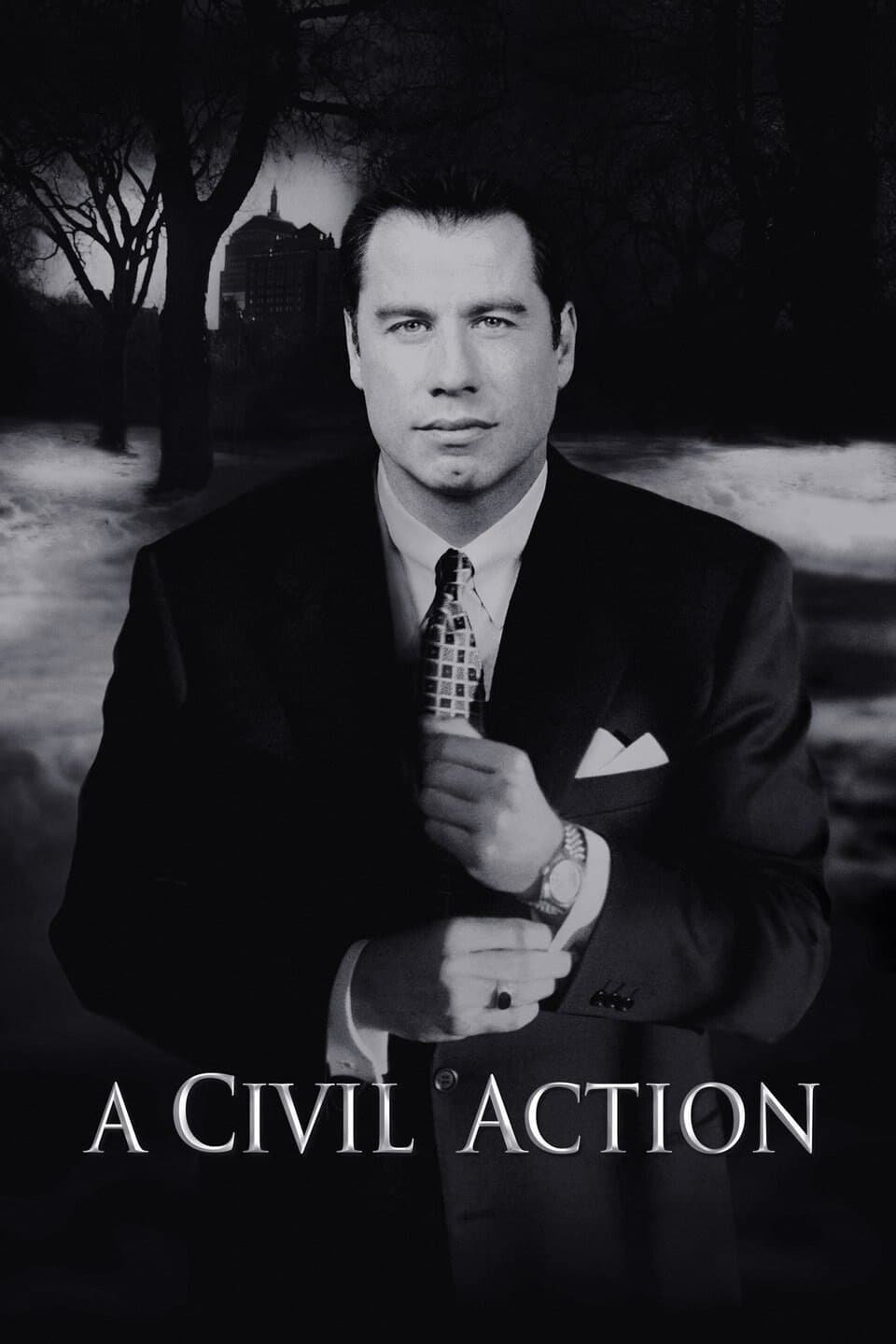
The Question of Truth Behind the Film
The relationship between fact and fiction is a point of persistent curiosity for film audiences, especially when a movie is promoted as having roots in actual events. When viewers encounter a film such as “A Civil Action” from 1998 and learn that it is inspired by real-life occurrences, there is a natural inclination to decipher how closely the screenplay follows documented history. The question “is this a true story?” often signals a deeper search for authenticity, moral resonance, or potential educational value. This inquiry is driven by the assumption that stories drawn from real situations inherently carry more weight, or that they offer insight into broader social, legal, or ethical phenomena. Audiences may arrive with expectations not only of entertainment, but also of factual accuracy—believing the account will closely mirror what truly happened. However, the very act of bringing a non-fiction story to the screen initiates a series of adaptations, compromises, and interpretations, and it is this space between reality and representation that shapes the audience’s engagement with fact-based films.
Historical Facts and Cinematic Interpretation
“A Civil Action” adapts the legal battle chronicled in Jonathan Harr’s nonfiction book, based on the actual lawsuit filed in Woburn, Massachusetts, during the 1980s. The true story centers on families affected by industrial pollution and the subsequent litigation spearheaded by attorney Jan Schlichtmann. In translating these events for cinema, specific facts, names, and sequences undergo transformation. Legal processes that spanned several years are compressed into a digestible timeline suitable for a feature film. The complex, multi-defendant lawsuit is streamlined: some involved companies and attorneys are amalgamated or omitted, while certain scientific details are depicted in broader strokes. The personalities of real figures are presented through composite characters or dramatized portrayals; not all attitudes, mannerisms, or motivations reflect the individuals involved as reported in historical records. Dialogues and confrontations seen on screen are shaped to communicate the legal and emotional stakes rather than serve as verbatim reenactments of documented exchanges. These narrative decisions are informed by the need to maintain audience involvement and to present a coherent throughline amid the intricacies of environmental law and civil litigation. As a consequence, the resulting film becomes a constructed version—rooted in fact, but necessarily altered in structure, rhythm, and detail for cinematic purposes.
What Changes When Reality Is Shaped for Cinema
Adapting a true story for the screen involves a set of practical considerations that guide what is retained, emphasized, or omitted. Length limitations necessitate that years of proceedings, investigative research, and personal evolution be distilled into a span of roughly two hours. Tightly woven narratives often require the condensation of multiple real-life individuals into singular, more readily understandable characters. Legal strategies and court procedures, in reality, are methodical and technical, but cinematic storytelling often simplifies or dramatizes these components to maintain pacing and emotional momentum. For example, “A Civil Action” presents key moments of decision, dialogue, or revelation that, in fact, may have occurred more gradually or with less apparent drama. This reshaping can alter the placement or perception of responsibility, risk, and transformation among the participants, and it may rearrange the sequence of events for narrative build-up rather than strict chronology. While these changes do not necessarily undermine the foundational truth of the story, they replace the full complexity of historical reality with versions that emphasize thematic clarity or emotional impact. Such trade-offs are neither inherently diminishing nor enhancing; they simply reflect the art of adaptation—an interplay between the integrity of the factual record and the conventions of cinematic storytelling.
Audience Expectations and the “True Story” Label
The labeling of a film as a “true story” plays a significant role in shaping how viewers interact with its content. Films that claim to depict real events set a framework of expectation—audiences may anticipate not only entertainment, but also informative or even documentary value. Some approach films like “A Civil Action” seeking insight into landmark legal battles or the realities of environmental justice, using the dramatization as a springboard for broader understanding. When artistic license is apparent or when the narrative diverges from well-publicized facts, viewers may adjust their interpretation, distinguishing between cinematic necessity and literal truth. The degree of perceived authenticity often colors the reading of character motives, triumphs, and setbacks; facts that are known to be true may resonate more strongly, while deviations invite questioning about the broader message or the function of these alterations. If audiences are made aware that what they are watching is inspired by, but not strictly faithful to, actual events, their approach can shift toward appreciating the film as interpretation or commentary rather than as an exact retelling. In contrast, a presentation as pure fiction generally relieves the audience of concern over accuracy, making engagement with the material more about narrative plausibility than factual correspondence. The designation of “true story,” then, has the capacity to both heighten engagement and foster critical scrutiny regarding what is factual and what is creative fabrication.
Final Perspective on Fact vs Fiction
Awareness of the distinctions between fact and fiction within a film like “A Civil Action” guides the viewer’s understanding without necessarily dictating appreciation or critique. When audiences recognize which scenes, characters, or plot developments are historically grounded and which are dramatized or invented, it shapes interpretation of the film’s themes, messages, and real-world implications. This factual awareness can encourage a more nuanced response—rather than accepting all elements as literal truth or dismissing the film’s claims outright, viewers may situate the narrative within a broader context that includes both historical documentation and artistic rendering. In this sense, each mode of storytelling—faithful reenactment and imaginative adaptation—offers its own interpretive possibilities. By clarifying the relationship between actual events and their cinematic depiction, audiences are better positioned to engage critically with the film’s portrayal of legal processes, personal transformation, and societal issues. Ultimately, the knowledge of what is real and what is fictional in “A Civil Action” reframes the film from a simple account of events to an exploration of how stories are told and remembered, highlighting the dynamic conversation between documented history and narrative construction.
🎬 Check out today's best-selling movies on Amazon!
View Deals on Amazon