
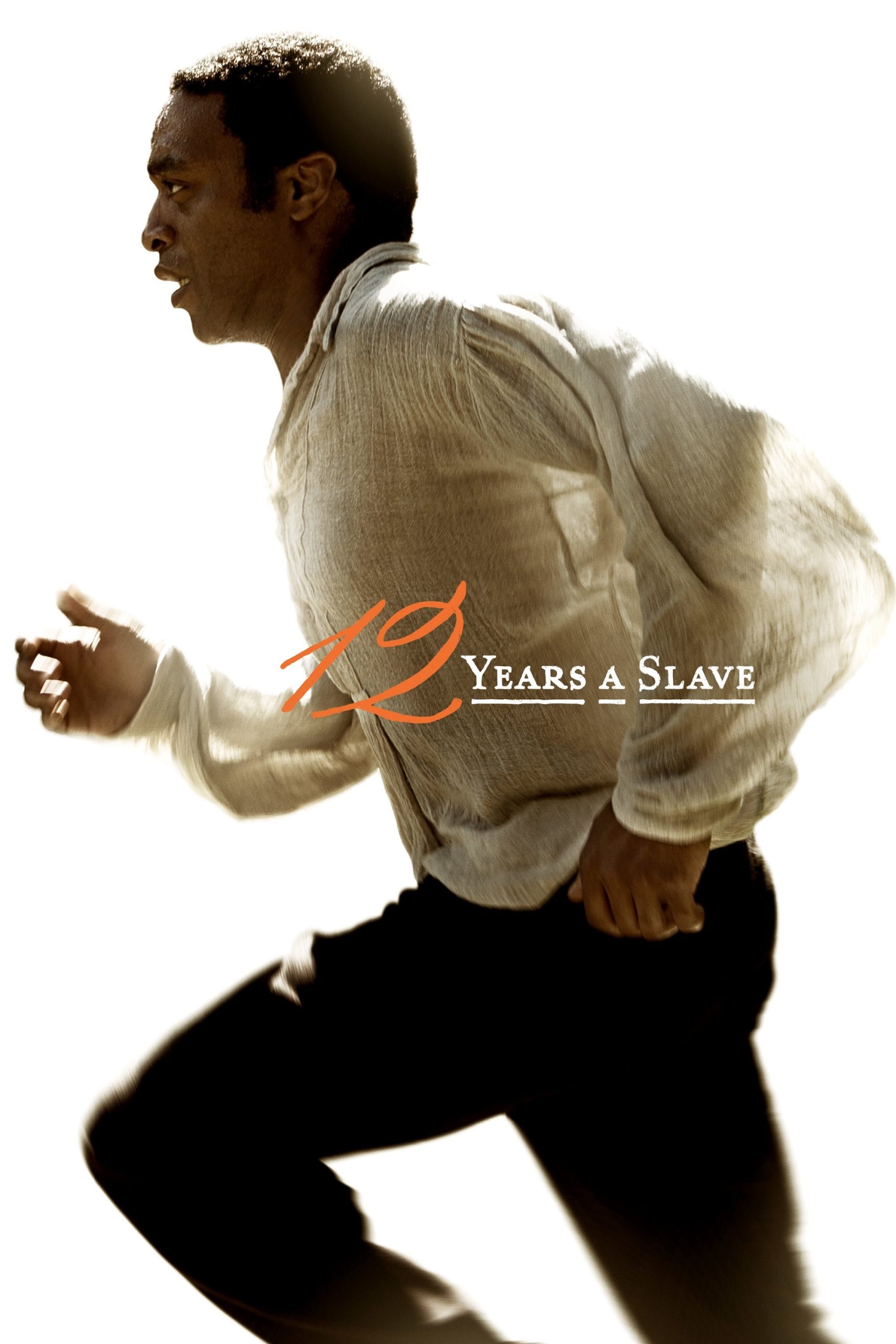
The Question of Truth Behind the Film
When viewers encounter a film like 12 Years a Slave, a common initial curiosity centers on the degree to which the narrative aligns with actual history. The label “based on a true story” often prompts audiences to engage with the movie not solely as entertainment but as a form of cultural memory. This designation implies an expectation that the depicted events, characters, and environments mirror real-life occurrences or, at least, are inspired by genuine historical testimonies. Many viewers trust such a label, sometimes unconsciously, as a guarantee of accuracy. Beyond mere curiosity, this eagerness to uncover what is factually true may also stem from a desire to learn about history through the accessibility of cinema. In the case of 12 Years a Slave, which adapts Solomon Northup’s 1853 memoir, the appeal is partly based on the assumption that the film will offer insight into the lived reality of American slavery through Northup’s perspective. However, this expectation sets up a particular relationship between the film and its audience, one in which the boundaries separating fact from creative adaptation remain both crucial and frequently blurred. The pursuit of historical authenticity, then, operates as both an invitation and a risk—inviting engagement with the past while risking oversimplification or misapprehension if the nuances between truth and fiction are overlooked.
Historical Facts and Cinematic Interpretation
Films rooted in historical accounts frequently rely on adaptation choices that reshape or distill complex narratives to suit the limited structure of cinema. 12 Years a Slave is grounded in Solomon Northup’s published autobiography, a firsthand recounting of his kidnapping as a free Black man in New York and subsequent enslavement in the Louisiana South. Many characters, locations, and broad incidents in the film trace directly to Northup’s testimony. Nevertheless, translating a dense memoir into a feature film involves selective emphasis and reorganization.
Certain sequences in the film—such as Northup’s abduction by conmen, his brutal journey South, and his attempts to retain dignity while enslaved—are rendered with close fidelity to source material, benefiting from the detailed record Northup provides. Other elements, though built upon his words, are adjusted for clarity or impact. Characters like Edwin Epps, Patsey, and Eliza existed in some form but may be constructed on screen with attributes drawn from multiple real individuals or enhanced through fictionalized dialogue and compressed timelines. Conversations and specific scenes—such as the infamous long take of Northup hanging perilously from a noose—are crafted to evoke emotional immediacy even when they do not precisely match the memoir’s plain descriptions.
Further, not all testimony in the memoir is visually dramatized; some episodes are combined, while others are omitted to maintain narrative focus. The broader context of slavery, including legal and economic details, is often streamlined to prioritize Northup’s personal trajectory. The resulting film weaves a tapestry that is underpinned by key facts but employs dramatization, visual motifs, and symbolic moments characteristic of cinematic adaptation.
What Changes When Reality Is Shaped for Cinema
Adapting genuine history for the screen requires balancing the accuracy of events with the principles of visual storytelling. Practical decisions, such as amalgamating supporting characters or compressing the time frame, serve the goal of coherence within a two-hour runtime. For instance, the book describes Northup’s years of captivity in episodic, detailed observation, but the film synthesizes select incidents to accelerate narrative momentum and thematic resonance. This occasionally means that subtle social interactions described in prose or brief passing references in the memoir become prolonged focal points or emotionally climactic scenes within the movie.
Another compromise arises in visualizing pain and injustice. In the memoir, Northup often uses formal, mid-19th-century language to recount horrific events, while the film employs imagery, sound, and performance to invoke visceral responses. Dialogue is frequently rewritten or invented to communicate internal states or complex historical realities more succinctly to modern viewers. Such dramatization may convey an emotional “truth” of the experience, even if certain exchanges or specific details do not originate directly from documented records.
Setting is another area where adaptation choices play a role. While the film’s artisans strive for historical verisimilitude in costume and landscape, certain visual details may be generalized for mood, symbolic impact, or logistical necessity in the filming process. The creation of composite scenes or parallel storylines—such as juxtaposing Northup’s labor with Patsey’s suffering—serves to heighten the sense of shared and systematic oppression, yet these juxtapositions are cinematic inventions rather than literal chronologies derived from the memoir.
Therefore, what changes most in the cinematic format is the rhythm of events, the specificity of character arcs, and the emotional sequencing that guides the viewer through a deliberately shaped lens, rather than an exhaustive recitation of every documented fact. This is not a failure of scholarship but a function of storytelling form, acknowledging the limitations and unique strengths of film as a medium.
Audience Expectations and the “True Story” Label
How viewers receive a film varies dramatically depending on its presentation as a factual recounting or creative fiction. When a drama like 12 Years a Slave announces—whether in its marketing or opening titles—that it springs from a real autobiography, audiences may approach it with a different skepticism or openness than they would with a purely imaginative narrative. For many, this claim to authenticity invites an educational stance. The film is not simply a story; it becomes a window into a specific historical time and context. This shaping of expectation can lead to a richer sense of historical connection, but it can also cause audiences to conflate dramatic license with documentary reportage.
Conversely, if a film’s status as a factual account is downplayed or if it is explicitly labeled as “inspired by real events,” viewers often focus more on universal themes, character psychology, or the plausibility of events rather than their verifiable accuracy. In such cases, a certain interpretive freedom opens, allowing viewers to ponder the larger meanings without being tethered to the veracity of each detail.
Audience reactions also reflect broader cultural assumptions about cinema’s role as both a source of truth and a space for creative exploration. Some viewers, aware of the distance between fact and adaptation, may actively seek out source materials such as Northup’s memoir to supplement or clarify the film’s depiction. Others, less concerned with precise details, might absorb the story as a representation of historical trauma writ large. The “true story” label, then, is not monolithic in its effect: while it raises expectations for accuracy, it also spotlights the distinction between experiencing an account as a personal witness and as a member of a vicarious audience.
Final Perspective on Fact vs Fiction
Knowing which aspects of 12 Years a Slave are based on documented history, and which reflect the interpretive hand of filmmakers, substantially shapes how the film is experienced. This awareness does not prescribe how the film should be valued but frames how it is understood and discussed. For some, the knowledge that many of the events and characters derive directly from Northup’s own written testimony anchors the film in the reality of lived experience. For others, recognizing the layer of adaptation—scenes composed for pacing, dialogue invented for clarity, events rearranged for emotional arc—encourages a more questioning engagement with the work as narrative art rather than unfiltered history.
Ultimately, the interplay between fact and fiction invites viewers to navigate between documentary curiosity and imaginative empathy. A cinema audience brings its own history, knowledge, and expectations to every film, but explicit familiarity with what is historical and what is dramatized allows for a more nuanced conversation. In the case of 12 Years a Slave, this awareness transforms passive consumption into active interpretation. The film becomes not a replacement for history but a catalyst, urging examination of both the content presented on screen and the conditions of its representation.
This approach honors the distinct contributions of both history and cinema. Fact grounds the story in a particular time and place, offering context and authenticity, while fiction grants the creative space necessary to evoke meaning and emotional resonance. Recognizing where these intersect—and diverge—deepens the viewer’s engagement, allowing for a richer, more critical appreciation of storytelling at the boundary between what happened and how it is told.
🎬 Check out today's best-selling movies on Amazon!
View Deals on Amazon